

A boat lift fails silently at 2 a.m. on a holiday weekend. No alarm trips, no staff member notices, and the first you hear about it is an angry phone call from a boater who arrived at dawn to find their vessel stranded. This scenario plays out at marinas of every size, and it represents exactly the kind of preventable disruption that boat lift mobile alerts explained through a proper remote monitoring framework are designed to stop. This guide covers how the technology works, what genuine operational advantages it delivers, and how to integrate it into your existing workflows without creating new headaches.
Table of Contents
- Key Takeaways
- How boat lift mobile alert systems work
- Operational advantages for marinas and waterfront managers
- Common challenges in boat lift alert implementation
- Selecting and integrating mobile alert solutions
- My perspective on where marina operators go wrong
- Take the next step with Atlantis-marina
- FAQ
Key Takeaways
| Point | Details |
|---|---|
| Mobile alerts require independent sensors | Remote control units alone do not deliver real-time system health notifications; dedicated monitoring gateways are necessary. |
| Connectivity resilience matters | Systems with local data buffering protect against signal gaps in remote dock locations and reduce false alert fatigue. |
| Proactive beats reactive maintenance | Alert data detects motor wear and cable stress weeks before failure, giving operators time to schedule repairs on their terms. |
| Cybersecurity cannot be an afterthought | Networked boat lift sensors require VPNs and firewalls; default manufacturer settings expose marina infrastructure to known vulnerabilities. |
| Integration amplifies the value | Pairing alert systems with marina management software, camera security, and billing platforms creates a centralized operational picture. |
How boat lift mobile alert systems work
The technical term most widely used in the industry is remote condition monitoring, or RCM. You will also see IoT asset monitoring used interchangeably in marine hardware contexts. The phrase "boat lift mobile alerts" describes the end-user experience, which is the notification that reaches your phone or dashboard when something changes. Understanding what generates that notification helps you evaluate systems accurately.
At the core of any capable system is a sensor gateway attached directly to the lift mechanism. These gateways communicate over 4G/LTE-M or cellular IoT networks, which means they operate independently of your marina's Wi-Fi infrastructure. That independence matters enormously at working marinas, where a router reboot or network outage should never create a blind spot in your monitoring coverage. Sampling intervals typically range from one minute to 24 hours depending on configuration, and many gateway units are battery or solar-powered, making them deployable on remote docks without running new electrical conduits.
The sensors themselves report on several distinct parameters:
- Motor current and load to detect overloading or bearing wear before it causes a failure
- Tilt angle and cable tension to flag alignment drift or fraying that would otherwise go unnoticed until a vessel is damaged
- Power supply status to alert staff the moment a breaker trips or utility power is interrupted
- Cycle counts and run time to support predictive maintenance scheduling based on actual usage rather than calendar estimates
Local edge computing is a feature worth specifically requesting when evaluating systems. Rather than transmitting raw sensor readings continuously, the gateway processes data on-device and sends only the relevant state changes or threshold breaches. This approach extends battery life significantly, reduces cellular data costs, and keeps alert volume manageable for your team.
Alert delivery reaches operators via SMS, app push notifications, or direct integration with marina management dashboards. The Atlantis Boater App exemplifies how these notifications can surface in a platform marina staff already use rather than requiring a separate monitoring application.
Pro Tip: When comparing systems, request documentation on the gateway's local storage capacity. Units that buffer 24 to 48 hours of sensor data locally will continue logging during cellular outages and transmit the complete record once connectivity restores, giving you a gap-free maintenance history.
Operational advantages for marinas and waterfront managers
The operational case for mobile alerts for boat lifts is not simply about receiving notifications faster. The more meaningful shift is structural: moving your maintenance posture from reactive to predictive changes how you staff, budget, and communicate with boat owners.
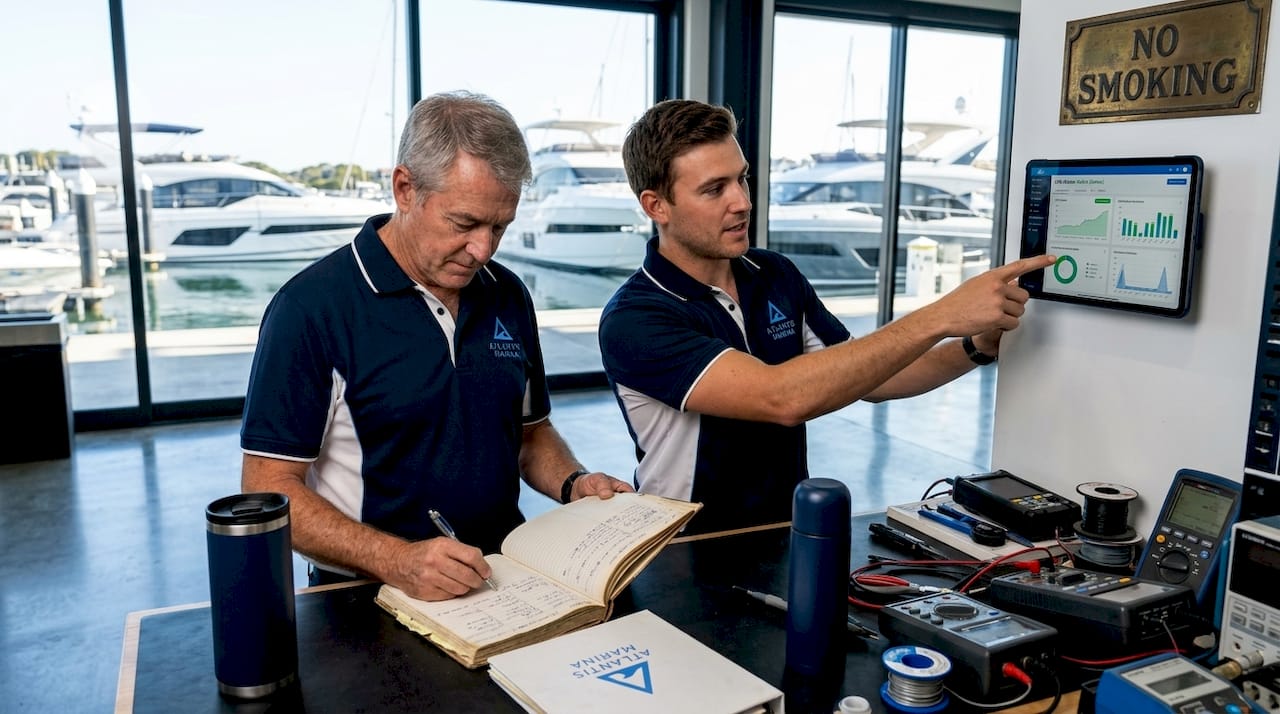
Consider the maintenance timeline difference. Without monitoring, your team discovers a problem only when a lift fails to respond or a customer reports an issue. At that point, you are working against an emotional clock. Boat lift operators expect a response and scheduled repair within 48 hours of a reported failure, and missing that window directly erodes customer trust. With continuous monitoring, the alert arrives while the lift is still operational but degrading, giving you time to source parts, schedule a technician, and notify the boat owner before any service interruption occurs.
Here is how that operational improvement breaks down in practice:
- Early fault detection. Continuous sensor data identifies motor wear and cable stress weeks before a mechanical failure. Proactive maintenance enabled by mobile alerts shifts technician visits from emergency calls to scheduled, lower-cost maintenance appointments.
- Same-day acknowledgment. When an alert fires, your dockmaster receives a notification immediately, regardless of whether they are on-site. The ability to confirm receipt and communicate a response to the boat owner on the same day is a measurable customer service differentiator.
- Data-driven maintenance budgeting. Cycle counts and run-time logs give you accurate usage data across your entire lift inventory, enabling you to allocate maintenance budgets to the highest-use assets rather than distributing resources evenly regardless of wear.
- Audit-ready records. Every alert, acknowledgment, and resolution is timestamped in the monitoring platform, which matters when a liability question arises about when a fault was first detected.
- Transparent customer communication. You can proactively notify boat owners that a routine check identified a minor issue and that a technician is already scheduled. That kind of communication builds the kind of loyalty that no amount of discounting achieves.
"Slow follow-up signals schedule trouble and loss of customer trust. Clear timing beats vague promises every time." This principle, drawn directly from customer expectations research in the boat lift service sector, applies equally to proactive alerts as it does to failure responses.
Smart systems added to existing equipment deliver these advantages without requiring a full infrastructure replacement. This retrofit capability is significant for marina operators managing a mixed inventory of older and newer lifts.
Common challenges in boat lift alert implementation
Marina operators who approach mobile alert systems with clear eyes about the challenges avoid the two most common outcomes: systems that generate so many false alerts that staff stop trusting them, and systems that go dark during the conditions when you need them most.
The comparison table below outlines the key distinctions between remote control systems and true remote monitoring gateways, since the market frequently conflates the two:
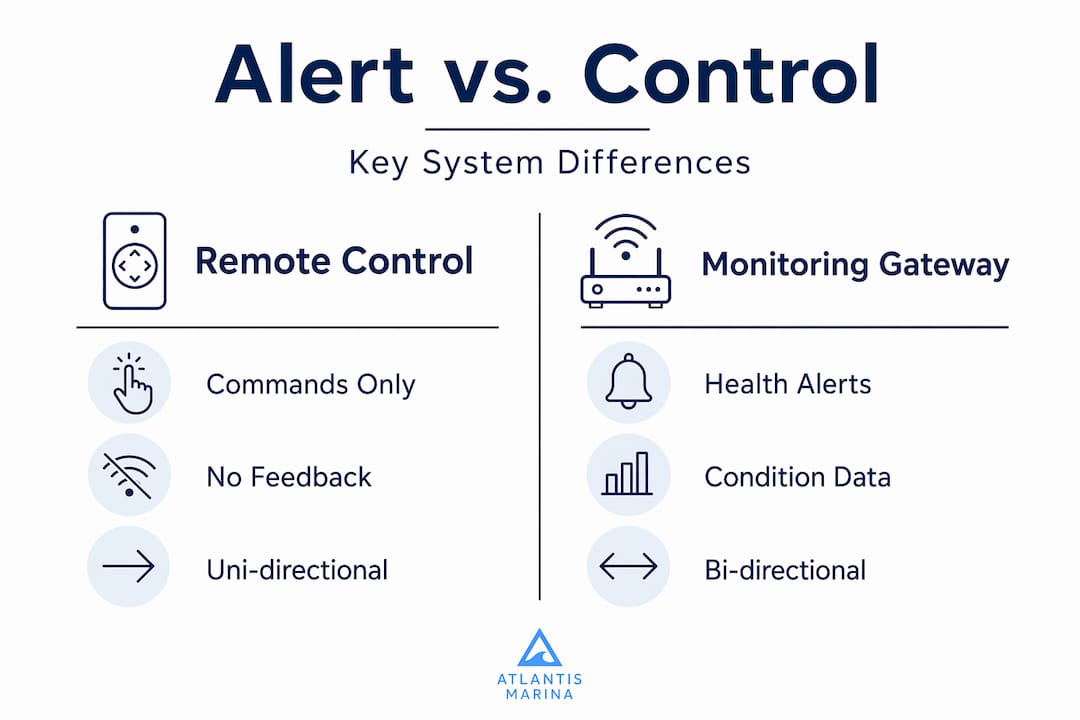
| Feature | Remote control unit | Remote monitoring gateway |
|---|---|---|
| Initiates lift operation | Yes | No (monitoring only) |
| Reports system health | No | Yes |
| Sends mobile alerts | No | Yes |
| Independent connectivity | Rarely | Yes, via cellular IoT |
| Local data buffering | No | Yes (in quality systems) |
| Supports predictive maintenance | No | Yes |
Many remote controls are uni-directional and provide no system health feedback whatsoever. Purchasing a remote control and expecting alert functionality is one of the most common procurement mistakes in marina infrastructure upgrades.
Connectivity remains the primary technical challenge at working marinas. Remote dock fingers and covered boat lift structures frequently produce inconsistent cellular signal. Cellular gateways require stable signal, and units without local buffering will produce data gaps or trigger spurious alerts during signal fluctuations. Prioritize gateways that store data locally and sync when connectivity stabilizes.
Cybersecurity deserves the same attention you give to your financial and reservation systems. IoT networked sensors are vulnerable when left on default manufacturer settings, and maritime-connected devices are increasingly targeted. Deploy your monitoring gateways behind a VPN or firewall, change default credentials immediately on installation, and include boat lift monitoring devices in your regular security audit cycle.
Alert fatigue is the operational risk that kills the long-term value of any monitoring program. When staff receive dozens of low-priority notifications daily, they begin filtering everything, including critical alerts. Configure your system with tiered alert levels: critical alerts for immediate response, warning-level alerts for next-business-day review, and informational logs that staff can review weekly. Reserve SMS and push notifications for events that actually require human action.
Pro Tip: Always maintain a manual override protocol for every lift in your inventory. App-based controls increase operational flexibility but also increase the number of failure points in your system. A physical control backup at the lift itself is non-negotiable.
Selecting and integrating mobile alert solutions
Choosing a boat lift alert system is a procurement decision with a five-to-ten year operational lifespan, so the evaluation criteria matter as much as the initial purchase price.
When assessing providers, prioritize these factors:
- Cellular network independence. The system must function without relying on your marina's local network infrastructure.
- Documented local buffering capacity. Confirmed storage for at least 24 hours of sensor data during connectivity outages.
- Open API or platform integration. The ability to push alert data into your existing marina management software rather than requiring staff to monitor a separate application.
- Configurable alert thresholds. Your dock configuration, equipment age, and customer mix are unique. A system with fixed alert levels will either over-alert or under-alert for your specific environment.
- Vendor support and firmware update policy. Cellular network standards evolve. Confirm that the vendor provides ongoing firmware support rather than shipping hardware and disappearing.
Continuous automated monitoring provides a far more complete picture of asset health than periodic manual inspections, but it only delivers that advantage when integrated into the workflows your staff actually use. An alert that fires and gets missed because it arrived in an application no one checks daily defeats the purpose entirely.
Consider pairing your alert system with marina camera security to give your team visual confirmation of reported conditions without requiring a physical dock walk for every notification. Camera integration allows a dockmaster to visually verify a tilt-angle alert before dispatching a technician, filtering out the minority of alerts that result from sensor calibration drift rather than actual mechanical issues.
Staff training is frequently underestimated in implementation planning. Define response protocols before the system goes live: who receives which alert types, what the expected response time is for each severity level, and how resolutions are logged. A well-configured system with undertrained staff produces the same outcome as no system at all.
My perspective on where marina operators go wrong
I have watched marinas invest in monitoring hardware and see almost no operational return, and in nearly every case the root cause was the same. The technology worked fine. The integration into daily workflow did not.
The single biggest mistake I see is treating mobile alerts as a notification system rather than a data platform. An alert that tells you a motor is drawing 15% above its normal current is useful. But that same data, trended across 90 days and compared against your maintenance records, tells you when that motor will fail with meaningful accuracy. Most operators stop at the notification. The operators who extract genuine value go one step further and build maintenance decisions around the accumulated data.
I have also seen operators underestimate the cybersecurity dimension until something goes wrong. The conversation around securing maritime IoT devices is not theoretical. Default credentials on monitoring gateways are a known attack vector, and a marina's connected infrastructure is more exposed than most operators realize. This is not a reason to avoid the technology. It is a reason to deploy it correctly from day one.
My honest advice is to start with three or four of your highest-use lifts, configure the system carefully, train your team thoroughly, and build confidence before scaling to your full inventory. Incremental deployment produces better long-term outcomes than a marina-wide rollout that overwhelms staff and creates alert fatigue before the system has a chance to prove its value.
— John
Take the next step with Atlantis-marina
Atlantis-marina, developed by Atlantis Control Systems, brings smart boat lift monitoring and mobile alert integration into the same platform you use to manage slips, reservations, billing, and customer communication.
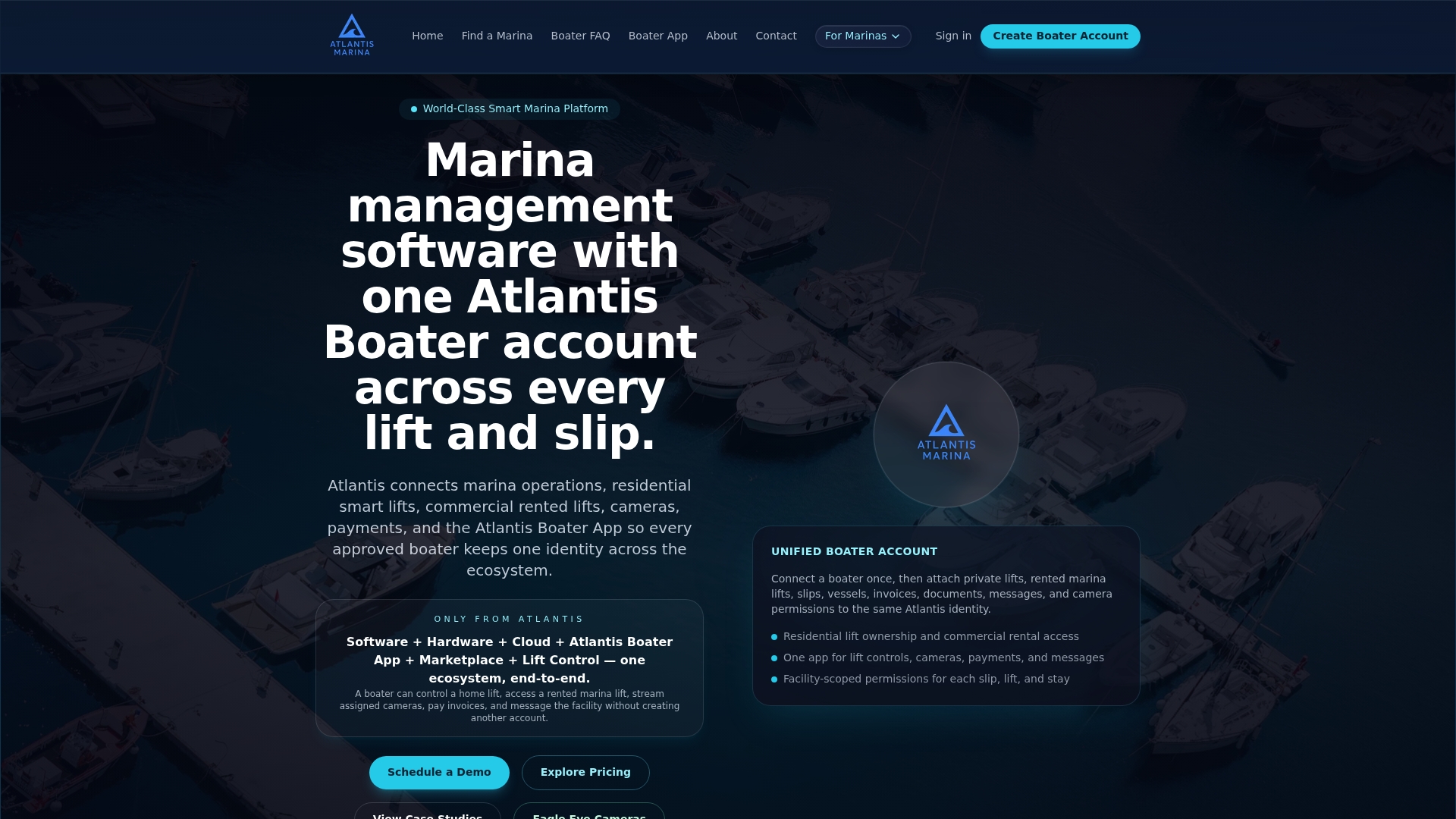
The smart lift control system delivers real-time mobile alerts, motor status tracking, and remote diagnostics across your entire lift inventory, all accessible from a single dashboard. It works alongside the full Atlantis-marina platform, which includes marina management software, camera security integration, and billing automation. If you are ready to move from fragmented workflows to a connected operational picture, explore the platform options or request a personalized demo at Atlantis-marina to see exactly how it fits your facility.
FAQ
What does "boat lift mobile alerts" actually mean?
Boat lift mobile alerts are real-time notifications sent to a smartphone, tablet, or management dashboard when a sensor detects a change in a lift's operating condition, such as a motor fault, power outage, or abnormal tilt angle. They are generated by dedicated monitoring gateways, not standard remote control units.
Can a remote control unit send mobile alerts?
No. Remote controls are uni-directional and do not report system health data. True mobile alerts require a separate monitoring gateway with independent cellular connectivity and onboard sensors.
How quickly should a marina respond to a boat lift alert?
Industry expectations set the standard at same-day acknowledgment and a scheduled repair within 48 hours of detecting a fault. Communicating a clear timeline to the boat owner from the first alert is what protects customer trust.
What are the biggest risks of networked boat lift monitoring?
The two primary risks are connectivity gaps that produce false alerts or data loss, and cybersecurity exposure from improperly configured IoT devices. Both are manageable: prioritize gateways with local buffering and deploy all monitoring hardware behind a VPN or firewall with changed default credentials.
Do mobile alert systems work on older boat lifts?
Yes. Smart sensor systems add intelligence to existing equipment without requiring full infrastructure replacement, making retrofit deployment practical and cost-effective for marinas with mixed-age lift inventories.