
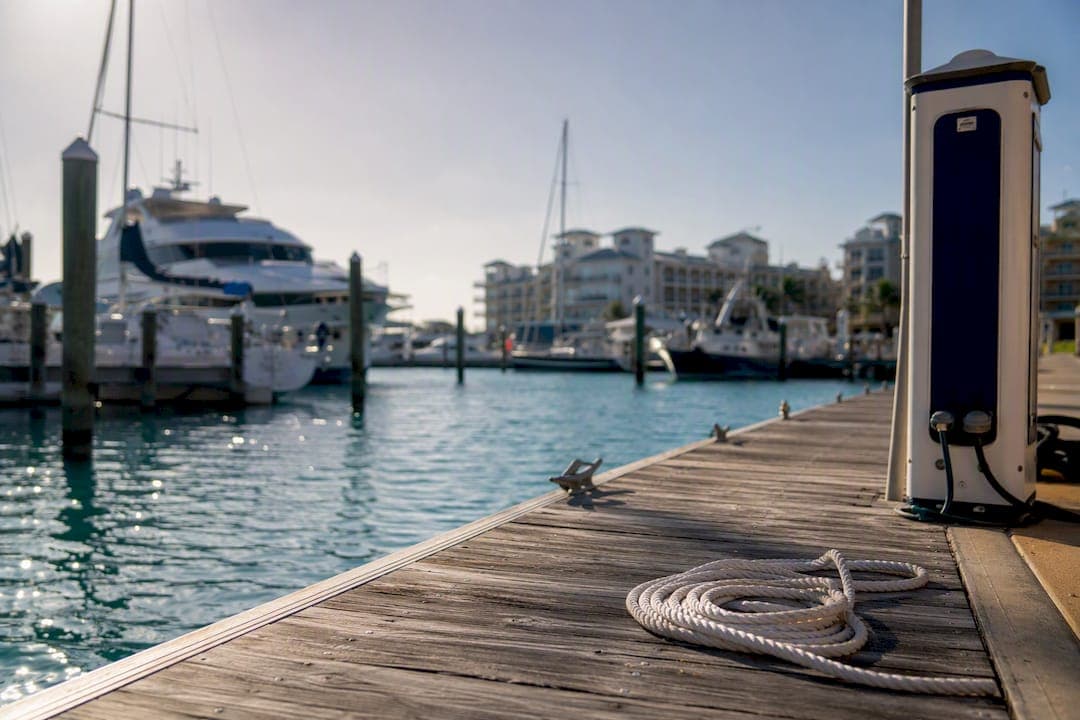
If you operate a marina in Destin and you're still running slip assignments off a whiteboard, the category you need is a smart waterfront platform that unifies reservations, billing, vessel records, and hardware control in one cloud system. Atlantis Marina is the platform to put in front of your team for evaluation this quarter. It combines slip and reservation management, automated billing through Stripe and ACH, a boater-facing app, and smart boat lift integration in a single dashboard built for exactly this kind of operation.
The reasoning is straightforward. A Destin marina juggles transient boat traffic during snapper season, seasonal dockage contracts, ship store sales, and lift maintenance, often with a two- or three-person office staff. A platform that only handles one of those jobs forces you back into spreadsheets for the rest.
When you request a demo, ask the vendor to show you three things live:
- The berth map updating in real time as a reservation is made
- The boater app completing a document upload and e-sign on a phone
- A payment landing in the system and reconciling against a QuickBooks entry without manual entry
If a vendor can't demonstrate all three in one sitting, keep looking.
Key Takeaways
A Destin marina modernizing operations gets the fastest measurable return by automating reservations and billing before layering in smart hardware, with Atlantis Marina built to run both from one dashboard.
| Point | Details |
|---|---|
| Start with billing, not hardware | Reconciliation and double-booking fixes deliver ROI faster than cameras or sensors alone. |
| Run a pilot first | Test 10 to 25 slips with one lift controller and one camera before a full rollout. |
| Demand vessel-aware booking | Confirm the platform checks length, beam, and draft, not just dates and names. |
| Verify accounting sync | Ask vendors to show a live payment landing and reconciling in QuickBooks Online. |
| Evaluate Atlantis Marina directly | Its combined reservations, billing, boater app, and lift integration fit a Destin marina's mixed seasonal and transient demand. |
Table of Contents
- What Core Features Does A Destin Marina Platform Need?
- How Do Payments And Accounting Integrations Work?
- What Self-Service Options Do Boaters Expect Now?
- Which Hardware Integrations Actually Matter On The Dock?
- What Should Implementation Timelines And Costs Look Like?
- Does It Integrate With The Tools You Already Use?
- How Do You Choose The Right Marina Platform?
- How Does A Unified Dashboard Change Daily Staff Workflows?
- What Makes The Destin Marina Market Different?
- What Support And Training Should A Vendor Provide?
- What Security And Privacy Standards Should Marina Software Meet?
- What A Destin Operator Should Actually Prioritize First
- Ready To See Atlantis Marina Run Your Docks?
- Sources
- FAQ
What Core Features Does A Destin Marina Platform Need?
Every credible marina platform starts with the same five building blocks: slip and reservation management, billing, vessel records, ship store point of sale, and a facility map. A buyer's guide from Moored Solutions lists booking and reservations, berth management, payments, maintenance work orders, customer profiles, mobile access, and analytics as the non-negotiable checklist for any serious platform.
The gap most Destin operators run into is vessel awareness. Generic booking tools handle a date and a name, but they don't check length overall, beam, or draft against a slip's actual capacity, and they can't manage the annual berth-holder contract renewals that make up a big share of steady revenue at Gulf Coast marinas. That same buyer's guide flags this as the exact place entry-level booking tools fall short.
Atlantis Marina builds vessel records, live facility maps, and ship store POS into the same system that runs reservations and billing, so a slip request is automatically checked against the vessel's dimensions before a dockhand ever walks the finger pier. Staff see occupancy, contract status, and open slips on one screen instead of cross-referencing a spreadsheet against a paper chart. That single view is what lets a small office run a 200-slip marina without adding headcount every peak season.
How Do Payments And Accounting Integrations Work?
Payment automation is where marina platforms either save you hours a week or create a second full-time bookkeeping job. Stripe and ACH processing handle the transaction; QuickBooks Online sync handles the part that actually eats staff time, matching every charge, refund, and adjustment to the general ledger without a manual entry.
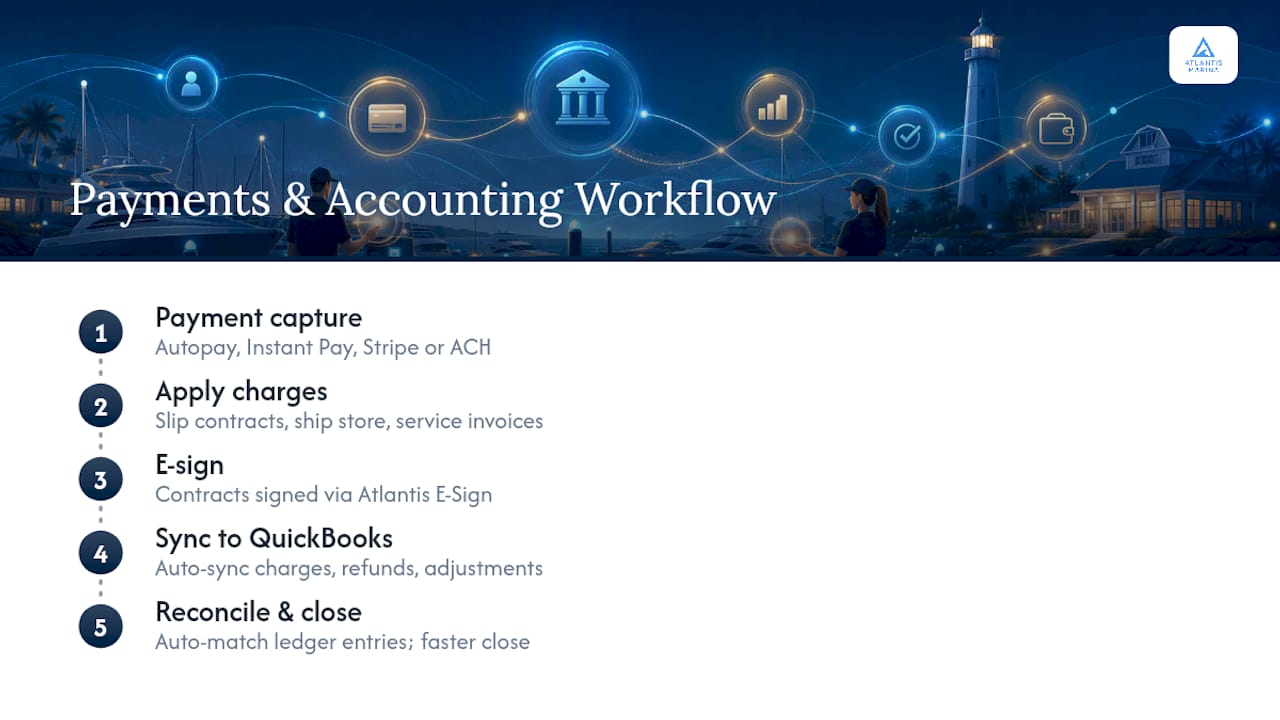
Atlantis Marina runs autopay, Instant Pay, and Stripe or ACH processing directly against slip contracts, ship store purchases, and service invoices, then syncs the results to QuickBooks Online automatically. Contracts get signed through Atlantis E-Sign, so a renewal doesn't wait on a signature that has to be scanned and filed. For a marina billing seasonal dockage plus transient nightly rates plus fuel and ship store sales, that reconciliation alone can be the difference between closing the books in an afternoon or a week.
A 150-slip case study on AI-driven marina automation found slip utilization rose from 78% to 89% after digitizing reservations and payments, with a six-month benefit of $119,000 against a $20,700 investment, a 474% return. Eliminating double bookings and manual billing entry accounted for most of that gain. If your current system still requires someone to key a credit card number into a separate processor and then re-enter the charge in accounting software, you're paying for that labor every single month, whether you notice it on a line item or not.
What Self-Service Options Do Boaters Expect Now?
Boaters booking a Destin slip in 2026 expect the same self-service experience they get from a hotel or an airline: browse availability, reserve online, upload their own documents, and sign a contract without a phone call to the office. A marina still requiring a fax of a boat registration is losing bookings to whichever nearby facility makes that process take ninety seconds on a phone.
The Atlantis Boater App and web portal let a boater find a marina through Atlantis Marina Search, request or reserve a slip, submit vessel details, upload insurance and registration, and sign contracts electronically through Atlantis E-Sign. Every reservation, payment, and message lives in one account that travels with the boater across the wider Atlantis Marina Network, so a returning transient guest doesn't re-enter the same information twice.
St Andrews Marina's boater login portal shows what that looks like in production: reservations, documents, and payments in one account view a boater can check from a phone at the fuel dock. That same self-service layer cuts front-desk check-in time, since a returning boater has already verified their documents and paid before they ever tie off. For a Destin operator managing heavy weekend transient traffic during tourist season, that's staff time you get back without adding a headcount line to next year's budget.
Which Hardware Integrations Actually Matter On The Dock?
Software alone doesn't run a boat lift, and it doesn't watch the fuel dock at 2 a.m. The integrations that matter most for a working marina are boat lift controllers, security cameras, environmental sensors, and QR-code workflows that tie a physical interaction back to the right account instantly.
Atlantis Marina supports smart boat lift controllers with remote monitoring and AUX device control, plus camera and sensor integrations that push mobile alerts when something needs attention. A handheld Dealer Tool Kit gives technicians a way to set up and diagnose lift hardware from the dock instead of hauling a laptop out to a slip. QR-code account passes let a boater check in, make a ship store purchase, or request service without staff hunting through a customer list.
The value of this kind of integration shows up clearly in a multi-marina rollout across 26 properties, where automating utility monitoring and control improved billing accuracy and gave technicians a mobile app for device lifecycle management instead of a paper maintenance log. Cameras and sensors that report into the same dashboard as your billing and reservations mean a security event or a lift malfunction shows up next to the account it affects, not in a separate monitoring app nobody checks until something breaks.
What Should Implementation Timelines And Costs Look Like?
Full marina platform rollouts typically move faster than operators expect, especially compared to ripping out a legacy accounting system. Pricing models vary by marina size and complexity: smaller seasonal marinas often fit better with lighter-touch, commission-style pricing, while larger year-round operations usually need a subscription model that scales with slip count and staff seats. Moored Solutions' buyer's guide recommends matching the pricing model to your marina's size and revenue complexity rather than defaulting to whatever a vendor pitches first.
Hardware like lift controllers, cameras, and POS equipment is available as optional add-ons rather than bundled into every plan, so a Destin marina without smart lifts yet isn't paying for hardware it doesn't use.
Running a pilot before full rollout reduces risk considerably. Piloting a subset of slips and a handful of hardware integrations lets your team validate payment reconciliation and lift control workflows in real conditions, an approach supported by findings from multi-marina IoT deployments that show smaller phased rollouts de-risk larger commitments. Expect the ROI curve to bend fastest in the first two quarters, once reservation double bookings and manual reconciliation work drop off.
Does It Integrate With The Tools You Already Use?
A marina rarely starts from zero. You likely already have QuickBooks Online for accounting, a Stripe or ACH processor for payments, and maybe a spreadsheet-based vessel log someone built five years ago and everyone's afraid to touch. The question isn't whether to replace all of that at once. It's whether the new platform talks to what you're keeping.
Atlantis Marina syncs with QuickBooks Online for accounting, connects directly to Stripe and ACH for payment processing, and supports API-based data exchange for marinas that run additional property management or point-of-sale systems alongside it. That matters most for multi-property marina groups, where one location might run a legacy fuel dock system that isn't worth replacing yet but still needs its sales data flowing into the same financial picture as everything else.
Enterprise-grade waterfront modernization depends on exactly this kind of property-wide integration. A report from NexusTek on smart marina technology found that centralized cloud platforms with mobile-first staff tools and managed support are what separate a genuinely modern operation from one that's just added a booking widget to an old website. Ask any vendor for their API documentation before you sign anything. A platform that can't describe its own integration points in writing usually can't deliver them either.
How Do You Choose The Right Marina Platform?
Choosing a marina platform comes down to five questions you should ask every vendor on the same call, side by side.
- Does it handle vessel-aware bookings (length, beam, draft) and annual berth-holder contracts, not just date and name reservations?
- Can it process payments through Stripe or ACH and sync automatically to QuickBooks Online?
- Does it support boater self-service, including document upload and e-signature, without a phone call to your office?
- Can it integrate with boat lift controllers, cameras, or sensors you already have or plan to add?
- What does a pilot look like, and what does full implementation cost at your slip count?
Score every vendor against that same list. The essential feature checklist from Moored Solutions covers booking, berth management, maintenance work orders, payments, customer profiles, and analytics as the baseline any serious platform must clear. Anything short of that list is a booking widget wearing a marina platform's marketing copy.
Bring your dockmaster and your bookkeeper to the demo, not just whoever manages the website. The dockmaster will spot whether the berth map actually reflects real slip conditions. The bookkeeper will spot whether the QuickBooks sync is cosmetic or functional within the first five minutes.
How Does A Unified Dashboard Change Daily Staff Workflows?
The clearest sign a marina has outgrown its current system is staff running three or four separate tools to answer one boater's question: a spreadsheet for the slip, a separate app for billing status, email for documents, and a text thread for maintenance requests. A unified operations dashboard collapses that into one screen.
Atlantis Marina's dashboard covers reservations, customer records, billing, documents, facility status, maintenance tracking, staff messaging, and occupancy analytics in one place, along with lead generation tools like website embeds and intake forms for prospective berth holders. A dockhand checking in a transient boater can see the reservation, the vessel record, payment status, and any outstanding documents without switching screens or calling the office.
That consolidation is also where measurable time savings show up. Faster, document-verified check-ins that free staff for higher-value work are one of the clearest operational wins buyer's guides point to when marinas move off spreadsheets. A marina running one dashboard instead of four disconnected tools isn't just faster; it's less likely to lose a maintenance request in someone's inbox during a busy holiday weekend.
What Makes The Destin Marina Market Different?
Destin's waterfront runs on a mix of year-round berth holders and heavy seasonal transient traffic tied to sport fishing, snapper season, and summer tourism, which means your platform needs to flex between steady contract billing and sudden spikes in one-night bookings without either workflow getting in the way of the other. A marina near Destin's harbor competing for slip business against nearby facilities in Fort Walton Beach or along Choctawhatchee Bay is also competing on how fast a boater can book from their phone, not just on rate.
Local demand is shaped by things a generic booking tool never accounts for: charter fishing schedules that fill fuel docks before dawn, waterfront dining and ship store traffic that spikes on weekends, and family travelers looking for slip access near beaches and attractions rather than just dockage. A platform that treats every reservation the same, regardless of vessel type or stay length, misses the operational reality of a market where a half-day charter turnaround and a month-long seasonal contract are happening at the same dock on the same afternoon.
Marina groups managing multiple Gulf Coast properties, or a single high-traffic Destin location competing for transient dollars, both need the same underlying flexibility: vessel-aware booking, fast digital check-in, and a dashboard that scales whether you're running one marina or several. Atlantis Marina's customer deployments, including Daytona Beach Marina and Pirate's Cove Marina, show how the same platform adapts to different Florida waterfront markets without forcing every property into an identical operational mold.
What Support And Training Should A Vendor Provide?
A platform is only as good as the onboarding behind it. Staff who've run a marina office off paper logs for a decade won't switch to a new dashboard overnight just because the software is capable, and a vendor that hands you login credentials and disappears is setting your team up to revert to the old spreadsheet within a month.
Look for a vendor offering structured onboarding, live staff training, and ongoing support channels, not just a help center article. Hardware rollouts add another layer: if you're integrating boat lift controllers or cameras, someone needs to physically set that hardware up and confirm it's reporting correctly.
Atlantis Marina backs implementation with staff onboarding support and a Dealer Tool Kit built specifically for lift setup and diagnostics in the field, so hardware integration isn't left to guesswork. Ask any vendor directly how many hours of live training are included, what happens after the first thirty days, and whether hardware setup requires a certified technician or your own staff with a manual. The answer tells you whether "support" means a person or a PDF.
What Security And Privacy Standards Should Marina Software Meet?
Marina platforms hold sensitive data: boater payment information, vessel registration and insurance documents, and contract signatures. That data needs the same handling standards you'd expect from any financial or property management software, not a lighter version because the industry is niche.
At minimum, ask whether payment processing runs through a PCI-compliant processor like Stripe, whether documents and e-signatures are encrypted in transit and at rest, and whether the vendor can describe its data backup and access-control policies in plain language. A vendor that gets vague or defensive about this question is a red flag regardless of how good the rest of the demo looked.
Atlantis Marina processes payments through Stripe and ACH, both PCI-compliant channels, and handles contracts and identity documents through Atlantis E-Sign with encrypted storage. Cloud hosting also means your data isn't sitting on a single office server that fails during a storm, a real consideration for any Gulf Coast marina planning for hurricane season disruptions.
What A Destin Operator Should Actually Prioritize First
The conventional wisdom in marina software buying is to chase the longest feature list. That's backward. The research behind this article points to a narrower truth: the platforms that deliver real ROI are the ones that eliminate double bookings and manual reconciliation first, because that's where the labor cost actually lives.
Most operators overrate flashy hardware demos and underrate boring reconciliation workflows. A camera integration looks impressive in a sales pitch, but a QuickBooks sync that quietly saves your bookkeeper six hours a week is worth more to your margin. Prioritize payment and billing automation before you prioritize sensors and cameras. Get the financial plumbing right, then layer in smart hardware once staff trust the core system.
The other overlooked point: a pilot beats a full rollout for a first move. Testing 10 to 25 slips with one lift controller and one camera over a busy weekend tells you more about fit than any demo slide. If a vendor resists a pilot scope and insists on a full-facility commitment upfront, treat that as information about their confidence in the product, not yours.
— John R
Ready To See Atlantis Marina Run Your Docks?
Atlantis Marina is the direct path from spreadsheet chaos to a single operating system built specifically for marinas, not a generic booking tool retrofitted for boats. Where a legacy patchwork forces you to reconcile payments by hand and field phone calls for documents your boaters could upload themselves, Atlantis Marina puts reservations, billing, vessel records, and hardware control on one dashboard from day one.
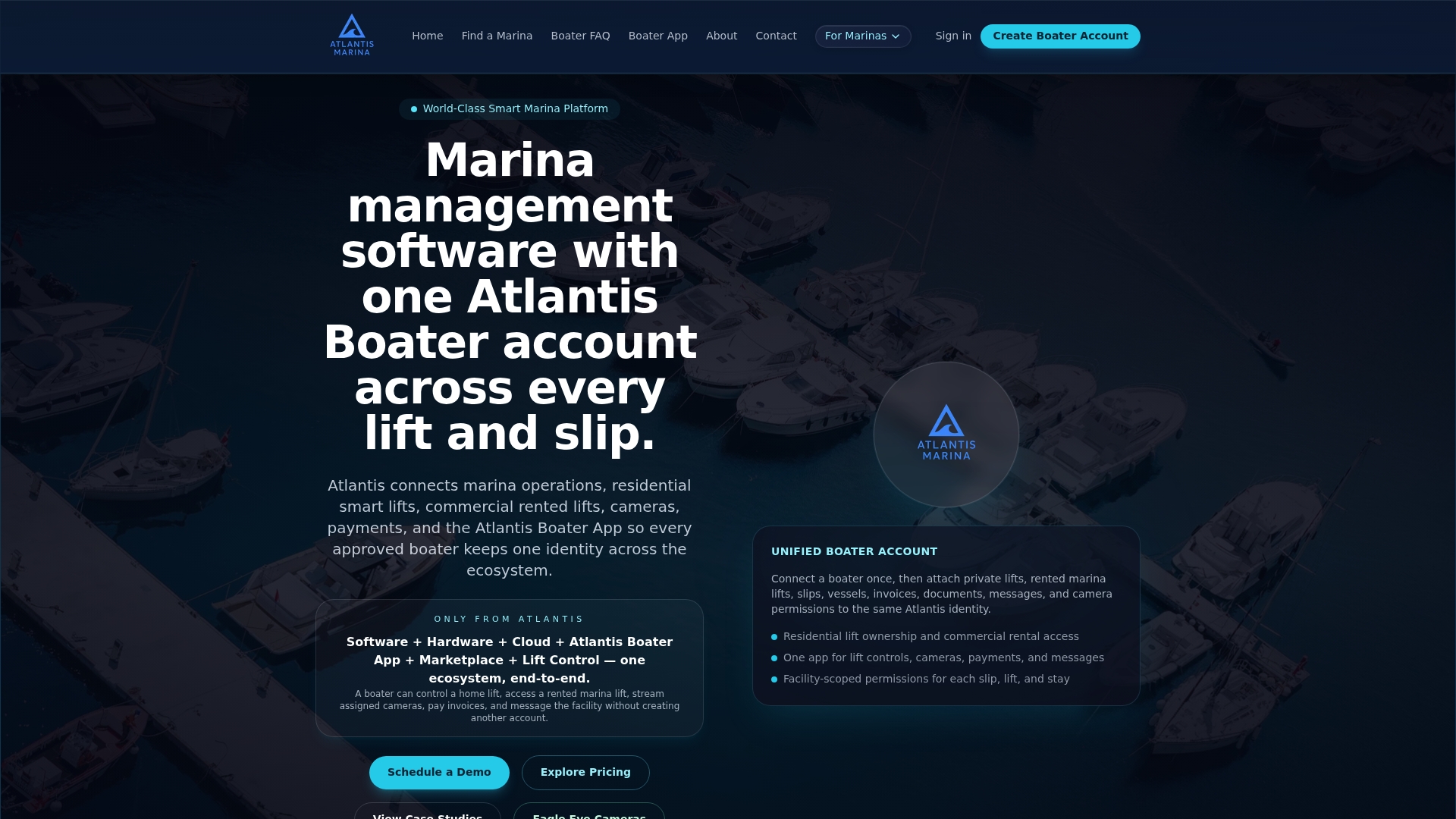
A smart starting point is a pilot: 10 to 25 slips covering your busiest transient flow, one lift controller, one camera, and QR check-in running through a single weekend. That scope is enough to validate the berth map, the boater app, and payment reconciliation without committing your whole facility on day one. From there, expanding to full dockage, ship store POS, and multi-property support is a configuration change, not a second implementation.
Explore the Marina Management Solution page to see the full feature set, check out Marina Reservations Software for the booking workflow specifically, or head straight to the sales page to request a live demo and get pricing scoped to your slip count.
Sources
- The ROI of AI Automation for Marina Management Businesses | OS For Your Business
- Marina Management Software: Complete 2026 Buyer's Guide | MooredOS | Moored Solutions
- Anchors Down, Systems Up: The Smart Marina Experience - NexusTek
- D-Marin Case Study | Euvic
FAQ
What Is A Smart Waterfront Platform?
It's cloud-based marina management software that unifies reservations, billing, vessel records, boater self-service, and hardware integrations like boat lift controllers and cameras in one system.
How Long Does Marina Software Implementation Take?
Timelines vary by scope, but a piloted rollout covering a subset of slips and select hardware integrations typically moves faster than a full-facility implementation, letting staff validate workflows before scaling up.
Does Marina Software Integrate With QuickBooks?
Yes. Platforms like Atlantis Marina sync payment and billing data directly to QuickBooks Online, so transactions reconcile automatically instead of requiring manual entry.
What Should A Destin Marina Look For In A Platform Demo?
Ask to see the live berth map, the boater app completing a document upload and e-sign, and a payment reconciling in the accounting system in the same session.
Can One Platform Manage Multiple Marina Locations?
Yes. Cloud-hosted platforms built for multi-property scalability, including Atlantis Marina, let marina groups manage several locations from one dashboard with shared reporting and consistent boater self-service.