
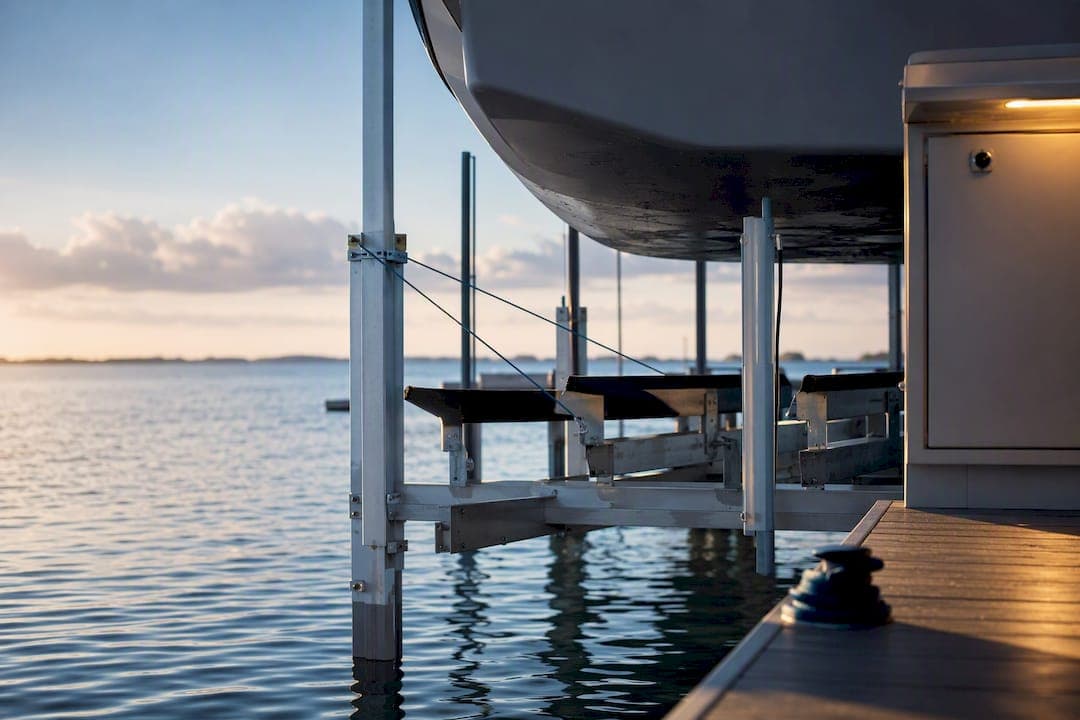
The fastest path to reliable boat lift automation depends on what you already own. New installs benefit most from a purpose-built direct-drive motor. Existing lifts do better with a retrofit smart controller kit adding Bluetooth, Wi‑Fi, or cellular control. Marinas running several lifts need both, tied into a platform that handles scheduling, billing, and remote monitoring at once.
TL;DR:
- Direct-drive motors are best for new installs due to their reduced wear and corrosion resistance, especially in saltwater environments.
- Remote control options vary: Bluetooth suits on-dock operation; Wi‑Fi allows local network management; cellular connectivity enables full remote access from anywhere.
- Safety features like limit switches, thermal overload protection, and emergency stops are essential; anti-theft alerts and activity logs improve security and monitoring.
- Retrofit kits typically include wiring and sensors, but verifying compatibility, power supply, and signal range is crucial for a smooth installation.
- Automation costs depend more on wiring and labor than hardware, with marina-wide systems offering integrated billing, scheduling, and remote diagnostics through platform solutions.
Table of Contents
- What Are the Main Types of Boat Lift Motors and Drives?
- Which Control Options Work Best for Remote Lift Operation?
- What Safety Features Does an Automated Lift Need?
- How Do You Install or Retrofit a Boat Lift for Automation?
- What Do Boat Lift Automation Costs and Maintenance Look Like?
- How Does Lift Automation Fit Into Marina Operations?
- How Do Boat Lift Manufacturers Compare on Warranties?
- What Regulations Apply to Automated Boat Lift Installation?
- A Dockmaster's View on What Actually Changes
- Where Atlantis Marina Fits Into Your Lift Automation Plan
- Sources
- FAQ
What Are the Main Types of Boat Lift Motors and Drives?
Motor choice determines how much you'll spend on repairs later, not just how fast the lift raises your boat. AC motors dominate the market because they tolerate moisture, run for years with minimal upkeep, and handle the repeated stop-start cycles of daily use without overheating. DC motors show up more often in battery-backed or solar-assisted setups where grid power is unreliable, but they generally demand closer monitoring and shorter service intervals.
Direct-drive units skip the belt or chain entirely, coupling the motor straight to the lift mechanism. That reduces the number of moving parts that can wear out, strip, or need tensioning, which matters most in salt air where corrosion attacks any exposed hardware. Belt-driven and gearbox systems remain common because they're cheaper to manufacture and easier to service locally, but they trade some of that reliability for lower upfront cost. Flat-plate drives change the torque curve, giving smoother lifts for heavier vessels at the expense of raw speed.
Marinas cycling lifts dozens of times a day tend to standardize on rugged AC or direct-drive units. The math is straightforward: a motor that fails twice a season costs far more in labor and lost slip time than the premium paid for a sturdier drive at purchase.
Which Control Options Work Best for Remote Lift Operation?
Control architecture is where most buyers overthink the decision. The real question is simple: how far from the lift do you need control, and how much do you need to see while you're away?
Bluetooth kits work well for on-dock control, letting you raise or lower the lift from a phone standing right next to it without draining data or depending on a network. Wi‑Fi extends that range to anywhere on the property's local network, useful for marina staff monitoring several lifts from an office. Cellular connectivity is the only option that gives true remote access when you're off-site entirely, which matters for owners who want to check or adjust a lift from home.
Before choosing a smartphone controller, evaluate:
- Access sharing — can you grant temporary control to a guest, renter, or dock crew without handing over your primary login?
- Activity logs — does the app record every raise, lower, and access attempt for later review?
- Scheduling and auto-run — can the lift run on a timer or respond to preset conditions without manual input?
- Camera integration — does the controller pair with a video feed so you can confirm lift position visually?
Lift Mate's controller kit supports Bluetooth, Wi‑Fi, and cellular modes in one unit, along with access sharing and activity logging. On security, look for encrypted key sharing and an offline fail-safe. A controller that loses connectivity should default to manual switch operation, not lock the lift in whatever position it happens to be in.
What Safety Features Does an Automated Lift Need?
Every automated lift needs limit switches. Full stop. These physical or digital sensors mark the top and bottom of the lift's travel, triggering auto-stop before the motor strains against a hard stop or drops the cradle too far. Without them, a stuck remote button or a network glitch can mean real damage to the hull, the motor, or both.
Beyond limit switches, look for thermal overload protection, which cuts power before the motor cooks itself during a jammed cycle, and mechanical end-stops as a backup if the electronic limits fail. Every system also needs a clearly labeled emergency stop, ideally reachable without pulling out a phone.
On the monitoring side, Lift Mate's product line highlights anti-theft alerts that fire if a lift moves off its stored position without authorization, plus storage-position monitoring that flags unexpected movement overnight. Pair that with a camera feed and an activity log, and you get a system that tells you not just what happened, but when and from which device it was triggered.
How Do You Install or Retrofit a Boat Lift for Automation?
Before ordering parts, walk the physical setup with a checklist in hand. Retrofits fail more often from missed wiring details than from bad hardware.
- Check control-box compatibility. Confirm your existing box supports the voltage and switch type the new controller expects.
- Verify limit-switch mounting points. Some lifts have factory brackets ready; others need custom mounting, which adds labor time.
- Measure clearance. Controllers and antennas need unobstructed space to transmit reliably, especially with cellular units.
- Confirm power supply details. Voltage, GFCI protection, and conduit routing all need sign-off before the controller goes live; battery-backed or solar-assisted setups need separate wiring review.
- Run post-install verification. Calibrate limits, test remote range from typical use points, and confirm every safety interlock trips correctly before calling the job done.
Pro Tip: Test remote range from the farthest point you'd realistically stand, not from right next to the lift. Dock structures and nearby boats block signal more than most owners expect.
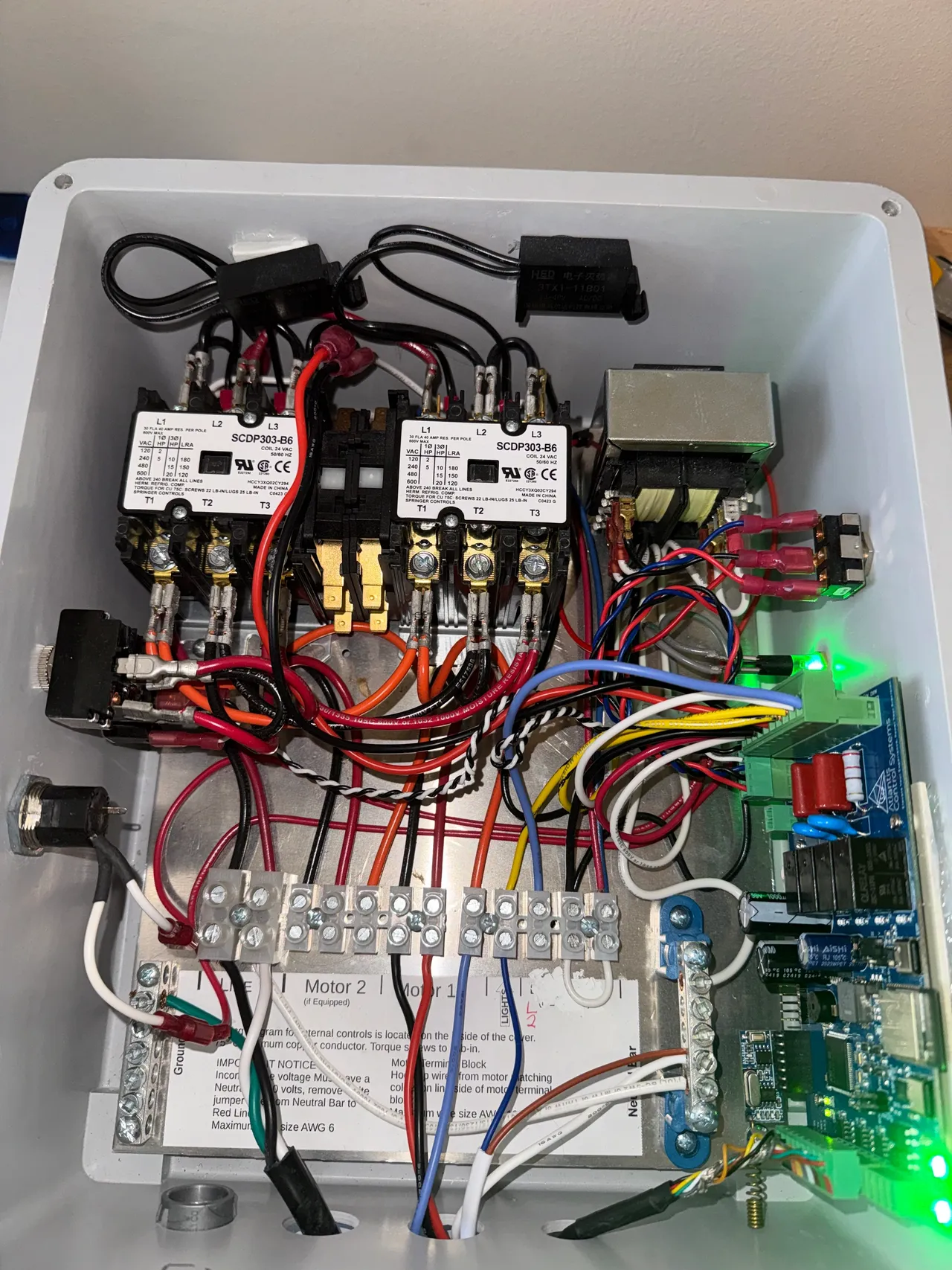
Many retrofit kits ship with the limit-switch sensor and wiring harness included, which cuts a step out of the install. A community programming thread on boat lift automation logic shows how installers sequence auto-run and service-position behavior for float lifts, useful reference if your retrofit involves custom PLC control rather than an off-the-shelf kit.
What Do Boat Lift Automation Costs and Maintenance Look Like?
Equipment costs vary by drive type and controller sophistication, but the labor side often swings the total more than the parts themselves. A straightforward swap onto existing wiring costs far less than a job requiring new conduit, a dedicated circuit, or custom limit-switch brackets.
Routine maintenance keeps the system honest; following proven engineering and marina maintenance practices is critical to eliminating hull slap at anchor and ensuring long-lasting equipment performance. Lubricate moving joints on a seasonal schedule, inspect belts for fraying before they snap mid-lift, and check electrical connections annually for corrosion, especially in saltwater. None of this is glamorous, but skipping it is how a $200 repair turns into a $2,000 motor replacement.
For marinas, automation's real payoff shows up in labor. A dockmaster who used to walk to each lift for a manual raise now handles it from a tablet, and that time savings compounds fast across a property with dozens of lifts running multiple cycles daily.
How Does Lift Automation Fit Into Marina Operations?
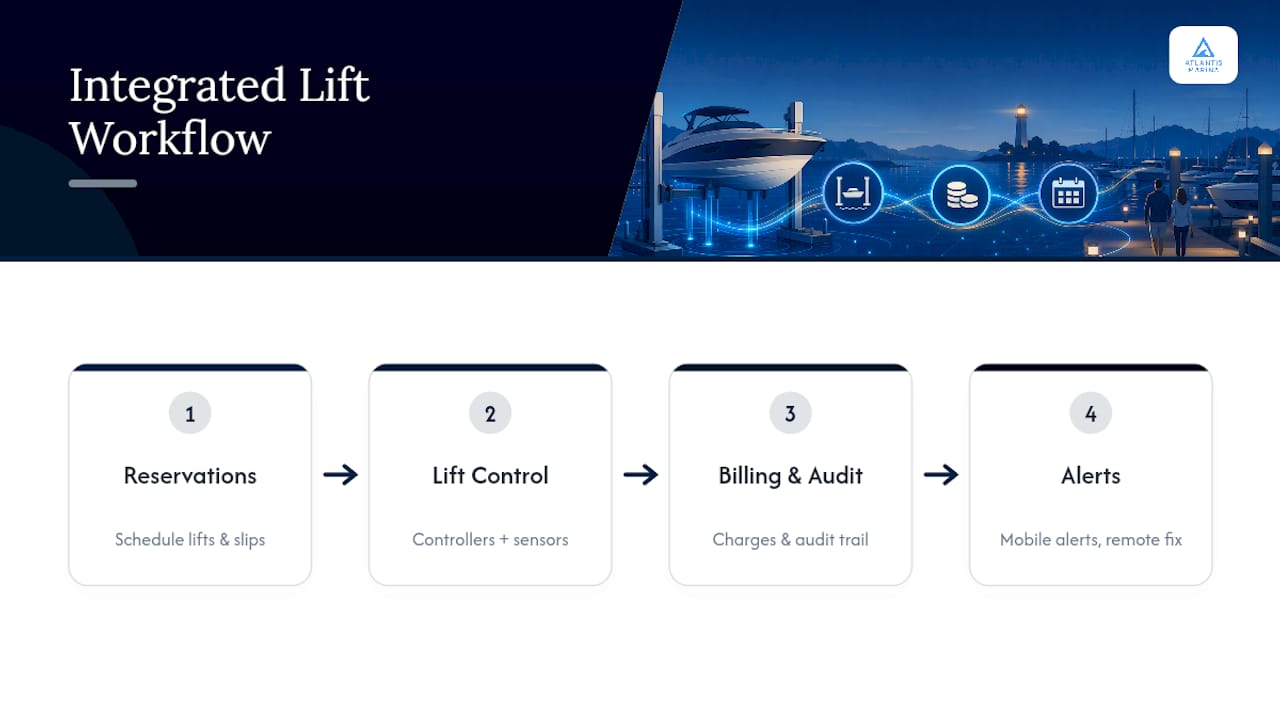
A single automated lift is convenient. A fleet of them, tied into one operations platform, changes how a marina runs day to day. Atlantis Marina's smart lift control connects individual controllers to camera and sensor feeds, mobile alerts, and the same billing system that handles slip fees and service charges, so a lift cycle and its cost show up in one place instead of three.

For dockmasters, that integration means scheduling lift use alongside slip reservations, pulling an audit trail when a boater disputes a charge, and troubleshooting remotely with the Atlantis Dealer Tool Kit instead of dispatching a technician for every alert. Staff see which lift moved, when, and who triggered it, all inside the same dashboard used for reservations and billing.
Marinas evaluating a vendor should ask pointed questions: does the controller integrate with existing reservation software, or does it require a separate login and a separate app? Does the vendor support multi-lift dashboards, or only single-unit control? Fragmented tools create the exact manual re-entry problem automation was supposed to eliminate.
How Do Boat Lift Manufacturers Compare on Warranties?
Warranty terms vary more by component than by brand name, and that distinction matters more than most buyers realize. Motors typically carry longer coverage than the electronic controllers attached to them, since motors are simpler mechanically and controllers involve more failure points like circuit boards and wireless modules.
Buyers should ask three specific questions of any manufacturer or dealer before purchase: what exactly does the warranty cover (motor only, or motor plus controller and sensors), how long does coverage last on each component separately, and does the warranty survive a self-install or does it require certified installation? Some warranties void entirely if wiring wasn't done by an approved installer, a detail easy to miss when shopping on price alone.
Enterprise-scale automated storage systems, the kind using industrial machine vision and high-throughput transport described by vendors like Aero-Docks, operate under entirely different warranty and service structures than a typical dock lift retrofit. Comparing a residential lift warranty against an industrial storage system's service agreement isn't a fair comparison. Stick to comparing like-for-like: consumer and light-commercial lift motors against other consumer and light-commercial motors.
Local vendor reputation matters just as much as the paper warranty. Checking a dealer's BBB profile before signing a retrofit contract catches installation quality issues a warranty document won't reveal.
What Regulations Apply to Automated Boat Lift Installation?
Local codes govern electrical work on any boat lift, automated or not, and that's the piece buyers most often overlook until an inspector flags it. GFCI protection on dockside circuits is standard requirement in most jurisdictions, and any new wiring run for a controller or sensor typically needs to meet the same electrical code as the rest of the dock's power system.
Permitting requirements vary by municipality and by whether the lift sits over water regulated by a local harbor authority or environmental agency. Some areas require a permit for any structural modification to a dock or lift platform, even when the modification is just adding a control box and sensor bracket. Skipping that step can create problems later if you ever sell the property or file an insurance claim tied to the lift.
Homeowners associations and marina leases sometimes add their own restrictions on top of municipal code, particularly around exterior equipment visibility or noise from motor operation. Before installing any automated system, check with the local building department and, where applicable, the marina's own facility rules. A licensed marine electrician familiar with local code will catch requirements a generic installation guide won't mention.
A Dockmaster's View on What Actually Changes
Turnaround time is where automation shows up first. Fewer walks to the lift box, fewer radio calls asking "is it up yet," and a log that answers billing disputes without a site visit. During any vendor demo, test range at the property's actual edges and ask what happens during a network outage. Push the vendor on whether the controller talks to your reservation and billing system, or sits alone.
— John R
Where Atlantis Marina Fits Into Your Lift Automation Plan
Atlantis Marina gives you one system instead of three logins for lift control, billing, and reservations, which is the actual bottleneck most marinas hit once they automate more than one lift. Smart lift control ties directly into camera feeds, mobile alerts, and the Atlantis Dealer Tool Kit for setup and remote diagnostics, so a technician can troubleshoot a stuck limit switch without a truck roll.
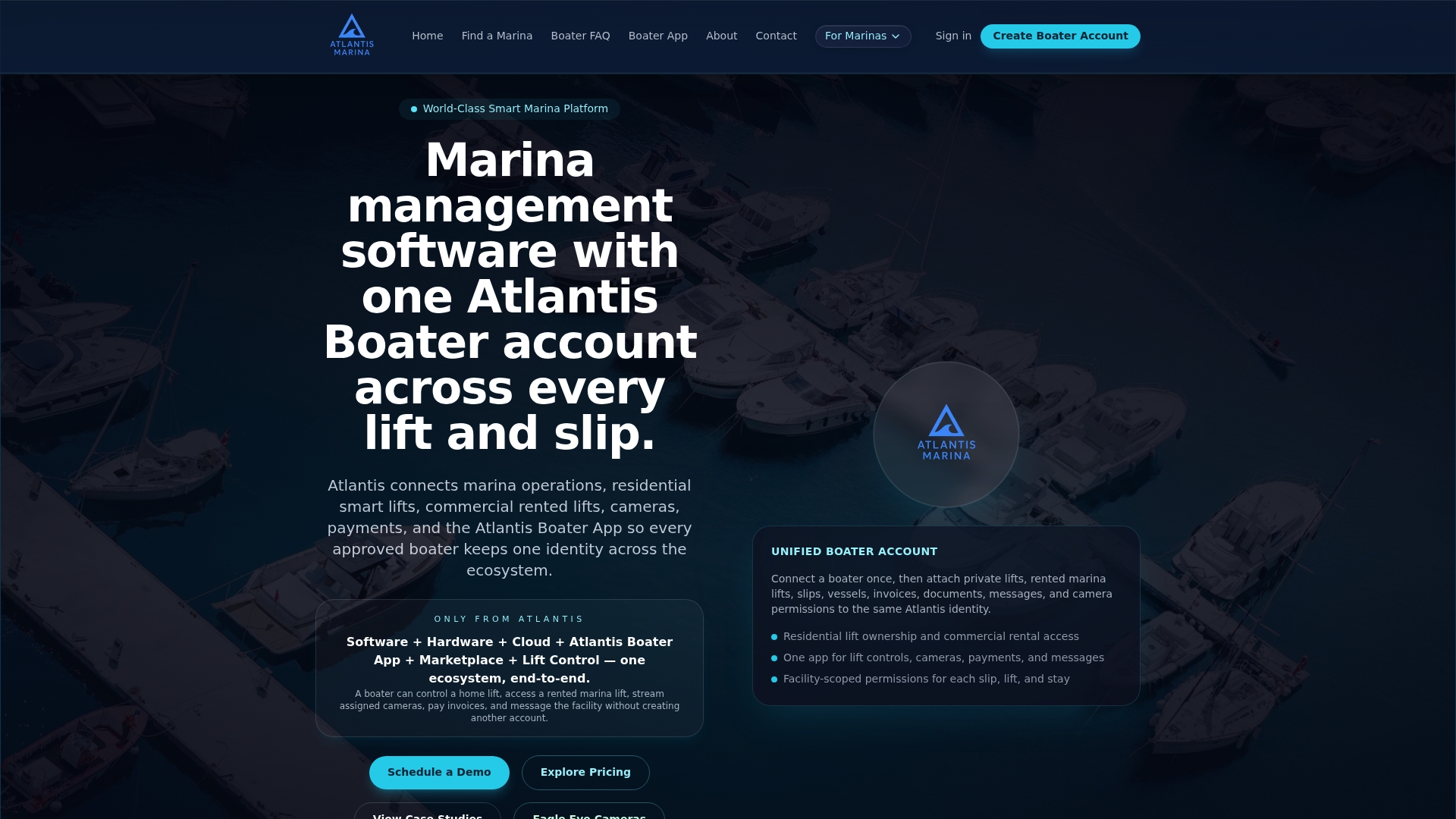
Lift activity flows straight into automated billing, so a lift cycle bills itself against the right slip and contract without a staffer keying it in manually, and it shows up alongside reservations instead of a separate spreadsheet. Premium smart lift automation is available as a low-cost add-on once your core operations run on the platform. Review the full pricing breakdown by marina size, or request a demo to see how lift control, billing, and monitoring work together on a live account.
Sources
- Lift Mate - Smart Boat Lift Remote Control System
- Boat Lift Simple Program
- BBB profile: Lakefront Fix Inc.
FAQ
What Is the Difference Between a Retrofit Kit and a New Motor?
A retrofit kit adds smart control, like Bluetooth or Wi‑Fi operation, to your lift's existing motor and control box. A new motor replaces the drive mechanism itself, usually chosen when the old motor is failing or when upgrading to direct-drive for better reliability.
Can I Control My Boat Lift From My Phone?
Yes, smartphone controllers connect over Bluetooth for on-dock use, Wi‑Fi for local network range, or cellular for full remote access from anywhere. Lift Mate's controller kit supports all three connection types along with access sharing and activity logs.
Do Automated Boat Lifts Need a Permit?
Often, yes, particularly for new electrical wiring or any structural change to the dock or lift platform. Requirements vary by municipality and by local harbor authority, so check with the building department before installation.
How Much Does Boat Lift Automation Cost for a Marina With Multiple Lifts?
Costs scale with the number of lifts and the wiring complexity at each one, since labor typically drives the total more than the controller hardware itself. Marinas running Atlantis Marina's platform can add premium smart lift automation as a paid add-on on top of their core plan; current pricing details are available on the pricing page.
What Safety Features Should Every Automated Lift Have?
At minimum, a lift needs limit switches for auto-stop, thermal overload protection for the motor, and a clearly accessible emergency stop. Anti-theft alerts and storage-position monitoring, highlighted by Lift Mate, add an extra layer of security for unattended lifts.