
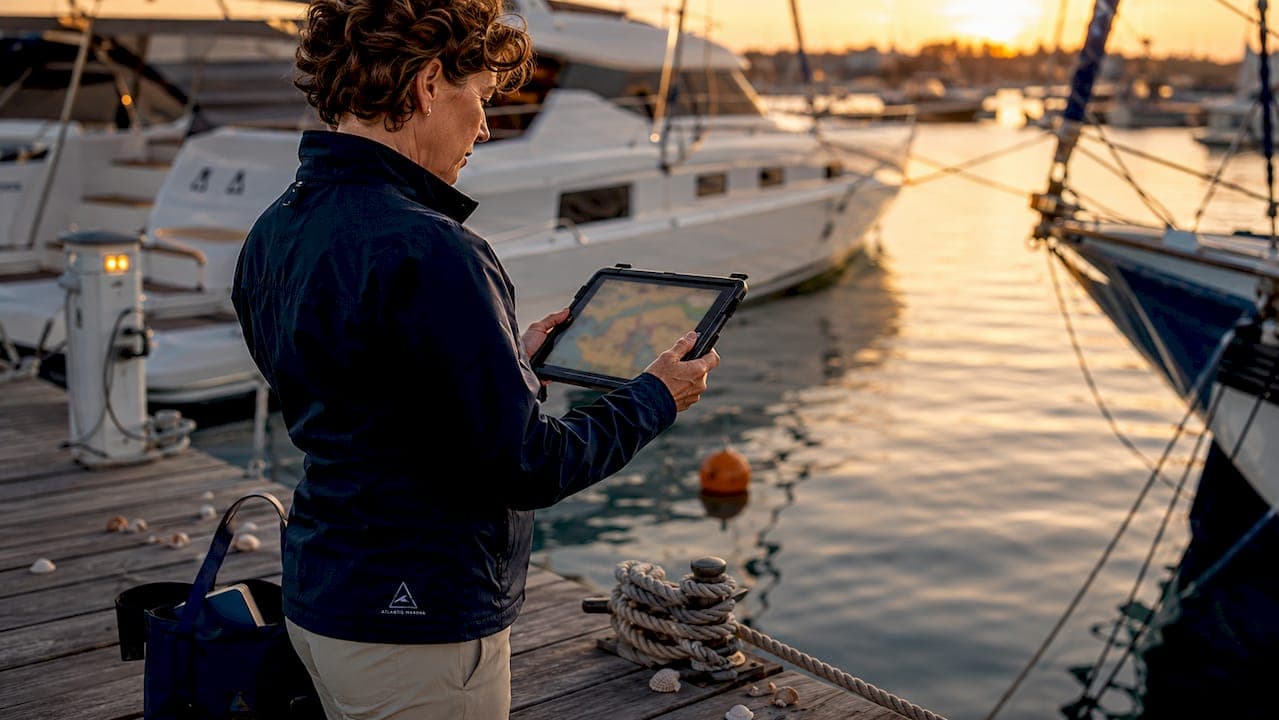
DockMaster Mobile management is defined as a cloud-connected field operations platform that gives marina staff real-time access to slip assignments, service requests, billing, and GPS-tracked labor data from any mobile device. The core dockmaster mobile management benefits are instant synchronization with DockMaster Desktop, role-based permissions, GPS clock-ins, and on-the-go access to every active workflow at your marina. Atlantis-marina builds its platform around these same principles, combining DockMaster-based tools with smart marina hardware to give operators a single, unified view of their entire waterfront. Understanding these benefits is the first step toward replacing fragmented, paper-based workflows with a system that keeps your dock team coordinated and your boaters satisfied.
1. dockmaster mobile management benefits at a glance
Mobile dock management delivers four core advantages: real-time data access, automatic synchronization, GPS-verified labor tracking, and controlled permissions by role. Updates made on mobile devices immediately reflect on DockMaster Desktop, so there is never a version mismatch between the field and the office. That single fact eliminates the most common source of operational errors at busy marinas: staff acting on outdated information. Role-based permissions add a security layer that paper logbooks and shared spreadsheets cannot match, restricting sensitive billing or tenant data to authorized users only.
2. how mobile management improves operational efficiency
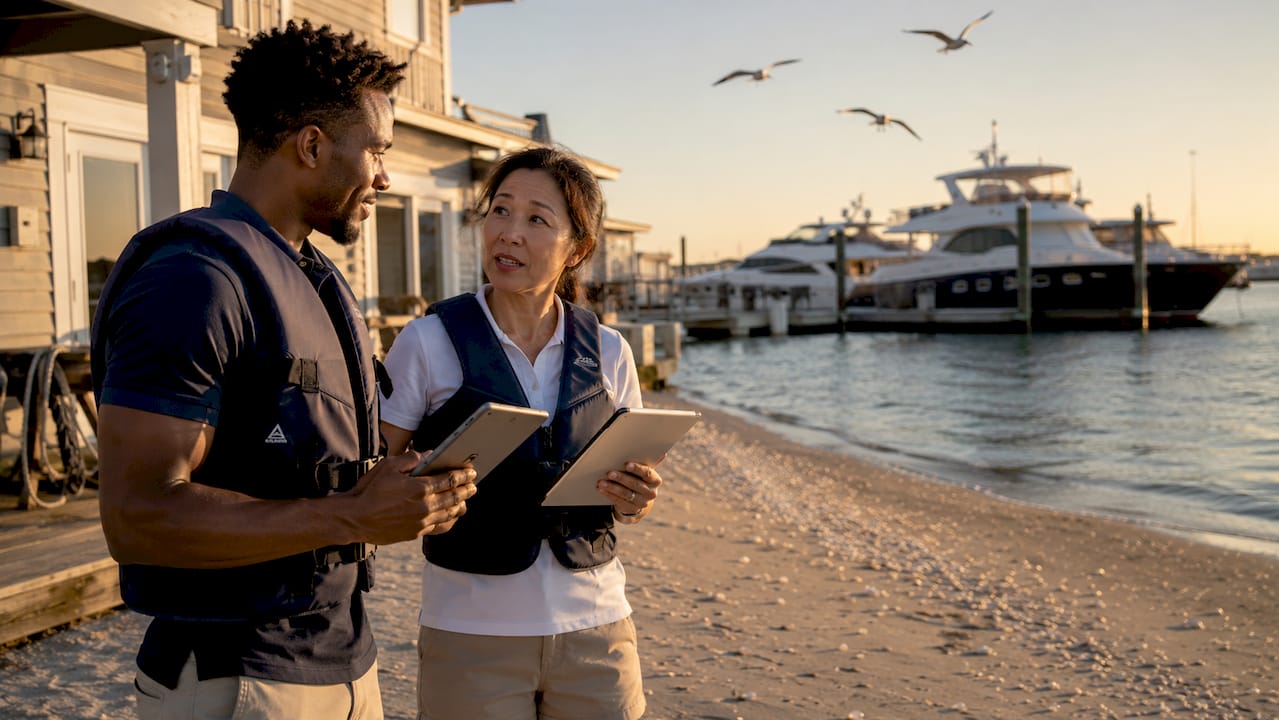
Operational efficiency in a marina depends on how fast accurate information reaches the right person. A centralized mobile platform solves this by replacing radio calls, paper forms, and manual check-ins with a live digital feed.
Key efficiency gains include:
- Centralized dock visibility: Dockmasters see arrivals, slip assignments, and open service requests from one interface, reducing the need for physical walkthroughs.
- Automatic data entry: Electronic time tracking updates labor records automatically, cutting administrative overhead and data entry errors.
- GPS clock-ins: Staff clock in at specific slips or work areas via the mobile app. Supervisors see live locations and job statuses without leaving the office.
- Real-time notifications: Task alerts push directly to staff devices, so service delays are caught before they escalate into customer complaints.
A unified real-time view of dock occupancy and services reduces operational friction across the entire facility. That reduction is most visible during peak season, when simultaneous arrivals, departures, and service calls would otherwise overwhelm a manual dispatch system.
Pro Tip: Assign role-based permissions before your first busy weekend. Limiting access to billing and tenant records by staff role prevents accidental edits and keeps your audit trail clean.
3. how mobile tools improve the boater experience
Customer experience at a marina is a direct function of response speed and communication accuracy. Mobile management addresses both.
- Faster service resolution: Staff receive service requests on their devices the moment a boater submits them, cutting response time from hours to minutes.
- Accurate billing on the spot: Mobile billing access lets dockmasters confirm charges, apply credits, and process payments dockside without returning to the office.
- Transparent work order tracking: DockMaster Mobile supports capturing photos and voice notes for service documentation. Boaters receive clear records of what was done, which reduces callbacks and disputes.
- Reservation and slip access: Staff can pull up reservation details, vessel records, and slip maps from any device, giving boaters accurate answers on the spot rather than "let me check the office."
Digital documentation through photos and notes is a detail most marina operators overlook until a billing dispute arises. Having timestamped visual evidence of service work protects both the marina and the boater. Atlantis-marina's platform extends this capability with e-signature tools that close the documentation loop on work orders before the boater leaves the dock.
4. mobile vs. traditional dock management: a direct comparison
The gap between mobile management and traditional manual methods is not a matter of preference. It is a measurable difference in speed, accuracy, and accountability.
| Factor | Traditional Manual Methods | DockMaster Mobile Management |
|---|---|---|
| Data entry | Paper forms, manual transcription | Automatic sync to desktop in real time |
| Labor tracking | Paper timesheets, honor system | GPS clock-ins tied to specific slips |
| Communication | Radio, phone calls, walkthroughs | Push notifications to staff devices |
| Access control | Shared logbooks, no restrictions | Role-based permissions per user |
| Error rate | High due to manual transcription | Low due to automatic data updates |
| Billing accuracy | Reconciled after the fact | Updated and confirmed dockside |
| Documentation | Paper notes, no photos | Photos, voice notes, digital work orders |
Manual workflows create reconciliation burdens at month-end that mobile systems eliminate entirely. The comparison above shows that every category where traditional methods fall short maps directly to a feature in the mobile platform. Marinas still running paper-based systems are not just slower. They are carrying a structural disadvantage in accuracy and staff accountability that compounds over time.
5. GPS tracking and staff accountability
GPS-enabled tracking is one of the most operationally significant dockmaster app features, and it is also the most misunderstood. The data shows that framing matters.
"74.6% of workers who experienced disputes preferred GPS records for fairness and protection."
That figure reframes the conversation entirely. GPS tracking is not surveillance. It is a fairness tool that protects workers as much as it protects management. When a staff member clocks in at Slip 42 at 7:14 a.m. and the record is timestamped and location-verified, there is no room for a subjective dispute about whether the work was done.
DockMaster Mobile ties GPS clock-ins to specific slips or work areas, giving supervisors a live map of staff locations and job statuses without requiring physical inspections. This is particularly valuable at large marinas where a dockmaster cannot physically be in two places at once. Atlantis-marina pairs this capability with camera security integrations that add a visual layer to the location data, giving operators verifiable records for any incident review.
Pro Tip: Present GPS tracking to your dock team as a record that protects them from false complaints, not as a monitoring tool. Acceptance rates and morale improve significantly when the framing is mutual fairness.
6. offline capability and dockside reliability
Marina environments are not office environments. Cellular signal drops at the end of a long dock, and Wi-Fi does not reach the fuel pier. A mobile management platform that fails without connectivity is not a field tool. It is a liability.
DockMaster Mobile addresses this directly. The app supports offline clock-in queuing and automatic sync when connectivity returns, so staff can log work and capture service notes even in dead zones. The data uploads the moment the device reconnects. This design choice reflects a genuine understanding of marine operating conditions, where signal reliability is never guaranteed.
The practical implication is that your labor records and service logs remain complete regardless of where on the property the work happens. Marinas with long fuel docks, remote dry stack facilities, or multi-pier layouts benefit most from this feature. Incomplete records from connectivity gaps are a common audit problem for marinas that use general-purpose time tracking apps not built for waterfront conditions.
7. system integration across marina operations
The advantages of using DockMaster software multiply when the mobile app connects to the full suite of marina management modules. A single operational control layer is more valuable than any individual feature.
| Module | Mobile Integration Benefit |
|---|---|
| Reservations | Staff confirm slip availability and assignments from the dock |
| Billing & payments | Charges updated and processed dockside without office trips |
| Inventory | Parts and supplies logged at point of use during service calls |
| Access control | Permissions enforced at the user level across all devices |
| Financials | Real-time labor and service data feeds directly into reporting |
DockMaster integrates marina operations, sales, inventory, and financials into a unified system, with the mobile app serving as the field layer that keeps all modules current. API connectivity extends this to third-party tools, so marinas using external accounting platforms or customer communication systems can maintain data consistency without manual exports. The result is a marina that operates with fewer blind spots and faster response times, especially during peak seasons when every minute of coordination delay has a direct cost.
Key takeaways
Mobile dock management delivers its full value only when GPS tracking, offline capability, role-based permissions, and system-wide integration operate together as a single platform.
| Point | Details |
|---|---|
| Real-time sync eliminates errors | Mobile updates reflect instantly on DockMaster Desktop, removing version mismatches between field and office. |
| GPS tracking builds fairness | 74.6% of workers in disputes preferred GPS records, making location data a trust tool for both staff and management. |
| Offline capability is non-negotiable | Automatic sync on reconnect keeps labor and service records complete even in low-signal dock environments. |
| Integration multiplies value | Connecting mobile to reservations, billing, and inventory creates one operational layer with no data gaps. |
| Documentation protects everyone | Photos and voice notes on work orders reduce billing disputes and callbacks from boaters. |
Why mobile management is the defining shift in marina operations
I have spent years watching marina operators invest in software and then underuse it because the tools were not built for the physical reality of dock work. The office-centric model, where a dockmaster enters data after the fact, is the single biggest source of inaccuracy in marina records. The moment you move data capture to the point of work, everything downstream improves: billing accuracy, labor reporting, customer communication, and dispute resolution.
What surprises most operators when they first adopt a mobile platform is not the technology. It is the cultural shift. Staff who previously felt micromanaged by radio check-ins often respond better to GPS-verified clock-ins because the record is objective. There is no argument about whether someone was at Slip 18 at 9 a.m. The data says so, and it protects the worker as much as the manager.
The dockmaster cloud software advantages that matter most are not the flashy features. They are the quiet ones: offline sync, role-based access, automatic data updates. These are the features that prevent the 11 p.m. billing reconciliation and the Monday morning dispute about who did what on Saturday. If you are evaluating mobile dock management, start by auditing where your current system produces the most errors. The answer will tell you exactly which mobile features to prioritize first.
— John
See how Atlantis-marina puts these benefits to work
Atlantis-marina delivers a complete marina management platform built on DockMaster-based tools, with mobile access, GPS tracking, billing, reservations, and smart marina hardware connected in one place.
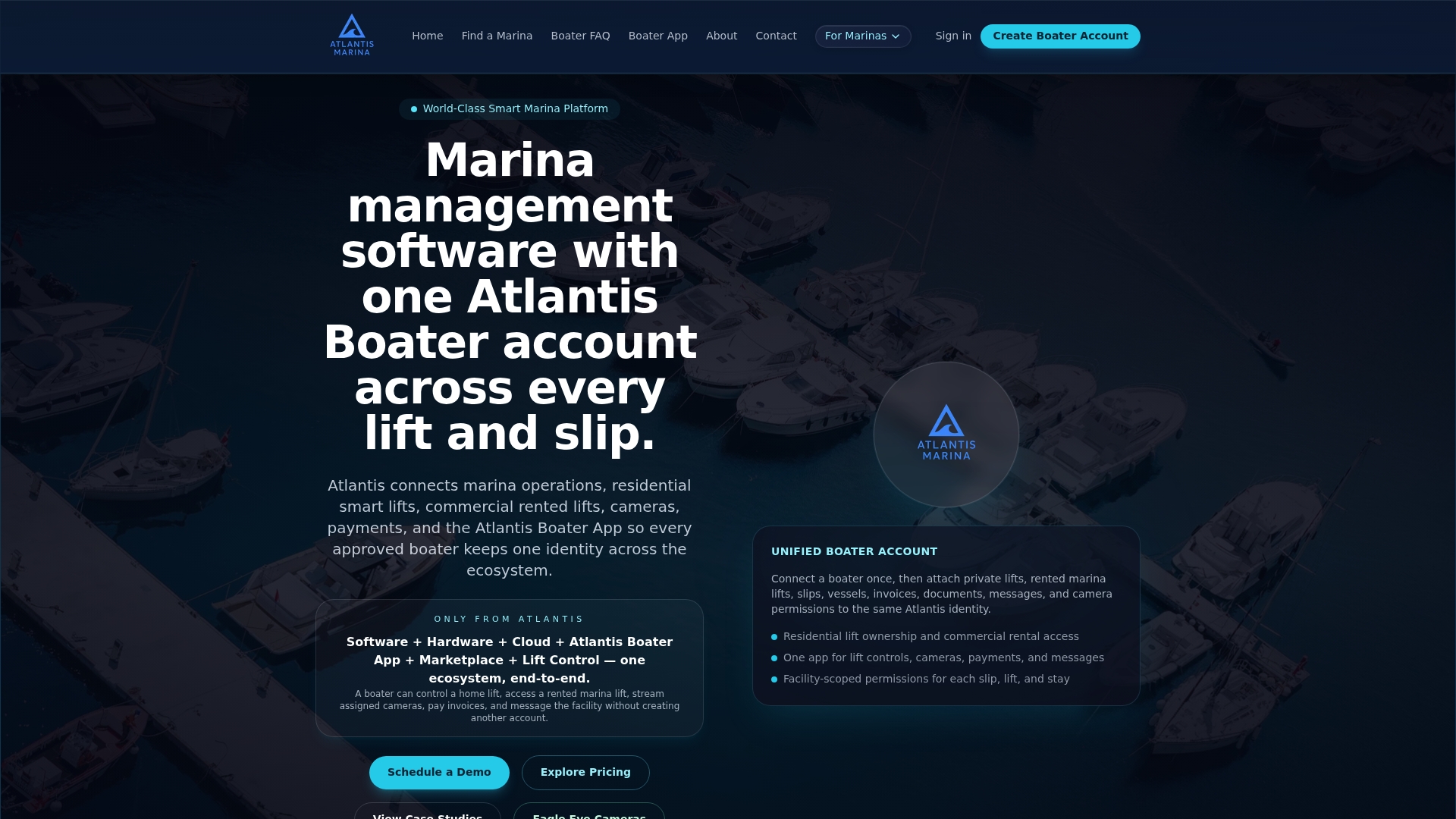
Whether you manage a private yacht club, a dry stack facility, or a multi-pier marina, Atlantis-marina gives your dock team the tools to work accurately from anywhere on the property. The platform scales from independent operators to enterprise marina groups without adding operational complexity. Explore the full marina management solution to see how mobile tools integrate with slip management, billing, and IoT hardware. Ready to see it in action? Review pricing and plans or request a demo directly from the software overview page.
FAQ
What are the core dockmaster mobile management benefits?
DockMaster Mobile delivers real-time sync with DockMaster Desktop, GPS-verified clock-ins, role-based permissions, and offline capability for dockside use. These features together reduce data errors, improve staff accountability, and speed up customer service.
How does mobile dock management work without internet access?
The app queues clock-ins and service updates locally when connectivity drops, then syncs automatically when the device reconnects. This design keeps labor records and work orders complete even in low-signal marina environments.
Does GPS tracking improve staff trust or reduce it?
GPS tracking improves trust when framed correctly. Research from the 2026 GPS Tracking & Employee Trust Report shows 74.6% of workers who experienced disputes preferred GPS records because the data protects them from false claims as much as it holds them accountable.
Can DockMaster mobile connect to other marina systems?
Yes. DockMaster integrates marina operations, sales, inventory, and financials into a unified system, with the mobile app feeding real-time field data into every connected module, including billing, reservations, and access control.
What makes mobile management better than paper-based workflows?
Mobile management eliminates manual transcription errors, provides GPS-verified labor records, and delivers real-time notifications to staff devices. Paper systems require after-the-fact reconciliation; mobile systems update records at the point of work.