
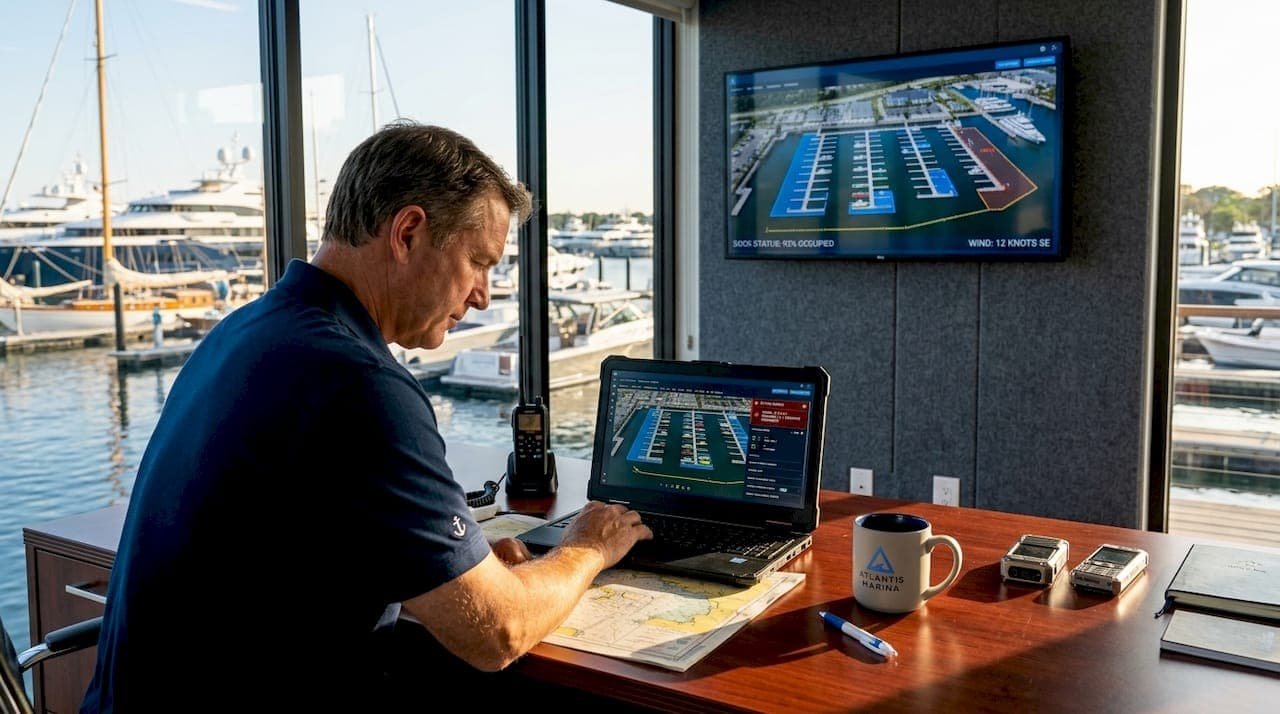
Smart marina mobile alert systems are sensor-driven notification platforms that push real-time warnings to marina operators and dockmasters via SMS, app notifications, and centralized dashboards. The core categories include event-driven sensor alerts, geofencing zone alarms, and AI-enhanced threat detection, each serving distinct operational and security functions. Systems like ARMIT Marine, The Marine Guardian, and DockSecure AI represent the current generation of purpose-built solutions that define how modern marinas respond to vessel emergencies, unauthorized access, and infrastructure failures. Understanding smart marina mobile alert system types is the first step toward selecting the right technology for your facility's specific risk profile and connectivity environment.
1. Event-driven sensor alerts for marina operations
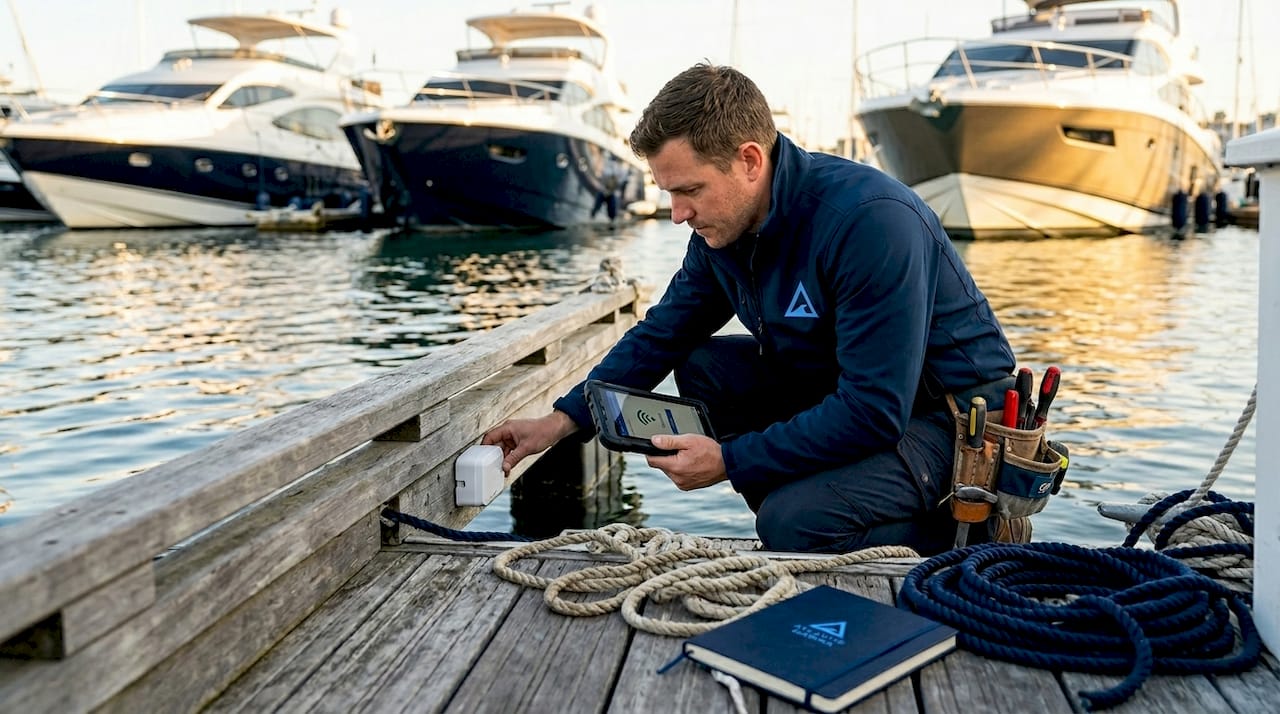
Event-driven sensor alerts are the foundational layer of any smart marina alert system. They work by monitoring discrete physical conditions on a vessel or dock and triggering an immediate notification the moment a sensor detects a state change. ARMIT Marine's sensors are designed for unattended operation, delivering alerts in milliseconds after detecting a critical event rather than batching data for later review. That speed is the difference between a manageable bilge pump situation and a sunken vessel.
The most common sensor-monitored conditions in marina environments include:
- Bilge water levels: Rising water triggers an alert before flooding becomes catastrophic.
- Shore power loss: Sensors detect disconnection or voltage drop, protecting refrigeration and battery systems aboard.
- Battery voltage: Low voltage alerts prevent dead starts and stranded vessels.
- Vessel movement and intrusion: Motion and door sensors flag unauthorized boarding or unexpected drift.
A critical design advantage in systems like ARMIT is network-independent operation. Their battery-powered sensors use a private maritime network rather than marina Wi-Fi, so alerts still reach operators even when dockside internet is down. For marinas with inconsistent connectivity, this is not a luxury feature. It is a baseline reliability requirement.
Pro Tip: Deploy bilge and shore power sensors first on every slip before adding motion or intrusion sensors. These two conditions account for the majority of vessel damage claims and deliver the fastest return on your monitoring investment.
2. Geofencing and zone-based mobile alerts
Geofencing-based alerts define virtual geographic boundaries around docks, slips, or protected water zones. When a vessel crosses a boundary, the system fires an immediate notification to designated recipients. The Marine Guardian implements geofence alerts with multi-recipient delivery and escalation pathways, meaning if the primary contact does not respond, the system automatically notifies a secondary contact via SMS or voice call.
The practical security application is straightforward. A marina can set a geofence around a private dock area so that any vessel entering after hours triggers an alert. A theft-fence configuration works in reverse: if a stored vessel leaves its assigned zone without authorization, the system alerts the operator immediately. This targeted approach produces far fewer false alarms than general motion detection, which can fire on wave action, wildlife, or dock workers during normal operations.
Key benefits of zone-based alert systems include:
- Contextual precision: Alerts fire only when a vessel crosses a defined boundary, not on every ambient movement.
- Scalable coverage: Operators can define multiple zones across a large marina with different alert rules for each.
- Escalation workflows: Multi-channel alert delivery via SMS, voice, and email ensures critical notifications reach a live person.
- Reduced alert fatigue: Operators trust geofence alerts more because they carry a clear, specific trigger context.
Geofencing works best when combined with event-driven sensors rather than replacing them. A vessel that triggers a geofence exit alert and simultaneously shows a bilge alarm gives the operator a complete picture of the situation before they even reach the dock.
3. AI-enhanced smart marina alert systems
AI-enhanced alert systems represent the most sophisticated category of marina mobile alert technology. Rather than simply detecting a state change, these systems apply anomaly detection and real-time video analytics to classify threats, filter noise, and deliver only the alerts that require human action. DockSecure AI combines configurable alert thresholds, AI anomaly detection, and integration with incident management platforms to give operators a structured, prioritized view of security events.
The operational benefit is significant. A standard motion sensor cannot distinguish between a boater returning to their vessel at midnight and an unauthorized intruder. An AI-enhanced system cross-references camera feeds, RFID or BLE access control data, and historical behavior patterns to make that distinction automatically. The result is fewer interruptions for routine activity and faster, more confident responses to genuine threats.
Key features of AI-enhanced marina alert systems include:
- Unauthorized access detection: Real-time identification of individuals who lack valid access credentials.
- Anomaly classification: The system learns normal patterns and flags deviations, such as a vessel running its engine at an unusual hour.
- Configurable thresholds: Operators set sensitivity levels to match their facility's specific risk tolerance.
- Incident management integration: Alerts feed directly into ticketing or response platforms for documented follow-through.
AI adoption in marina management now includes a 47% adoption rate of IoT sensors integrated with AI, reflecting how quickly this technology is moving from experimental to standard. That figure signals that marinas delaying AI integration are not holding a steady position. They are falling behind peers who are already reducing false alarm rates and improving response times.
Pro Tip: Before deploying AI-enhanced alerts, audit your existing camera placement. AI video analytics are only as effective as the camera angles feeding them. Poor coverage zones produce blind spots that undermine the entire threat classification model.
4. Comparison of mobile alert delivery methods
The delivery method for a marina alert determines whether an operator actually acts on it in time. Four primary delivery channels exist in current marina alert platforms: SMS text, mobile app push notifications, voice calls, and centralized dashboard alerts. Each carries distinct trade-offs in speed, reliability, and operator engagement.
| Delivery method | Speed | Reliability | Best use case |
|---|---|---|---|
| SMS text | Near-instant | High, no app required | Critical alerts to any phone |
| App push notification | Near-instant | Requires app and data connection | Operators with dedicated marina apps |
| Voice call | Seconds delay | Highest for urgent escalation | After-hours emergencies, unresponsive contacts |
| Dashboard alert | Real-time on screen | Requires active login | Monitoring multiple slips simultaneously |
Immediate alert delivery consistently outperforms delayed batch reporting in operator responsiveness. A dashboard alert that sits unread for 20 minutes while a bilge fills is operationally equivalent to no alert at all. SMS and push notifications solve this by reaching operators wherever they are, not just when they are logged into a management console.
Multi-channel delivery is the standard recommendation for marinas managing more than 20 slips. The Marine Guardian and ARMIT both support tiered delivery, where an initial SMS fires first, followed by a voice call if no acknowledgment is received within a defined window. This escalation model ensures that critical alerts reach a live person even during off-hours or staff transitions.
For smaller marinas with limited staff, SMS alone often provides sufficient coverage. For larger facilities or those with high-value vessels, combining app notifications with voice escalation and a centralized marina management dashboard gives operators the full situational picture without requiring constant manual monitoring.
5. How to choose the right alert system for your marina
Selecting the right mobile alert system starts with an honest assessment of your marina's infrastructure, connectivity, and primary risk exposures. The following framework gives operators a structured path from baseline monitoring to advanced automation.
- Audit your connectivity. Determine whether your docks have reliable Wi-Fi or cellular coverage. If connectivity is inconsistent, prioritize systems with network-independent sensors that operate on private maritime networks.
- Identify your critical conditions. Bilge flooding and shore power loss are the highest-priority sensor types for most marinas. Start there before adding motion, intrusion, or geofencing layers.
- Match delivery method to staff coverage. A single dockmaster on call overnight needs SMS and voice escalation. A staffed facility with a monitoring station benefits more from a centralized dashboard paired with push notifications.
- Evaluate AI features against your threat profile. AI-enhanced systems like DockSecure AI are most valuable for marinas with high-value vessels, frequent unauthorized access attempts, or limited staff bandwidth for manual monitoring.
- Plan for modular scaling. Industry guidance recommends starting with bilge and power monitoring, then adding geofencing and AI analytics as operational needs grow. Buying a fully integrated system upfront when you only need basic sensors creates unnecessary complexity and cost.
- Calculate ROI in concrete terms. One prevented sinking or theft event typically covers multiple years of sensor subscription costs. Frame the investment against the replacement value of the vessels you are protecting, not just the monthly software fee.
The most effective approach pairs sensor type selection with delivery channel configuration from the start. Systems that allow operators to customize which conditions trigger which delivery method, and to whom, produce the best long-term outcomes in both response time and alert relevance.
Key takeaways
Smart marina mobile alert systems deliver maximum operational value when sensor monitoring is paired with the right delivery channel for each condition's urgency level.
| Point | Details |
|---|---|
| Event-driven sensors are the foundation | Bilge, power, and intrusion sensors provide the most immediate protection for vessels and infrastructure. |
| Geofencing reduces false alarm fatigue | Zone-based alerts fire only on boundary breaches, giving operators higher-confidence notifications. |
| AI classification improves decision quality | AI-enhanced systems like DockSecure AI filter noise and deliver prioritized, context-rich alerts. |
| Delivery method determines response time | SMS and voice escalation outperform dashboard-only alerts for time-sensitive conditions. |
| Start modular, then scale | Deploy critical sensors first and add geofencing or AI features as your marina's needs expand. |
What I've learned from watching marinas adopt mobile alerts
The operators who get the most out of mobile alert systems are not the ones who deploy the most sensors. They are the ones who spend time configuring alert rules before the system goes live. I have seen marinas install 40 sensors across every slip and then disable half the alerts within 60 days because the volume was unmanageable. Alert fatigue is real, and it is self-inflicted when operators skip the configuration phase.
The shift toward AI-enhanced systems is genuinely meaningful, not just a marketing upgrade. When a system can tell the difference between a boater boarding their own vessel and an unauthorized person on the dock, the operator's trust in every alert goes up. That trust is what drives fast response times. A dockmaster who has been burned by too many false alarms will start ignoring notifications, and that is the worst possible outcome.
The trend I find most promising is the integration of mobile alerts into unified marina management platforms rather than standalone monitoring apps. When an alert fires and the operator can immediately pull up the vessel record, the slip assignment, and the owner's contact information from the same interface, the response is faster and more informed. Platforms like Atlantis-marina are building toward exactly that kind of connected operational picture, and it represents where the industry is heading. The marinas that adopt this model now will have a measurable operational advantage within two to three years.
— John
See how Atlantis-marina handles smart marina alerts
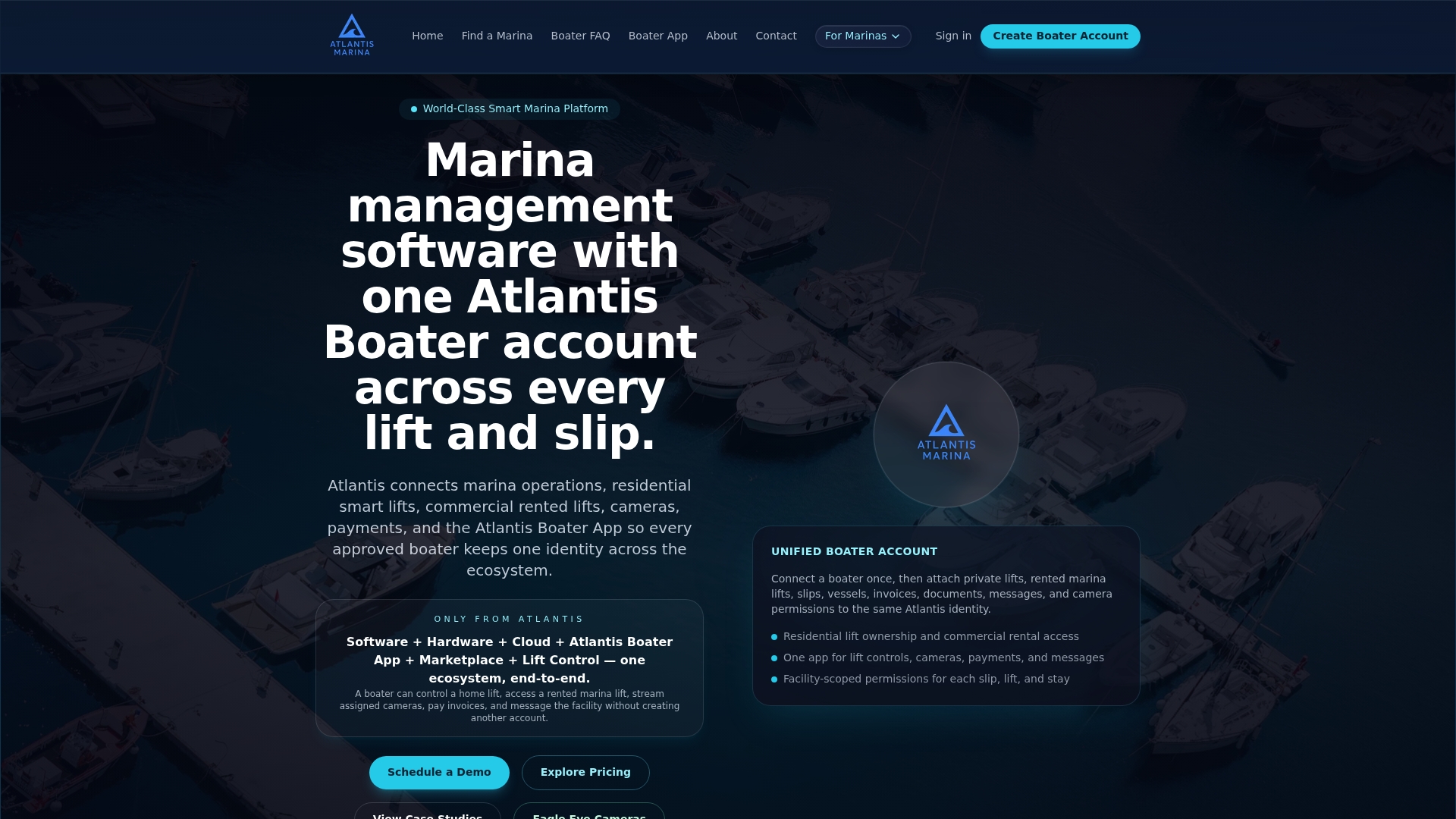
Atlantis-marina, developed by Atlantis Control Systems, brings mobile alert integration, sensor monitoring, and centralized operations into a single cloud-based platform built specifically for marina operators and dockmasters. The platform connects slip management, vessel records, and real-time notifications so that when an alert fires, your team has every piece of relevant information at hand without switching between systems. Whether you manage 15 slips or 150, the architecture scales to your facility. Explore the full feature set or schedule a walkthrough at the Atlantis-marina sales page to see how integrated mobile alerting fits into your current workflow.
FAQ
What are the main types of smart marina mobile alert systems?
The primary types are event-driven sensor alerts, geofencing zone alarms, and AI-enhanced threat detection systems. Each type differs in how it generates alerts and which operational conditions it monitors.
How do event-driven sensor alerts work in a marina?
Sensors monitor conditions like bilge water, shore power, and battery voltage, then push an immediate notification via SMS or app the moment a threshold is crossed. Systems like ARMIT Marine deliver these alerts in milliseconds after a sensor state change.
What is geofencing in marina security?
Geofencing creates a virtual boundary around a dock or water zone. When a vessel enters or exits that boundary without authorization, the system fires an alert to designated contacts, with escalation to voice calls if no response is received.
Do marina alert systems work without Wi-Fi?
Yes. Systems like ARMIT Marine use battery-powered, network-independent sensors that operate on a private maritime network, delivering alerts even when dockside internet is unavailable.
When should a marina invest in AI-enhanced alerts?
AI-enhanced systems are the right fit when a marina has high-value vessels, frequent unauthorized access incidents, or limited staff capacity for manual monitoring. They reduce false positives and integrate with incident management platforms for structured response workflows.