
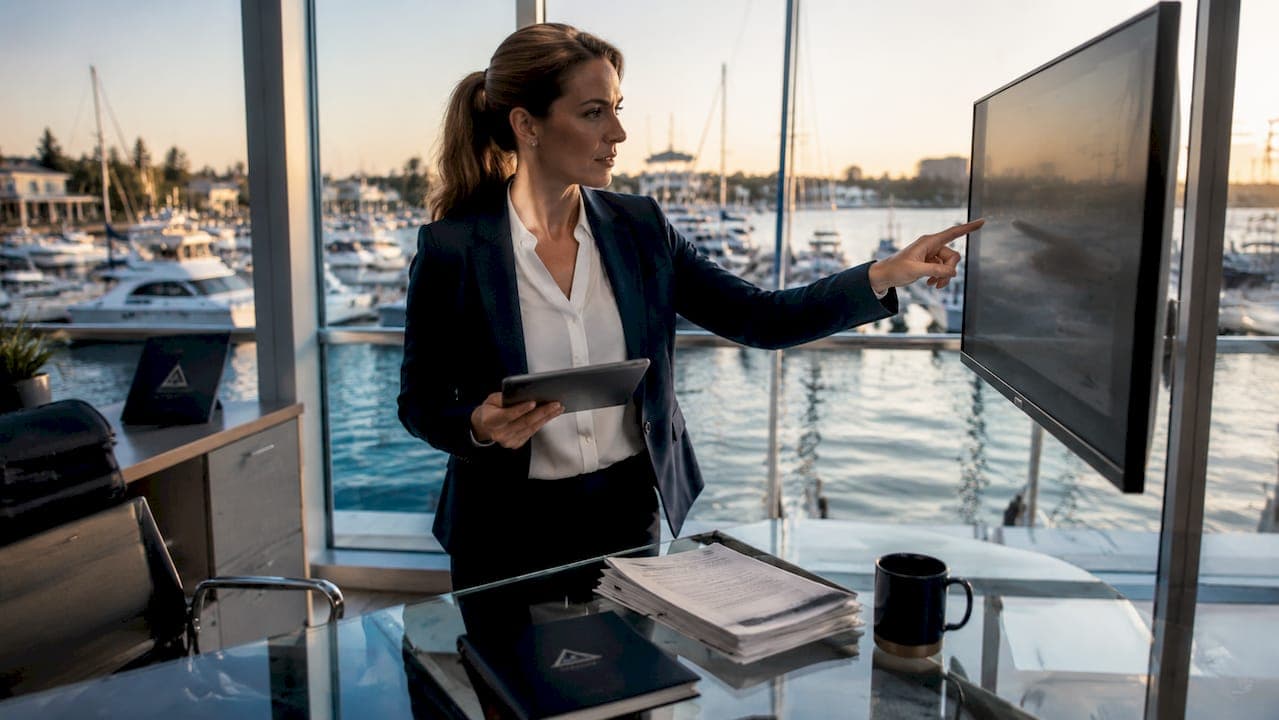
A smart marina is a digitally integrated, sensor-enabled waterfront facility that uses connected technology to automate berth management, utility monitoring, security, and customer services. The industry term most commonly used is “connected marina” or “smart marina,” and both refer to the same core concept: replacing manual, fragmented workflows with unified digital systems. Operators at facilities like Safe Harbor Marinas and MDL Marinas have moved in this direction because the operational gains are concrete and measurable. Platforms such as MarinaOne and Parkinto Marina demonstrate what this looks like in practice. For marina operators and waterfront facility managers, understanding what makes a marina smart is the first step toward modernizing how your facility runs.
What is a smart marina and how does it work?
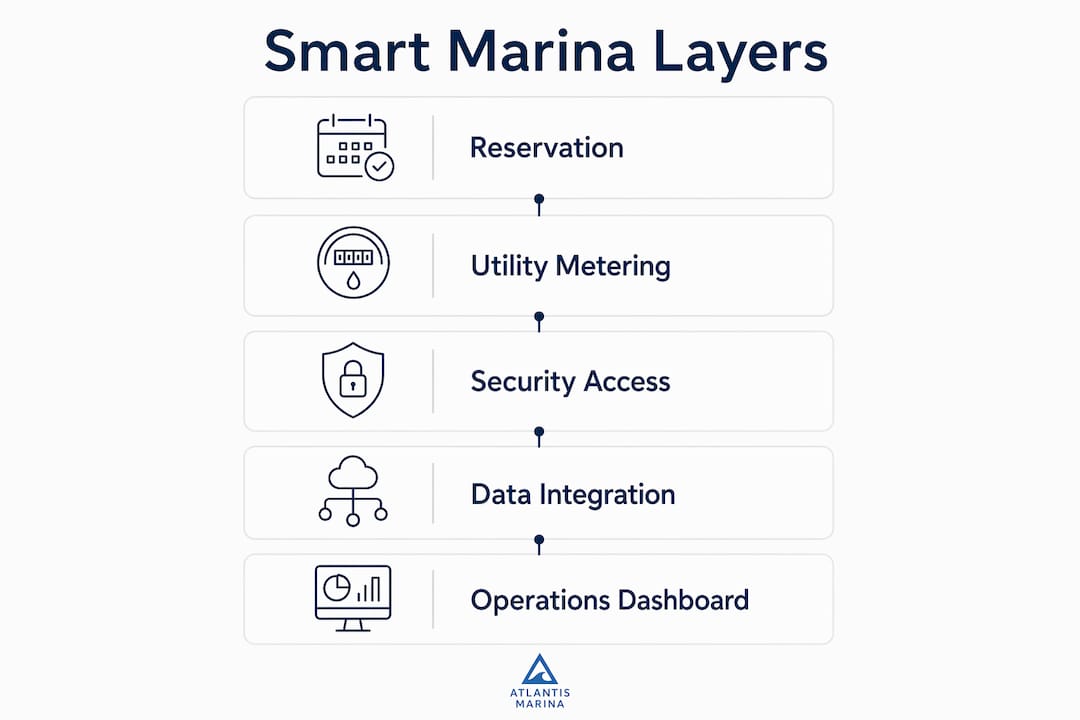
A smart marina is defined by the integration of software, sensors, and connected hardware into a single operational system. Each component, from berth reservations to utility metering to gate access, feeds data into a central platform that staff can monitor and act on in real time. The result is a facility that responds to conditions automatically rather than waiting for a staff member to notice a problem or process a request manually.
Centralized berth reservation software is the most visible layer of smart marina technology. Online booking portals integrated with dashboards give staff real-time berth capacity and arrival data, eliminating the whiteboard and phone-tag workflows that still define many smaller marinas. Boaters can reserve a slip, submit vessel documents, and pay before they arrive.
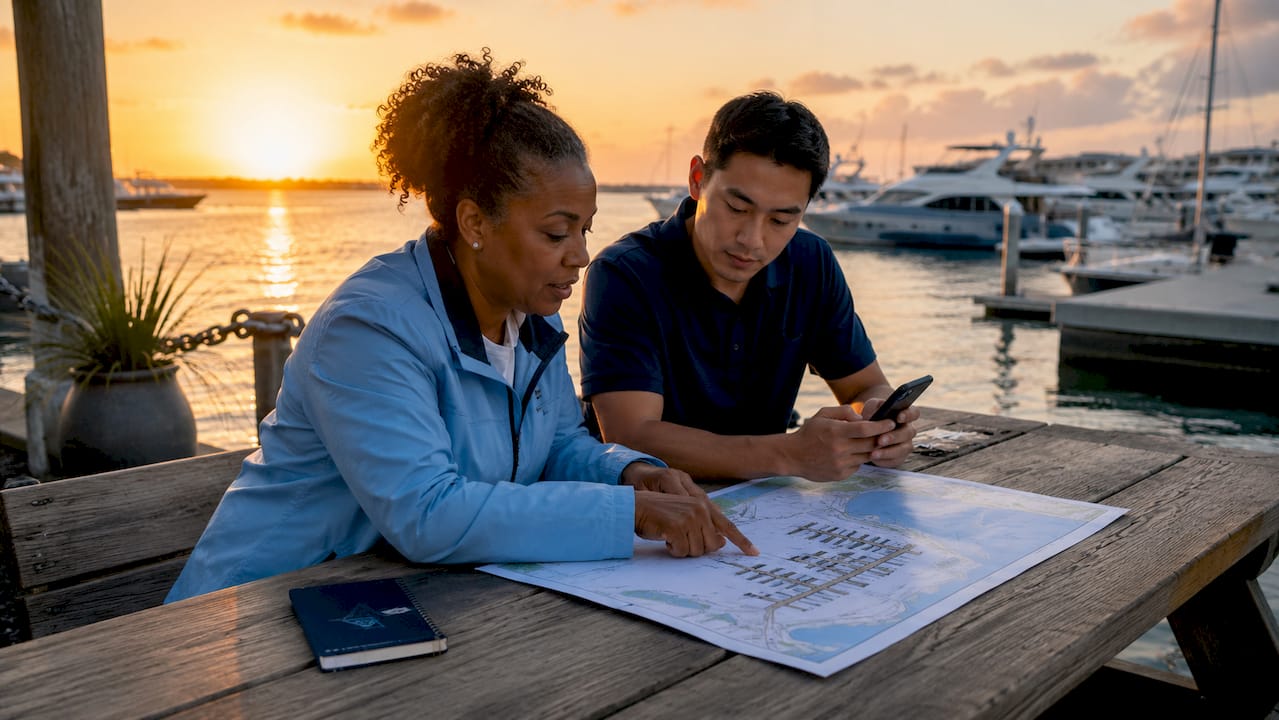
Utility metering is the second critical layer. Smart pedestal metering systems allow boaters to activate power and water at their berth using a QR code or mobile app, with consumption tracked automatically and billed based on actual usage. This removes the need for staff to read meters manually and eliminates billing disputes caused by estimated charges.
Security and access control form the third layer. App-based entry and real-time alerting paired with camera systems give operators remote visibility into dock gates and high-value areas. Incidents trigger immediate notifications rather than being discovered during a morning walkthrough.
The fourth layer is data integration. Cameras, booking systems, and weather inputs feed into a unified dashboard that updates berth availability dynamically and helps staff plan for arrivals, departures, and service needs. This is what separates a smart marina from a marina that simply uses one or two digital tools.
Pro Tip: Before evaluating any platform, map out your current data flows from reservation to billing to utility usage. The gaps in that map are exactly where smart marina technology delivers the fastest return.
Core technology components at a glance
-
Berth reservation software: Online booking with real-time availability, vessel records, and staff dashboards
-
Utility metering pedestals: QR code or app activation, per-berth consumption tracking, automated billing
-
Access control systems: Smartphone-based gate entry, camera integration, remote alerts
-
Operational data feeds: Weather data, AIS vessel tracking, camera inputs linked to availability and staffing decisions
-
Unified management platform: Single dashboard connecting reservations, utilities, security, and billing
How do smart marinas improve operations and customer experience?
The clearest benefit of smart marina technology is the reduction of manual administrative work. Staff who previously spent hours on meter reading, phone reservations, and manual billing can redirect that time to maintenance, customer service, and facility improvement. Automation with camera, booking, and weather inputs reduces staff workload while improving the accuracy of availability data.
For boaters, the experience improves at every touchpoint. Self-service check-in, digital utility activation, and online payment mean fewer interactions with a front desk and faster access to the water. Atlantis Marina’s 24/7 self check-in and automatic stay billing demonstrate that this level of automation is achievable without expensive dedicated hardware, using standard IP cameras for occupancy monitoring.
Revenue capture also improves. Automated billing based on actual utility consumption means marinas collect what they are owed without estimation errors. Digitalizing utility metering removes queuing and administrative workload by enabling customer self-service and transparent consumption tracking. Boaters trust the bill because they can see their usage in the app.
Security improvements are equally tangible. Unified access control, monitoring, and alerts in a single management view increase security effectiveness beyond what standalone gates and cameras can provide. An operator managing a 200-slip facility can monitor dock access from a tablet rather than relying on a night watchman.
Pro Tip: Track your billing dispute rate before and after implementing smart utility metering. Most operators see disputes drop significantly within the first billing cycle because boaters can verify their own consumption data.
Smart marina technology solutions: what to compare
Not all smart marina platforms deliver the same capabilities. The right choice depends on your facility size, existing infrastructure, and which operational problems cost you the most time and money.
| Feature | Cloud-based platforms | On-site software |
|---|---|---|
| Remote access | Full remote management | Limited to on-site terminals |
| Updates and maintenance | Automatic via vendor | Manual IT management required |
| Multi-location support | Built-in for enterprise operators | Typically single-site |
| Integration capability | API-based, connects to payment and utility systems | Often siloed |
| Upfront cost | Lower, subscription-based | Higher hardware and licensing costs |
| Data security | Vendor-managed with redundancy | Operator-managed |
MarinaOne unifies billing, payments, reservations, and service workflows into a single platform, reducing manual processes with integrated billing and real-time reservation updates. Parkinto Marina adds dynamic pricing and multi-marina management on top of occupancy monitoring. Smarter Technologies focuses on the utility metering layer with QR code activation and pre-paid or post-paid billing options.
When evaluating platforms, marina operators should prioritize these criteria:
-
Integration depth: Does the platform connect reservations, billing, utilities, and security, or does it handle only one function?
-
Hardware requirements: Some platforms require proprietary sensors; others work with standard IP cameras and existing pedestals.
-
Customer interface: Boaters expect a mobile-friendly experience. Platforms that offer app-based or QR code access reduce friction at check-in.
-
Scalability: If you manage multiple locations or plan to expand, multi-property support is a non-negotiable feature.
-
Pricing structure: Subscription models lower the barrier to entry, but total cost of ownership includes hardware, installation, and training.
Combining remote consumption visibility, automated billing, and customer self-service accelerates the payback on utility automation investments. The operational savings from eliminating manual meter reading alone often cover the platform subscription cost within the first year.
Best practices for implementing smart marina systems
Successful smart marina projects follow a consistent pattern. They start with operational data flows, not hardware purchases.
-
Map your current workflows first. Document how reservations, utility billing, and security incidents are handled today. Identify where data is lost, delayed, or duplicated.
-
Prioritize integration over features. A platform that connects reservations to billing to utility usage delivers more value than three separate tools with more individual features.
-
Phase your hardware rollout. Start with the software layer and add connected hardware, such as smart pedestals and access control systems, once the data flows are working correctly.
-
Train staff before launch. Digital tools only improve operations if staff use them consistently. Allocate training time before going live, not after.
-
Educate boaters on self-service tools. Post QR code instructions at pedestals, include app download links in reservation confirmation emails, and brief arriving guests on digital check-in.
-
Monitor and adjust. Use the analytics built into your platform to track occupancy rates, billing accuracy, and service request volume. Adjust workflows based on what the data shows.
Smart marina implementations succeed when designed around data flows linking reservations, real-time availability, utility usage, and billing, rather than deploying isolated hardware. This approach ensures system reliability and prevents the siloed-tool problem that undermines many first-generation smart marina projects.
Pro Tip: Assign one staff member as the platform administrator during the first 90 days. Having a single point of accountability for data quality and workflow adherence makes the difference between a smooth rollout and a system that gets abandoned.
Key Takeaways
A smart marina succeeds when reservations, utility billing, access control, and operational data connect through a single platform rather than operating as separate tools.
| Point | Details |
|---|---|
| Core definition | A smart marina integrates software, sensors, and connected hardware into one operational system. |
| Technology layers | Berth reservations, utility metering, access control, and data feeds must connect to deliver full value. |
| Operational benefit | Automation reduces manual tasks and improves billing accuracy, freeing staff for higher-value work. |
| Implementation priority | Design data flows first, then add hardware to avoid siloed systems that undermine efficiency. |
| Platform selection | Evaluate integration depth, hardware requirements, customer interface, and multi-location support before committing. |
The waterfront is changing faster than most operators realize
I have worked with marina operators at various stages of digital adoption, from facilities still running paper logbooks to those piloting AI-assisted berth allocation. The gap between those two groups is widening every year, and the operators who wait for the technology to mature further are already falling behind on customer expectations.
What I find most telling is where the resistance comes from. It is rarely about cost. The operators who hesitate most often cite complexity, specifically the fear that connected systems will break down and leave them worse off than before. That concern is legitimate, but it points to a vendor selection problem, not a technology problem. The platforms that succeed in real marina environments are the ones built around operational simplicity, not feature count.
The future of smart marinas will include AI-assisted demand forecasting, environmental monitoring for water quality and weather, and tighter integration between marina management and the broader boating ecosystem. But the foundation is the same today as it will be in five years: clean data flows connecting reservations, billing, and operations. Get that right first, and every future capability becomes easier to add.
— John
How Atlantis-marina supports your smart marina goals
Atlantis-marina, developed by Atlantis Control Systems, gives marina operators a single platform for slip reservations, utility billing, and connected marina infrastructure. The platform handles everything from online boater check-in and vessel document management to smart boat lift control and mobile alerts for dockmasters.
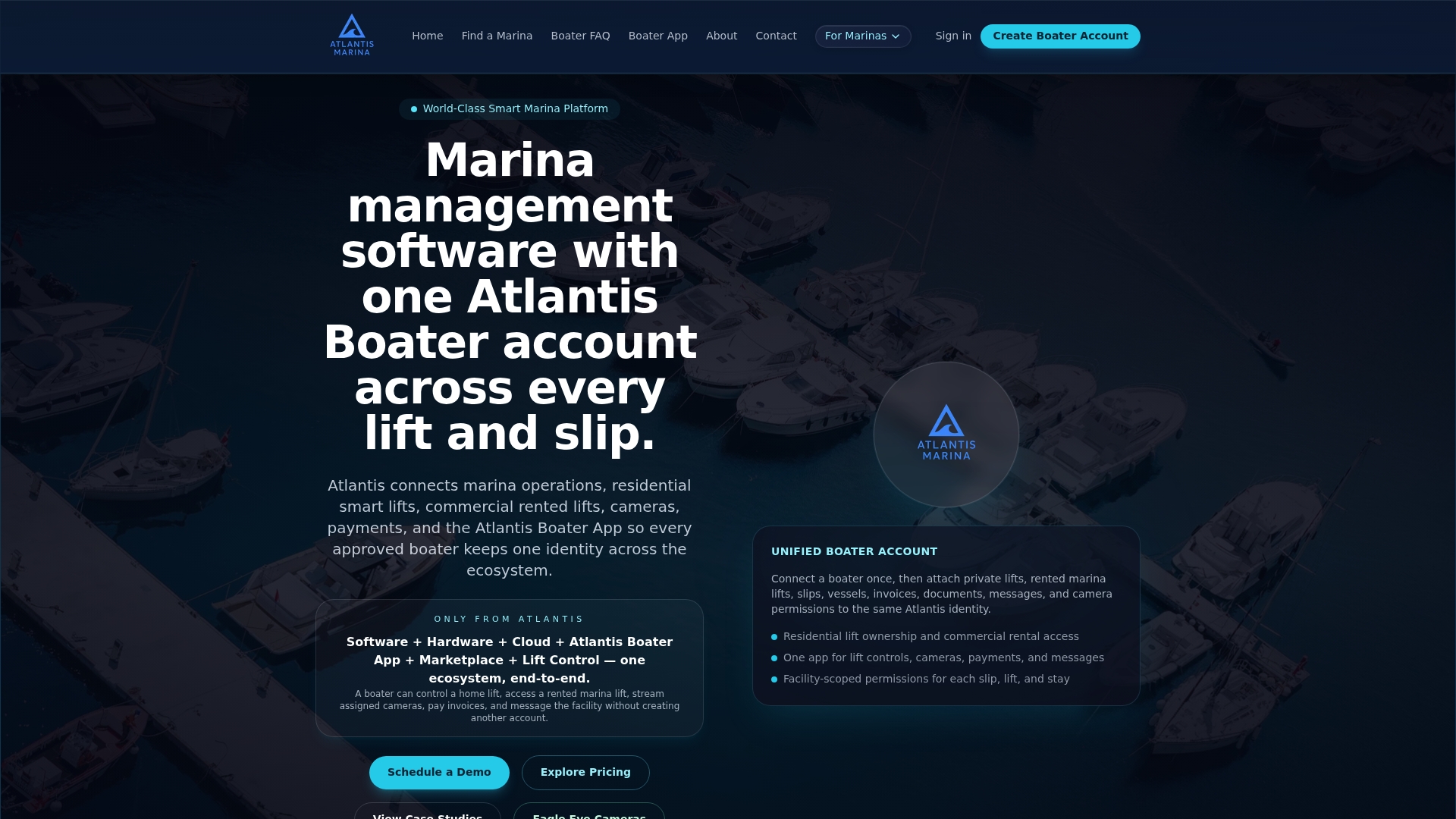
Operators managing smaller and mid-sized facilities get the same operational visibility as enterprise marinas, without the complexity of stitching together separate tools. Atlantis-marina connects your reservations, billing workflows, and IoT hardware into one cloud-based dashboard accessible from any device. If you are ready to move beyond fragmented systems, the Atlantis-marina management platform is built for exactly that transition.
FAQ
What is a smart marina in simple terms?
A smart marina is a waterfront facility that uses connected software and sensors to automate berth reservations, utility billing, and security. The goal is to replace manual workflows with real-time digital systems that improve efficiency for staff and boaters.
What technology does a smart marina use?
Smart marinas use centralized reservation software, connected utility metering pedestals, app-based access control, and integrated cameras. These systems feed data into a unified dashboard that operators monitor and manage remotely.
What are the main benefits of smart marinas for operators?
The primary benefits are reduced manual workload, more accurate utility billing, improved security visibility, and faster boater check-in. Operators also gain real-time occupancy data that supports better revenue management decisions.
How do smart marina utility metering systems work?
Boaters activate power and water at their berth using a QR code or mobile app, with consumption tracked per berth and billed automatically based on actual usage. This eliminates manual meter reading and reduces billing disputes.
How should a marina operator start implementing smart marina technology?
Start by mapping your current reservation, billing, and security workflows to identify gaps. Then select a platform that integrates those functions before adding connected hardware like smart pedestals or access control systems.