

AI-assisted marina operations is defined as the use of intelligent software platforms that process real-time data from cameras, berth sensors, and utility pedestals to automate and optimize marina management tasks. These systems handle berth allocation, billing, security monitoring, and customer communications with minimal manual input. The Marinas26 Conference identifies AI as critical for managing the growing data volumes that human teams alone cannot process. Atlantis Marina, built by Atlantis Control Systems, delivers this capability through a unified cloud platform connecting marina software, smart hardware, and AI assistance in one operating system.
What is AI-assisted marina operations and how does it work?
AI-assisted marina operations uses intelligent software to analyze live data streams and trigger automated actions across the facility. The core inputs are CCTV feeds, berth occupancy sensors, utility pedestal meters, and reservation records. The software processes these inputs continuously, then acts: it updates berth availability, adjusts billing, flags maintenance issues, and alerts staff to security events.
The precision of these systems is measurable. AI occupancy detection achieves 99.7% accuracy with berth status updates every 30 seconds. That level of accuracy eliminates the guesswork that causes double bookings and revenue leakage. Cloud-based platforms consolidate all of this into a single operations dashboard accessible from any device, giving operators a live picture of the entire facility without walking the docks.
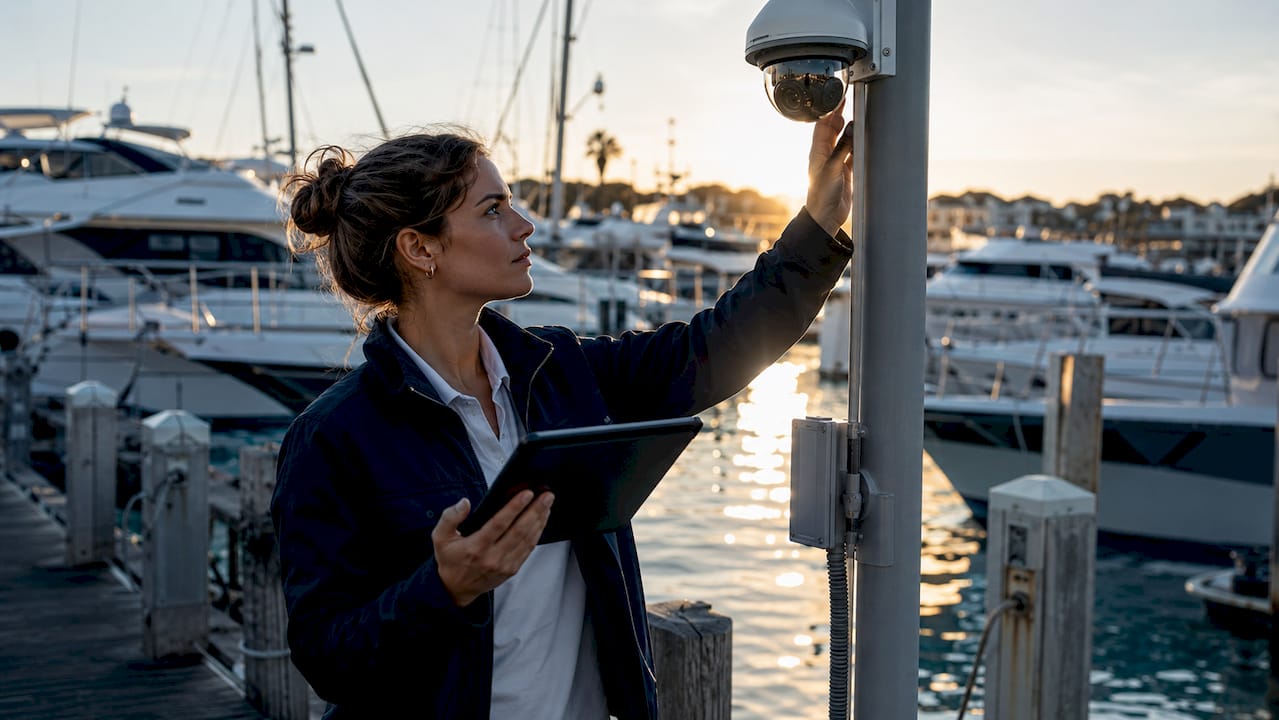
Modern AI tools function as a central nervous system for marinas, eliminating manual friction and driving sustainable revenue growth. Atlantis Marina reflects this architecture directly. Its platform connects slip assignments, dry stack queues, boat lift controls, billing, and customer accounts into one system. Atlantis Bot, the platform's built-in AI assistant, handles boater questions on marina websites and supports staff with reservation and billing tasks, with all actions confirmed by staff before execution.
How AI improves day-to-day marina management tasks
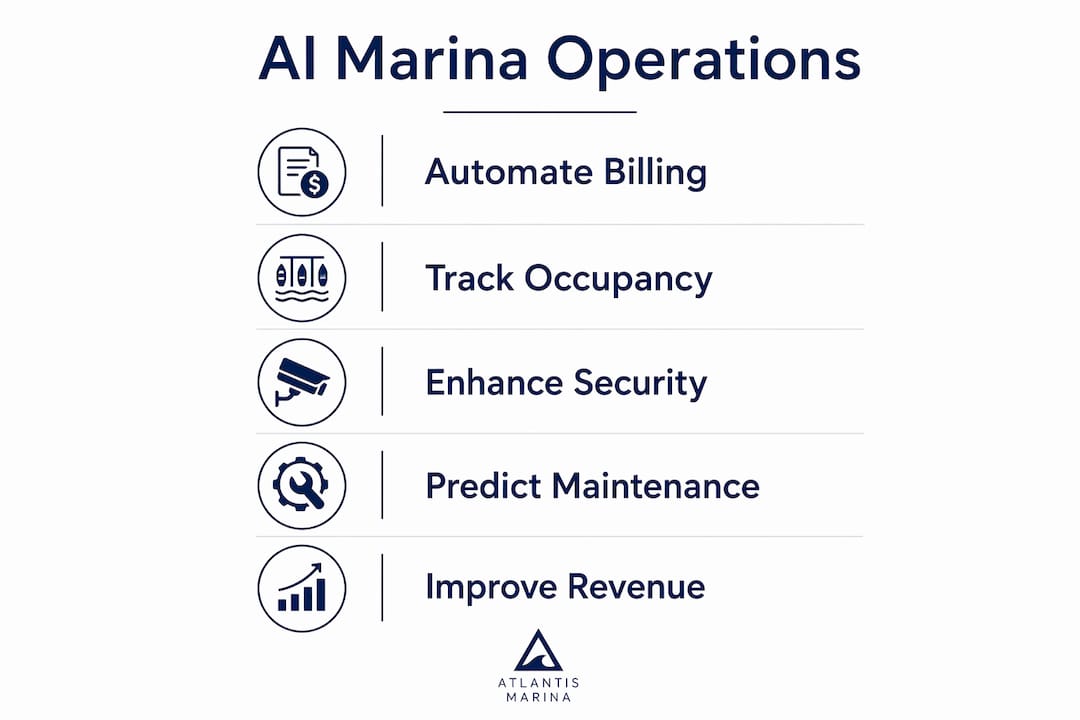
AI removes the manual steps that slow marina staff down and create errors. The biggest gains appear in four operational areas: berth management, reservations, billing, and utility monitoring.
- Berth occupancy and allocation. AI reads camera feeds and sensor data to detect vessel presence in real time. Staff no longer walk the docks to confirm availability. The system updates the facility map automatically and flags open slips for incoming reservations.
- Reservation management. Automated workflows handle booking requests, waitlist notifications, and check-in confirmations. Boaters receive SMS and email updates without staff sending a single message manually.
- Billing accuracy. AI calculates charges based on actual occupancy duration and utility consumption pulled directly from pedestal meters. Automated billing eliminates manual entry errors and ensures every billable hour is captured.
- Utility and infrastructure monitoring. Real-time monitoring of energy consumption and water usage detects anomalies before they become failures. Staff receive alerts when a pedestal shows abnormal draw, allowing a response before a boater reports a problem.
- Administrative workload reduction. Operators who move from paper-based records to cloud platforms report immediate efficiency gains, freeing staff to focus on customer experience rather than data entry.
Pro Tip: Start by automating billing and occupancy tracking before adding security or predictive maintenance features. These two areas deliver the fastest, most measurable return and build staff confidence in the system.
The cumulative effect is significant. Staff spend less time on administrative tasks and more time on direct customer interactions. Dockmasters using Atlantis Marina's platform manage reservations, vessel records, documents, and billing from one screen, replacing clipboards and spreadsheets with a single connected workflow.
How does AI strengthen marina security and safety?
AI-powered surveillance changes marina security from reactive to proactive. The system analyzes camera feeds continuously, not just when a staff member is watching a monitor. When it detects unusual movement, an unauthorized vessel, or an access violation, it sends an automated alert immediately.
- Continuous surveillance analysis. AI reviews CCTV footage in real time and flags anomalies such as unauthorized dock access or unattended vessels in restricted zones. Staff receive mobile alerts and can view the relevant camera feed instantly.
- Environmental risk monitoring. IoT sensors detect water ingress, power outages, and abnormal utility readings. Predictive analytics combined with sensor data enables centralized monitoring of energy, water levels, and security events from one dashboard.
- Predictive maintenance. AI analyzes sensor readings and inspection logs to identify equipment showing early signs of failure. Addressing a failing pump or lift motor before it breaks protects both assets and boater safety.
- Faster incident response. Automated alerts cut the time between an event occurring and staff responding. A water ingress alert at 2:00 AM reaches the dockmaster's phone immediately rather than waiting for a morning walkthrough.
- Centralized monitoring dashboard. All security feeds, sensor alerts, and maintenance flags appear in one view. Operators managing multiple properties can monitor every facility from a single screen without being on-site.
Pro Tip: Camera placement quality determines AI detection accuracy more than camera count. Position cameras to cover slip entrances and dock access points clearly. Repurposed standard IP cameras work reliably for AI-based boat detection without requiring specialized sensor hardware.
Atlantis Marina supports smart boat lift controllers, sensor integrations, and camera security workflows within the same platform. Smart lift control connects physical infrastructure to the operations dashboard, so lift status, access events, and alerts appear alongside reservations and billing in one place.
What does implementing AI-assisted operations actually require?
Implementation is more straightforward than most marina operators expect. The foundation is a cloud-based platform that integrates with existing hardware rather than replacing it.
- Camera infrastructure. Standard IP cameras already installed at most marinas are sufficient for AI occupancy detection. Repurposing existing cameras for AI analysis avoids the cost of specialized sensor hardware and speeds up deployment.
- Utility pedestal integration. Smart pedestals that report consumption data feed directly into automated billing. Marinas without metered pedestals should prioritize this upgrade first, as it enables precise billing and utility monitoring simultaneously.
- Cloud platform setup. A cloud-hosted system requires no on-site servers. Configuration covers facility mapping, slip assignments, rate structures, and user accounts. Most platforms complete this setup within days, not months.
- Staff training. The learning curve is shorter than operators anticipate. Staff who previously managed paper records adapt quickly when the system handles the repetitive steps automatically.
- Phased feature adoption. Starting with administrative automation, specifically billing, reservations, and document management, delivers quick operational wins within the first quarter. Security and predictive maintenance features layer on top once the core workflows are stable.
A common misconception is that AI adoption requires a dedicated data science team or custom software development. Existing data streams like maintenance logs and occupancy records can be used by AI platforms directly, without bespoke development. Atlantis Marina's platform is built for this reality. It connects existing infrastructure, automates core workflows through Atlantis Bot and Atlantis E-Sign, and scales from a single small marina to a multi-property group without requiring technical staff on-site.
| Implementation phase | Focus area | Expected outcome |
|---|---|---|
| Phase 1: Core admin | Billing, reservations, documents | Immediate workload reduction |
| Phase 2: Occupancy AI | Camera integration, berth mapping | Real-time availability accuracy |
| Phase 3: Security and monitoring | Sensor alerts, surveillance AI | Proactive safety management |
| Phase 4: Predictive analytics | Maintenance logs, usage data | Asset longevity and cost control |
How do you measure the ROI of AI in marina operations?
The financial case for AI in marina management is concrete. AI adoption increases revenue by up to 18% by reducing operational leakage and optimizing berth utilization. That figure reflects the combined effect of accurate billing, reduced vacancy, and dynamic pricing enabled by real-time occupancy data.
Key performance indicators to track include berth utilization rate, revenue leakage from unbilled occupancy, administrative cost per transaction, and customer satisfaction scores. Each of these metrics responds directly to AI-driven automation. Berth utilization improves because the system captures every occupied slip and makes vacancies visible instantly. Revenue leakage drops because billing is calculated from sensor data, not manual logs. Administrative costs fall because staff process more transactions in less time.
Predictive maintenance adds a longer-term financial benefit. Analyzing sensor and inspection data to catch equipment failures early extends asset life and prevents costly emergency repairs. Marinas that track maintenance costs before and after AI adoption consistently report lower unplanned repair expenses within the first year.
Customer retention is a less obvious but equally important metric. Boaters who can reserve slips online, sign contracts electronically, and receive automated updates return at higher rates. The Atlantis Boater App gives boaters a self-service experience that reduces inbound calls to staff while improving satisfaction. Platforms managing thousands of boaters demonstrate that reducing booking friction directly correlates with year-over-year revenue growth from repeat customers.
Key Takeaways
AI-assisted marina operations delivers measurable gains in revenue, safety, and efficiency when implemented with a phased approach that prioritizes administrative automation first.
| Point | Details |
|---|---|
| AI occupancy detection accuracy | Systems achieve 99.7% precision with berth updates every 30 seconds, eliminating manual dock walks. |
| Revenue impact | AI adoption increases marina revenue by up to 18% through reduced leakage and optimized berth utilization. |
| Implementation starting point | Begin with billing and reservation automation for the fastest ROI before adding security or predictive features. |
| Infrastructure requirements | Standard IP cameras and existing data streams are sufficient; specialized hardware is rarely necessary. |
| Customer experience gains | Self-service reservations, digital contracts, and automated updates improve boater retention and reduce staff call volume. |
The part of AI adoption nobody talks about honestly
I have spent years watching marina operators approach AI with two equally unhelpful attitudes: either they dismiss it as hype, or they expect it to solve every problem on day one. Neither position serves them well.
The operators who get real results do one thing differently. They pick one broken workflow, usually billing or occupancy tracking, and fix it completely before touching anything else. That first win does two things. It proves the system works in their specific environment, and it builds the internal confidence that makes every subsequent adoption easier.
The technology itself is mature enough. The practical AI applications discussed at industry conferences like Marinas26 are not experimental. They are running in real facilities right now. The gap is not technical. It is organizational. Staff need to trust the system before they will rely on it, and that trust comes from watching it work accurately on a task they previously did by hand.
My honest observation is that marinas underestimate how much value sits in their existing data. Maintenance logs, occupancy records, and billing history already contain the patterns that AI uses to predict failures and optimize pricing. The platform does not need new data. It needs access to what the marina already has. That realization changes the conversation from "can we afford AI" to "why are we leaving this data unused."
— John R
Atlantis Marina brings AI-powered operations to your waterfront
Atlantis Marina gives marina operators a single platform that connects AI assistance, automated billing, occupancy monitoring, and customer self-service in one cloud-based system.
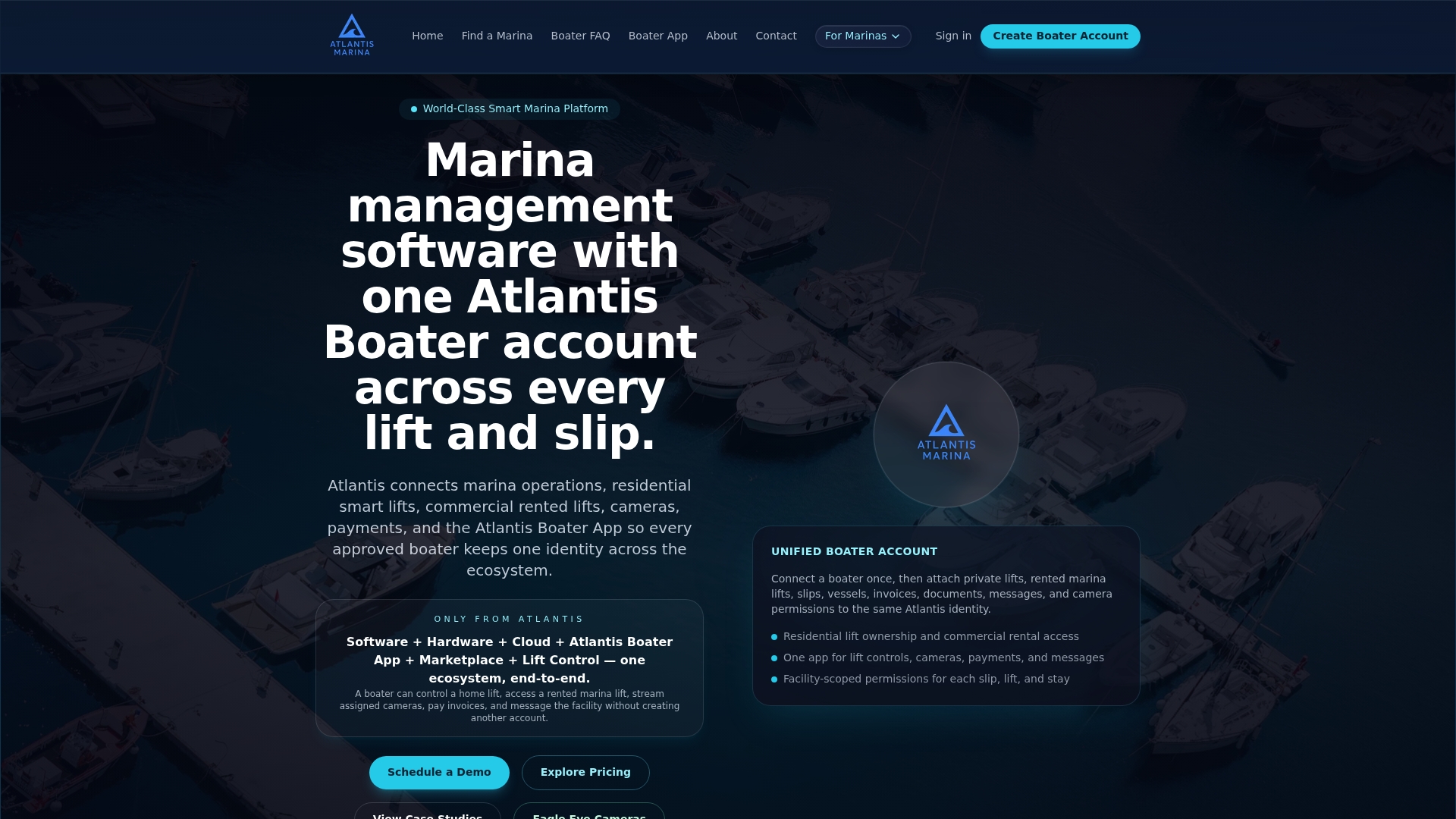
Atlantis Bot handles boater questions and staff workflows automatically. Marina reservations software manages slip requests, waitlists, and check-ins without manual coordination. Billing runs on autopay and Stripe with QuickBooks Online sync, so revenue is captured and recorded without manual entry. Smart boat lift control and sensor integrations connect physical infrastructure to the same dashboard your team already uses. Whether you operate a single marina or a multi-property group, Atlantis Marina's management platform is built to replace fragmented tools with one connected operating system that works from any device.
FAQ
What is AI-assisted marina operations?
AI-assisted marina operations is the use of intelligent software that processes real-time data from cameras, sensors, and utility systems to automate berth management, billing, security, and customer communications. The system reduces manual workload and improves decision accuracy across the facility.
How accurate is AI berth occupancy detection?
AI occupancy detection systems achieve 99.7% precision and update berth status every 30 seconds. This accuracy level eliminates double bookings and ensures billing reflects actual occupancy rather than estimated time.
What hardware does a marina need to implement AI operations?
Standard IP cameras and existing utility pedestals are sufficient for most AI implementations. Specialized sensor hardware is rarely required, as AI platforms are designed to work with infrastructure already installed at most marinas.
How does AI in marina management improve revenue?
AI increases marina revenue by up to 18% by capturing every billable occupancy period, reducing booking friction, and enabling dynamic pricing based on real-time availability data. Reduced administrative errors also prevent revenue from slipping through unbilled transactions.
How long does it take to see results from AI adoption?
Marinas that prioritize administrative automation, specifically billing adjustments and reservation workflows, report measurable productivity improvements within the first quarter of deployment. Security and predictive maintenance benefits follow as the system accumulates operational data.