
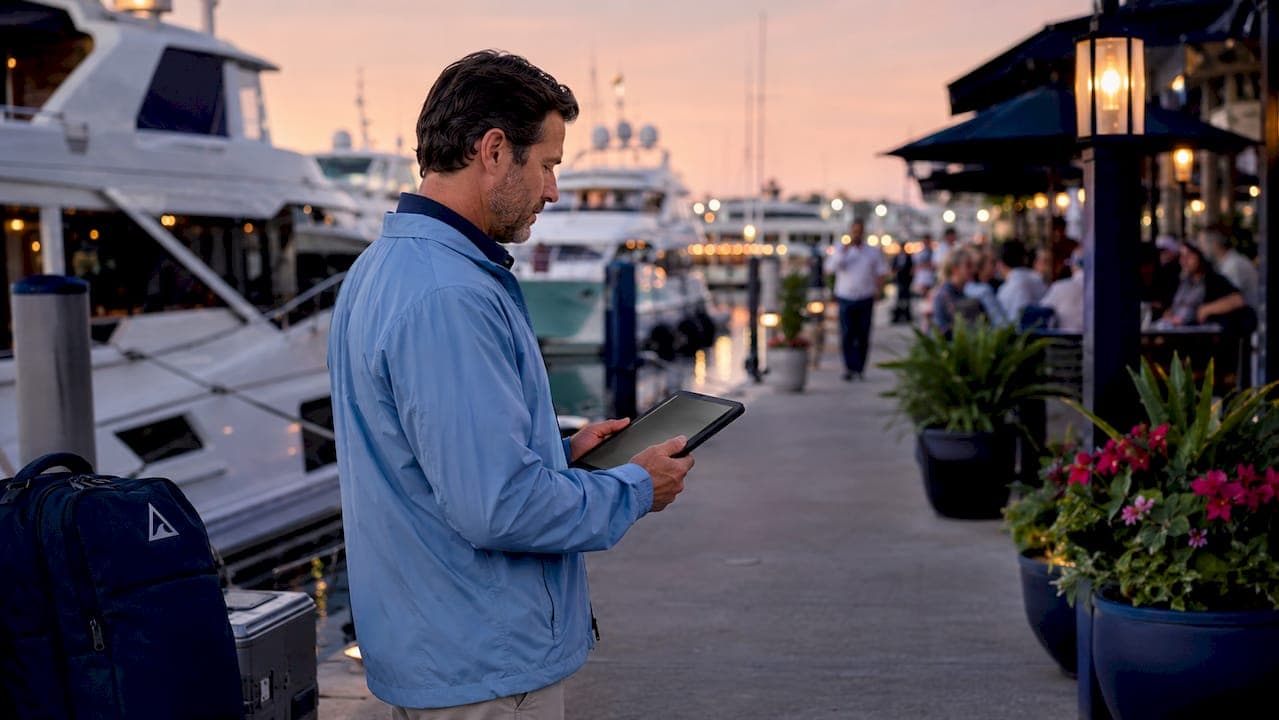
Mobile access in marina operations is defined as the use of smartphones, tablets, and mobile web applications by marina staff and operators to manage slips, reservations, billing, and guest communications directly from the dock. The role of mobile access in marina operations has shifted from a convenience feature to a core operational requirement. Marinas that still rely on office-bound desktop workflows face slower response times, longer guest wait times, and higher staff workloads. Platforms like DockMaster, Parkinto, and Atlantis-marina demonstrate that mobile management from the dock produces measurable gains in staff efficiency and guest satisfaction. This guide covers the practical applications, technical requirements, and platform options marina operators need to make informed decisions.
How does mobile access improve real-time marina operations?
Mobile accessibility in 2026 enables marina staff to manage reservations, update vessel and slip status, and respond to guests anywhere on site without returning to an office computer. That capability eliminates the single biggest bottleneck in traditional marina workflows: the round trip between the dock and the front desk. A dockmaster handling a late arrival no longer needs to walk back to a terminal to check availability or update a record. The response happens on the spot, in real time.
The operational gains from this shift are concrete and consistent across marina types:
- Slip status updates: Staff update occupancy in real time, so the availability display guests see online is always current.
- Vessel record access: Dockmasters pull up vessel dimensions, insurance status, and owner contact details from the dock before a boat ties up.
- Instant guest communication: Staff send arrival instructions, utility codes, or billing confirmations directly from a mobile device.
- Reservation management: New bookings, modifications, and cancellations are processed on the water, not queued for office hours.
- Maintenance tracking: Service requests are logged and assigned the moment an issue is spotted, reducing the lag between identification and resolution.
The cumulative effect is a faster, more responsive operation. Guests receive answers in seconds rather than minutes. Staff spend more time on the dock and less time at a desk. That reallocation of attention directly improves the quality of service guests experience.
Pro Tip: Integrate your mobile management tools with your existing marina management software from day one. A mobile app that operates as a standalone tool creates duplicate data entry and sync errors. Choose a platform where the mobile interface and the back-end system share a single database.
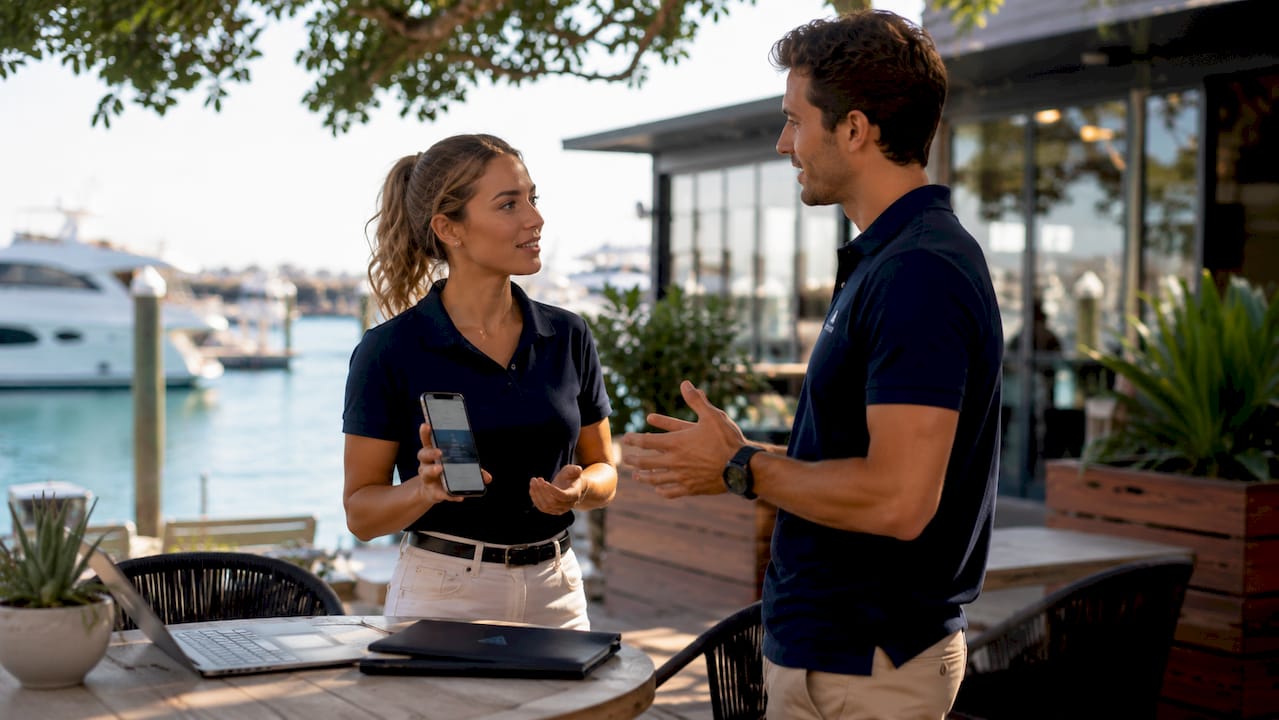
What mobile tools improve the guest check-in and payment experience?
Mobile check-in via QR codes enables skippers to complete arrival and departure in seconds without paperwork or front desk queues. That single change removes one of the most consistent friction points in marina guest experience. A boater arriving after hours, or during a busy summer weekend, no longer waits for a staff member to process their arrival manually.
The mobile check-in flow at a well-configured marina follows a clear sequence:
- Pre-arrival booking: The guest reserves a slip online through the marina's website or a dedicated boater app.
- Document submission: Insurance certificates and vessel registration are uploaded digitally before arrival.
- QR code delivery: The system sends a unique QR code to the guest's phone upon confirmed reservation.
- Dockside scan: The guest scans the code at the dock or slip entrance to confirm arrival and trigger check-in.
- Automated billing: Payment processes automatically via integrated card or QR payment systems, with a digital receipt sent instantly.
- Departure confirmation: The guest scans out at departure, triggering final billing reconciliation and slip release.
Integrated payment systems support multiple channels, including card, QR, and online payment, which reduces administrative errors and speeds transactions. The guest experience mirrors what boaters already expect from premium hotels and resorts. Guests expect frictionless, tech-enabled experiences, and marinas that deliver them see stronger loyalty and higher renewal rates.
Marina customer portals extend this further by enabling instant billing updates, service request submissions, and notifications through a mobile interface. Self-service check-in and payment automation reduce staff workload while giving guests more autonomy over their stay. The front desk handles exceptions, not routine transactions.
Why does offline capability matter for mobile marina software?
Intermittent connectivity is a structural reality at marinas, not an edge case. Storms, peak-season congestion, remote waterfront locations, and cloud service outages all create periods where a marina's internet connection is unreliable or absent. Mobile software that depends entirely on a live server connection fails exactly when operational pressure is highest.
Offline-first maritime software treats the local device as the source of truth. Data is stored on the device using local storage systems like IndexedDB, and changes are queued for synchronization when connectivity returns. This architecture differs fundamentally from "offline-capable" software, which still treats the server as the canonical data source and simply caches a read-only snapshot. The distinction matters when multiple staff members are editing records simultaneously during a disconnected period.
Key features of a reliable offline-first mobile marina solution include:
- Local data replication: Full or partial copies of reservations, slip assignments, and guest records are stored on the device.
- Conflict-aware sync: When two staff members edit the same record offline, the system applies defined rules to merge changes without data loss.
- Island mode operation: Local fallback servers redirect terminal traffic during cloud outages, keeping booking and check-in functional at the property level.
- Automatic reconnection: The app detects restored connectivity and syncs queued changes without staff intervention.
- Data integrity validation: Sync processes include checks to flag anomalies before writing changes to the central database.
Offline-first Progressive Web Apps have demonstrated 99.2% uptime over five years in maritime operations. That figure reflects the reliability advantage of local-first architecture over server-dependent designs. For a marina processing dozens of arrivals and departures daily, even a two-hour outage during peak check-in time creates significant operational disruption without offline capability.
Pro Tip: Before selecting a mobile marina platform, ask the vendor directly: "Is your app offline-first or offline-capable?" Offline-capable means the app caches data but still requires server confirmation for writes. Offline-first means the device operates independently. The difference determines whether your staff can process check-ins and payments during a connectivity gap.
Comparing mobile platforms for marina operators
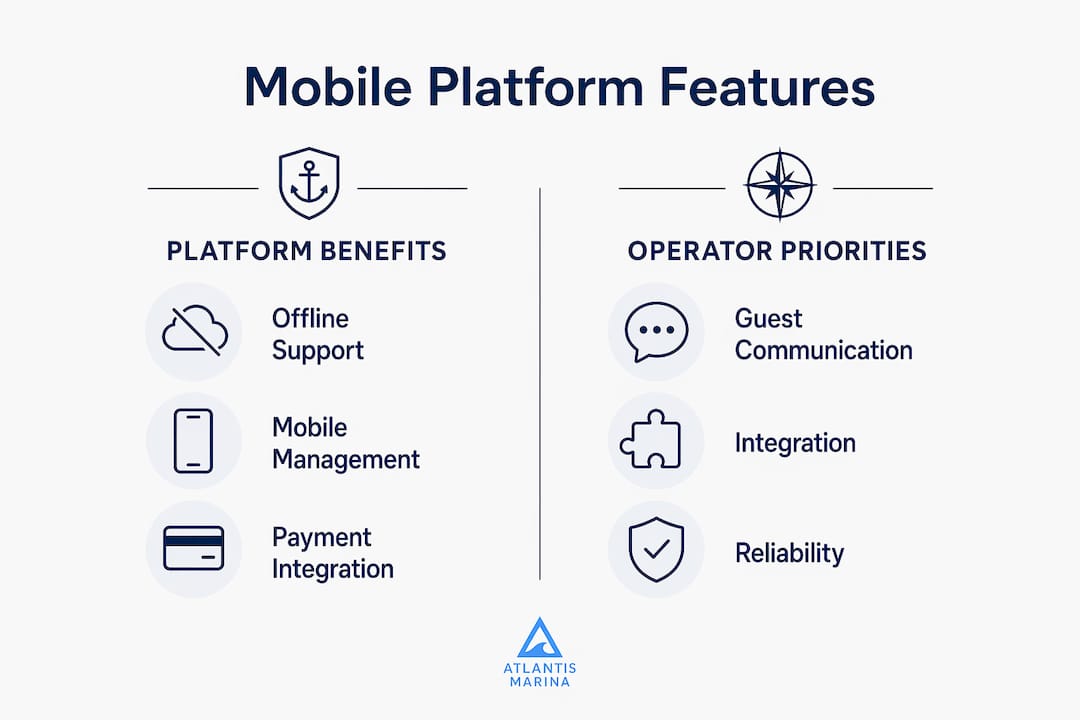
Marina operators evaluating mobile solutions face a market with meaningful differences in capability, architecture, and operational fit. The table below compares three platforms referenced across marina technology discussions.
| Platform | Mobile management | Offline support | Payment integration | Guest communication |
|---|---|---|---|---|
| DockMaster | Berth tracking, reservations, on-the-go control | Not publicly listed | Integrated billing | Notifications and messaging |
| Parkinto | Slip management, self-service booking | Not publicly listed | QR and card payments | Automated confirmations |
| Atlantis-marina | Slips, lifts, reservations, service requests | Cloud-based with mobile access | Recurring and utility billing | Portal, alerts, and direct messaging |
DockMaster provides mobile management benefits that include remote berth tracking and on-the-go operational control, making it a recognized option for operators focused on workflow flexibility. Parkinto's strength is its guest-facing self-service layer, particularly QR check-in and integrated payment channels that reduce front desk dependency. Atlantis-marina covers the broadest operational scope, connecting slip management, boat lift tracking, billing, reservations, and IoT device monitoring in a single cloud-based platform.
Operators should evaluate platforms against three criteria beyond the feature list. First, does the platform integrate with existing billing and communication tools, or does it require replacing them? Second, what is the vendor's support model for marina-specific workflows? Third, how does the platform handle connectivity gaps at the property level? A platform that scores well on features but lacks offline resilience creates operational risk during the periods when reliability matters most.
Customer communication tools integrated with mobile platforms reduce operational friction by enabling instant notifications, billing alerts, and service updates without staff manually reaching out. Technology in marinas automates routine tasks, freeing staff to deliver more personal hospitality and improving guest loyalty.
Key Takeaways
Mobile access is the single most direct lever marina operators have for improving both staff efficiency and guest experience simultaneously.
| Point | Details |
|---|---|
| Real-time dock management | Mobile access removes the office-to-dock round trip, cutting response times and improving slip accuracy. |
| QR-based guest check-in | Self-service check-in and payment automation reduce front desk congestion and speed guest arrivals. |
| Offline-first architecture | Choose platforms that store data locally and sync with conflict resolution to maintain operations during outages. |
| Platform selection criteria | Evaluate integration depth, offline capability, and marina-specific support before committing to a platform. |
| Staff reallocation benefit | Automating routine transactions frees staff to focus on direct guest service and complex operational tasks. |
What I've learned about mobile access after years at the waterfront
The most common mistake I see marina operators make is treating mobile access as a front-end upgrade rather than an operational infrastructure decision. They add a mobile app for guest check-in, see a short-term improvement in arrival times, and consider the project complete. The deeper opportunity is in what happens behind the scenes: slip data accuracy, billing reconciliation speed, and staff communication during high-pressure periods like holiday weekends or storm arrivals.
The second thing I've learned is that the human element does not disappear with mobile technology. It shifts. When staff are no longer tied to a front desk processing routine paperwork, they become available for the interactions that actually build loyalty: helping a first-time boater navigate a tight slip, resolving a billing question face to face, or simply being present and attentive on the dock. Technology in marinas automates the transactional so the relational can happen more consistently.
The technical nuance that most operators underestimate is offline resilience. I've watched marinas invest in mobile platforms that work beautifully in normal conditions and then fail completely during a summer storm when connectivity drops and 15 boats are trying to check in. Offline-first architecture is not a premium feature. It is a baseline requirement for any marina operating in a real waterfront environment.
The future direction is clear: AI-assisted operations, predictive occupancy management, and tighter integration between mobile software and physical marina infrastructure like smart boat lifts and sensor networks. Operators who build their mobile foundation correctly now will be positioned to add those capabilities without replacing their entire stack.
— John
Atlantis-marina's mobile platform for marina operators
Atlantis-marina brings together slip management, boat lift tracking, reservations, billing, and guest communications in one cloud-based platform built for mobile operation.
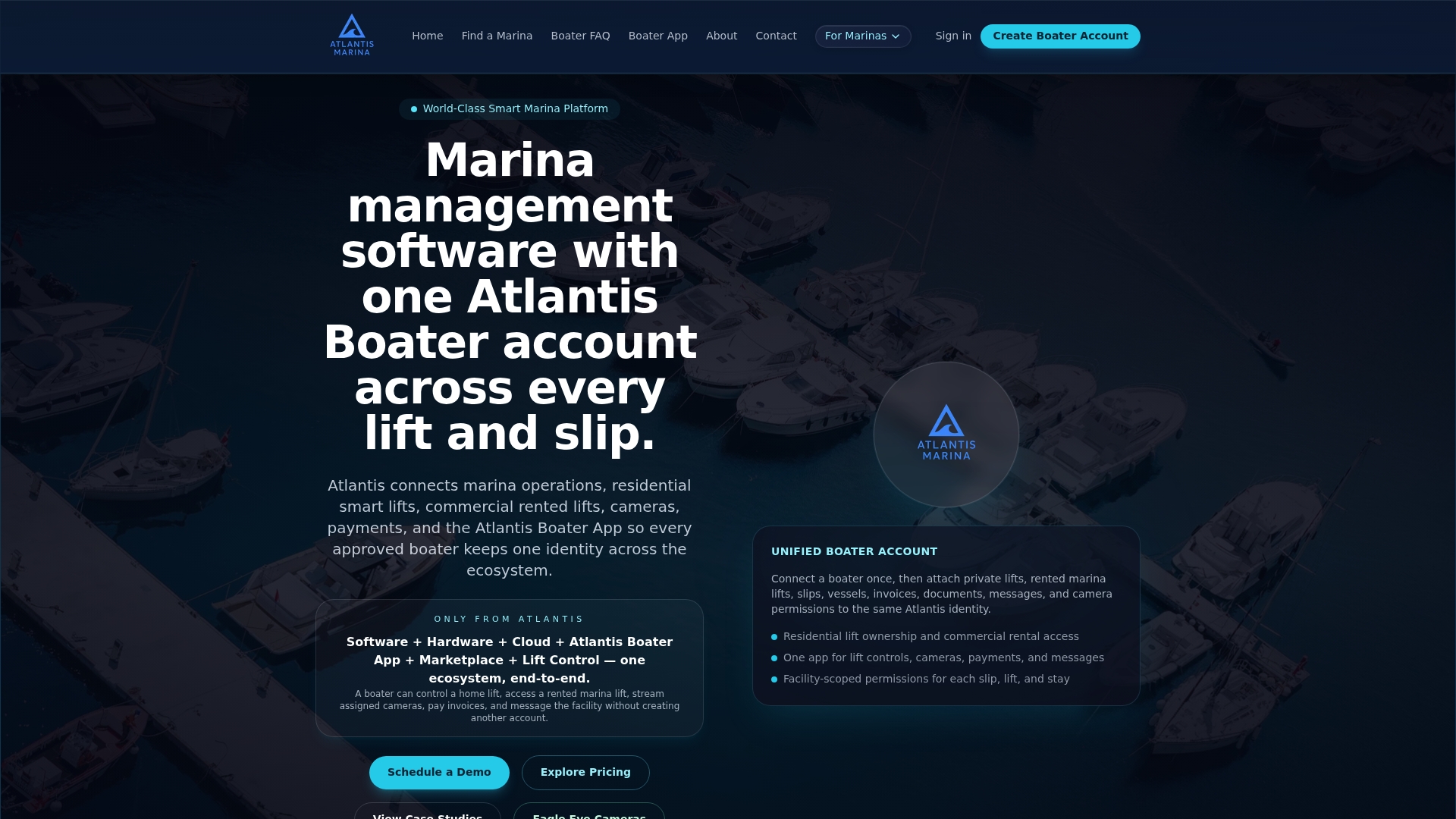
Marina operators managing everything from dry stack facilities to private yacht clubs use Atlantis-marina to process reservations, automate recurring billing, and communicate with guests from any device on the property. The platform's marina reservations software supports online booking and guest self-service, while the marina billing tools handle utility billing, invoicing, and payment processing without manual reconciliation. For operators ready to move beyond fragmented, office-bound workflows, the full platform overview is available at Atlantis-marina management software.
FAQ
What is the role of mobile access in marina operations?
Mobile access allows marina staff to manage reservations, update slip status, process payments, and communicate with guests directly from the dock without returning to an office. It is the primary tool for improving response times and reducing operational bottlenecks in modern marina management.
How does mobile check-in work at a marina?
Guests receive a QR code after booking, scan it at the dock to confirm arrival, and payment processes automatically through integrated card or QR payment systems. The process eliminates paperwork and front desk queues for both staff and guests.
Why do marina mobile apps need offline capability?
Marinas face intermittent connectivity due to storms, remote locations, and peak-season network congestion. Offline-first apps store data locally and sync when connectivity returns, maintaining check-in, billing, and slip management without interruption.
What should marina operators look for in a mobile management platform?
Operators should prioritize platforms that offer offline-first architecture, deep integration with billing and communication tools, and marina-specific support. Feature-rich platforms that lack offline resilience create operational risk during connectivity gaps.
How does mobile technology affect guest satisfaction at marinas?
Mobile tools reduce friction at every guest touchpoint, from booking and check-in to payments and service requests. Guests who experience fast, self-service arrivals and instant communication report higher satisfaction and stronger renewal intent.