
Boat arrival tracking software is a technology platform that enables marinas to monitor and manage vessel arrivals and dock occupancy in real time using AIS data, satellite tracking, and IoT sensor integration. The industry term for the broader category is marine vessel tracking, but marina-specific platforms go well beyond general ship tracking by connecting dock infrastructure, reservations, and billing into a single operational system. Platforms like Atlantis-marina, along with general AIS tools such as MarineTraffic and VesselFinder, represent the spectrum from broad vessel identification to full marina management. For dockmasters managing dozens of slips and transient boaters, the difference between a live dock map and a paper log is the difference between a smooth operation and a costly scheduling conflict.
What is boat arrival tracking software and how does it work?
Boat arrival tracking software combines terrestrial AIS receivers, satellite AIS networks, and dockside IoT sensors to generate continuously updated vessel positions and predictive estimated times of arrival. The Automatic Identification System (AIS) is a VHF radio-based transponder standard that broadcasts a vessel's identity, position, speed, and heading. Terrestrial AIS receivers cover coastal and harbor areas, while satellite AIS extends coverage to open water and remote regions where land-based receivers cannot reach.
The data volume involved is significant. Systems process over 188 million AIS data points per day to predict vessel movements accurately. That scale of data processing means predictive ETAs are not static estimates. They update continuously as a vessel's speed or heading changes, giving dockmasters a reliable picture of when a boat will actually arrive rather than when it was originally scheduled.
Beyond AIS, marina-specific platforms layer in IoT sensor data from the dock itself. IoT-integrated systems detect slip occupancy changes in real time and automatically notify dockmasters, reducing manual monitoring. Sensors can track whether a slip is occupied, whether a boat lift is in use, and whether utilities like shore power are active. All of these data streams feed into a unified dashboard that gives the dockmaster a live operational picture.
Pro Tip: When evaluating boat tracking software, confirm whether the platform uses satellite AIS in addition to terrestrial receivers. Terrestrial-only systems lose vessel visibility once a boat moves beyond coastal range, which matters for marinas that serve offshore cruisers.
Key data sources that power arrival tracking platforms include:
- Terrestrial AIS networks covering harbors and coastal zones
- Satellite AIS for global vessel coverage in open water
- IoT dock sensors measuring slip occupancy, lift status, and utility draw
- GPS transponders on individual vessels for precise position data
- Weather and current feeds used by advanced platforms for ETA refinement
What features differentiate boat arrival tracking software for marina management?
General vessel tracking apps show you where a boat is. Marina arrival tracking software tells you what to do about it. The distinction comes down to dock-level integration and workflow automation.
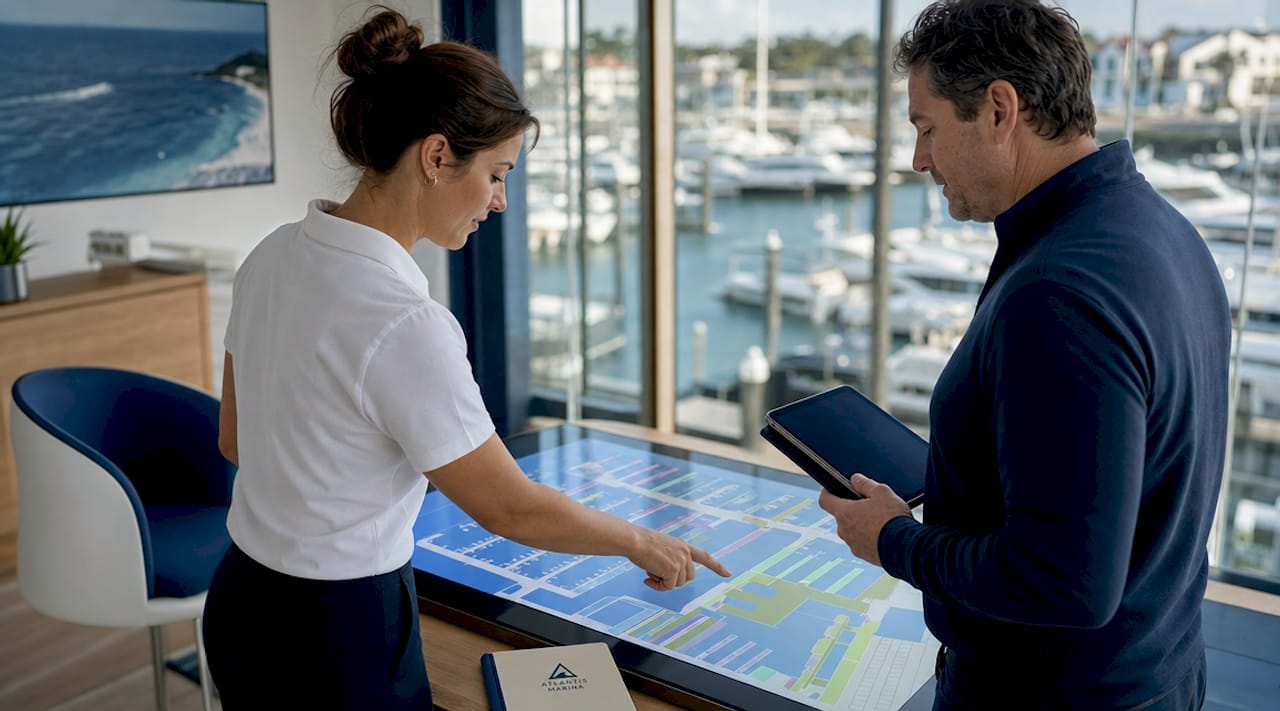
The most operationally significant feature is the visual dock map. Color-coded dock maps with real-time updates serve as an operational command center, substantially reducing the risk of double-booking and unsynchronized slip management. A dockmaster can see at a glance which slips are occupied, which are reserved for incoming vessels, and which are flagged for maintenance. Static whiteboard methods cannot replicate this, and they consistently lead to booking conflicts and revenue loss.
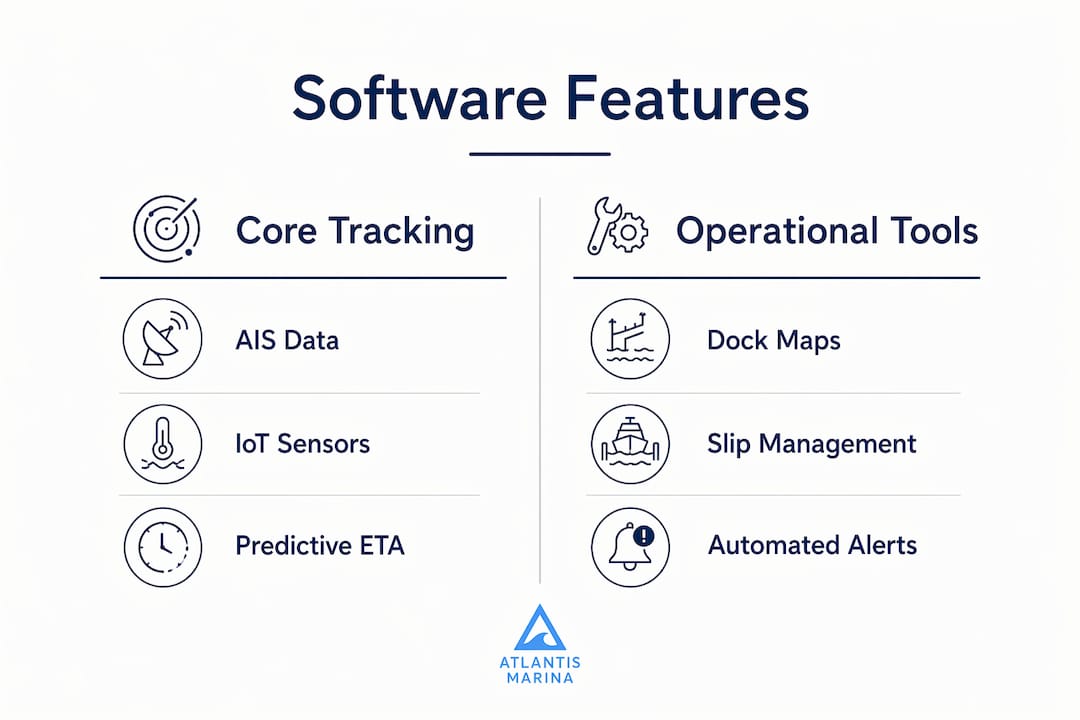
Predictive ETA updates are equally important. Static ETAs fail to capture schedule changes; continuously updated AIS-based predictions allow proactive scheduling adjustments. If a vessel slows due to weather, the system recalculates and alerts staff before the delay creates a downstream problem.
| Feature | General AIS app | Marina arrival tracking software |
|---|---|---|
| Vessel position tracking | Yes | Yes |
| Predictive ETA updates | Limited | Continuous, AIS-based |
| Visual dock occupancy map | No | Yes, color-coded |
| Slip reservation integration | No | Yes |
| Utility and billing tracking | No | Yes |
| Automated staff alerts | No | Yes |
| Boat lift status monitoring | No | Yes |
Beyond the dock map, specialized marina platforms include features that general tracking tools simply do not offer:
- Automated notifications for arrivals, delays, and slip availability changes
- Integration with slip reservation workflows and transient booking management
- Seasonal contract management and waitlist auto-notifications
- Utility tracking tied directly to billing for accurate invoicing
- Boat lift occupancy tracking and remote lift control via IoT integration
- Camera and access control integration for security monitoring
Pro Tip: Look for platforms that offer boat lift tracking software as part of the same dashboard as slip management. Managing lifts and wet slips in separate systems creates the same fragmentation problem you are trying to solve.
How does arrival tracking software improve efficiency and reduce revenue loss?
Operational fragmentation is the primary source of revenue leakage in marina management. When reservations, payments, and dock sensor data exist in separate systems, errors multiply. Unifying these workflows into a single platform reduces booking conflicts and automates invoicing, directly protecting revenue.
The practical gains start with slip assignment accuracy. When a dockmaster knows a 45-foot sailboat is arriving in two hours and the system shows exactly which slips can accommodate that vessel's beam and draft, the assignment takes seconds rather than minutes of manual cross-referencing. That precision also prevents the costly scenario of assigning a slip that is already reserved or physically incompatible with the incoming vessel.
Automated alerts change how staff prepare for arrivals. Instead of a dockmaster checking a clipboard every 30 minutes, the system pushes a notification when a tracked vessel crosses a defined geofence or updates its ETA. Staff can have dock lines ready, utilities connected, and a welcome ready before the boat reaches the slip. That level of preparation directly improves the boater experience and reduces the time each arrival takes.
Billing accuracy is another measurable benefit. Marina software with automated dock space allocation and payment processing eliminates the gap between actual slip usage and what gets invoiced. Shore power consumption tracked by dockside sensors feeds directly into the billing system, so every kilowatt-hour is captured without manual meter reading.
The benefits of tracking boats extend to maintenance scheduling as well. When a slip sensor flags an issue or a lift controller reports abnormal load data, the system can generate a service request automatically. That prevents small maintenance problems from becoming expensive equipment failures during peak season.
AIS tracking apps vs. specialized marina arrival software
Understanding the difference between standard AIS boat tracking apps and marina arrival management platforms helps operators choose the right tool for their actual needs.
General AIS applications like MarineTraffic and VesselFinder are designed for broad vessel identification and position monitoring across large geographic areas. They are excellent for monitoring commercial shipping lanes, identifying vessels in a harbor approach, or tracking a specific boat's progress on a passage. What they do not provide is any connection to dock infrastructure, slip availability, or marina workflows.
Marine-grade sensors with IP67 ratings track engine hours, battery voltage, and propeller interaction in ways that generic automotive GPS systems cannot. This hardware distinction matters for marinas that need accurate vessel condition data, not just position data. Platforms built for marine environments use hybrid LTE and satellite connectivity to maintain signal in low-coverage areas, which is a requirement for any marina serving offshore or coastal cruising traffic.
| Capability | AIS tracking app | Marina management platform |
|---|---|---|
| Vessel position and ID | Yes | Yes |
| Dock occupancy status | No | Yes |
| Transient booking management | No | Yes |
| Utility billing integration | No | Yes |
| Boat lift occupancy tracking | No | Yes |
| Marine-grade IoT hardware | No | Yes |
| Waitlist and contract management | No | Yes |
The cost and scalability profiles also differ significantly. General AIS apps are typically low-cost or subscription-based consumer tools. Marina arrival tracking platforms are purpose-built B2B systems priced to reflect their integration depth, support requirements, and the revenue they protect. For a marina managing 50 or more slips with seasonal contracts, transient traffic, and utility billing, the return on a specialized platform is clear. For a small private dock with three slips, a general AIS app may be sufficient.
Boat lift control systems integrated with IoT devices improve operational control and reduce downtime through real-time battery monitoring and wireless control. This level of integration is only available in platforms built specifically for marina and waterfront operations, not in general vessel tracking tools.
Key Takeaways
Boat arrival tracking software delivers its greatest value when it connects AIS vessel data, dockside IoT sensors, and marina workflows into a single platform rather than functioning as a standalone tracking tool.
| Point | Details |
|---|---|
| Core technology stack | AIS networks, satellite data, and IoT dock sensors combine to generate live positions and predictive ETAs. |
| Visual dock maps reduce errors | Color-coded occupancy maps replace static whiteboards and directly prevent double-bookings and revenue loss. |
| Marina software vs. AIS apps | General AIS tools track vessel location only; marina platforms add slip management, billing, and lift tracking. |
| Automated alerts improve readiness | Push notifications triggered by geofences or ETA updates allow staff to prepare before a vessel arrives. |
| Integration protects revenue | Connecting reservations, sensor data, and billing in one system eliminates invoicing gaps and scheduling conflicts. |
Why fragmented marina tech is the real problem worth solving
I have spent years watching marina operators invest in tracking tools that solve one problem while creating three others. A dockmaster installs a solid AIS feed, then still runs reservations on a spreadsheet and billing through a separate accounting tool. The tracking data never connects to the workflow that actually matters. The boat arrives, the slip is double-booked, and the technology investment looks like a failure even though the tracking itself worked perfectly.
The real issue is that most marinas adopted technology in layers, one tool at a time, without a plan for how those tools would communicate. The result is a fragmented stack where the arrival data lives in one screen, the reservation in another, and the invoice in a third. Staff spend more time reconciling systems than managing the dock.
What I find genuinely promising about the current generation of marina management platforms is the shift toward unified architecture. When boat lift occupancy tracking, slip reservations, and automated billing all operate from the same data layer, the compounding benefits are real. A vessel's arrival updates the slip status, triggers the billing clock, and closes the reservation in one action. That is not a minor efficiency gain. It is a structural change in how a marina operates.
The marinas that will see the strongest returns from arrival tracking software are not the ones with the most sophisticated AIS setups. They are the ones that connect tracking data to every downstream workflow, from the dock line to the invoice.
— John
See how Atlantis-marina handles arrival tracking end to end
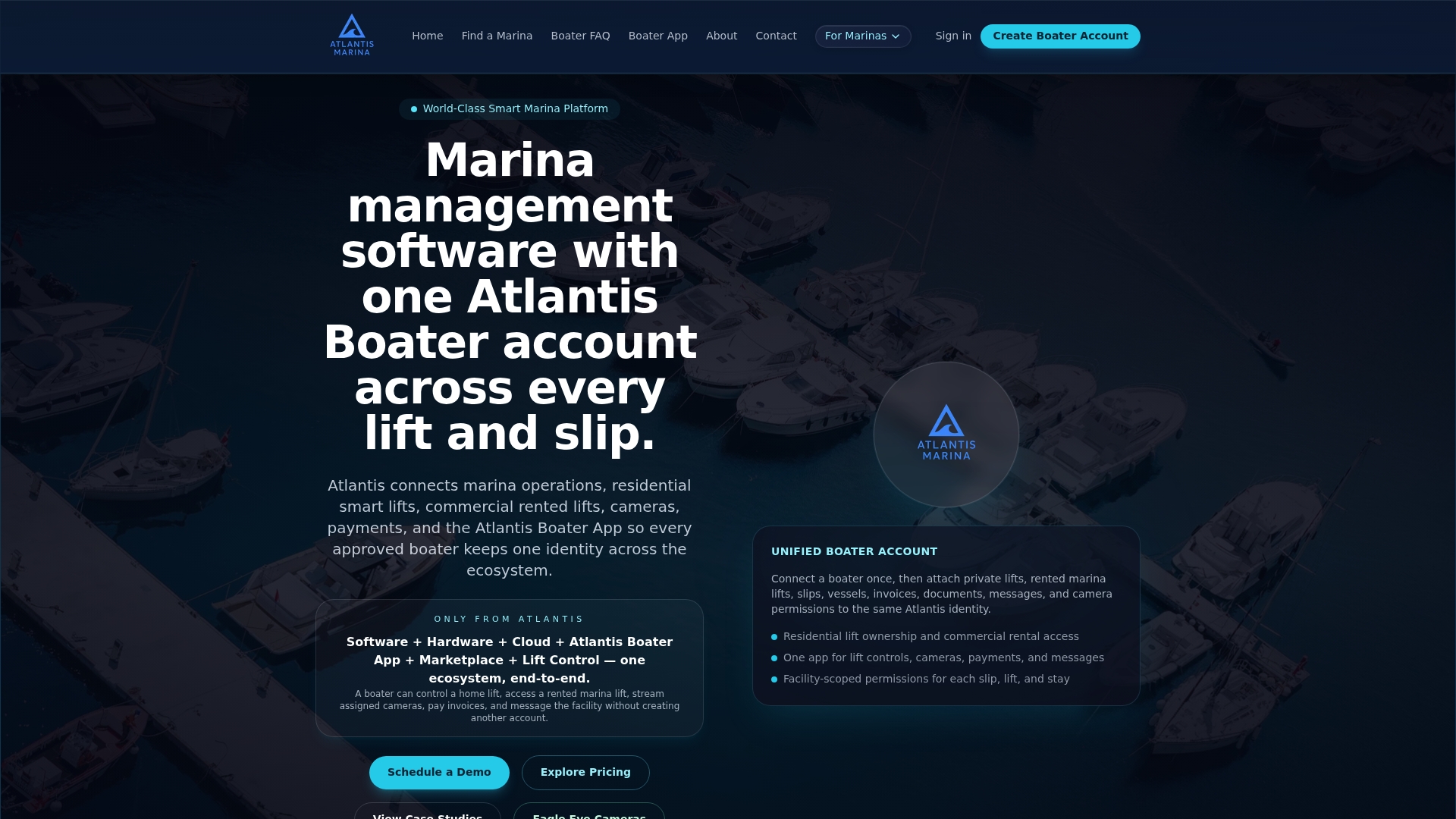
Atlantis-marina, developed by Atlantis Control Systems, brings boat arrival tracking, slip management, boat lift occupancy tracking, and automated billing into a single cloud-based platform built for marina operators and dockmasters. The operations dashboard gives your team live dock maps, vessel records, and automated mobile alerts so you are never caught off guard by an arriving vessel. Reservations, utility billing, and IoT lift controls connect directly to the same system, eliminating the fragmentation that causes revenue leakage. Whether you manage a private yacht club or a mid-sized transient marina, Atlantis-marina scales to your operation. Explore the full platform and request a demo to see how unified marina management works in practice.
FAQ
What is boat arrival tracking software used for?
Boat arrival tracking software monitors vessel positions and dock occupancy in real time using AIS data and IoT sensors, giving marina operators accurate ETAs and live slip status to coordinate arrivals and reduce scheduling conflicts.
How does boat lift occupancy tracking work?
Boat lift occupancy tracking uses dockside IoT sensors to detect whether a lift is in use, report its operational status, and send alerts to dockmasters, with advanced systems also enabling remote lift control through mobile apps.
What is the difference between AIS apps and marina tracking software?
General AIS apps display vessel location and identification data across broad areas, while marina arrival tracking software integrates dock occupancy maps, slip reservations, utility billing, and boat lift tracking into a single operational platform.
Do marinas need marine-grade hardware for tracking?
Yes. Standard automotive GPS hardware is inadequate for marine environments. Marine-grade sensors with IP67 ratings and hybrid LTE/satellite connectivity are required to track vessel metrics accurately in saltwater conditions and low-signal areas.
How does arrival tracking software reduce revenue loss?
By connecting real-time slip occupancy data to reservations and automated billing workflows, arrival tracking software eliminates invoicing gaps, prevents double-bookings, and captures utility usage charges that manual processes routinely miss.