
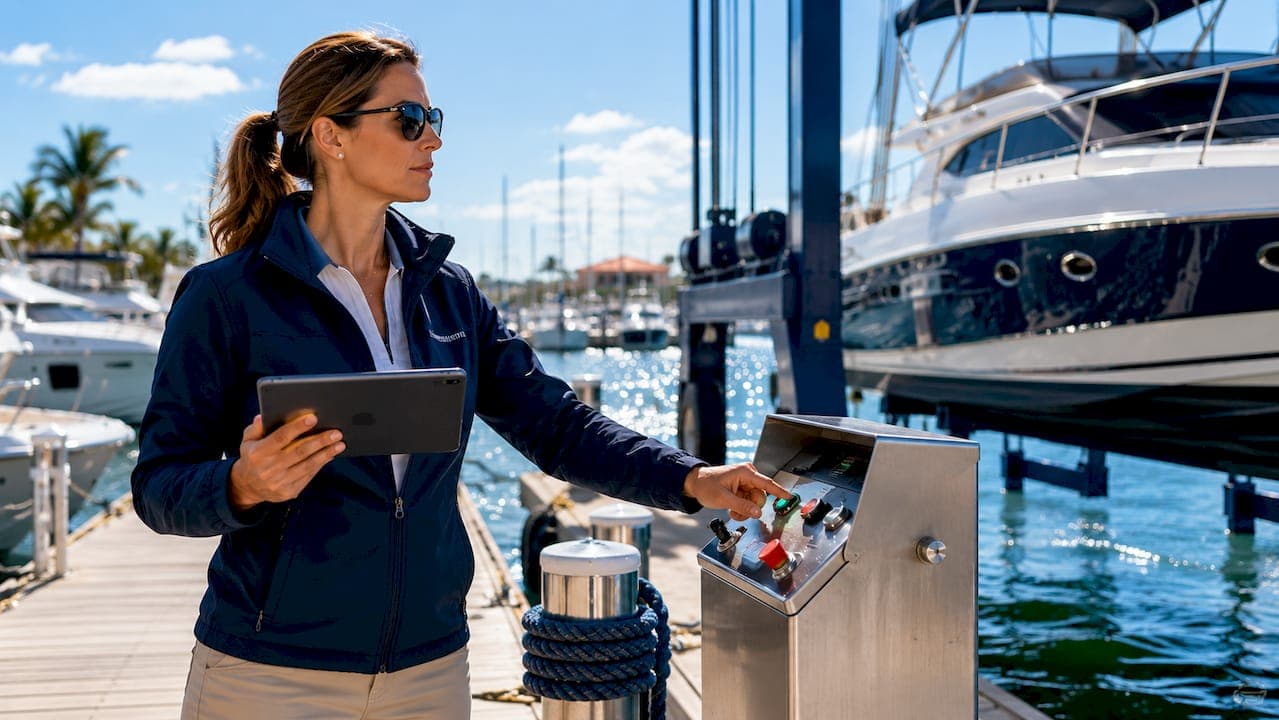
A boat lift management platform is an integrated software system that coordinates scheduling, operational control, hardware monitoring, and maintenance documentation for boat lift operations across marina and waterfront facilities. Unlike standalone scheduling tools or basic dock management apps, these platforms connect every part of the lift workflow, from a boater's initial reservation request to the technician's post-service report. Marina operators who replace fragmented, manual processes with a unified platform gain real-time visibility, fewer scheduling errors, and a documented record of every lift event. The result is a facility that runs more efficiently and handles more vessels without adding staff.
What is a boat lift management platform and how does it work?
A boat lift management platform is defined by its ability to connect requests and scheduling into an end-to-end workflow that coordinates haul-outs, launches, slip assignments, and technician dispatch. That definition separates it from a simple calendar or spreadsheet. The platform acts as the operational backbone of a marina's lift program, linking what the boater requests with what the yard team executes.
The workflow typically starts when a boater submits a launch or haul-out request through a customer portal or reservation interface. The platform routes that request to the dockmaster, assigns the appropriate lift or forklift, and schedules a technician. Every step is visible to office staff, dockmasters, yard foremen, and technicians through a live operational picture. That shared visibility eliminates the phone calls and radio back-and-forth that slow down manual operations.
Timing is a real constraint in lift management. Weather windows, tidal cycles, and equipment turnaround times all affect when a lift can safely operate. Platforms built for marina environments treat scheduling as a live, auditable workflow rather than a static calendar block. That design choice matters because a schedule that looks correct on paper can still cause technician misalignment and rework if it does not account for real-world constraints.

Pro Tip: Set up automated alerts for weather threshold breaches within your platform. Proactive notifications let dockmasters reschedule lift operations before a conflict reaches the boater.
Key workflow functions a boat lift management platform handles include:
- Haul-out and launch scheduling with equipment assignment
- Slip and lift occupancy tracking across the full facility map
- Technician dispatch linked directly to confirmed reservations
- Real-time status updates visible to all staff roles
- Audit trails recording who authorized each lift event and when
What features distinguish advanced boat lift management platforms?
Advanced platforms go beyond scheduling by integrating directly with the physical hardware that operates the lift. The most capable systems connect to smart boat lift controllers, sensors, and remote monitoring devices, giving operators both software control and hardware awareness from a single interface.
The following features define the top tier of boat lift management software:
-
Smart hardware integration. Platforms like Atlantis-marina connect to smart boat lift controllers, sensor arrays, and camera systems. This means a dockmaster can check lift status, confirm a vessel is properly seated, and authorize a raise or lower from a mobile device without walking the dock.
-
Remote lift operation. Remote monitoring via LTE/4G allows operators to control lift functions and receive safety alerts from off-site. Remote operation is especially valuable for waterfront properties where staff coverage is limited during early morning or evening launch windows.
-
Safety alerts and audit trails. Platforms that handle remote command permissions with status alerts and audit trails tied to work orders maintain operational accountability. Every command is logged, every permission is traceable, and every safety event is documented.
-
Maintenance workflow management. Inspection scheduling, condition documentation, and lifecycle tracking are built into the platform rather than managed in a separate spreadsheet. This keeps maintenance history attached to the specific lift asset, not buried in a technician's notebook.
-
Customer portal access. A boat lift customer portal lets boaters view their lift status, request service, submit vessel documents, and make payments without calling the marina office. Boat lift customer portal benefits include reduced inbound calls, faster payment collection, and a better boater experience.
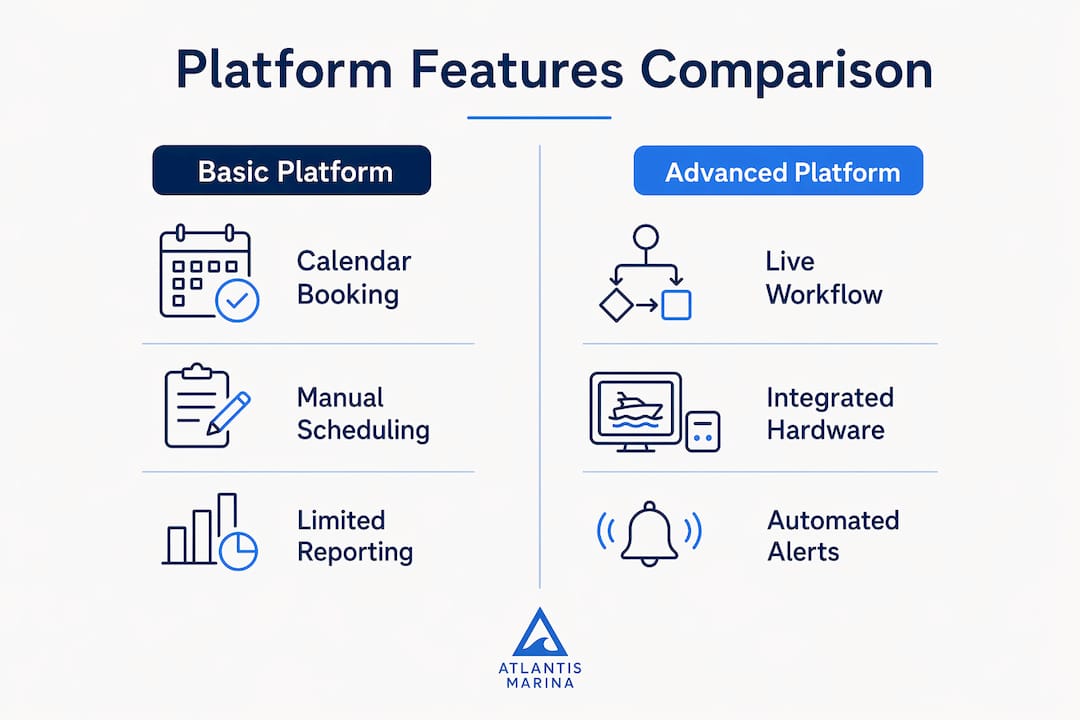
| Feature | Basic platform | Advanced platform |
|---|---|---|
| Scheduling | Calendar-based booking | Live workflow with dispatch |
| Hardware control | None | Smart controller integration |
| Remote access | Limited or none | Full remote lift operation |
| Maintenance tracking | Manual logs | Integrated lifecycle documentation |
| Customer portal | Email requests | Self-service portal with payments |
| Audit trail | Minimal | Full permission and event log |
Pro Tip: When evaluating platforms, ask vendors specifically how audit trails connect to work orders. A disconnected dashboard that shows lift status but does not log it against a reservation creates accountability gaps.
How do boat lift management platforms improve maintenance and asset longevity?
Proactive maintenance is where boat lift management software delivers some of its clearest financial value. Platforms that integrate maintenance scheduling into the operational workflow prevent the reactive, expensive repairs that result from deferred inspections.
The strongest maintenance programs attach scheduled technician visits directly to the lift asset record inside the platform. Honc Docks & Lifts, for example, structures its ShoreWatch membership around scheduled visits with detailed condition documentation linked to warranties. That model works because the maintenance history travels with the asset, not with the technician who performed the work.
Key maintenance capabilities that a well-designed platform supports include:
- Scheduled inspection visits with automated reminders for both staff and boaters
- Condition reporting with photo documentation attached to the lift record
- Storm event preparation services and priority repair scheduling
- Lifecycle tracking that flags aging components before they cause failures
- Warranty documentation tied to service records for dispute resolution
Maintenance programs with scheduled visits and storm event services prolong asset life and reduce unplanned downtime. For a marina operating dozens of lifts, even a modest reduction in emergency repair calls produces measurable savings across a season. Platforms that surface maintenance data alongside scheduling data give operators the full picture of each lift's condition and operational history in one place. That integration is what separates a boat lift management system from a simple work order tool.
What factors should marina operators consider when choosing a platform?
Choosing the right boat lift management system requires evaluating more than the feature list. The platform must fit the marina's existing hardware, staff workflows, and customer expectations before it delivers value.
Pro Tip: Before requesting demos, document your current lift workflow step by step. Vendors who can map their platform to your existing process will close gaps faster than those selling a generic solution.
The most important evaluation factors for marina operators include:
- Hardware compatibility. The platform must support your existing lift controllers, sensors, and dock infrastructure. Replacing hardware to match software adds cost and delays adoption.
- Workflow flexibility. Marinas with seasonal cycles, dry stack operations, or mixed wet slip and lift facilities need platforms that handle multiple operational models without forcing a single workflow.
- User access controls. Dockmasters, yard technicians, office staff, and boaters all need different permission levels. Platforms that centralize booking, vessel data, and billing while enforcing role-based access prevent both errors and unauthorized actions.
- Customer-facing tools. The best remote boat lift management tools include a boater-facing portal that reduces staff workload. Evaluate how the portal handles reservations, document uploads, and payment processing.
- Integration with marina management software. A lift platform that does not connect to your slip management, billing, or vessel records system creates the same fragmentation it was meant to solve.
- Support and training. Staff adoption determines whether a platform succeeds. Vendors who provide onboarding support, training resources, and responsive technical help reduce the time to full operational use.
Pricing models vary across the market. Some platforms charge per slip or per lift, while others use flat monthly fees or tiered plans based on facility size. Evaluate total cost of ownership, including hardware, setup, and annual fees, not just the monthly subscription rate.
Key Takeaways
A boat lift management platform delivers the most value when it connects scheduling, hardware control, maintenance records, and customer communication into a single operational system.
| Point | Details |
|---|---|
| Unified workflow | Connecting reservations to dispatch and equipment eliminates manual handoffs and reduces errors. |
| Smart hardware integration | Remote lift control and sensor monitoring give operators real-time visibility from any location. |
| Proactive maintenance | Scheduled inspections and condition documentation extend asset life and reduce emergency repairs. |
| Customer portal value | Self-service portals reduce inbound calls and improve boater satisfaction with faster service access. |
| Platform selection criteria | Evaluate hardware compatibility, workflow fit, and integration with existing marina software before committing. |
The shift I keep watching marina operators miss
The conversation about boat lift management platforms almost always starts with hardware. Operators want to know which controller is best, whether wireless remotes are reliable, and how sensors hold up in saltwater environments. Those are legitimate questions. But the operators who get the most out of these systems are the ones who treat the platform as an operational tool first and a hardware interface second.
The real problem at most marinas is not that the lift hardware is outdated. The problem is that the workflow around the lift is fragmented. Reservations live in one system, billing in another, maintenance logs in a notebook, and technician schedules on a whiteboard. A boat lift management platform solves that fragmentation by pulling all of those threads into one place. When lift calendars connect directly to work orders across launch, haul-out, and service tasks, technicians show up at the right lift with the right information at the right time.
My honest recommendation: do not evaluate platforms by their feature count. Evaluate them by how well they close the gap between what a boater requests and what the yard team executes. That gap is where delays, callbacks, and missed service windows live. The platform that closes it fastest, with the least staff friction, is the right one for your facility. Atlantis-marina's approach of connecting dockmaster mobile management with smart lift hardware and a customer portal is a good example of what that integration looks like in practice.
— John
Atlantis-marina brings boat lift and marina management together
Atlantis-marina, developed by Atlantis Control Systems, is built specifically for marina operators who need lift scheduling, slip management, billing, and customer communication in one cloud-based platform.
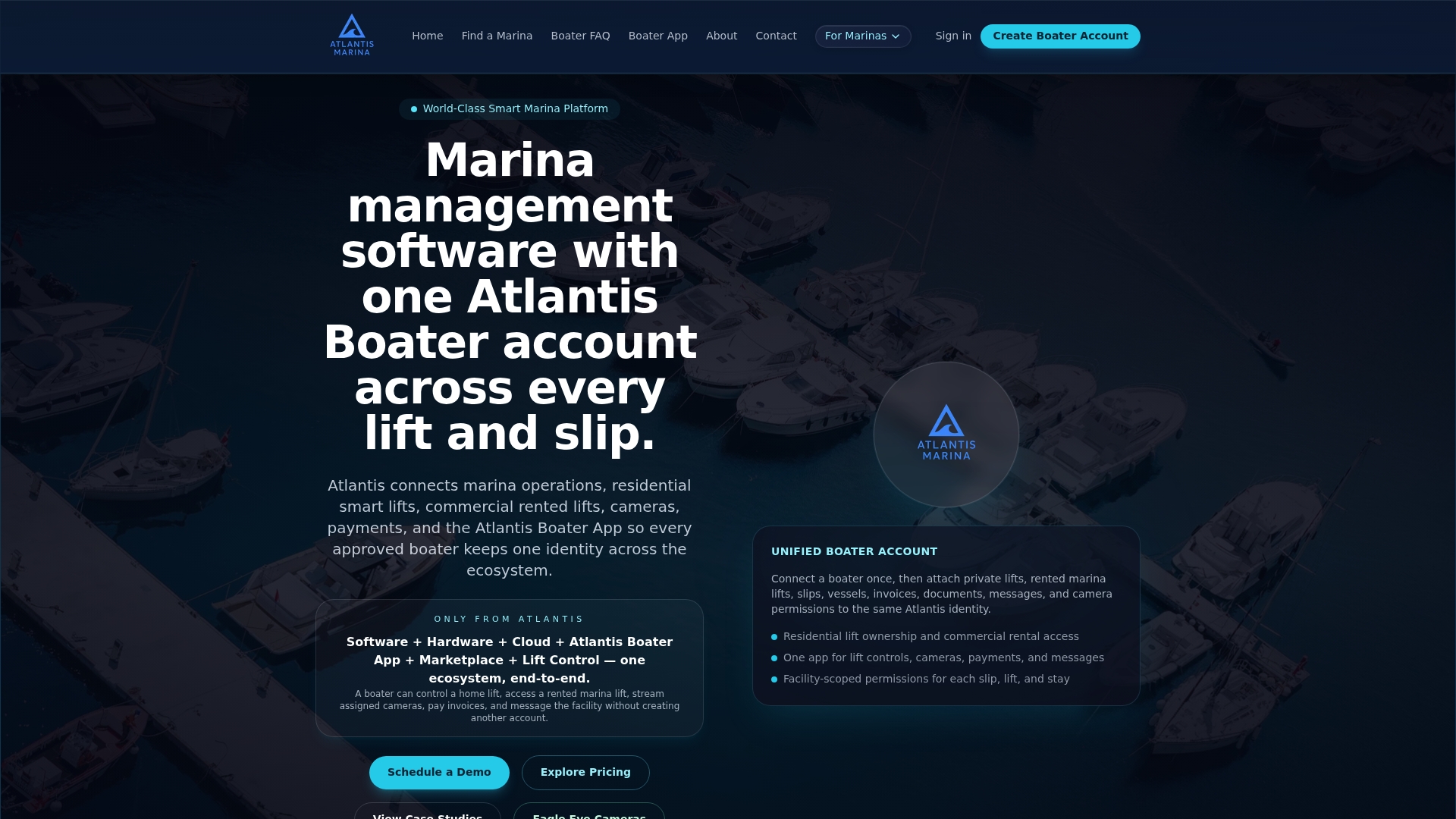
The platform connects smart boat lift controllers, remote monitoring, and sensor integrations with a full marina management solution that handles reservations, vessel records, and recurring billing. Boaters access their lift status, submit documents, and make payments through a built-in customer portal. Dockmasters manage the entire facility from a mobile dashboard without switching between disconnected tools. For marina operators ready to replace fragmented workflows with a unified system, Atlantis-marina's marina management software is worth a direct look.
FAQ
What is a boat lift management platform?
A boat lift management platform is an integrated software system that coordinates lift scheduling, hardware control, maintenance tracking, and customer communication for marina and waterfront operations. It replaces disconnected tools with a single workflow connecting reservations to technician dispatch and equipment.
What is a boat lift customer portal?
A boat lift customer portal is a self-service interface that lets boaters request lift service, view lift status, upload vessel documents, and make payments without contacting marina staff directly. Boat lift customer portal benefits include reduced administrative workload and faster service for boaters.
What types of boat lift management systems exist?
Boat lift management systems range from basic scheduling software with calendar-based booking to advanced platforms with smart controller integration, remote lift operation, sensor monitoring, and full maintenance lifecycle tracking. The best smart boat lift management platforms combine all of these functions in one connected system.
What is remote boat lift control?
Remote boat lift control is the ability to operate, monitor, and receive alerts from a boat lift using a connected device such as a smartphone or tablet, typically over LTE or 4G. It allows marina operators and waterfront property managers to manage lift operations without being physically present at the dock.
How do boat lift management platforms reduce maintenance costs?
Platforms reduce maintenance costs by scheduling regular inspections, attaching condition reports to the lift asset record, and flagging aging components before they fail. Structured maintenance programs with scheduled technician visits and storm event services extend asset life and minimize unplanned repair expenses.