
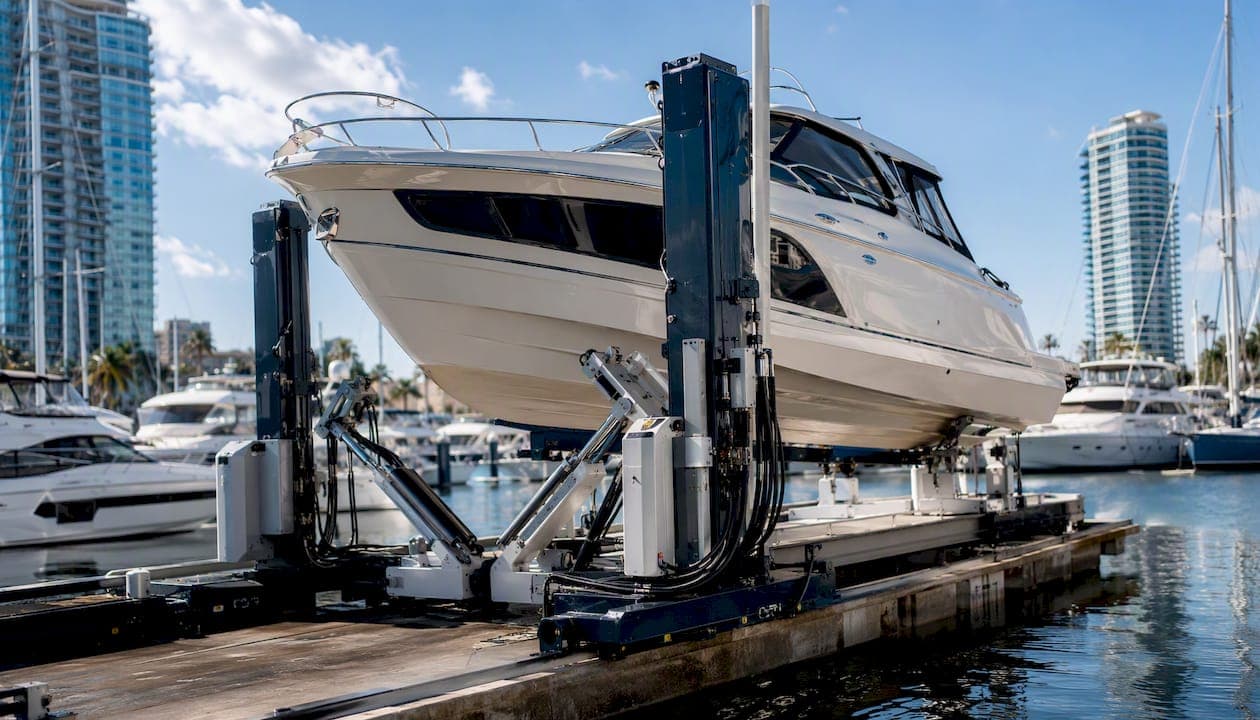
If you operate a high-density, multi-user, or commercial marina, integrated smart boat lift automation is worth adopting. The immediate next step is not buying hardware. Run a site-flow audit first: record peak Saturday vessel movement, staging zones, and electrical capacity before you specify a single controller.
Here is the short case for acting now:
- Networked lift controllers tied to your marina management platform reduce human error, cut launch queue times, and create auditable billing records automatically.
- Dry-stack facilities, high-transient commercial marinas, and multi-slip yacht clubs see the largest throughput gains.
- Automation amplifies existing bottlenecks if layout problems are not solved first, so the audit is not optional.
Key Takeaways
Integrated smart boat lift automation delivers measurable throughput, safety, and revenue gains for commercial marinas, but only when a site-flow audit precedes hardware spend and open API integration connects lift controls to the marina management platform.
| Point | Details |
|---|---|
| Audit before hardware | Map peak Saturday flow to identify bottlenecks automation cannot fix before specifying controllers. |
| Pilot 1–3 lifts first | A 30–90 day pilot with defined KPIs (launch time, queue length, uptime, damage incidents) builds a defensible rollout case. |
| Require open APIs | Demand documented REST APIs, webhooks, and OAuth authentication so telemetry connects to your marina platform. |
| Link CMMS to telemetry | Automated work orders from telemetry signals reduce reactive repairs and satisfy insurer audit requirements. |
| Atlantis Marina unifies the stack | The Atlantis Marina platform connects reservations, launch queues, billing, lift telemetry, and mobile staff alerts in one system. |
Table of Contents
- What does "smart boat lift automation" mean for enterprise marinas?
- What operational benefits can your marina expect from lift automation?
- What hardware and software make up a typical lift automation system?
- How do automated lift systems operate day to day?
- How do you implement lift automation from audit to full rollout?
- What safety codes and insurance requirements apply in the U.S.?
- How do you maintain lifts and prevent unplanned downtime?
- What should you demand from vendors and platform contracts?
- How does Atlantis Marina map to a smart lift automation deployment?
- The site-flow audit is the step most operators skip
- Atlantis Marina is built for exactly this deployment
- Sources
- FAQ
What does "smart boat lift automation" mean for enterprise marinas?
Smart boat lift automation, as used in commercial marina operations, means a networked system of lift controllers, sensors, cameras, and software APIs that integrates directly with your marina management platform to schedule, monitor, and execute lift operations across multiple slips or dry-stack aisles. This guide covers that enterprise context only. It does not address consumer Bluetooth or Wi-Fi remote kits for a private single-lift dock.
The system operates across four functional layers:
- Control layer: PLC-based controllers, motor drives, limit switches, and leveling sensors that execute lift commands with precision.
- Sensing and safety layer: Load cells, alignment sensors, cameras for visual confirmation, and zone-intrusion detectors.
- Network and integration layer: Edge gateways, local PLC networks, Wi-Fi or PoE switches, cellular fallbacks, and open APIs connecting to the marina management platform.
- Application layer: Scheduling engine, launch-queue manager, user-role management, telemetry dashboard, and mobile operator app.
What operational benefits can your marina expect from lift automation?
PLC-based intelligent control and electro-mechanical retrieval systems increase storage density in dry-stack marinas and reduce reported boat damage incidents, though they carry higher upfront capital costs than manual systems. Narrower aisles and greater vertical storage become achievable when synchronized lifting replaces forklift operations.
The labor picture shifts as well. Fewer staff are needed at the lift itself because the scheduling engine sequences launches automatically. Billing and reservations tie directly into the lift command cycle, so a completed retrieval triggers an invoice without manual entry.
Facilities that benefit most:
- Dry-stack operators gain density and retrieval consistency from electro-mechanical systems.
- High-transient commercial marinas reduce peak-day queue backlogs through automated sequencing.
- Multi-slip yacht clubs cut damage incidents and free dockmaster time for customer-facing tasks.
Smart marina IoT integrations also enable access control, telemetry alerts, and billing automation that manual workflows cannot match.
What hardware and software make up a typical lift automation system?
The control layer centers on PLC-based lift controllers paired with motor drives and limit switches. Leveling sensors confirm cradle position before a lift command completes. Emergency stops must be physically independent of network connectivity.
Pro Tip: Require a local, hardwired E-stop on every lift that operates regardless of network status. A controller that depends on cloud connectivity for its safety interlock is not an acceptable design for a commercial facility.
Sensing and safety components include load cells for weight verification, LiDAR or sonar for alignment confirmation, and cameras for visual verification of the vessel and zone. Camera and security integrations complement telemetry by giving staff visual confirmation before and after each lift cycle.
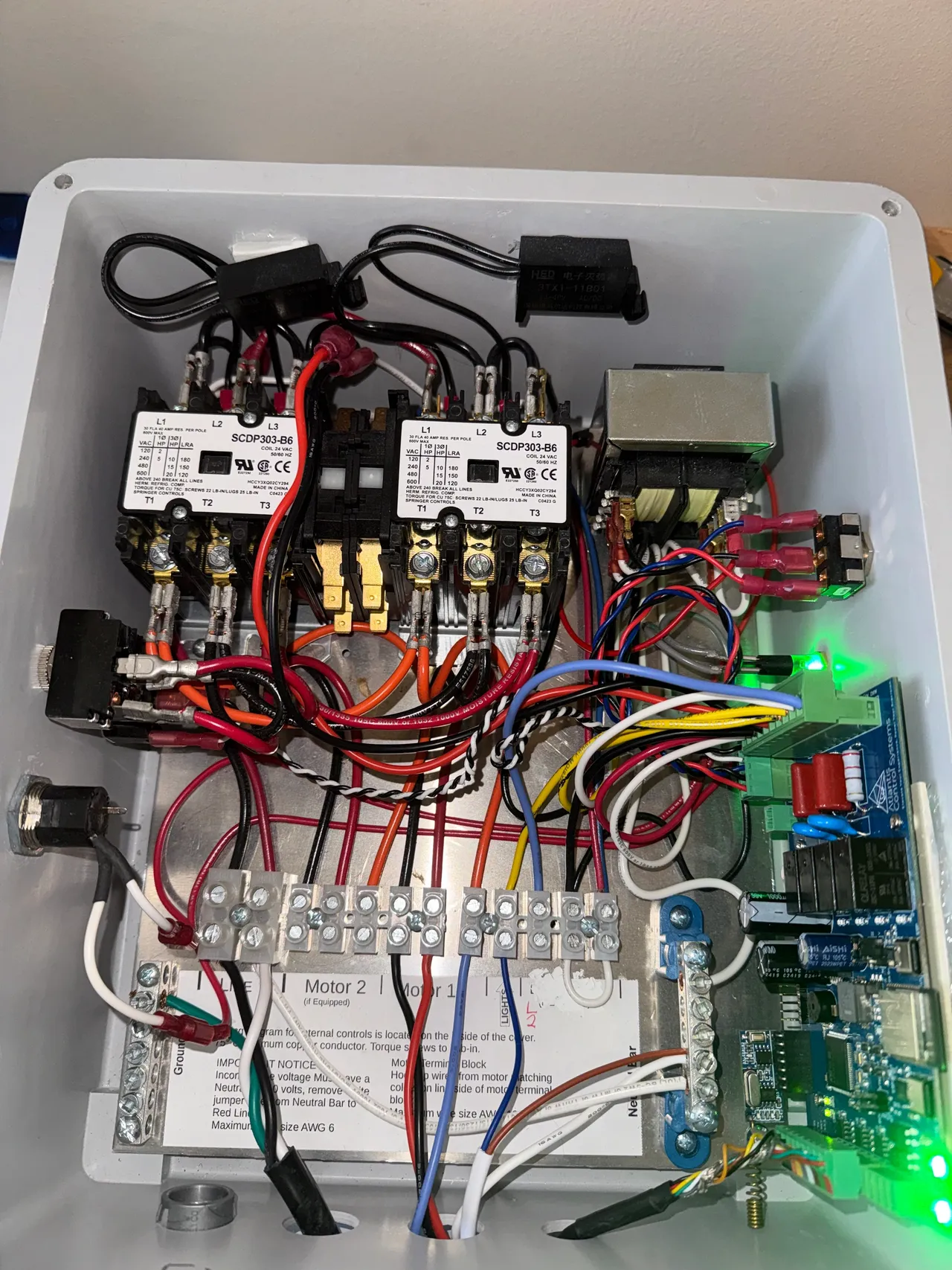
The network layer connects edge gateways to local PLC networks over PoE switches, with cellular fallback for connectivity loss. Secure VPNs and role-based authentication protect the control plane. Auxiliary device integrations extend this layer to cameras, gate controls, and utility monitors.
Key items to confirm at the specification stage:
- Power supply sizing and dedicated circuit requirements per lift
- NEMA enclosure ratings for the marine environment
- Surge protection on all control panels
- Grounding compliance with NEC requirements
- Environmental HVAC for electronics enclosures in hot or humid climates
How do automated lift systems operate day to day?
The core workflow runs in sequence: a boater submits a reservation through the marina platform or boater app, the system stages the vessel in the queue, the scheduling engine sequences the launch, the lift executes the command, and billing posts automatically on completion.
User roles control what each person can do. Operators execute and monitor lift commands. Supervisors override queues and manage emergency retrievals. Boaters interact through the Atlantis Boater App, submitting launch requests and receiving status updates by SMS or push notification.
Practical use cases across a typical week:
- Peak Saturday retrievals: The queue engine sequences multiple vessels by slip location and fuel-dock proximity, reducing dock congestion.
- Multi-vessel launches: Synchronized lift commands across adjacent aisles cut total launch time without adding staff.
- Emergency retrievals: Supervisors override the queue from a mobile device and dispatch a manual crew if the automated sequence cannot complete.
- Scheduled maintenance windows: The system blocks lift commands during PM windows and notifies affected boaters automatically.
Staff intervene at defined handover points: visual confirmation before lift execution, and sign-off after the vessel clears the zone.
How do you implement lift automation from audit to full rollout?
Industry experts recommend a site-flow audit before hardware purchases because automation amplifies existing flow bottlenecks if layout and staging are not resolved first.
- Phase 0 — Site-flow audit: Map peak vessel movement, staging zones, fuel and service pass-throughs, electrical capacity, and radio coverage. Produce traffic heatmaps for your busiest Saturday. Identify bottlenecks that hardware cannot fix.
- Phase 1 — Pilot scope: Select 1–3 lifts or one dry-stack aisle. Define KPIs: launch time per vessel, queue length, uptime percentage, and damage incidents. Record baseline metrics before the pilot begins. A 30–90 day pilot gives a defensible business case for full rollout.
- Phase 2 — Install and integrate: Run network infrastructure, install edge gateways and PLC controllers, complete API integration with the marina management platform, and provision user accounts.
- Phase 3 — Test and commission: Execute a commissioning checklist covering limit-switch acceptance tests, load-cell calibration, network failover validation, full UAT of the API flow (reservation to queue to lift command to billing), and documented manual recovery steps.
- Phase 4 — Phased rollout: Expand aisle by aisle or zone by zone, using pilot KPI data as go/no-go gates.
| Cost driver | Typical impact |
|---|---|
| Site prep and staging zone work | Moderate to high depending on existing layout |
| Power upgrades and dedicated circuits | High for older facilities |
| Enclosure HVAC and environmental hardening | Moderate in humid coastal climates |
| Structural modifications to lift bays | Variable; highest for dry-stack retrofits |
| API integration and software licensing | Moderate; lower with open-API platforms |
What safety codes and insurance requirements apply in the U.S.?
Required safety features for every commercial lift installation:
- Independent, hardwired E-stop on each lift, tested at commissioning and documented quarterly
- Limit switches with redundant sensors on upper and lower travel limits
- Audible and visual zone alerts before and during lift cycles
- Load monitoring with automatic halt on overload detection
- Redundant sensors on safety-critical functions
OSHA's powered industrial equipment standards apply to commercial lift operations, and local electrical inspectors will verify NEC grounding and circuit protection compliance. Insurers increasingly require documented commissioning records, preventive maintenance logs from a CMMS, third-party load testing, and annual certified inspections before binding coverage on automated lift systems.
Pro Tip: Keep every commissioning record, load-test certificate, and PM log in a CMMS tied to the specific lift asset. Insurers and auditors want time-stamped, asset-linked histories, not spreadsheets.
Emergency procedures must include a written communications plan, manual recovery steps for each lift type, defined evacuation zones during active lift cycles, and a named contractor for after-hours mechanical failures. Consult a licensed marine electrical contractor and your insurer before finalizing specs; requirements vary by state and facility type.
How do you maintain lifts and prevent unplanned downtime?
A CMMS is the operational backbone for marina lift maintenance: it schedules preventive tasks, auto-generates work orders from telemetry triggers, and creates the auditable maintenance histories insurers require.
Recommended PM cadence:
- Weekly: Visual inspection of wire ropes, cradle hardware, and zone sensors
- Monthly: Limit-switch function tests, motor current baseline checks
- Quarterly: Hydraulic fluid sampling, E-stop validation, network failover test
- Annual: Certified third-party load test, full electrical inspection, sensor calibration
Telemetry-driven alerts change the maintenance model. A current spike or vibration anomaly at 2:00 AM triggers a targeted work order for that specific lift rather than a broad inspection sweep. Linking lift telemetry to facility maps and staff workflow alerts keeps maintenance proactive and shortens mean-time-to-repair.
What should you demand from vendors and platform contracts?
Integration checklist for demos and proof-of-concept sessions:
- Open REST APIs with documented endpoints for reservations, queue management, lift commands, and billing
- Event webhooks for real-time telemetry alerts to the marina management platform
- OAuth or token-based authentication on all API calls
- Role-based access control with audit logging
- Network segmentation between the control plane and the guest/boater network
- Encryption in transit (TLS 1.2 minimum) and at rest for stored telemetry
- Documented penetration-testing policy and schedule
Contract clauses worth requesting: acceptance testing criteria tied to commissioning KPIs, software update policies with rollback procedures, data ownership and export rights, training and Dealer Tool Kit access for your maintenance team, and spare-parts commitments with lead-time guarantees.
Open API integrations are the single most important vendor differentiator for long-term operational flexibility. A closed system that cannot share telemetry with your marina management platform will create manual workarounds within the first season.
How does Atlantis Marina map to a smart lift automation deployment?
Atlantis Marina, built by Atlantis Control Systems, connects the software and hardware layers that a lift automation deployment requires. The marina management platform handles reservations, launch queues, billing, vessel records, and facility maps in one system, so the lift orchestration engine has a live data source for every decision it makes.
Key feature-to-workflow mappings:
- Reservations and launch queue: Boaters submit requests through the Atlantis Boater App; the platform sequences the queue and pushes lift commands to the controller.
- Automated billing: A completed retrieval posts a charge automatically through Stripe or ACH, with QuickBooks Online sync, eliminating manual invoicing.
- Telemetry and alerts: Lift fault alerts route to the dockmaster's mobile dashboard; staff acknowledge and dispatch from the same interface.
- Dealer Tool Kit: The handheld commissioning and diagnostics tool gives your maintenance team direct access to lift setup and fault history without a vendor site visit.
- AI-assisted operations: Atlantis Bot handles boater questions about launch status and billing, freeing staff for physical operations.
Pro Tip: During your pilot, map every Atlantis API event (reservation confirmed, queue position updated, lift command sent, billing posted) to a timestamp log. That log becomes your commissioning evidence and your baseline for KPI reporting.
A peak-day example: on a busy Saturday with 40 vessels queued, the Atlantis platform sequences launches by slip location and fuel-dock proximity, sends SMS updates to boaters, alerts the dockmaster to a motor current spike on Lift 7, and auto-posts charges as each vessel clears the zone. Staff manage exceptions; the platform handles the sequence.
The site-flow audit is the step most operators skip
The most consistent mistake in marina lift automation projects is treating the site-flow audit as optional paperwork rather than the technical foundation of the entire deployment. Hardware cannot fix a staging zone that is too narrow for simultaneous retrievals, a fuel dock that blocks the primary launch lane, or an electrical panel that cannot support three lifts running concurrently.
The audit forces those constraints into the open before a purchase order is signed. Operators who skip it often discover mid-installation that their most congested bottleneck is not the lift itself but the 40-foot lane between the dry-stack aisle and the travel lift bay. Automation installed on top of that constraint runs slower than the manual system it replaced.
Run the audit on your two busiest Saturdays of the season. Map every vessel movement, every staff position, and every customer interaction from arrival to launch. The bottlenecks you find there define your pilot scope more accurately than any vendor's site assessment.
Atlantis Marina is built for exactly this deployment
Marinas that have completed a site-flow audit and are ready to pilot lift automation need a platform that connects the control layer to daily operations without a custom integration project. Atlantis Marina delivers that connection out of the box: lift controllers, telemetry, launch queues, reservations, billing, and the Atlantis Boater App all run on one cloud-based system from Atlantis Control Systems.
The platform is built for marinas modernizing manual workflows and scaling to multi-property operations. You get automated billing through Stripe and ACH, AI-assisted staff workflows via Atlantis Bot, mobile dockmaster tools, and a handheld Dealer Tool Kit for commissioning and diagnostics. No spreadsheets, no fragmented vendor stack, no manual invoice runs after every retrieval.
Schedule a pilot scoping call and see how Atlantis Marina maps to your facility at Atlantis-marina.
Sources
- The Movement Problem Many Marinas Miss Until the Weekend Rush | Marina Dock Age
FAQ
What is smart boat lift automation for commercial marinas?
It is a networked system of PLC-based lift controllers, sensors, cameras, and APIs integrated with a marina management platform to schedule, monitor, and execute lift operations across multiple slips or dry-stack aisles automatically.
Should you run a site-flow audit before buying lift automation hardware?
Yes. Industry experts recommend auditing peak vessel movement and staging zones before hardware purchases because automation amplifies existing flow bottlenecks rather than eliminating them.
How long does a lift automation pilot typically take?
A focused pilot covering 1–3 lifts or one dry-stack aisle typically runs 30–90 days, long enough to baseline KPIs including launch time per vessel, queue length, uptime, and damage incidents.
What maintenance records do insurers require for automated lift systems?
Insurers typically require documented commissioning records, preventive maintenance logs tied to specific lift assets in a CMMS, third-party load-test certificates, and annual certified inspection reports.
How does Atlantis Marina connect to lift automation hardware?
Atlantis Marina integrates lift controllers, telemetry, launch queues, reservations, and billing in one platform, routing fault alerts to the dockmaster's mobile dashboard and auto-posting charges when each lift cycle completes.