

Smart marina IoT integration is defined as the deployment of networked sensors, controllers, and software that collect and act on real-time data across marina infrastructure, slips, utilities, and guest services. The smart marina IoT integration benefits are concrete and measurable: reduced staff workload, lower operating costs, and a guest experience that matches what boaters now expect as standard. 47% of new marina construction projects include IoT infrastructure designed for AI integration, with market adoption projected to reach 45% by 2027. That figure signals a clear industry direction. Platforms like Atlantis Marina are built to sit at the center of this shift, connecting marina management software, smart marine hardware, and automation into one operating system.
1. Real-time operational visibility across the entire facility
IoT sensors give marina operators a live view of every critical system, from shore power pedestals and fuel levels to gate access and slip occupancy. That visibility replaces guesswork with data. Staff no longer walk the docks to check what is available or what needs attention. The operations dashboard in Atlantis Marina surfaces facility status, maintenance flags, and occupancy data in one place, so dockmasters make decisions based on current conditions, not yesterday's clipboard notes.
Real-time data also feeds occupancy reporting and reservation management. When a slip opens, the system knows immediately. That speed reduces the gap between a departure and the next booking, which directly improves revenue per slip.

2. Automated billing and contract workflows
Billing is one of the highest-friction tasks in marina management. IoT integration connects metered utility usage directly to billing records, removing manual entry from the process. Atlantis Marina automates this end to end: contracts signed through Atlantis E-Sign, autopay and Instant Pay processing through Stripe and ACH, and QuickBooks Online sync that keeps the books current without staff intervention.
The practical result is fewer billing errors and faster collections. Marinas that automate billing also reduce the administrative load on front-desk staff, freeing them for guest-facing work.
3. How smart marina IoT integration improves operational efficiency
IoT-driven efficiency comes from three connected mechanisms: monitoring, automation, and predictive analytics. Each one reduces the reactive work that consumes staff time.
- Infrastructure monitoring: Sensors on shore power, water systems, and access points flag anomalies before they become failures.
- Automated alerts: When a pedestal trips or a gate sensor triggers, the system notifies the right staff member by mobile alert, not by a guest complaint at the office.
- Predictive maintenance: AI analytics applied to sensor data identify wear patterns. Predictive maintenance enabled by IoT reduces downtime and extends asset lifespan. That means fewer emergency repairs and longer service life for expensive infrastructure.
- Workload reduction: Automation reduces staff workload while preserving personalized hospitality, which keeps guest satisfaction high without adding headcount.
- Performance improvement: Second-year IoT implementations deliver 23% better performance metrics due to adaptive machine learning. The system gets more accurate as it learns the facility's patterns.
Pro Tip: Start monitoring shore power and gate access first. These two systems generate the most actionable data and show the fastest return on investment in year one.
The AI marina operations guide from Atlantis Marina details how AI-assisted workflows translate sensor data into specific staff actions, which is where efficiency gains become real.
4. Enhancing the guest experience through IoT-enabled services
82% of marina customers prefer digital service delivery, making IoT-enabled amenities a baseline expectation rather than a premium feature. That preference shapes every touchpoint from arrival to departure.
- Mobile check-in and QR workflows: Boaters use account QR codes and digital passes for identification, check-in, and POS purchases. Staff reach the correct reservation and billing status without manual search.
- Real-time SMS and email updates: Guests receive slip assignment confirmations, service notifications, and billing receipts automatically. No phone tag required.
- Smart access control: IoT-connected gate systems grant or restrict access based on reservation status. Guests with active bookings get in. Expired accounts do not.
- Reliable Wi-Fi coverage: Wi-Fi is the top guest complaint when coverage is poor. Marine-grade access points distributed across the docks are the baseline for any connected guest experience.
- Self-service through the boater app: The Atlantis Boater App lets guests reserve slips, upload documents, sign contracts, and make payments from their phones. Staff handle exceptions, not routine transactions.
Pro Tip: Pair smart access control with the Atlantis Boater App so guests can manage their own check-in. This cuts front-desk traffic by a measurable margin during peak arrival windows.
Better guest experiences drive loyalty and repeat bookings. A boater who can manage everything digitally has fewer reasons to switch marinas.
5. Smart marina IoT infrastructure setup essentials and common challenges
Setting up IoT infrastructure in a marine environment is not the same as wiring an office building. Salt air, humidity, vibration, and sun exposure degrade standard hardware quickly.
- Marine-grade hardware is non-negotiable: Industrial-grade PoE switches, corrosion-resistant cables, and scheduled maintenance plans are required to maintain system integrity in harsh salt-air environments. Consumer-grade equipment fails within one season.
- Network design matters: Treating marina Wi-Fi as office Wi-Fi causes failures. Success requires outdoor-rated, distributed access points with VLAN separation to keep guest traffic, operational systems, and security cameras on isolated network segments.
- Phased deployment reduces risk: Starting IoT deployment with monitoring or communications allows staff to adjust and reduces operational disruption. Full automation comes after the team understands the data.
- Budget and timeline planning: IoT integration projects typically take 3–4 weeks and may cost $15,000–$45,000 depending on complexity and customization. That range reflects significant variation based on facility size and existing infrastructure.
| Challenge | Practical solution |
|---|---|
| Hardware corrosion | Use IP67-rated enclosures and stainless hardware throughout |
| Wi-Fi dead zones | Deploy distributed outdoor access points at 50-foot intervals along docks |
| Network security | Separate guest, operations, and security traffic with VLAN configuration |
| Staff adoption | Phase deployment and train staff on the dashboard before adding automation |
| Cost overruns | Define scope before procurement; pilot one dock before full rollout |
The marina camera integration walkthrough from Atlantis Marina covers how to connect security cameras to the operations dashboard, which is a practical starting point for managers new to IoT infrastructure.
6. IoT integration supports smarter asset management and sustainability
IoT modernization shifts marinas from reactive to proactive management, optimizing energy use and enabling vessel electrification readiness. That shift has direct financial and environmental consequences.
Real-time condition monitoring catches infrastructure damage early. A sensor that detects abnormal current draw on a shore power pedestal triggers a maintenance alert before the pedestal fails and damages a vessel. That early warning prevents both repair costs and liability exposure.
Energy load balancing is a growing priority as electric vessels become more common. IoT systems that monitor power draw across the facility can distribute load intelligently, preventing grid overloads during peak charging periods. Marinas that build this capability now are positioned for the electrification trend without expensive retrofits later.
| Asset management approach | Reactive (no IoT) | Proactive (IoT-enabled) |
|---|---|---|
| Maintenance trigger | Failure or guest complaint | Sensor alert before failure |
| Energy management | Manual monitoring | Automated load balancing |
| Infrastructure lifespan | Shortened by undetected wear | Extended through early intervention |
| Sustainability reporting | Manual data collection | Automated usage tracking |
IoT management is the fastest-growing software segment in marina operations due to real-time operational data needs. That growth reflects where marina operators are finding the most value.
Key Takeaways
Smart marina IoT integration delivers the greatest return when operators combine real-time monitoring, marine-grade hardware, and a unified management platform from day one.
| Point | Details |
|---|---|
| IoT adoption is accelerating | 47% of new marina builds include IoT infrastructure designed for AI integration. |
| Guest expectations are digital | 82% of marina customers prefer digital service delivery as a baseline, not a bonus. |
| Hardware quality determines reliability | Industrial-grade, corrosion-resistant hardware is required for long-term IoT performance in marine environments. |
| Phased deployment reduces disruption | Starting with monitoring before full automation gives staff time to adapt and reduces implementation risk. |
| Proactive management cuts costs | Predictive maintenance and real-time monitoring extend asset lifespan and reduce emergency repair expenses. |
Why the "marina service gap" is the real argument for IoT
The core driver of IoT adoption is what industry analysts call the marina service gap: guest expectations consistently outpacing what dockside staffing can deliver. I have seen this play out repeatedly. A marina adds slips, grows its transient traffic, and suddenly the front desk is fielding calls about Wi-Fi passwords, billing questions, and gate codes while the dockmaster is trying to manage arrivals. The staff is not failing. The system is.
What I find most operators underestimate is how quickly IoT closes that gap without adding headcount. The moment a boater can check in from their phone, receive a slip assignment by SMS, and access the dock with a QR code, the front desk handles exceptions instead of routine transactions. That is not a minor efficiency gain. It changes the entire character of the operation.
The mistake I see most often is treating IoT as a technology project rather than an operations project. The hardware and network design matter, but the real work is mapping your workflows before you deploy. Know which tasks consume the most staff time. Start your IoT rollout there. The dockmaster mobile management tools available today make it practical to run a modern marina from a tablet on the dock, not a desk in an office.
My honest recommendation: do not wait for a full-facility plan before you start. Pick one high-friction area, deploy IoT there, measure the result, and build from that proof point. Marinas that take that approach move faster and spend less than those who try to plan everything upfront.
— John R
Atlantis Marina: built for the connected waterfront
Atlantis Marina gives marina operators a single platform that connects management software, smart marine hardware, and guest-facing digital services into one operating system.
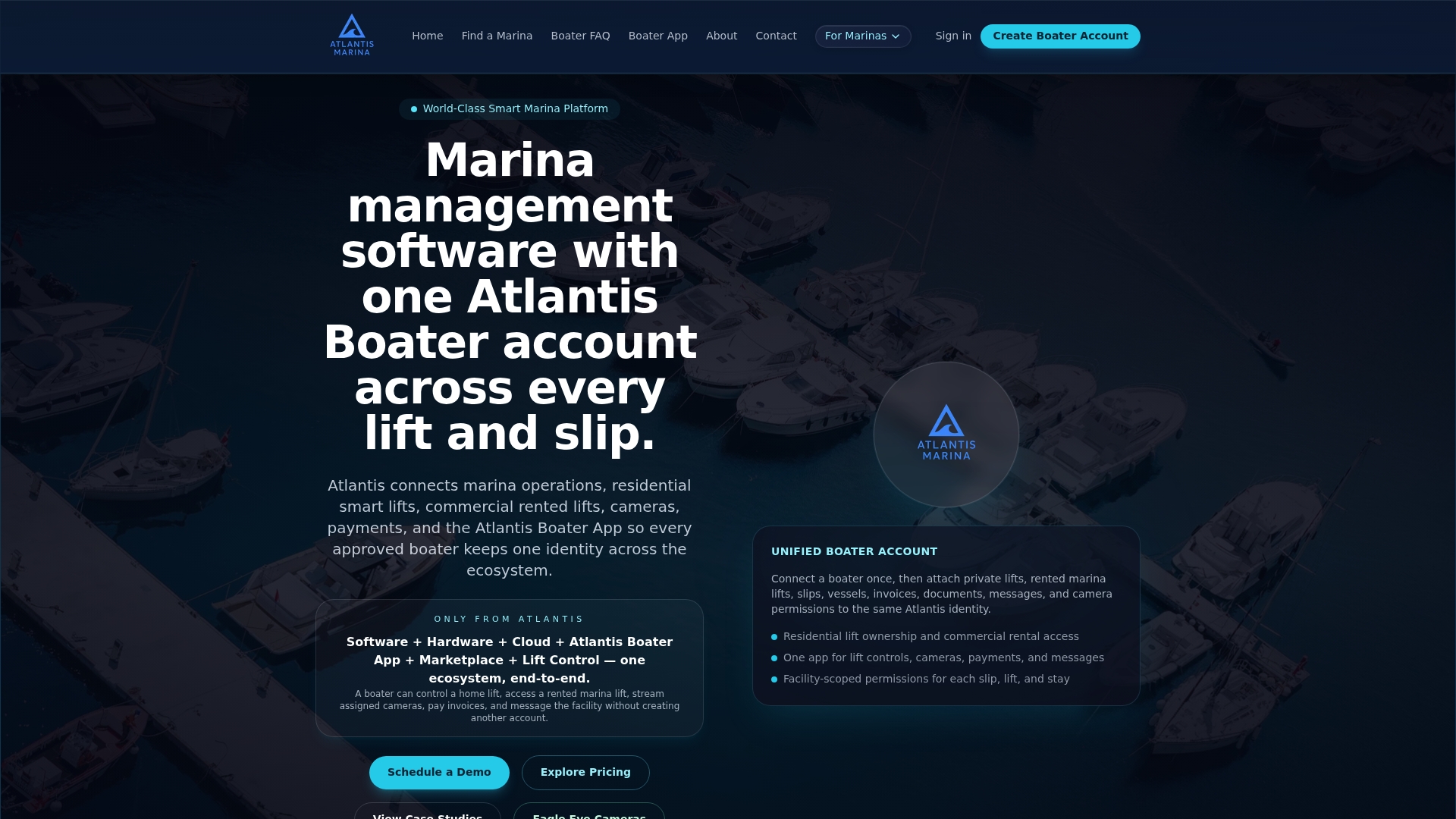
The platform supports smart boat lift controllers, remote monitoring, sensor and camera integrations, mobile alerts, and automated billing, all managed from one cloud-based dashboard. Atlantis Bot, the built-in AI assistant, handles boater questions on your website and supports staff with reservation, billing, and operational tasks. Whether you are modernizing a single facility or managing a multi-property group, the marina management platform scales to fit your operation. Explore Atlantis Marina's full feature set and see how connected infrastructure and software work together on the modern waterfront.
FAQ
What are the main smart marina IoT integration benefits?
Smart marina IoT integration delivers real-time infrastructure monitoring, automated billing, predictive maintenance, and digital guest services. These capabilities reduce staff workload and improve both operational efficiency and guest satisfaction.
Why are premium marinas adopting IoT technology now?
82% of marina customers prefer digital service delivery, and 47% of new marina construction projects already include IoT infrastructure. Premium marinas adopt IoT to meet guest expectations and stay competitive as digital services become the standard.
What are the most common marina IoT implementation challenges?
The most common challenges are hardware corrosion from salt-air exposure, Wi-Fi dead zones from poor network design, and staff adoption during the transition. Using marine-grade hardware, distributed outdoor access points, and a phased deployment approach addresses all three.
How long does a marina IoT integration project take?
IoT integration projects typically take 3–4 weeks and may cost $15,000–$45,000 depending on facility size and complexity. A phased approach, starting with monitoring systems, reduces both timeline risk and upfront cost.
How does IoT support marina sustainability goals?
IoT enables automated energy load balancing, real-time condition monitoring, and usage tracking that extends infrastructure lifespan. These capabilities reduce both operating costs and the facility's environmental footprint over time.