
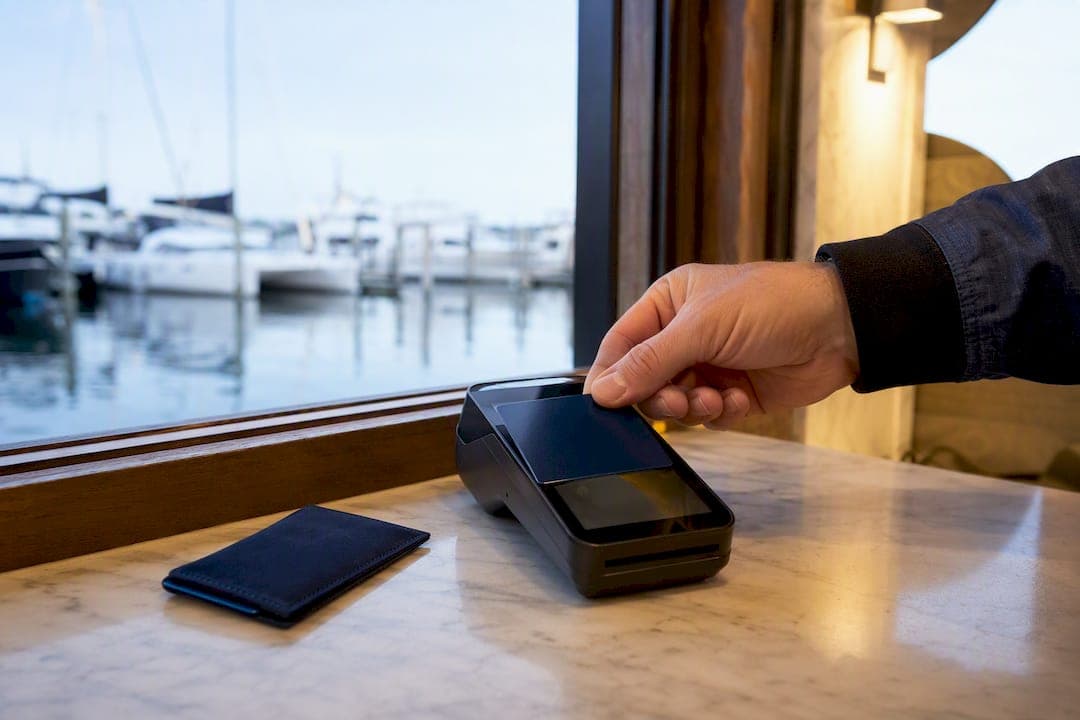
For marina operators, "card on file" means a tokenized, PCI-safe payment reference that enables autopay, incidentals, refunds, and recurring charges without storing card numbers on your systems. The bottom line: fewer failed payments, less manual collection work, and dockholders who renew without a phone call. Platforms like Atlantis Marina build this workflow directly into slip billing so revenue keeps moving without a staff member chasing it.
TL;DR:
- Using tokenized autopay ensures recurring fees process automatically, with network tokens updating when a card is reissued, reducing failed payments.
- Storing only tokens, not raw card data, shifts most PCI DSS compliance burden to the payment processor and enables lighter security assessments.
- Proper staff training on consent and incidental charges is crucial, as technical setup alone does not guarantee successful autopay implementation.
- A two-week pilot with secure capture, retry rules, and reconciliation should precede full autopay activation to catch issues early.
- Atlantis Marina offers integrated tokenized billing, refunds, and QuickBooks sync starting at $150 per month, tailored for different marina sizes.
Table of Contents
- How Card-On-File Payments Work for Marinas
- What Card-On-File Actually Does for Marina Revenue
- Staying PCI Compliant While Storing Cards on File
- How to Set Up Tokenized Autopay: A Step-by-Step Checklist
- Getting Boater Consent and Communication Right
- Fixing Failed Payments and Reconciliation Gaps
- How Atlantis Marina Handles Card-On-File Billing
- What Marina Operators Get Wrong About Rolling This Out
- Automate Card-On-File Billing With Atlantis Marina
- Sources
- FAQ
How Card-On-File Payments Work for Marinas
A card-on-file system never stores an actual card number on your marina's servers. Instead, it captures the card once, sends it to a payment processor, and gets back a token, a string of characters with no usable value if stolen. That token sits in your billing system and stands in for the card on every future charge.
The workflow runs in four steps: capture at checkout or in the boater app, vault the card with the processor, receive a token back, then run future charges against that token instead of the raw card number. Stripe describes this as replacing sensitive card data with a non-sensitive string that can be stored and reused safely.
Not all tokens behave the same way:
- Gateway (vault) tokens are tied to one processor. If you switch payment providers, you typically have to re-collect cards.
- Network tokens are issued by Visa, Mastercard, or the card networks themselves and travel with the cardholder's account, not just the processor relationship.
- Gateway tokens and network tokens have different portability and lifecycle behavior, which matters when a marina changes software or a boater's bank reissues a card.
Because the card number itself never touches your servers, tokenization shrinks your PCI DSS exposure. Hosted payment pages, where the boater enters card details directly into the processor's secure form, and direct-to-processor capture through an app, are the two most common ways marinas achieve this without building their own secure vault.
What Card-On-File Actually Does for Marina Revenue
Manual billing is slow, and it is expensive in ways that do not show up on a single invoice. Card-on-file billing changes three things at once: slip renewals process automatically, staff stop chasing checks, and fewer legitimate charges get declined by mistake.
Some processors report an increase in authorization rates for tokenized transactions compared to raw card numbers. Checkout points to uplifts as high as roughly 10 percentage points in certain studies, largely because networks recognize tokenized traffic as lower-risk and approve it more readily.
That translates into concrete operational gains:
- Recurring slip fees and dry-stack storage bills run on schedule instead of waiting on a mailed check.
- Network tokens update automatically when a bank reissues a card, so a lost or expired card does not silently break autopay.
- Transient boaters check out faster at the fuel dock or ship store because the card is already on file from their reservation.
Fewer declines mean fewer awkward follow-up calls asking a dockholder to update their payment method. That is staff time you get back every month.
Staying PCI Compliant While Storing Cards on File
Storing a card reference does not mean storing a card. Tokenization plus hosted payment pages keeps card numbers off your servers entirely, which is what actually reduces your Payment Card Industry Data Security Standard (PCI DSS) obligations. When your marina never receives, transmits, or stores raw card data, most of your PCI scope shifts to the processor.
Marinas that respond to municipal or institutional bids see this expectation written directly into procurement language. Public-sector RFPs for marina management software commonly require auto-billing support, hosted payment capture, documented PCI compliance, and accounting integration such as QuickBooks.
What that means in practice:
- Use a hosted checkout or in-app secure capture so raw card numbers never reach your internal systems.
- Expect to complete a Self-Assessment Questionnaire (SAQ), typically the simplest SAQ A or SAQ A-EP tier for hosted-page merchants, plus an Attestation of Compliance (AOC) from your processor.
- Enforce role-based access to billing records, keep audit logs of who touched a payment record and when, and require encrypted, authenticated API connections between your marina software and processor.
Pro Tip: Ask your payment provider directly which SAQ tier applies to your setup before you sign a contract. Hosted-page merchants almost always qualify for the lightest compliance tier, but only if the card form is genuinely hosted, not just styled to look that way.
How to Set Up Tokenized Autopay: A Step-by-Step Checklist
Rolling out card-on-file billing is a sequencing problem more than a technical one. Follow these steps in order:
- Pick a PCI-compliant gateway. Confirm it supports Stripe or ACH processing and offers hosted payment pages so card data bypasses your servers entirely.
- Capture cards through a secure checkout or boater app. Store only the returned token, never the card number, in your marina management system.
- Turn on network tokens where your processor supports them, so cards update automatically when banks reissue them.
- Configure autopay rules and retry logic, including how many attempts a failed charge gets and on what schedule before it escalates to staff.
- Connect refunds, adjustments, and QuickBooks Online sync so reversed or corrected charges post to your books without manual re-entry.
- Set up automatic receipts and notifications for every charge, refund, and failed payment attempt.
- Train staff on how to capture consent, trigger incidental charges (fuel, pump-out, late fees), and reconcile daily transactions against bank deposits.
Pro Tip: Run a two-week pilot before flipping autopay on for your full dockholder list. Configure hosted capture, simulate a handful of recurring charges and refunds, and reconcile against your accounting system before you trust it at scale.
Getting Boater Consent and Communication Right
A card-on-file program only works if boaters understand what they agreed to. Vague consent language is where most billing disputes start.
Your slip or storage contract should spell out, in plain terms, that a card is kept on file, what it will be charged for (rent, incidentals, late fees), and how often. A short clause drafted with Atlantis E-Sign at signing removes any ambiguity about whether autopay was authorized.
Beyond the contract itself:
- Send a receipt or notification for every charge, not just failed ones, so nothing feels like a surprise.
- Give dockholders a way to see upcoming charges before they post, especially for variable incidentals.
- Route disputes through a documented workflow: verify the charge, check the token and transaction ID, and issue a refund through the same tokenized flow rather than a separate manual process.
A clear approach to reducing marina chargebacks starts with this kind of upfront transparency, not with fighting disputes after they happen.
Fixing Failed Payments and Reconciliation Gaps
Most declined recurring charges trace back to one of three causes: an expired card, a reissued card number, or a processor mismatch that never got flagged. Smart dunning, where a failed charge retries on a staggered schedule instead of all at once, recovers a meaningful share of those declines without any staff involvement.
Network tokens do most of the heavy lifting here, since they update automatically when a card is reissued, preventing the churn that comes from a dockholder simply forgetting to update their payment method.
Keep it running smoothly with these checks:
- Review failed-payment reports weekly, not monthly, so retries happen while the charge is still fresh.
- Process refunds and adjustments through the same tokenized flow used for the original charge, never a manual card re-entry.
- Reconcile your processor's settlement report against your marina software monthly to catch any token or transaction mismatch before it becomes a bookkeeping headache.
How Atlantis Marina Handles Card-On-File Billing
Atlantis Marina builds tokenized billing into the platform rather than bolting it on. Contracts get signed through Atlantis E-Sign, autopay runs on Stripe and ACH processing, and refunds, adjustments, and QuickBooks Online sync happen without manual re-entry on the staff side.
On the boater side, the Atlantis Boater App captures card details through a secure checkout and returns only a token to the marina's account record, keeping raw card numbers off marina servers entirely. Marinas like Marina Jack in Sarasota, Florida, Vintage Marina in Oxnard, California, and Legendary Marina in Destin, Florida, represent the kind of operation this workflow is built for: seasonal dockholder billing, transient traffic, and incidental charges that all need to run automatically.

What Marina Operators Get Wrong About Rolling This Out
Most marinas treat card-on-file as a payments project when it is really a staff-training project. The tokens work regardless. What breaks autopay is a front-desk team that never learned how to capture consent correctly or trigger an incidental charge without confusion.
Get the capture and training right first, then turn on aggressive autopay rules. Expect a modest setup cost and a short adjustment period, followed by faster collections and real staff hours back on the schedule.
— John R
Automate Card-On-File Billing With Atlantis Marina
Atlantis Marina is the alternative to spreadsheets, paper authorization forms, and manually re-keyed card numbers, everything in this checklist runs natively: tokenized capture through the boater app, autopay with retry logic, Stripe and ACH processing, refunds routed through the same token, and QuickBooks Online sync that posts without a bookkeeper's intervention.
Pricing scales with marina size, from the Micro plan at $150 per month up through Large at $900 per month, with Enterprise pricing available on request for larger marina groups. If you are ready to see tokenized billing running against your own dockholder list, talk to the Atlantis Marina team about a pilot before rolling it out fleet-wide.
Sources
- Payment tokenization: What it is and how it works | Stripe
- Checkout
- Payment Tokenization: Network Tokens, Gateway Tokens, and Why They Matter | IsoFluent
- Clay County Marina Management Software RFP
FAQ
What Does "Card on File" Mean for a Marina?
It means a tokenized payment reference stored in your billing system instead of the actual card number, allowing autopay, incidentals, and refunds to run without exposing card data.
Does Tokenization Reduce PCI Compliance Requirements?
Yes. Keeping raw card numbers off your servers through hosted pages or tokenized capture shifts most PCI DSS scope to your processor, often qualifying you for a lighter SAQ tier.
What Is the Difference Between a Gateway Token and a Network Token?
A gateway token is tied to one processor and often needs re-collection if you switch providers, while a network token is issued by the card network and updates automatically when a card is reissued.
Can Atlantis Marina Handle Autopay and QuickBooks Sync Together?
Yes. Atlantis Marina connects tokenized autopay, refunds, and adjustments directly to QuickBooks Online sync so billing posts without manual entry.
How Much Does Atlantis Marina Cost for Small Marinas?
Plans start at $150 per month for the Micro tier, with Small at $300 and Medium at $500 per month; current pricing details are listed on the Atlantis Marina pricing page.