

Benefit segmentation, grouping customers by the services and experiences they actually value, is the most reliable way for marinas to increase occupancy and ancillary revenue. Academic studies applying this method to marina customers consistently find four to five practical segments, not the dozens of micro-personas marketing decks tend to promise. That consistency is the point: it means you don't have to invent a segmentation model from scratch.
The segments that show up again and again include:
- Socially oriented boaters who value community events, food and beverage, and gathering spaces
- Facilities/supportive segment focused on technical services, boat maintenance, and reliable infrastructure
- Service and prestige seekers who pay for concierge treatment, premium storage, and white-glove billing
- Touristic or attraction-oriented visitors drawn by transient slips, local access, and events
- Indifferent or price-focused customers who mainly want a dependable mooring at a fair rate
The action item is simple: run a short benefit-focused survey of your current slip-holders and transients, map your existing offerings against those five categories, and see where the gaps are. You'll likely find you're already serving two or three of these groups by accident and ignoring the rest.
Key Takeaways
Marinas that segment customers by benefits sought, then operationalize those segments through automated billing, reservations, and targeted communication, consistently see stronger retention and ancillary revenue than marinas treating every slip-holder the same way.
| Point | Details |
|---|---|
| Use benefit segmentation first | Group customers by what they value (social, technical, prestige, location, price) before demographics. |
| Expect four to five segments | Academic studies by Paker and Benevolo and Spinelli consistently find this range. |
| Run PCA plus cluster analysis | Reduce survey items to factors, then cluster respondents; validate against real behavior data. |
| Match offers to segments | Bundle amenities, pricing, and messaging by segment instead of a one-size-fits-all package. |
| Measure with a segment dashboard | Track occupancy, ancillary revenue, and retention by segment weekly to quarterly. |
| Operationalize with Atlantis Marina | Atlantis Marina ties segment tags to reservations, billing, and app-based delivery so pilots are measurable, not anecdotal. |
Table of Contents
- What Customer Segmentation in Marinas Means for Your Business
- What the Academic Research Says About Marina Segments
- Four Ways to Segment Your Marina's Customer Base
- The Five Marina Customer Segments You'll Likely Find
- How to Run a Benefit-Segmentation Study at Your Marina
- Turning Segments Into Service Bundles and Pricing
- What to Measure After You Segment Your Customers
- How Atlantis Marina Puts Segmentation Into Practice
- Why Most Marinas Get Segmentation Backward
- Get Started With Segment-Ready Marina Software
- Sources
- FAQ
What Customer Segmentation in Marinas Means for Your Business
Customer segmentation marina research treats a marina less like a parking lot for boats and more like a destination with a bundle of experiences attached to it. That reframing matters because it changes what you measure. Instead of tracking only slip occupancy, you start tracking which benefits drive renewals, referrals, and upsells.
The academic term for this approach is "benefit segmentation," borrowed from broader marketing theory but applied specifically to marina customer analysis over the past decade. It groups boaters not by who they are (age, income, boat length) but by what they're trying to get out of the marina relationship. Two people with identical 40-foot sailboats might want completely different things: one wants a bar with a view and Friday night events, the other wants a technician on call and a locked gate. Demographic data alone won't tell you that difference. A well-designed benefit survey will.
What the Academic Research Says About Marina Segments
The foundational work here comes from Paker's 2016 study published in Tourism Management, which surveyed 261 yachters across seven marinas and applied a formal benefit segmentation approach. The result was five distinct clusters: socially oriented, indifferent, supportive facilities oriented, service and prestige oriented, and touristic attractiveness oriented. Paker framed marinas explicitly "as destinations," a phrase that has since become shorthand for the whole benefit-segmentation approach to marina customer analysis.
A follow-up line of research from Benevolo and Spinelli ran a similar analysis on 228 pleasure boaters in Mediterranean marinas and landed on four well-differentiated segments rather than five. The interesting finding wasn't the count, it was the direction of the shift: their data showed benefit preferences moving away from tourist- and people-focused services toward technical, boat-centered services. In plain terms, some boater populations care more about the quality of your haul-out equipment than the quality of your happy hour.
Both studies used the same core methodology, and it's worth understanding because you can replicate a scaled-down version of it yourself:
- A questionnaire asking respondents to rate a list of potential marina benefits (social atmosphere, technical service, prestige, location, price, and so on)
- Principal component analysis (PCA) to collapse dozens of correlated survey items into a handful of underlying benefit factors
- Cluster analysis run on those factors to group respondents into segments with similar benefit priorities
Neither study is a perfect template for every marina. Paker's sample came from Turkish marinas, and Benevolo and Spinelli's came from the Mediterranean. Sample sizes in both cases were in the low hundreds, and boater preferences have shifted since these surveys were fielded, particularly around digital expectations. Industry data shows online slip booking adoption rose from roughly 10% to 55% over five years, a shift neither foundational study could have captured. Treat the five/four segment framework as a strong starting hypothesis for your own survey, not a fixed answer you can import wholesale.
Four Ways to Segment Your Marina's Customer Base
Benefit segmentation is the headline approach, but it works best layered with three other lenses. Here's how to think about each one and what data to collect.
- Benefit segmentation asks what customers want from the relationship. Survey variables should cover amenities (pool, restaurant, lounge access), event participation, concierge-level service interest, technology expectations (app-based check-in, digital billing), and sustainability preferences (clean marina certifications, pump-out access, green infrastructure).
- Demographic and vessel-based segmentation asks who the customer is and what they own. Capture age bracket, household income range, vessel type and length, and ownership status (owner-operator versus fractional or club membership). Vessel length in particular correlates strongly with willingness to pay for prestige services.
- Behavioral segmentation asks how customers actually use the marina. Track visit frequency, seasonality of usage, which booking channel they use (app, phone, walk-up), and ancillary spend at the ship store or on service appointments.
- Psychographic and lifestyle segmentation asks about values and identity. This is the hardest to capture cleanly, but short survey items work: "I choose a marina mainly for its social scene" versus "I choose a marina mainly for reliability and price," rated on a five-point scale, gets you most of the signal without a lengthy instrument.
The real operational value comes from combining these frameworks rather than picking one. A hybrid segment like "prestige-seeking, high-frequency, 45-foot-plus owner" is something your marketing team can act on immediately, while "socially oriented" alone tells you the benefit but not who to target with it. Benevolo and Spinelli's own work supports this: their strongest finding was that benefit clusters shift meaningfully when cross-referenced with vessel type, which is exactly the kind of hybrid signal a pure demographic or pure benefit survey would miss on its own.
Practical variable list for a first-pass survey:
- Vessel length, type, and age of ownership
- Primary reason for choosing the current marina (open-ended plus rated benefit list)
- Frequency of on-site visits per month, by season
- Ship store and service department spend over the last 12 months
- Preferred communication channel (app, email, text, phone)
- Interest in concierge, event, or premium storage add-ons (yes/no plus willingness-to-pay range)
The Five Marina Customer Segments You'll Likely Find
Once you run your own survey, expect something close to the academic framework, adjusted for your local market. Here's what each group typically wants and how to serve it.
Socially oriented boaters treat the marina as a social club with water access. They show up for trivia nights, dockside barbecues, and the bar at the clubhouse. Investment priorities here are low-cost and high-visibility: a monthly potluck, a covered gathering deck, or a simple events calendar pushed through your booking platform. This group also tends to generate the most word-of-mouth referrals, so treat their satisfaction as a marketing input, not just a retention metric.
Facilities and supportive-service boaters care about the boat, not the bar. They want a reliable haul-out schedule, responsive maintenance staff, and clear communication when something on their vessel needs attention. This segment punishes bad technical service disproportionately; a single missed maintenance window can cost you the renewal even if everything else is excellent.
Service and prestige seekers want to feel like members of something exclusive. Concierge check-in, premium covered storage, and billing that never requires them to think about a late fee are the table stakes here. MDPI research on marina services notes that hospitality-style amenities are becoming a bigger differentiator across the industry, and this segment is where that investment pays back fastest.
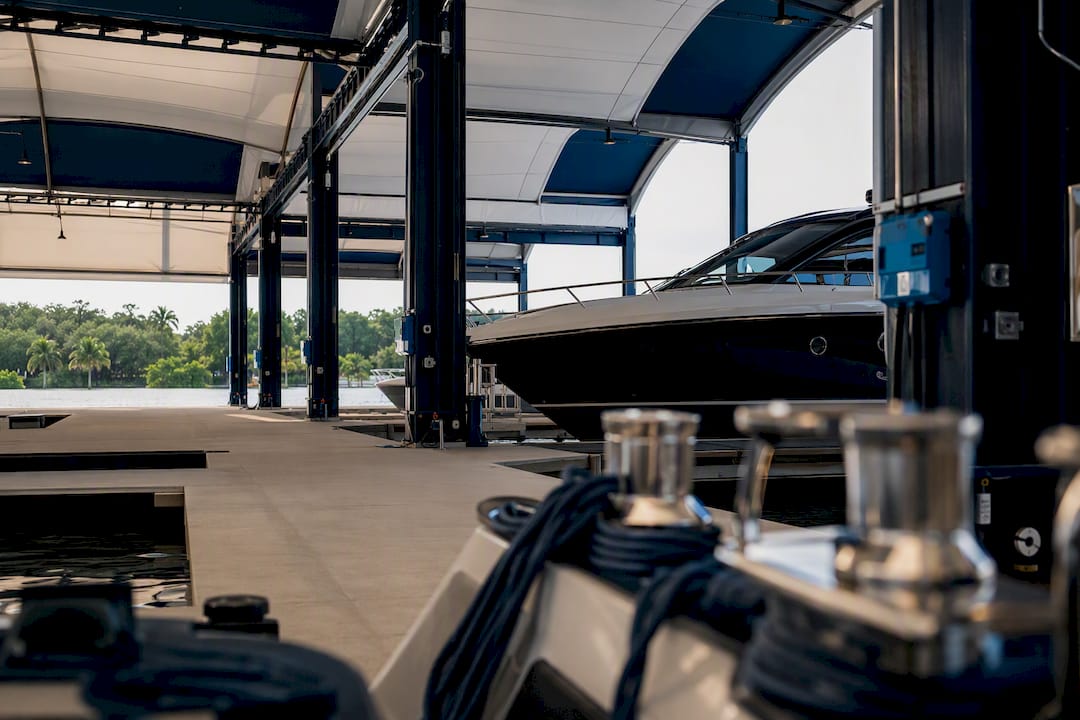
Touristic and attraction-oriented visitors are often transient rather than long-term slip-holders. They're choosing your marina because of what's nearby: a downtown, a beach, a festival weekend. Family recreation options and city access rank among the most cited factors driving marina attractiveness in survey research, so day-pass pricing, easy transient booking, and clear signage about local attractions matter more here than long-term loyalty perks.

Indifferent or price-focused customers are the segment most operators underestimate. They don't want extras. They want a dependable slip, fair pricing, and minimal friction. Trying to upsell this group on concierge packages usually backfires; the better play is operational reliability and transparent billing.
Pro Tip: Don't assume your indifferent segment is unprofitable just because they buy less. Low-touch customers often have the lowest service cost per dollar of revenue, which can make them your highest-margin segment even without ancillary spend.
How to Run a Benefit-Segmentation Study at Your Marina
You don't need a research grant to replicate the academic methodology. Here's a version scaled for a working marina team.
Step 1: Design the survey. Include 15 to 25 benefit statements rated on a five-point agreement scale (examples: "I value having a bar or restaurant on-site," "I value fast technical service for repairs," "I value premium storage options," "I value having events and community activities"). Add basic demographic and vessel fields, plus one open-ended question asking what would make them recommend the marina to another boater.
Step 2: Set sampling targets. Aim for responses from all three major customer types: permanent slip-holders, seasonal or annual renters, and transient/day visitors. As a rule of thumb, 100 to 150 responses is enough to run a basic PCA and cluster analysis with reasonable stability; smaller marinas can work with fewer but should treat results as directional rather than definitive.
Step 3: Run the analysis. Feed the rated benefit items into a principal component analysis to collapse them into three to six underlying factors (this is the same step Paker's study used to move from raw survey items to interpretable dimensions). Run cluster analysis on those factor scores to group respondents. Validate by cross-tabbing the resulting clusters against vessel type, spend history, and tenure. If a cluster doesn't line up with any coherent behavioral pattern, it's probably noise, not a real segment.
Step 4: Set a timeline and budget. Small marinas can complete a basic version of this process, survey design, fielding, and analysis, in several weeks to a few months using free or low-cost survey tools and spreadsheet-based PCA. Consultant-led projects move faster and add statistical rigor but cost more; the tradeoff is speed and confidence versus budget. A reasonable middle path is a DIY pilot survey followed by a consultant review of the results before you commit to operational changes.
Step 5: Handle data properly. Get explicit consent when collecting survey responses tied to customer accounts, store the data securely, and separate identifiable records from the aggregated segment analysis wherever possible. This matters both for regulatory reasons and for maintaining boater trust, especially if you're layering survey data on top of existing vessel and billing records.
Quick reference for planning:
- Survey length: 15 to 25 items, five minutes or less to complete
- Sample size: 100 to 150 minimum for stable clusters; more for larger marinas
- Timeline: 6 to 12 weeks for a DIY pilot
- Tools: any standard survey platform, spreadsheet or statistical software for PCA and clustering
- Validation: cross-tab clusters against real behavioral data (spend, tenure, vessel type) before acting on them
Turning Segments Into Service Bundles and Pricing
Segmentation only pays off when it changes what you sell and how you sell it. Here's how to map each finding to an operational decision.
Start with amenity bundling. If your survey confirms a strong service-and-prestige cluster, pilot a premium package: covered storage, priority haul-out scheduling, and a dedicated point of contact, priced at a clear premium over standard slip fees. If the socially oriented cluster is large, a low-cost monthly events calendar and a covered gathering space will move retention more than almost any single facilities upgrade.
Pricing and membership design should follow willingness to pay, not a flat percentage markup. The prestige segment will often absorb premium pricing for guaranteed service windows; the price-focused segment will churn immediately if you try the same move on them. Structuring at least two or three tiers, rather than one-size-fits-all pricing, lets each segment self-select into the offer that fits.
Communication has to match the segment too. Touristic and transient visitors respond to location-based, short-lead-time messaging: a text or app notification about a weekend event works better than a quarterly newsletter. Long-term slip-holders in the facilities segment want direct, low-frequency updates about maintenance schedules and service availability. A customer portal that lets boaters set their own communication preferences removes the guesswork from this entirely.
Operationally, this means adjusting staffing and scheduling around segment needs rather than a single generic service model: dedicated technical staff availability for the facilities segment, concierge coverage during peak hours for the prestige segment, and simplified self-service check-in for the price-focused and touristic segments.
Pro Tip: Pilot one segment-driven change at a time. Rolling out a premium package, a new pricing tier, and a new communications cadence simultaneously makes it impossible to tell which change actually moved the needle.
Before scaling anything, run a short checklist: confirm the offer maps to a validated segment, price it against a control group of similar customers, set a 60 to 90 day measurement window, and only expand marina-wide once the pilot shows a clear, attributable lift.
What to Measure After You Segment Your Customers
Segmentation without measurement is just a labeling exercise. Track these metrics from day one of any pilot:
- Occupancy rate by segment, not just marina-wide
- Ancillary revenue per slip, broken out by segment
- Retention and renewal rate by segment, year over year
- Net Promoter Score or a simple satisfaction rating by segment
A basic dashboard should report weekly on booking and occupancy trends, monthly on ancillary spend and retention, and quarterly on satisfaction and segment mix shifts. That cadence matches how operations dashboards are typically structured for marina management, and it keeps the reporting burden manageable for a small team.
| Metric | Suggested Reporting Cadence |
|---|---|
| Occupancy by segment | Weekly |
| Ancillary revenue per slip | Monthly |
| Retention/renewal rate | Monthly |
| Satisfaction/NPS by segment | Quarterly |
Evaluate a pilot honestly: compare the treated segment against a similar control group over the same window, and don't declare success on a small sample after a single busy weekend. Re-run your segmentation study every two to three years, or sooner if you see a major shift in booking channel mix, a new competitor marina nearby, or a sustained change in the demographic composition of your waiting list.
How Atlantis Marina Puts Segmentation Into Practice
Segmentation research is only useful if the resulting tags and packages actually reach your front-line operations. This is where the software layer matters as much as the survey design.
Vessel and customer records function as the source of truth for segment tags: once a boater is classified as prestige-seeking or facilities-focused, that tag should travel with every reservation, billing cycle, and support interaction, not live in a separate spreadsheet. The Atlantis Boater App and reservation automation let you deliver segment-specific packages directly, whether that's a premium storage upsell for one group or a simplified transient booking flow for another, while quietly collecting the usage data you need to validate the segment over time.
Automated billing, covering autopay, Instant Pay, and Stripe/ACH processing, paired with QuickBooks Online sync, turns segment pilots into measurable revenue events instead of anecdotes. When a premium package rolls out to the prestige segment, the billing data shows exactly what it added to revenue per slip. Analytics dashboards then let you A/B test a pilot against a control group and track segment KPIs without manually reconciling spreadsheets.
Marinas that connect segmentation directly to their booking, billing, and communication systems close the gap between "we know what our customers want" and "we're actually delivering it and can prove it worked."
Why Most Marinas Get Segmentation Backward
Most operators start segmentation with demographics because it's the easiest data to pull from existing records: age, income, boat length. That's backward. The research is clear that benefit preferences, not demographics, predict which package a customer will actually buy, and demographic data alone consistently fails to explain why two similar boaters make opposite purchasing decisions.
The bigger mistake is treating segmentation as a one-time report rather than an operating input. A cluster analysis sitting in a slide deck changes nothing. The marinas that actually benefit are the ones that route segment tags into daily workflows, reservation defaults, billing tiers, and communication triggers, so the insight compounds every month instead of decaying the day the report is filed.
If you take one thing from the academic work, take this: don't wait for a perfect five-segment model before acting. Run a smaller, imperfect survey now, tag your existing customer base with your best guess, and refine it as real behavioral data comes in. Waiting for statistical certainty costs more in lost renewals than acting on a directionally correct segmentation ever will.
— John R
Get Started With Segment-Ready Marina Software
Atlantis Marina gives you the operational backbone to act on segmentation instead of just studying it. Rather than bolting a survey tool onto disconnected spreadsheets, you get one platform where segment tags, reservations, billing, and boater communication already live together, so a pilot package for your prestige segment or a simplified flow for transient visitors can go live in days, not quarters.
That matters most for small and mid-sized marinas that don't have a data team to stitch together survey results, billing reports, and app usage manually. Vessel and customer records serve as the single source of truth for whichever segments your survey turns up, the Atlantis Boater App delivers segment-specific offers directly to boaters, and automated billing through Stripe, ACH, and QuickBooks sync means you can see the revenue impact of a pilot within a billing cycle instead of guessing at it months later. Real marinas already run on this setup, including Diversey Harbor Marina in Chicago and Bayshore Landing in Miami.
If you've just run your first benefit survey and want a system that can turn those findings into live packages and measurable pricing tiers, start with Atlantis Marina's platform overview and see how quickly a segment-driven pilot can go from spreadsheet to revenue.
Sources
- Development of Marina Services in the Context of Sustainable Water and Coastal Tourism (MDPI)
- 100+ Marina Industry Statistics: 2026 Verified Report
FAQ
What are the four types of customer segmentation?
The four broad frameworks are demographic (age, income, vessel type), behavioral (visit frequency, spend, booking channel), psychographic (values and lifestyle), and benefit segmentation (what services and experiences customers actually want). Marina research favors benefit segmentation as the most predictive of these four.
What is an example of customer segmentation in a marina?
A marina running a benefit survey might find a "service and prestige" segment willing to pay premium rates for concierge check-in and covered storage, alongside an "indifferent" segment that just wants a reliable slip at a fair price, exactly the pattern Paker's 2016 study identified.
How profitable is owning a marina?
Profitability varies widely by location, size, and service mix, but industry data shows US marinas operate at relatively high occupancy on average, and marinas that diversify into hospitality and ancillary services tend to outperform those relying on slip fees alone.
What is meant by customer segmentation?
Customer segmentation means dividing your customer base into distinct groups that share similar needs, behaviors, or preferences, so you can target offers, pricing, and communication more precisely than a one-size-fits-all approach allows. For marinas, the most useful version groups customers by the benefits they seek rather than by demographics alone.