

Service request tracking in marinas is the process of digitally capturing, assigning, and monitoring maintenance and repair tasks from initial intake through billing and closure. Without a centralized system, dockmasters rely on memory, radio calls, and paper logs. That approach fails at scale. Platforms like Shifton, DockMaster, and Storable Marine have demonstrated that connecting service requests to work orders, parts inventory, and billing in one place prevents revenue loss and eliminates the administrative delays that frustrate both staff and boaters. This guide covers the tools, processes, and pitfalls every marina operator needs to know.
What tools and features make service request tracking at marinas effective?
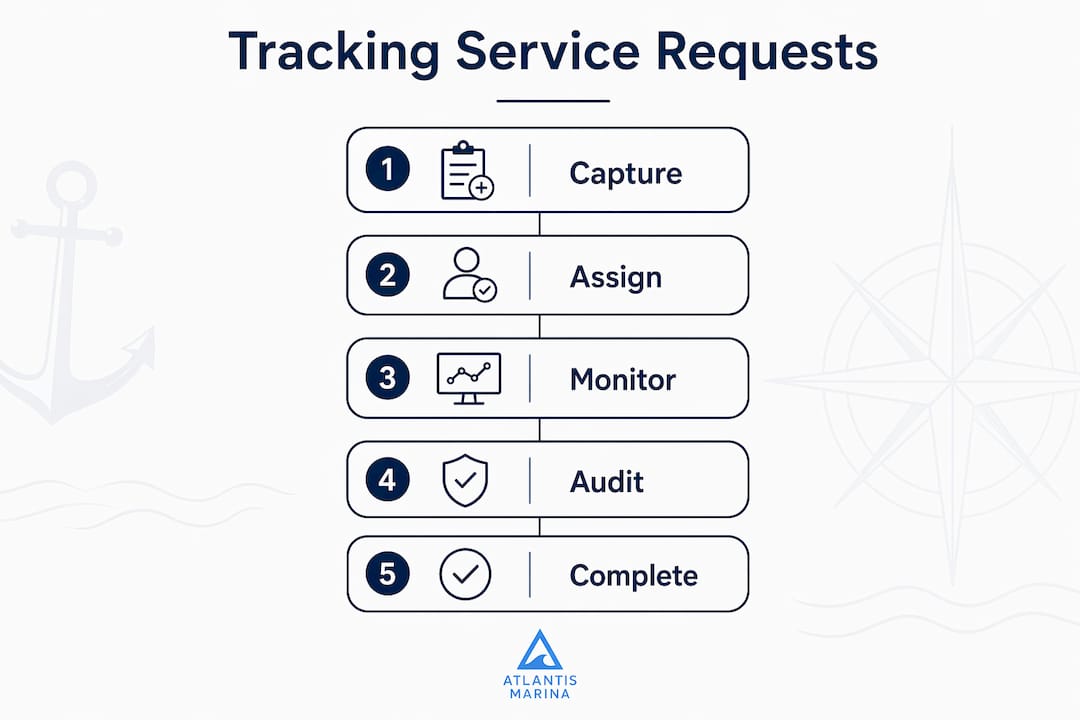
Effective marina service management requires a centralized digital platform that connects every service request to a work order, a parts record, and a billing line. Without that connection, charges get forgotten and jobs get lost. The right platform does more than store requests. It coordinates people, parts, and payments in real time.
The core features to look for include:
- Centralized work order management. Every request gets a digital record with timestamps, assigned technician, job status, and linked parts. Platforms that offer real-time status updates can significantly reduce inbound phone calls from boaters asking for progress reports.
- Parts inventory integration. Technicians log parts consumption directly against the work order. This prevents the common problem of completing a job and forgetting to bill for three small items.
- Labor hour tracking. Staff log time per job, not per shift. That granularity feeds accurate billing and reveals which vessel types or job categories consume the most labor.
- Mobile access with offline sync. Dock environments have spotty Wi-Fi and weak cellular coverage. Apps that queue tasks offline and sync automatically when connectivity returns are not optional. They are a baseline requirement.
- Automated scheduling for recurring tasks. Winterization, spring commissioning, and annual inspections repeat on predictable cycles. Platforms that auto-generate recurring assignments remove the risk of missing scheduled maintenance.
- GPS-based crew tracking. Knowing where technicians are across a large dock layout eliminates the radio-chase cycle and helps dispatchers assign the nearest available person to an urgent request.
Pro Tip: Before selecting a platform, map your three highest-volume recurring jobs and confirm the software can auto-schedule them. If it cannot, that gap will cost you labor hours every season.
| Feature | Why it matters for marina operations |
|---|---|
| Offline sync | Prevents lost requests in low-connectivity dock zones |
| Parts and labor integration | Feeds billing automatically and reduces forgotten charges |
| Recurring task automation | Eliminates manual scheduling for seasonal maintenance |
| GPS crew tracking | Reduces dispatch time and idle waiting across large facilities |
| Real-time dashboard | Gives dockmasters, office staff, and technicians the same live view |
How to implement a step-by-step process for tracking marina service requests
A reliable marina service request management process starts before a technician ever touches a vessel. The intake step determines whether the rest of the workflow runs cleanly or collapses into confusion.
-
Capture every request digitally at intake. Use a web form, a customer portal, or a dockside tablet. Record the vessel name, slip number, reported issue, and the exact time of submission. Time-stamped digital intake creates an audit trail that protects both the marina and the boater if a dispute arises later.
-
Assign and schedule with operational context. Not all jobs can be scheduled the same way. Underwater hull work depends on tides. Electrical repairs may require the vessel to be out of the water. Assign jobs with awareness of tidal windows, seasonal peak periods, and current technician workloads. Scheduling without that context creates bottlenecks.
-
Update job status in real time from the dock. Technicians should log progress from a mobile app or dockside terminal as work happens, not at the end of the day. Technicians logging updates in real time prevent managers and customers from being blindsided by delays caused by weather or parts availability.
-
Link parts and labor directly to the work order. Every part pulled from inventory and every hour logged should attach to the specific work order automatically. This is the step most marinas skip, and it is where revenue leakage begins. Gold standard systems auto-generate draft invoices from technician updates so no billable item gets missed.
-
Close jobs with a documented audit trail. Mark jobs complete only after confirming all parts and labor are recorded. Generate a service summary the boater can review. Closed jobs with full records feed [comprehensive service histories](https://blog.atlantis-marina.com/blog/yacht-club-vessel-records-management guide) that support compliance checks and future maintenance planning.
Pro Tip: Assign one person per shift the role of "work order auditor." Their job is to review all open orders before end of day and flag any missing parts entries or labor logs. This single habit catches most billing gaps before invoices go out.
What are the common mistakes in marina service tracking and how to avoid them?
The most damaging mistakes in marina service request management are not technical failures. They are process failures that technology could have prevented.
"Single operational control layers replace institutional memory with institutional data, minimizing errors and friction in high-traffic marina operations." — Nexustek
The most common pitfalls include:
- Relying on memory or verbal handoffs. When a dockmaster takes a service request by radio and holds it in memory until they reach a desk, that request is one distraction away from disappearing. Digital intake at the point of contact eliminates this single point of failure.
- Using fragmented tools. A marina that tracks requests in a spreadsheet, schedules in a calendar app, and bills in a separate accounting system creates three separate places for errors to hide. Fragmented tools create friction and expand the number of places where information can fall through the cracks.
- Disconnecting labor and parts from billing. Forgotten small charges accumulate into significant revenue loss over a season. Without automated invoice triggers tied to field updates, marinas consistently underbill for materials and labor.
- Ignoring offline sync requirements. A platform that requires constant connectivity will fail at the end of a long dock or inside a covered boathouse. Staff will revert to paper the first time the app stops working, and that paper record rarely makes it back into the system.
- Operating without a shared live dashboard. When the office, the dockmaster, and the technicians each have a different view of job status, the result is a chase-down culture. Staff spend time asking each other for updates instead of completing work. One shared dashboard showing planned, in-progress, and awaiting-parts jobs eliminates that waste.
How does integrated service tracking improve the boater experience?
Managing service requests is inseparable from managing the customer's experience. A boater who cannot get a clear answer on the status of their vessel repair will call the office repeatedly, leave frustrated reviews, and reconsider their slip renewal. Integrated tracking solves this at the operational level.
The direct benefits for boaters include:
- Real-time status visibility. When technicians update job status from the dock, that information can flow directly to a customer portal or automated message. Boaters stop calling because they already know where their job stands.
- Proactive communication on delays. Weather holds and parts backorders are unavoidable. A system that flags these delays and triggers a customer notification prevents the boater from feeling ignored. Proactive mobile updates by technicians remove the need for customers to chase down progress.
- Accurate, dispute-free billing. When invoices are generated directly from logged labor and parts, the line items are specific and defensible. Boaters who can see exactly what was done and what was charged raise far fewer billing disputes.
- Service history transparency. A complete digital record of every job performed on a vessel builds trust over time. Boaters at marina management apps that offer customer portals report higher satisfaction because they can access their own vessel's maintenance history on demand.
Consistent, transparent communication turns a functional service operation into a competitive advantage. Boaters choose marinas where they feel informed and respected, not just docked.
Key Takeaways
Effective service request tracking in marinas requires a single integrated system that connects intake, scheduling, parts, labor, and billing in real time.
| Point | Details |
|---|---|
| Centralize all intake digitally | Capture every request with timestamps to create an audit trail and prevent lost jobs. |
| Connect parts and labor to billing | Auto-generate draft invoices from field updates to eliminate revenue leakage. |
| Use offline-capable mobile tools | Ensure technicians can log updates anywhere on the dock, even without connectivity. |
| Share one live dashboard | Give office staff, dockmasters, and technicians the same real-time job status view. |
| Communicate proactively with boaters | Push status updates and delay notifications to reduce inbound calls and build trust. |
Why I think most marinas are still leaving money on the table
After years of watching marina operations up close, the pattern is consistent. The marinas that struggle most are not short on skilled technicians or willing staff. They are short on institutional data. They run on institutional memory, and that memory walks out the door every time a senior dockmaster retires or a lead technician takes another job.
The shift from memory to data is not complicated, but it requires a deliberate decision. The marinas that have made that shift report two immediate changes. First, billing accuracy improves because nothing falls through the cracks. Second, staff stress drops because nobody is chasing information. A dockmaster with mobile access to a live dashboard spends their time managing work, not hunting for it.
The adoption hurdle is real. Staff who have used radio and paper for years will resist a new system, especially in the first few weeks. The solution is not to mandate the tool. It is to show staff how it makes their specific job easier. Show the technician that logging parts on the app means they stop getting blamed for billing errors. Show the dockmaster that the dashboard means fewer interruptions. Adoption follows usefulness.
The business case is straightforward. Marinas that connect service tracking to invoicing recover charges they were previously missing and reduce the time spent on billing disputes. That combination improves both revenue and the boater relationship. Both matter for long-term retention.
— John
How Atlantis-marina supports marina service request management
Atlantis-marina, developed by Atlantis Control Systems, brings service request tracking, billing, maintenance scheduling, and customer communication into one cloud-based platform built for marina operators and dockmasters.
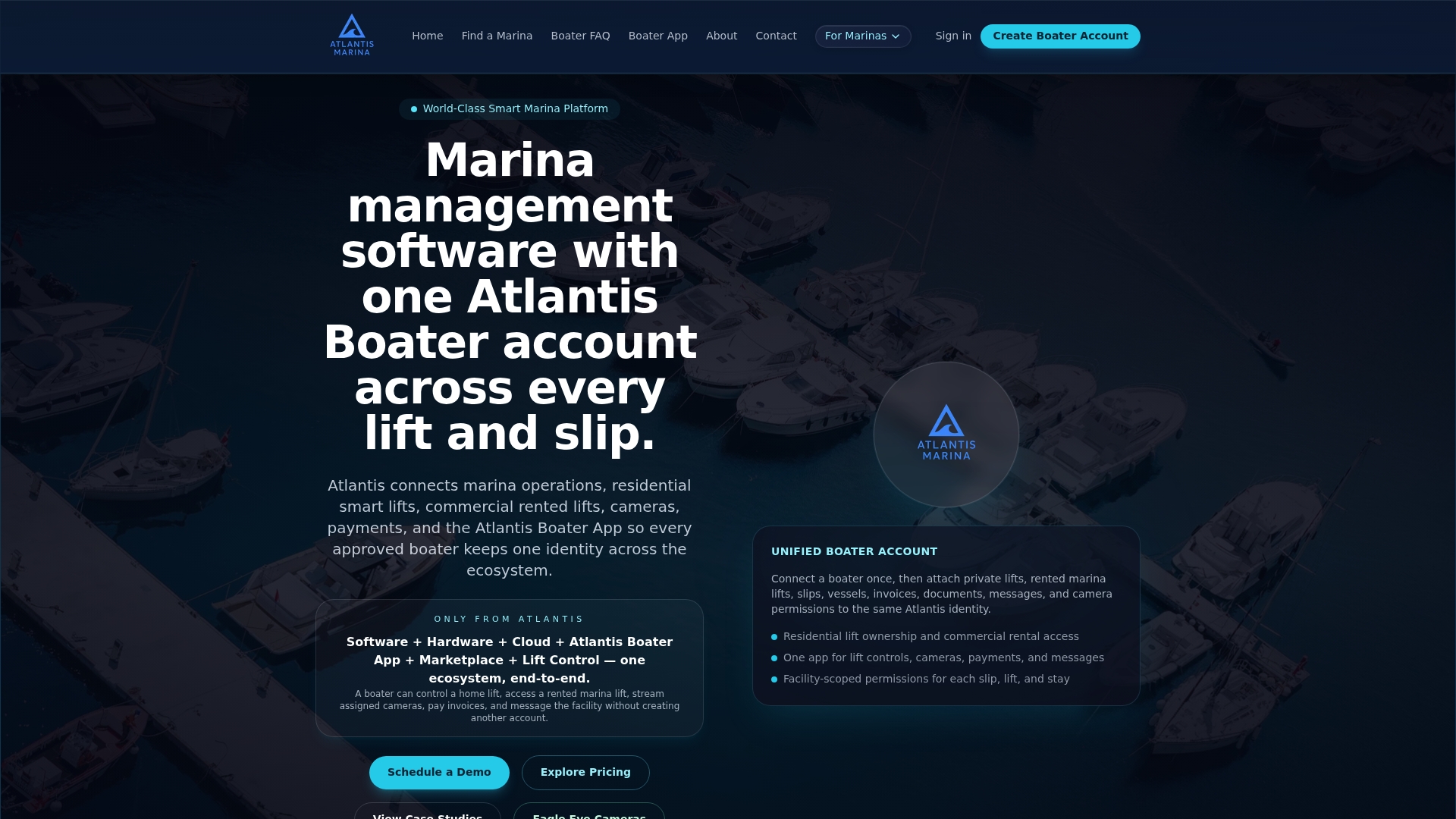
The platform gives dockmasters a live operations dashboard covering reservations, service requests, facility status, and tenant communications. Technicians access job details and log updates from mobile devices, with no dependency on a strong dock connection. Billing connects directly to completed work orders, so invoices reflect actual labor and parts without manual re-entry. Marinas looking to move from fragmented workflows to a single operational layer can explore the full feature set and request a demo to see how Atlantis-marina fits their specific operation. Pricing details are available at Atlantis-marina pricing.
FAQ
What is service request tracking in a marina?
Service request tracking is the process of digitally capturing, assigning, and monitoring maintenance and repair jobs from intake through billing. It replaces verbal handoffs and paper logs with a centralized, time-stamped workflow.
What features should marina service tracking software include?
The core features are centralized work order management, parts and labor integration, mobile access with offline sync, automated recurring task scheduling, and a shared live dashboard for all staff roles.
How does service tracking reduce revenue leakage at marinas?
When labor hours and parts consumption are logged directly against a work order, the system auto-generates draft invoices that capture every billable item. Without that link, small charges are routinely forgotten and never billed.
Can service tracking software work in low-connectivity dock environments?
Yes. Platforms with offline sync capability queue all technician updates locally and push them to the central system automatically when connectivity is restored, making them reliable across the full dock footprint.
How does service tracking improve communication with boaters?
Real-time technician updates flow into customer notifications and portal status views, so boaters know where their job stands without calling the office. Proactive delay alerts for weather or parts issues prevent frustration before it starts.