
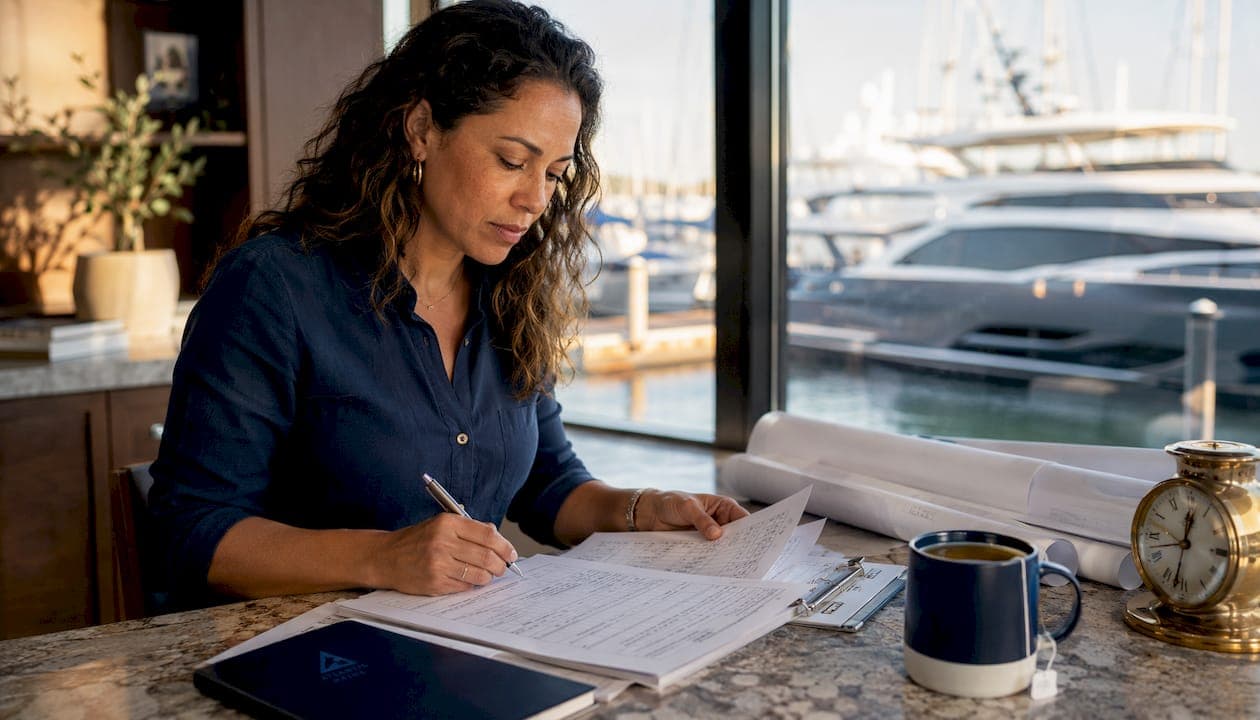
The most common luxury marina service gaps are digital guest UX failures, fragmented billing and reservations, maintenance scheduling breakdowns, security and connectivity shortfalls, and inconsistent staff responsiveness. Each one erodes renewal rates and reputation. The single highest-leverage remedy is consolidating operations onto a unified platform that connects reservations, billing, maintenance, and guest communications into one customer-facing view. Platforms like Atlantis Marina are purpose-built for exactly that. On the compliance side, any marina processing card payments must meet PCI standards, and fragmented systems make that harder to enforce consistently.
Pro Tip: Run a 30-minute "boater walk-through" audit: attempt to book a slip, pay an invoice, and submit a service request as a guest would. Every friction point you hit is a gap your team has likely stopped noticing.
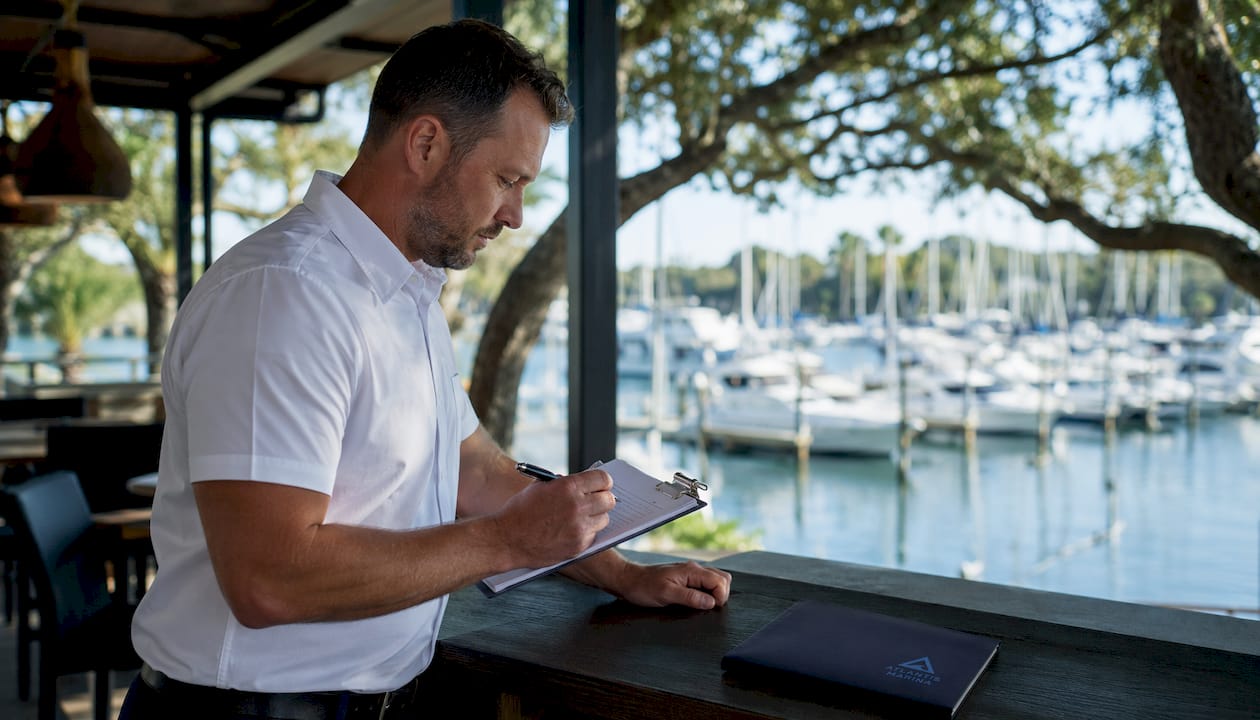
Table of Contents
- What are the most common luxury marina service gaps?
- Why do these gaps persist in luxury marinas?
- How to prioritize fixes: a short-, medium-, and long-term action plan
- What KPIs and SLAs should you track to measure improvement?
- How does an integrated platform close each gap?
- What should you know before implementing a new platform?
- Key Takeaways
- What marina leaders actually learn when they close these gaps
- Atlantis Marina closes the gaps your current systems leave open
- Useful sources
- FAQ
What are the most common luxury marina service gaps?
Luxury marinas face a consistent set of failures that show up across facility types, from full-service waterfront resorts to dry-stack operations. Here are the five most impactful, ranked by frequency and guest-facing consequence:
- Digital guest UX and mobile reservation failures. Guests expecting mobile-first booking and real-time slip availability hit outdated web forms or phone-only intake. The consequence: lower transient occupancy and lost revenue before a boat ever arrives.
- Fragmented billing and slow checkout. Fuel charges, slip fees, and repair tickets living in separate systems produce manual reconciliation errors and delayed invoices. Guests leave without a clean final bill.
- Maintenance scheduling and pump-out unreliability. Deferred maintenance and poor scheduling visibility create service outages. A mechanical failure at a pump-out station, like the one that forced Picton Harbour Marina to issue a public notice and halt service, can immediately disrupt guest experience with no warning system in place.
- Security, monitoring, and connectivity failures. Gaps in camera coverage, unreliable Wi-Fi, and no remote monitoring leave both guests and staff without visibility into dock conditions or vessel status.
- Inconsistent staff responsiveness during peak season. When requests arrive by phone, text, and email with no central queue, high-priority issues get missed. The consequence is reputational damage that surfaces in reviews and renewal conversations.
Why do these gaps persist in luxury marinas?
The root causes are structural, not accidental. Most marinas operate with lean dock crews and legacy IT environments, and the gap between guest digital expectations and dockside delivery widens every season.
Four causes drive nearly every gap on the list above:
- Legacy and fragmented systems. Reservations in one tool, billing in another, service tracked on a spreadsheet. Alliance Marine's analysis found that duplicate data entry and lost visibility prevent managers from acting before problems compound across a season.
- Manual administrative processes. Staff spend hours on billing reconciliation, notification calls, and access management tasks that automation could handle in seconds. That time comes directly out of high-touch guest service.
- Seasonal staffing and high turnover. New staff inherit broken workflows with no documentation. The real bottleneck, though, is the manual administration those staff are handed, not the headcount itself.
- Poor operational visibility. Without a live dashboard, a dockmaster cannot see which slips are overdue for maintenance, which invoices are unpaid, or which guest requests are aging past SLA.
Pro Tip: Before blaming staffing shortfalls, audit how much of your team's day goes to tasks a platform could automate: invoice generation, payment reminders, and reservation confirmations. That number usually surprises managers.
How to prioritize fixes: a short-, medium-, and long-term action plan
| Phase | Actions | Timeline | Cost Tier |
|---|---|---|---|
| Short-term | QR check-in, unified invoice template, autopay enrollment | 1–4 weeks | Low |
| Medium-term | Integrate reservations + billing + service tickets; consolidate fuel/facility POS | 2–6 months | Medium |
| Long-term | Smart hardware, site-wide connectivity, AI-assisted staff tools, full platform rollout | 6–18 months | High |
Short-term (weeks): Start with process fixes that require no major integration. Deploy QR-code check-in so staff reach the correct account instantly. Standardize your invoice template to capture fuel, slip, and repair charges in one document. Launch an autopay enrollment campaign for recurring billing to reduce manual collection calls.
Medium-term (2–6 months): Integrate your reservation system, billing platform, and service ticketing so a repair order automatically flows into the checkout invoice. Capturing repair tickets at checkout recovers revenue that otherwise disappears between the work order and the final bill. Consolidate fuel-dock payments into the same flow.
Long-term (6–18 months): Invest in smart hardware, including boat lift controllers and camera integrations, alongside a full platform rollout. Weak digital tools hurt transient slip occupancy and amenity utilization, so this phase also includes upgrading your online reservation and marketing presence.
Pro Tip: Pilot the integrated checkout on one dock section or fuel dock first. A four-week pilot with a defined control group gives you before-and-after data to justify the broader rollout to ownership.
What KPIs and SLAs should you track to measure improvement?
Closing gaps without measuring outcomes is guesswork. Track these metrics from day one of any remediation effort:
| KPI | Target | Cadence |
|---|---|---|
| Slip renewal rate | Year-over-year improvement | Monthly |
| Transient occupancy | Occupancy vs. prior season | Weekly |
| Service request response time | Under 2 hours during peak season | Daily |
| Time to invoice after departure | Under 24 hours | Daily |
| Invoice reconciliation lag | Zero unmatched charges at month-end | Monthly |
| Fuel dock throughput errors | Zero missed charges per session | Per transaction |
| Guest satisfaction (NPS) | Positive trend quarter-over-quarter | Quarterly |
Ownership of each metric matters as much as the target. Assign the operations dashboard to a named dockmaster or operations manager, not a committee. When operational visibility gaps go unaddressed, managers cannot act before the season ends. A live dashboard changes that dynamic.
How does an integrated platform close each gap?
| Service Gap | Atlantis Marina Feature |
|---|---|
| Mobile reservation failures | Boater App + online slip requests + Atlantis Marina Search |
| Fragmented billing | Autopay, Instant Pay, Stripe/ACH, QuickBooks sync |
| Maintenance delays | Service ticketing + mobile work orders + operations dashboard |
| Security and monitoring | Camera/sensor integrations, remote monitoring, mobile alerts |
| Staff responsiveness | Atlantis Bot AI assistant, unified messaging, QR workflows |
| Guest communications | Push notifications, SMS/email updates, digital passes |
The before-and-after effect is clearest in billing. A marina running separate fuel-dock and slip-billing systems typically reconciles charges manually at month-end, missing items and delaying invoices. After consolidating onto a unified platform, invoice management moves to automated generation on departure, with QuickBooks sync completing the accounting entry without staff intervention.
Pro Tip: Link your service ticketing directly to the guest account, not just the vessel record. When a guest calls about a charge, staff can see the full history, including the work order, parts used, and authorization, without switching systems.
What should you know before implementing a new platform?
Implementation risk is real, but manageable with the right sequence.
Security and compliance first:
- Confirm your payment processor meets PCI requirements before migrating card data.
- Use Stripe or ACH integrations with tokenized card storage, never store raw card numbers locally.
- Back up all vessel records, contracts, and billing history before any data migration.
Integration priority order:
- Reservations and slip assignments (highest guest-facing impact)
- Billing and payment processing (revenue recovery)
- Fuel-dock POS consolidation (closes the most common missed-charge gap)
- QuickBooks sync (accounting accuracy)
- Camera and sensor integrations (security and remote monitoring)
Training and change management:
- Identify two or three staff champions per property before go-live.
- Run a train-the-trainer session so those champions own onboarding for seasonal hires.
- Tie a small incentive to platform adoption milestones, such as first autopay enrollment or first QR check-in completed without assistance.
Vessel data management deserves particular attention during migration. Vessel records, insurance documents, and registration files must transfer cleanly or staff will revert to manual lookups on day one.
Pro Tip: Keep a rollback plan for the first 30 days: maintain read-only access to your legacy system so staff can verify historical records while the new platform stabilizes.
Key Takeaways
Closing luxury marina service gaps requires a prioritized sequence: audit gaps, fix billing and reservation fragmentation first, then layer in smart hardware and AI tools as the platform matures.
| Point | Details |
|---|---|
| Top five gaps | Digital UX, fragmented billing, maintenance delays, security failures, and staff responsiveness drive the most renewal and revenue risk. |
| Root cause priority | Manual administration is a higher-leverage fix than hiring alone; automation scales through peak season without equivalent headcount. |
| KPI to watch first | Time to invoice after departure (target: under 24 hours) is the fastest indicator that billing consolidation is working. |
| Implementation sequence | Start with reservations and billing integration, then add fuel-dock POS, QuickBooks sync, and hardware in later phases. |
| Atlantis Marina | Unifies reservations, billing, service ticketing, guest communications, and smart hardware into one operations platform for U.S. marinas. |
What marina leaders actually learn when they close these gaps
The conventional wisdom says service gaps are a staffing problem. Hire more dockmasters, train them better, and the guest experience improves. That framing is wrong, and it is expensive. The marinas that close gaps fastest are the ones that stop asking staff to compensate for broken systems and start fixing the systems instead.
The most revealing moment in any gap audit is watching a dockmaster handle a guest checkout. They toggle between a reservation screen, a billing spreadsheet, a fuel-dock terminal, and a text thread with the service tech. Every toggle is a chance for a missed charge, a wrong number, or a delayed response. The guest standing at the dock sees none of that complexity. They see a slow, disorganized checkout at a marina charging premium rates.
The technology transformation in luxury marina operations is not about replacing staff judgment. It is about removing the administrative friction that prevents good staff from doing their best work. A 30-day gap audit, starting with the boater walk-through described at the top of this article, will surface more actionable intelligence than a full season of guest surveys.
Atlantis Marina closes the gaps your current systems leave open
Luxury marinas running fragmented tools leave real revenue on the table every season, from missed repair charges to slow invoicing to guest requests that fall through the cracks. Atlantis Marina gives your operations team one connected platform: unified billing and payments, the Atlantis Boater App for mobile reservations and guest self-service, Atlantis Bot for AI-assisted staff workflows, smart boat lift controls, camera integrations, and a live operations dashboard that replaces clipboards and spreadsheets.
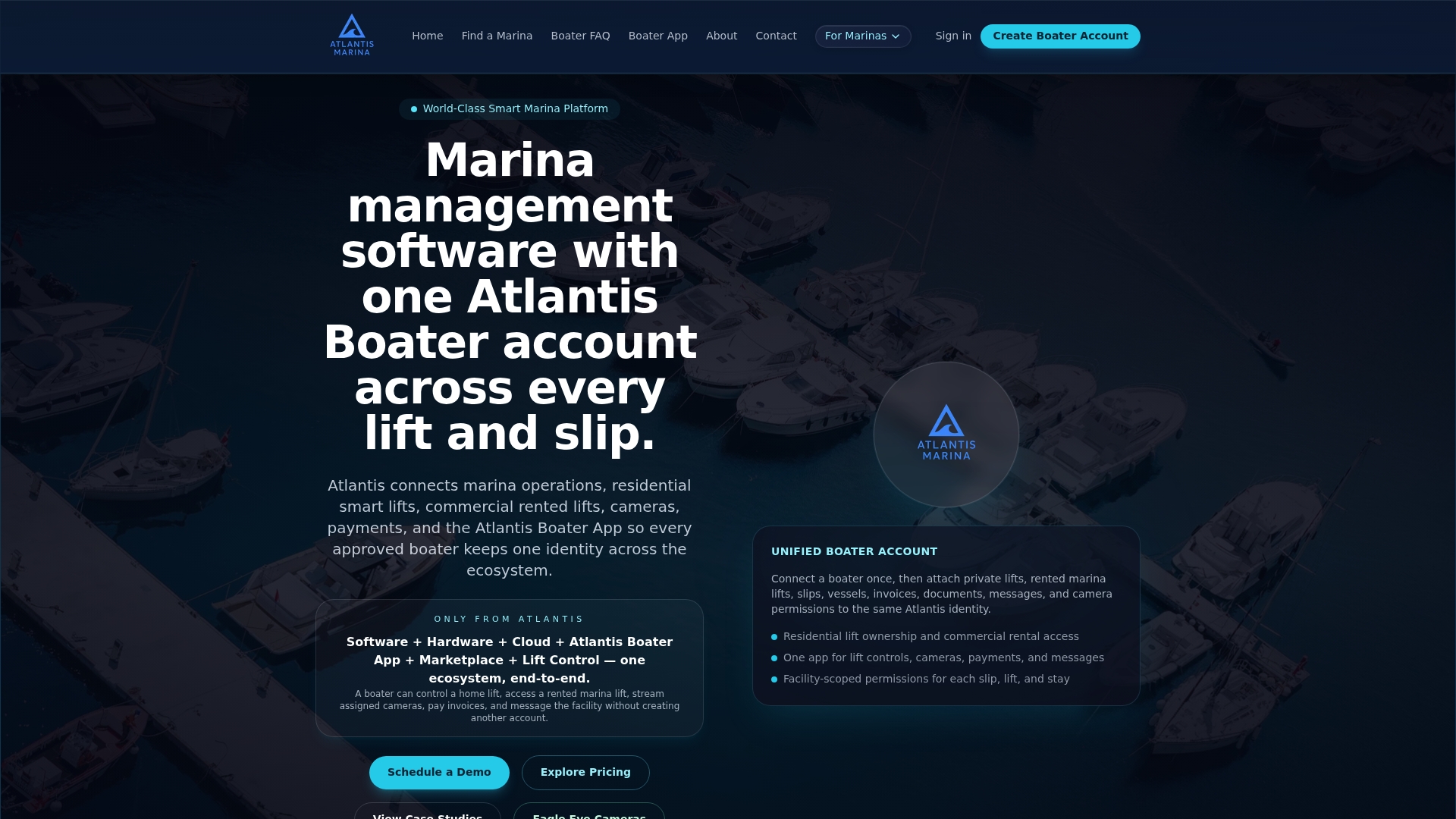
The result is faster checkout, cleaner reconciliation, and a guest experience that matches the premium your marina delivers. Request a demo or start a gap audit at Atlantis Marina and see how quickly the platform closes the gaps catalogued in this article.
Useful sources
- NexusTek — Analysis of the marina technology service gap and the case for automation over headcount; used in root causes and action plan sections.
- AJG/Gallagher — Industry guidance on luxury marina guest expectations, mobile booking, and transient occupancy; used in the gaps catalog and technology mapping.
- Marina Merchant Services — Practical breakdown of unified checkout and repair-ticket integration; used in billing and KPI sections.
- Alliance Marine — Operational visibility analysis covering duplicate entry and dashboard investments; used in root causes and KPI sections.
- Picton Harbour Marina / The County — Concrete U.S.-adjacent pump-out failure example illustrating maintenance gap consequences; used in the gaps catalog.
- Atlantis-Marina.com — Product documentation, feature pages, and demo contact for the unified platform recommended throughout this article.
FAQ
What are the most common service gaps in luxury marinas?
The five most common are digital reservation failures, fragmented billing, maintenance scheduling breakdowns, security and monitoring gaps, and inconsistent staff responsiveness. Each one directly affects renewal rates and guest satisfaction.
Why do billing errors happen so often at marinas?
Separate systems for fuel, slips, and repairs force manual reconciliation, which creates missed charges and delayed invoices. Consolidating those systems into a unified checkout flow eliminates most billing errors at the source.
How long does it take to close the most critical service gaps?
Short-term fixes like QR check-in and autopay enrollment take one to four weeks. Billing and reservation integration typically runs two to six months. Full smart-hardware rollouts fit a six-to-eighteen-month timeline.
How does Atlantis Marina address these gaps specifically?
Atlantis Marina unifies reservations, billing, service ticketing, guest communications, and smart hardware into one platform, with the Atlantis Boater App giving guests mobile self-service and staff a single operations dashboard for every guest interaction.
What KPI should marina managers track first?
Time to invoice after departure is the fastest leading indicator. If invoices go out within 24 hours of a guest's departure, billing consolidation is working. Slip renewal rate is the lagging indicator that confirms the guest experience has improved.