
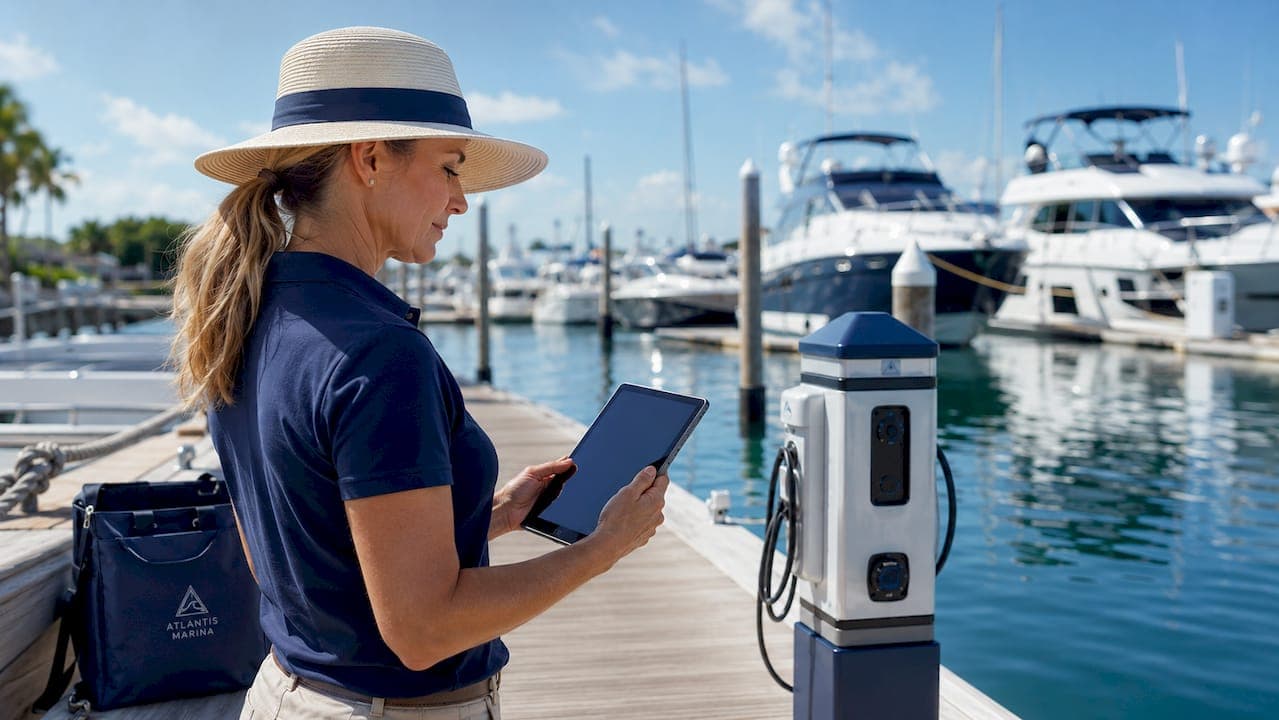
The role of technology in luxury marinas is the integration of AI, IoT sensors, and unified management platforms that automate daily operations and raise the standard of guest service. Marinas that adopt these tools replace manual processes with real-time data, reduce operating costs, and meet the expectations of high-value boaters who demand a premium digital experience. Platforms like Atlantis Marina, combined with smart pedestal infrastructure and AI-powered berth monitoring, define what advanced marina management looks like in 2026. This guide breaks down exactly how each technology layer works and what operators gain by deploying it.
How does the role of technology in luxury marinas improve berth management?
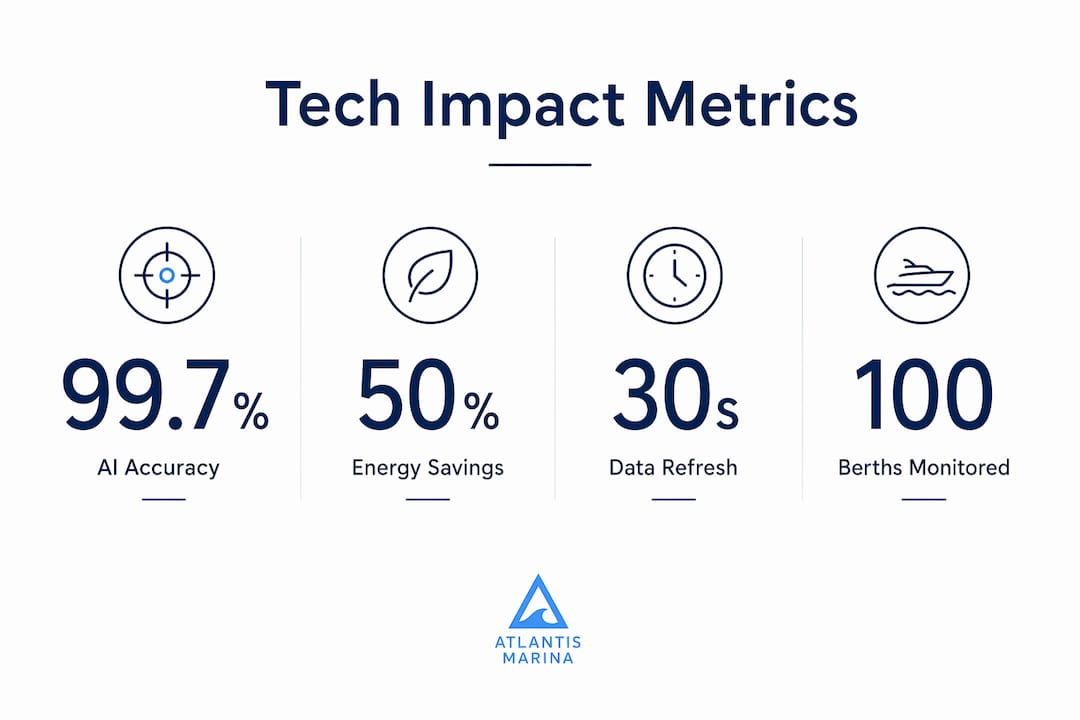
AI-powered berth monitoring is the most operationally significant technology shift in luxury marina management today. AI occupancy detection using existing camera infrastructure achieves 99.7% accuracy in identifying whether a berth is occupied or vacant. That level of precision means dockmasters no longer rely on walkthroughs or radio calls to confirm slip availability.
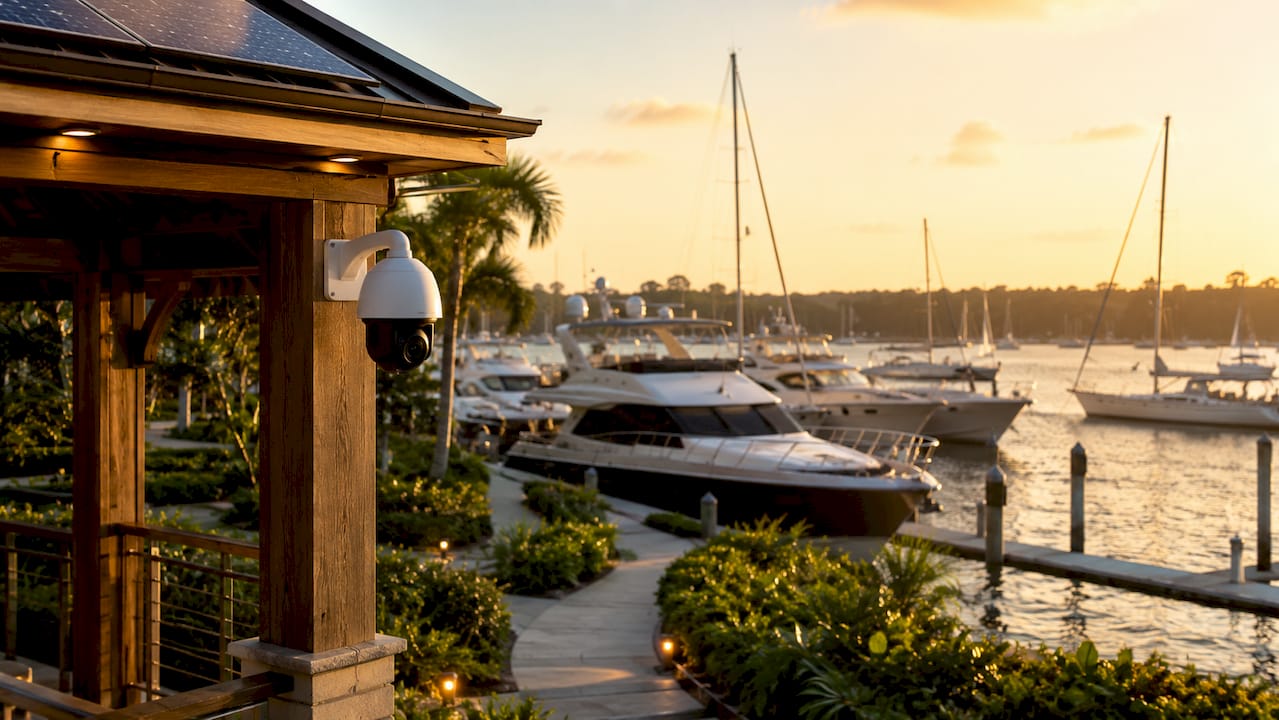
These systems refresh occupancy data every 30 seconds and can monitor up to 100 berths from a single camera. The practical result is that a marina can respond to transient arrivals faster, reduce double-booking errors, and keep revenue-generating slips filled. Real-time analytics from AI-native platforms also allow operators to forecast occupancy trends and adjust pricing based on demand, weather patterns, and local events.
IoT smart pedestals extend this intelligence to utility management. These connected devices monitor water consumption, electrical load, and leak detection at each slip in real time. When a pedestal detects an anomaly, it alerts staff before a failure occurs, not after.
Key capabilities that AI and IoT deliver at the berth level:
- Occupancy detection with sub-minute refresh rates across the full marina footprint
- Automated billing tied directly to actual utility consumption recorded at each pedestal
- Demand-based pricing informed by historical data and live conditions
- Predictive alerts for electrical faults or water leaks before they escalate
- Staffing optimization based on forecasted arrival and departure patterns
Pro Tip: Before deploying AI camera systems, audit your existing camera positions. Systems that monitor up to 100 berths from one camera only perform at peak accuracy when camera angles are unobstructed and consistent.
What impact do integrated platforms have on operations and guest experience?
Operational fragmentation is the single largest source of revenue leakage in marina management. When reservations, billing, vessel records, and compliance documents live in separate systems, staff spend time reconciling data instead of serving guests. Disconnected systems cause manual errors, missed billing cycles, and compliance gaps that expose the marina to liability.
Integrated platforms like Atlantis Marina solve this by centralizing every operational function into one connected system. Marina teams manage slip assignments, billing, and vessel records from a single dashboard, with no manual handoffs between departments. The result is faster service, fewer errors, and a complete audit trail for every transaction.
The guest experience improvement is equally direct. Here is how a unified platform changes the arrival and stay process for a luxury boater:
- Pre-arrival document submission. Guests upload vessel registration, insurance certificates, and crew lists through a mobile portal before they arrive. Staff review and approve documents without a single paper form.
- Contactless check-in. QR-code-based digital passes let dockmasters pull up a guest's full account, reservation, and billing status instantly at the dock.
- Automated billing. Charges for slip rental, utilities, and marina services post automatically to the guest's account, with no manual entry required.
- Real-time communication. Guests receive marina updates, weather alerts, and service confirmations directly through the platform's messaging system.
- E-signature workflows. Dock agreements and service authorizations are signed digitally, with records stored automatically in the guest's account.
Operators using fully integrated platforms eliminate manual billing errors and automatically track vessel insurance expiry linked to berth assignments. That automation alone removes a significant compliance risk that manual systems routinely miss.
Pro Tip: Map every workflow handoff in your current operation before selecting a platform. The goal is to eliminate steps where data moves between people or systems manually. Each handoff is a point where errors enter and time is lost.
How does technology support sustainability in luxury marina design?
Sustainability is no longer a marketing add-on for luxury marinas. Institutional investors and high-net-worth boaters now treat environmental performance as a baseline requirement. Technology makes meeting that requirement operationally practical rather than aspirational.
Smart pedestals reduce water and energy usage by up to 50% when utility points are fully digitized. That reduction comes from real-time monitoring that catches waste at the source, not from behavioral change alone. A marina that installs connected pedestals across 200 slips gains granular consumption data that manual metering cannot provide.
Solar energy integration is the second major sustainability lever. A 196 kWp solar system at Marina Dorica accounted for 25% of the facility's energy, demonstrating that renewable generation at marina scale is operationally viable. Microgrids paired with battery storage allow marinas to reduce grid dependence during peak demand periods.
| Technology | Sustainability Benefit | Operational Benefit |
|---|---|---|
| Smart pedestals | Reduces water and energy waste | Enables automated, consumption-based billing |
| Solar microgrids | Cuts carbon footprint and grid costs | Provides energy resilience during outages |
| IoT leak detection | Prevents water loss before it compounds | Reduces infrastructure repair costs |
| Predictive maintenance | Extends equipment lifespan | Prevents unplanned service disruptions |
Predictive maintenance through digitized utility connections detects water leaks and electrical faults before failures occur. This protects the marina's physical infrastructure and reduces the emergency repair costs that erode operating margins. Embedding these systems during the design phase of a marina development is significantly less expensive than retrofitting them later.
The future of luxury marinas relies on modular infrastructure that allows operators to scale hospitality and energy offerings as demand evolves. Modular design means a marina can add solar capacity, expand pedestal coverage, or integrate new sensor types without rebuilding core infrastructure.
What challenges come with technology integration in luxury marinas?
Technology adoption in luxury marinas creates real operational complexity before it delivers efficiency gains. The most common failure point is not the technology itself. It is the gap between what a system promises and how it fits into existing workflows.
AIS data normalization is a specific example. AIS feeds arrive in multiple formats with inconsistent sampling rates from satellite and terrestrial sources. Without customized filtering logic, automated vessel tracking generates false arrival alerts that erode staff trust in the system. When staff stop trusting automated alerts, they revert to manual processes, and the technology investment produces no return.
Common integration challenges marina operators face:
- Data format inconsistency across AIS, IoT, and billing systems that requires normalization before data becomes usable
- Workflow misalignment where new software is layered over old processes instead of replacing them, creating duplicate work
- Staff resistance when teams are not trained on why the system changes their daily tasks, not just how to use it
- Revenue leakage from partial integrations where reservations, billing, and maintenance systems still require manual reconciliation
- Vendor lock-in risk when platforms lack open APIs, making future integrations expensive or impossible
Operational inefficiencies from disconnected systems cause revenue leakage that compounds over time. A marina that manually reconciles reservations against billing each month loses both time and accuracy. Redesigning workflows before deploying new software is the step most operators skip and later regret.
Pro Tip: Run a 30-day parallel operation period when switching platforms. Keep your old system active while staff learn the new one. This surfaces workflow gaps before they affect guests and gives your team confidence in the new process.
Digital platforms enable marinas to meet rising customer service expectations while aligning with sustainability and investor requirements. The operators who succeed with technology adoption treat it as a workflow redesign project, not a software installation.
Key Takeaways
Technology in luxury marinas delivers measurable gains in efficiency, guest experience, and sustainability only when systems are integrated and workflows are redesigned to match.
| Point | Details |
|---|---|
| AI berth monitoring accuracy | AI camera systems achieve 99.7% accuracy, refreshing occupancy data every 30 seconds. |
| Integrated platforms reduce errors | Unified systems eliminate manual billing errors and automate compliance tracking across all vessel records. |
| Smart pedestals cut utility waste | Digitized utility points reduce water and energy usage by up to 50% through real-time consumption monitoring. |
| AIS normalization prevents false alerts | Customized filtering logic is required to make automated vessel tracking reliable enough for staff to trust. |
| Workflow redesign precedes tech gains | Deploying software over broken workflows compounds inefficiency; process redesign must come first. |
Why I think most marinas are adopting technology in the wrong order
After years of watching marina operators invest in technology, the pattern I see most often is this: a marina buys a new platform, installs it on top of existing workflows, and then wonders why efficiency did not improve. The technology was not the problem. The sequence was.
The operators who get the best results from digital transformation in marinas start with a workflow audit, not a software demo. They map every point where data moves between people, systems, or paper, and they eliminate those handoffs before selecting tools. When you do that work first, the right platform becomes obvious because you know exactly what it needs to replace.
I also think the industry underestimates how much the human element matters in luxury marina settings. Automation handles billing, document collection, and occupancy tracking well. But the guest who arrives on a 100-foot yacht still wants a dockmaster who knows their name and their preferences. The best technology deployments I have seen use automation to free staff from administrative tasks so they can focus entirely on that personal interaction. That is the balance worth pursuing.
The marinas that will lead this industry in five years are not the ones with the most technology. They are the ones that chose the right technology, integrated it properly, and trained their teams to use it with confidence.
— John R
Atlantis Marina: built for the demands of modern luxury marinas
Marina operators who want to move from fragmented tools to a single connected system have a direct path forward with Atlantis Marina.
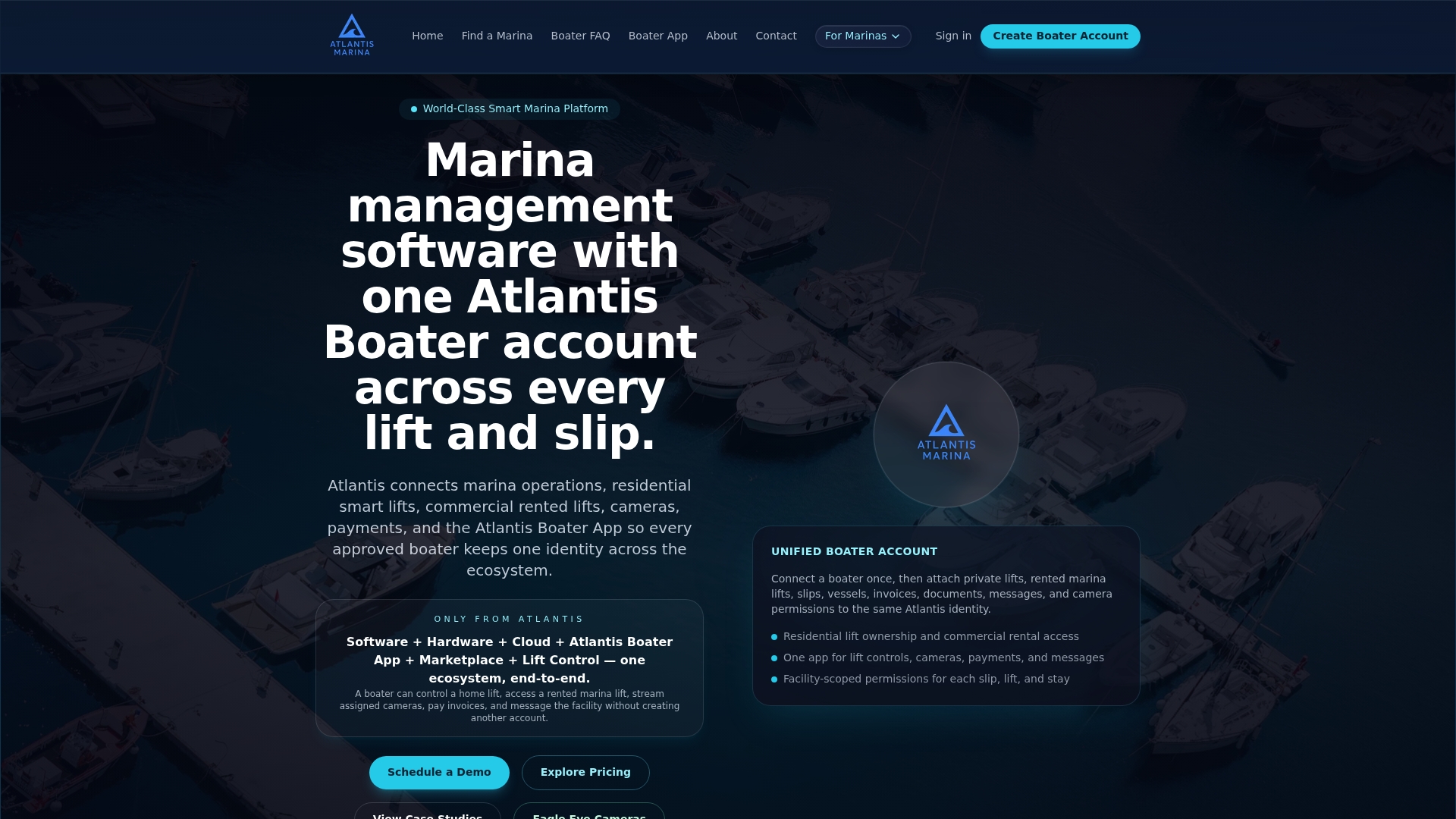
Atlantis Marina brings together slip management, automated billing, vessel records, reservations, and guest communication in one cloud-based platform. Dockmasters get a live operations dashboard. Guests get a mobile portal for document submission, payments, and marina updates. The platform supports marina reservations and e-signature workflows that eliminate paper entirely. For operators ready to see how it works in practice, the Atlantis Marina platform is available for a full walkthrough.
FAQ
What is the role of technology in luxury marinas?
Technology in luxury marinas automates berth management, billing, compliance, and guest services through integrated platforms, AI monitoring, and IoT sensors. These tools replace manual processes and give operators real-time visibility across all marina operations.
How accurate is AI-based berth occupancy detection?
AI camera systems achieve 99.7% accuracy in berth monitoring, refreshing data every 30 seconds and covering up to 100 berths from a single camera. This level of accuracy makes manual occupancy checks unnecessary.
How do smart pedestals support sustainability goals?
Digitizing utility points with smart pedestals reduces water and energy usage by up to 50% through real-time consumption monitoring and automated leak detection. They also enable consumption-based billing that eliminates flat-rate utility estimates.
What is the biggest challenge when integrating new marina technology?
AIS data normalization and workflow misalignment are the two most common failure points. Improper AIS handling generates false alerts that cause staff to distrust automated systems, while deploying software over unchanged workflows produces no efficiency gain.
Why do luxury marinas need modern software specifically?
Early automation adopters outperform peers in meeting the experience economy demands of high-value boaters and institutional investors. Modern software gives luxury marinas the operational transparency and guest service capability that legacy tools cannot deliver.