
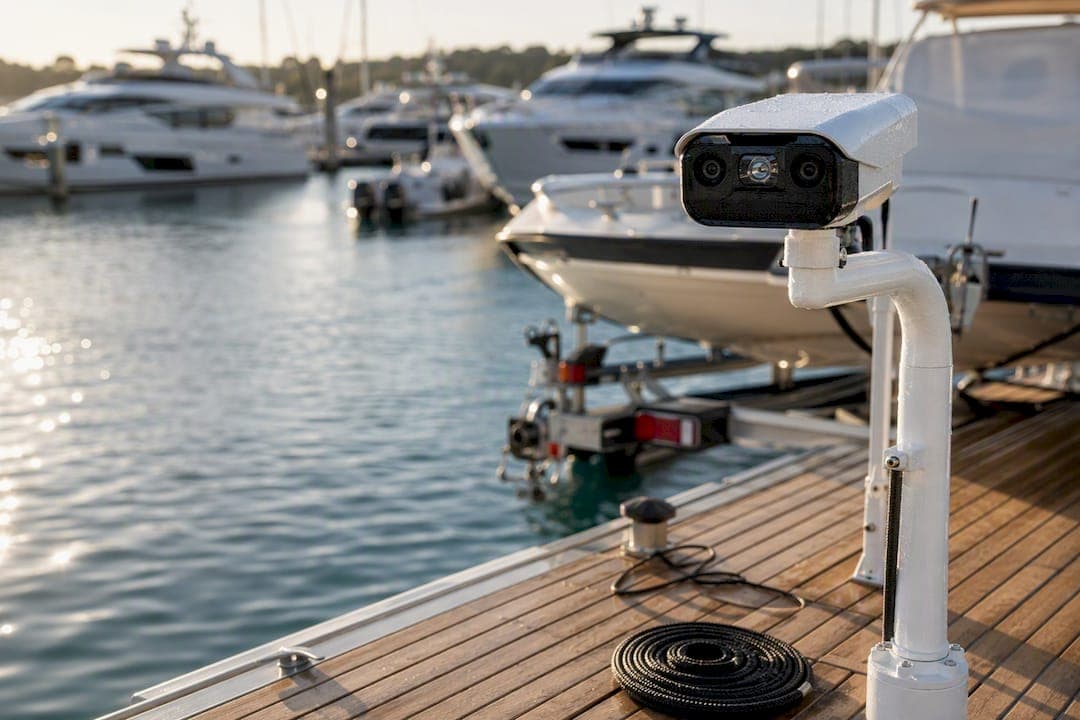
License plate recognition works at marinas when treated as a security audit layer, not a standalone gatekeeper. It automates entry logging, catches unauthorized trailer removals at launch ramps, and turns raw camera footage into searchable evidence for insurance claims. The catch: it needs correct camera placement, a written retention policy, and integration with your parking or marina management system. Pilot one gate or ramp first, confirm the data flows into your existing workflows, then expand.
TL;DR:
- Proper camera placement and dual infrared and color sensors are essential to handle glare, salt film, and challenging angles at marinas.
- Most successful deployments focus on permit parking, trailer tracking, incident investigation, and peak-season throughput, with some variation in camera setup and integration.
- Accurate recognition relies on on-site testing with actual plates, clear integration with management systems, and adherence to privacy rules on data retention and law enforcement requests.
- Hardware costs include corrosion-resistant housings, while software expenses vary between SaaS subscriptions and open-source options like OpenALPR.
- Piloting at a single gate or ramp provides valuable data on recognition rates and false positives before expanding to other areas.
Table of Contents
- How Does License Plate Recognition Work at a Marina?
- What Are the Best Marina Use Cases for License Plate Recognition?
- What Should Marinas Specify Before Installing LPR?
- How Should Marinas Handle Privacy and Data Retention?
- What Does License Plate Recognition Cost at a Marina?
- How Atlantis Marina Turns License Plate Data Into Operations
- Should You Pilot LPR First, or Build a Hybrid Stack?
- How Atlantis Marina Helps Implement License Plate Recognition Workflows
- Sources
- FAQ
How Does License Plate Recognition Work at a Marina?
Marina license plate recognition runs on three layers working together: cameras, an OCR pipeline, and metadata matching. Get any one wrong and the whole system underperforms, which is why so many pilot deployments disappoint operators who bought on spec sheets alone.
Camera hardware matters more at marinas than in a typical parking garage. Salt spray, standing water, and direct sun glare off a hull or a wet dock create glare and reflection problems a landlocked parking lot never sees. Dual infrared and color camera heads solve most of this: the IR sensor reads plates in low light or against headlight glare, while the color sensor captures a usable image for human review during a dispute.
The software side follows a standard sequence: plate detection, image normalization, optical character recognition, then a metadata check against a hot list or permit database. The DHS SAVER market survey evaluated 16 commercial automated license plate reader systems and found that character recognition accuracy across all 50 U.S. states depends heavily on plate angle, distance, and the number of frames captured per pass.
Common failure points at marinas include:
- Steep entry angles at narrow gate lanes, which distort character shapes and confuse OCR models trained on straight-on plates
- Glare off wet trailers or chrome bumpers, especially at midday during peak launch traffic
- Partial obstruction from trailer hitches, bike racks, or mud flaps that cover a corner of the plate
- Salt film and grime that builds up on plates during long-term dry storage, softening character edges
Multi-frame averaging, where the system captures several images per vehicle and reconciles them, fixes most of these issues without added hardware cost.
What Are the Best Marina Use Cases for License Plate Recognition?
Four use cases account for nearly every successful marina deployment, and they rarely require the same camera setup or the same integration path.
- Permit parking and contactless entry. Slipholders and registered guests get a digital pass matched against their plate on file, so the gate opens without a card swipe or staff check. Combine this with a boater's existing account and the plate becomes just one more identifier tied to a reservation.
- Launch ramp and trailer tracking. Cameras at the ramp head capture the tow vehicle and trailer plate at the moment of launch, creating a record that flags a mismatch if a different vehicle tries to retrieve the same trailer later. Some deployments configure LPR to read boat registration numbers alongside vehicle plates, extending the same audit logic to the vessel itself.
- Incident investigation. A plate read paired with a timestamp turns hours of raw footage into a searchable clip. Marina-focused LPR deployments use this specifically to resolve theft claims and unauthorized dock access disputes, cutting investigation time from days to minutes.
- Peak-season throughput. Marinas that integrate LPR with a Parking Access and Revenue Control System (PARCS) see fewer bottlenecks at gates during holiday weekends, since PARCS-LPR integration supports ticketless entry and contactless payment validation without stopping vehicles for a manual check.
Pro Tip: Map every plate read to a temporary visitor session in your parking system, then validate it against a payment token on exit. This avoids handing out paper tickets to trailer traffic during your busiest weekends.
What Should Marinas Specify Before Installing LPR?
Deployment problems almost always trace back to specs that got skipped during procurement, not to the cameras themselves.
Camera placement rules differ by lane type; for expert technical integration with CCTV, alarms, and access control at marinas, see CCTV, Alarms & Access Control SEQ | DJC Engineering. Gate lanes need a camera mounted 6 to 9 feet high, angled 15 to 30 degrees off vertical, covering one lane per camera head for reliable reads. Launch ramps require a wider field of view since the trailer and tow vehicle need to appear in the same frame at the moment of launch. A dual-camera head handles this better than a single wide-angle lens, since reflective trailer surfaces distort a single sensor's read at that angle.
Connectivity choices carry real tradeoffs. Power over Ethernet works for gates near existing infrastructure; ramps and remote lots often need cellular or solar backup, especially where trenching fiber isn't practical. Edge OCR processing (recognition happening on the camera itself) reduces bandwidth needs but limits how easily you can retrain models later; cloud OCR centralizes updates but depends on a stable connection.
Before signing off on any installation, require:
- Manufacturer-supplied day and night recognition rate targets, tested on-site with your actual plate mix
- A defined integration point with your PARCS, payment processor, and marina management software
- Written SLAs for alerting and support response time
- A maintenance schedule covering lens cleaning and corrosion checks
Recognition accuracy claims on a spec sheet mean little until tested against your own gate's lighting and traffic angle, on-site, with representative plates from both day and night conditions — a step the DHS SAVER survey explicitly recommends before acceptance.
How Should Marinas Handle Privacy and Data Retention?
ALPR systems capture identifiable location and time data every time they log a plate, which means marinas are collecting a record of vehicle movements whether they intend to or not. The Congressional Research Service's overview of ALPR privacy issues flags this as the core policy question any business running LPR needs to address before deployment, not after a complaint.
Build your policy around a few concrete rules:
- Set a defined retention window, commonly 30 to 90 days for routine gate and ramp logs, with longer holds reserved for footage tied to an active investigation
- Restrict access to plate data by role, so only authorized staff can search or export records
- Post visible signage at entry points noting that LPR is in use
- Notify slipholders in your contract or welcome materials, not just via a sign they might miss
- Decide in advance how you'll respond to a law enforcement request for footage, and document that process
Legal review matters here more than most operators expect. Retention rules, notification requirements, and law-enforcement data-sharing obligations vary by state, and a policy copied from another marina's website may not hold up in your jurisdiction. A short consult with counsel before your first camera goes live costs far less than untangling a dispute after the fact.
What Does License Plate Recognition Cost at a Marina?
Budgeting for LPR involves two cost layers that operators frequently underestimate separately: hardware and software.
Upfront hardware costs cover cameras, mounting, and integration labor, and marine environments add a line item most parking-lot vendors don't quote by default: corrosion-resistant housings. Skipping this is the single most common reason marinas file warranty claims within the first year, since standard camera housings weren't built for salt air.
On the software side, expect either a per-camera SaaS subscription or a bundled fee through a managed PARCS provider. Self-hosted OCR, including open-source options like OpenALPR, can lower software costs for teams with in-house technical staff, but it shifts maintenance burden onto your own team.
To estimate ROI, weigh:
- Reduced theft-related insurance claims from faster incident documentation
- Recovered parking or permit revenue from catching unauthorized use
- Staff hours saved on manual gate checks during peak season
- Faster incident resolution, which shortens claims processing with your insurer
How Atlantis Marina Turns License Plate Data Into Operations
Atlantis Marina ingests LPR outputs directly into slipholder records, incident logs, and billing, so a plate read becomes an operational event, not just a security clip. A camera match against a registered plate can auto apply a visitor parking charge, flag a trailer that doesn't match its permitted tow vehicle, or generate a time-stamped clip tied to a specific reservation. Combined with vessel and boater recordkeeping and camera integration workflows already built into the platform, plate data stops living in a separate security silo and starts feeding the same system that manages billing and dockmaster tasks.

Should You Pilot LPR First, or Build a Hybrid Stack?
Pilot LPR on the specific pain point: a launch ramp with a trailer theft history, a lot with chronic unauthorized parking, or a gate that sees heavy transient traffic. If your slipholder base is stable and access disputes are rare, prioritize RFID or QR-based digital passes first and add LPR as the audit layer behind it, following the same logic vendors use when they pair transponders with LPR rather than relying on plate reads alone. Track recognition rate, false-match rate, and average entry time during a 60 to 90 day pilot before expanding to additional gates.
— John R
How Atlantis Marina Helps Implement License Plate Recognition Workflows
Atlantis Marina gives you a faster path from camera footage to billed revenue than building a separate security system and bolting it onto your existing parking process. Instead of managing plate data in one tool and billing in another, the platform maps plate reads directly to permits, slipholder accounts, and payment records in one place.
A typical onboarding runs in three steps: pilot the camera integration at one gate or ramp, map recognized plates to existing permits and reservations through the reservations system, then automate billing and alerts so a plate mismatch or unauthorized entry triggers a notification instead of a manual review. Contracts and visitor agreements can run through Atlantis E-Sign, and boaters manage their own account details through the Atlantis Boater App, so the data trail from plate to payment stays connected end to end.
If you're evaluating how license plate recognition fits into your broader operations, visit the Atlantis Marina solutions page to see how camera data, billing, and slipholder records work as one system rather than three separate tools.
Sources
- SAVER Project: Automatic License Plate Readers — DHS
- CRS report on ALPR privacy and policy considerations
FAQ
Is License Plate Recognition Legal for Marinas to Use?
Yes, marinas can legally deploy LPR for private security and access control purposes, but retention periods, signage, and law-enforcement data sharing are subject to state-specific rules the CRS privacy overview recommends reviewing with counsel before deployment.
How Can Someone Avoid License Plate Recognition Cameras?
Techniques like plate covers or reflective sprays exist, but most are illegal to use on public roads in the U.S. and offer little protection against the multi-frame, dual-camera setups increasingly used at gates and ramps.
What Do Operators Actually See When a Plate Is Scanned?
A marina LPR system captures the plate image, timestamp, and location, then checks that data against a permit database or hot list. Staff typically see a match or mismatch alert rather than raw personal information tied to the plate.
Does the Rarest License Plate in the US Matter for Marina Security?
No. Recognition accuracy depends on plate condition, angle, and lighting, not rarity or novelty of the plate design, so unusual or vanity plates read the same as standard ones once properly captured.
Can License Plate Recognition Integrate With Existing Marina Billing?
Yes. Platforms like Atlantis Marina can map a recognized plate to a slipholder or visitor account and auto apply charges, removing the need for manual ticket handling at the gate.