
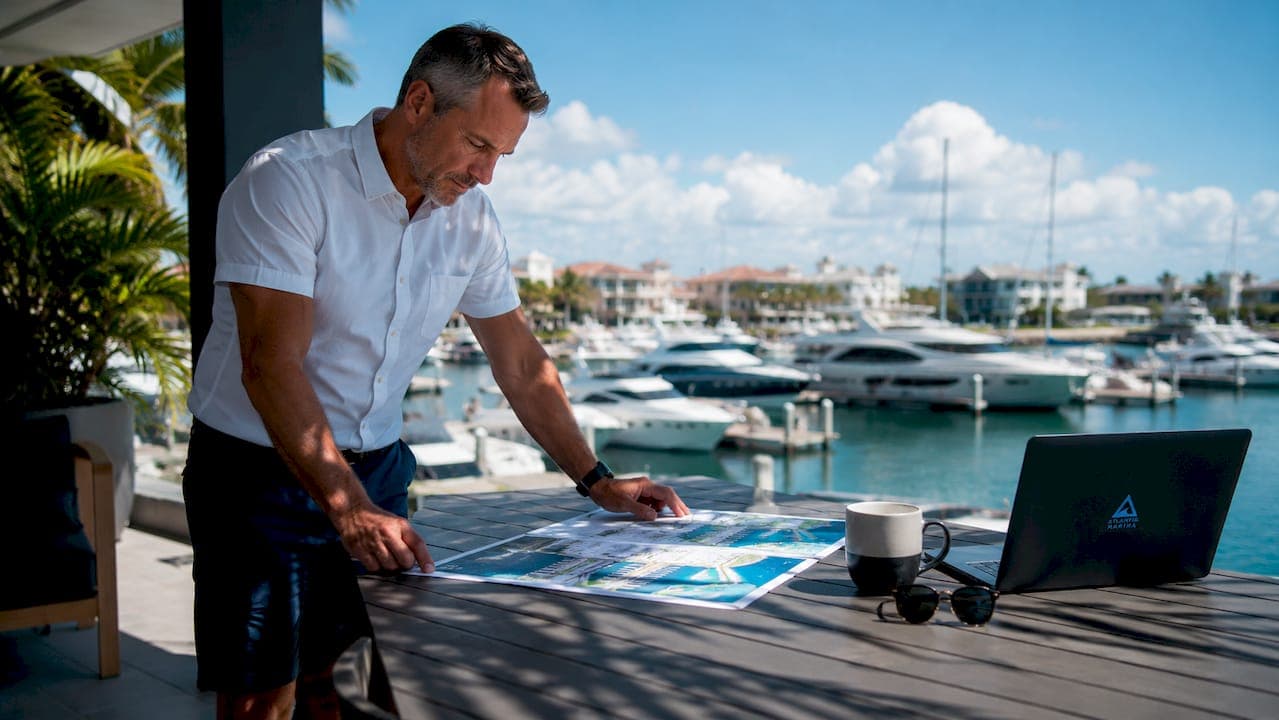
Multi-property marina management is the structured practice of overseeing multiple marina locations through coordinated operations, standardized workflows, and shared resources to drive efficiency and profitability. Operators who treat each location as an isolated business miss the compounding advantages that come from a portfolio approach. This guide to managing multiple marinas covers the phased growth model endorsed by Trident Marine Group, infrastructure investment principles from DockBoxes, team coordination tactics, and the technology systems that replace fragmented spreadsheets with real-time control. Whether you manage two locations or twenty, the principles here apply.
What are the critical stages of scaling multi-property marina management?
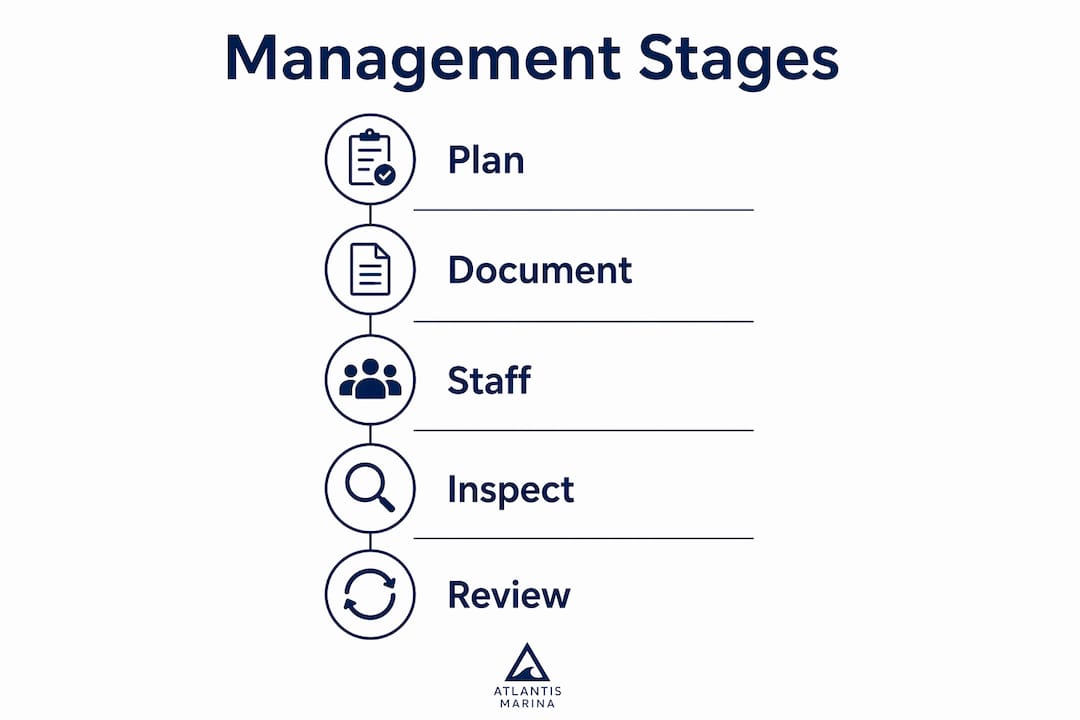
Structured growth stages define three distinct phases for multi-site marina operations: 1–3 assets for standardization, 4–10 for regional resource sharing, and multi-market portfolios for centralized governance. Each phase demands a different management focus, and operators who skip phases tend to create costly operational gaps.
-
Standardization (1–3 properties). The priority at this stage is documenting every repeatable process. Write playbooks for slip assignments, billing cycles, safety checks, and customer check-in. Consistency at this stage prevents the chaos that compounds when you add a third or fourth location.
-
Regional resource sharing (4–10 properties). Shared procurement becomes a real financial lever here. Bulk fuel contracts, consolidated dock supply orders, and a shared maintenance crew reduce per-property costs. Talent development also becomes critical. Building an internal bench of trained staff means you fill vacancies from within rather than scrambling during peak season.
-
Centralized governance (multi-market portfolios). At this scale, compliance, succession planning, and unified training programs take priority. A single policy deviation at one location can create liability across the entire portfolio. Centralized reporting and audit cycles keep every property aligned with brand and regulatory standards.
Pro Tip: Write your operational playbook before you acquire your second property, not after. Retrofitting documentation onto an existing team is three times harder than building the habit from day one.
Operational focus shifts with each phase, but the underlying principle stays constant. Documented routines protect cash flow, reduce staff turnover costs, and create a repeatable guest experience that boaters recognize across every location in your portfolio.
How does infrastructure management impact multi-property marina success?
Infrastructure is a capital investment, not a maintenance expense. Treating docks, fuel systems, and electrical hookups as depreciating assets on a capital plan changes how you budget, inspect, and upgrade them. That shift in mindset directly improves net operating income and exit value.
Key infrastructure components that require active capital planning include:
- Dock structural integrity. Floating and fixed docks require monthly inspections for corrosion, fastener failure, and decking wear.
- Fuel systems. Fuel dock equipment carries environmental liability. Monthly checks on hoses, nozzles, and containment systems prevent regulatory fines.
- Electrical hookups. Code-compliant power pedestals protect boaters and reduce insurance exposure. Upgrades to Eaton power pedestals with integrated sub-metering allow marinas to recover utility costs directly from tenants.
- Dry storage and covered slips. These assets command premium rates. Deferred maintenance on storage structures erodes that premium quickly.
"Infrastructure quality is the single largest driver of buyer confidence during a marina exit event. Operators who maintain condition indexes and track grant opportunities for capital improvements consistently achieve higher valuations and shorter sale timelines." — DockBoxes, Marina Asset Management
Monthly inspection cycles prevent the emergency repair costs that destroy quarterly NOI. A blown fuel line or failed electrical pedestal during peak summer season costs far more to fix on an emergency basis than it would have through scheduled preventative maintenance. Regularly updated capital plans with condition indexes and grant tracking keep every property on a proactive investment schedule rather than a reactive one.
What team and resource strategies optimize multi-property marina operations?
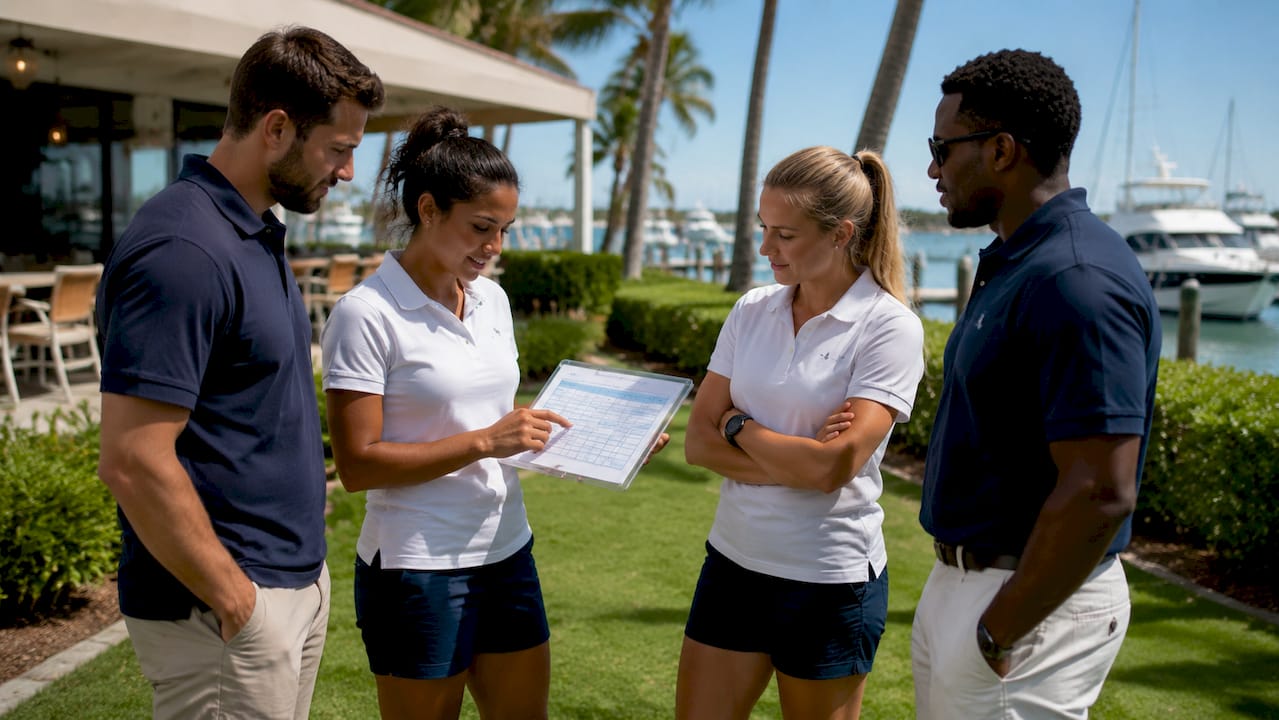
Staffing across multiple locations requires deliberate structure. The biggest mistake multi-property operators make is treating each marina as a fully independent HR unit. That approach eliminates the workforce flexibility that makes a portfolio more profitable than a single property.
Effective team strategies include:
- Cross-training for coverage. Cross-trained employees who can support different sites improve operational flexibility and prevent lost revenue during staff absences or demand spikes. A dockmaster who can also run the ship store POS or manage dry stack workflows is worth more than two narrowly specialized hires.
- Centralized maintenance teams. A shared pool of vetted maintenance personnel eliminates the need to call emergency vendors. Emergency vendor rates during peak seasons or crises run 200–300% above standard labor rates. A centralized crew eliminates that exposure.
- Vendor scope clarity. Every vendor contract across your portfolio should define scope, response time, and escalation procedures in writing. Ambiguous vendor agreements create gaps that become expensive during high-demand periods.
- Consistent training cycles. Quarterly training updates across all locations keep staff aligned on safety protocols, customer service standards, and software workflows.
Pro Tip: Schedule cross-property staff rotations during shoulder season, not peak season. Staff learn new workflows best when the dock is not full, and you build relationships between teams before they need to cover for each other under pressure.
Staff communication across locations also requires a deliberate system. Group messaging apps and shared task boards reduce the coordination overhead that otherwise falls on site managers and creates burnout.
How can modern technology support management across multiple marina properties?
Automated, centralized dashboards replace disconnected spreadsheets and eliminate the double bookings and revenue loss that fragmented manual tracking causes. The shift from spreadsheets to a unified platform is the single highest-leverage operational change a multi-property operator can make.
Core functions a marina management platform must deliver across all locations:
- Slip and dock visualization. Real-time maps showing occupancy, vessel assignments, and availability across every property.
- Centralized CRM. Customer records, vessel data, insurance documents, and communication history in one place.
- Billing and payments. Automated invoicing, power resale billing, and payment processing without manual entry.
- Maintenance tracking. Work orders, inspection logs, and vendor assignments tied to specific assets at specific locations.
- Occupancy and revenue reporting. Live dashboards showing yield per slip, transient revenue, and occupancy rates by property.
| Function | Manual approach | Platform approach |
|---|---|---|
| Slip assignments | Spreadsheet, phone calls | Real-time visual map, instant confirmation |
| Billing | Manual invoices, errors common | Automated billing, power sub-metering included |
| Maintenance tracking | Paper logs, missed cycles | Digital work orders, scheduled alerts |
| Occupancy reporting | End-of-month manual tallies | Live dashboard, cross-property view |
Atlantis Marina delivers all of these functions through a single cloud-based system. The platform covers slip assignments and reservations, billing, dry stack workflows, vessel records, maintenance tracking, and customer self-service portals. Marina teams can manage every property from one operations dashboard without switching between tools or reconciling separate data sets. The dockmaster mobile management capability means site managers stay connected to real-time data whether they are on the dock or off-site.
What KPIs and routines sustain profitability across a marina portfolio?
Structured operational routines over a 12-week cycle improve margins and reputation by closing the gaps that seasonality and staff turnover create. Tracking the right metrics makes those routines measurable and defensible to investors or lenders.
Key performance indicators every multi-property operator should track monthly:
- Occupancy rate by property. Measures slip utilization and identifies underperforming locations before they drag portfolio averages.
- Yield per amp. Tracks revenue from power resale relative to electrical capacity. Sub-metering makes this metric precise and billable.
- Transient revenue share. Monitors the percentage of revenue from short-term guests versus annual tenants. A healthy mix protects against seasonal swings.
- Maintenance cost per slip. Flags properties where deferred maintenance is accumulating before it becomes a capital crisis.
- Customer satisfaction scores. Collected through post-visit surveys or digital feedback tools, these scores reveal service gaps that financial metrics miss.
Pricing strategy also belongs in the KPI review. Transient discounts during low-demand periods fill slips that would otherwise sit empty. Power resale billing, enabled by sub-metering, converts a cost center into a revenue line. Both strategies require consistent tracking to confirm they are improving NOI rather than eroding it. Aligning customer experience standards across locations while allowing site managers to adapt to local boater expectations is the final piece. Brand consistency builds trust. Local flexibility builds loyalty.
Key Takeaways
Effective multi-property marina management requires phased scaling, proactive infrastructure investment, cross-trained teams, and a centralized technology platform to sustain profitability across every location.
| Point | Details |
|---|---|
| Phase your growth strategy | Match management priorities to portfolio size: standardize first, then share resources, then centralize governance. |
| Treat infrastructure as capital | Monthly inspections and condition indexes protect NOI and increase exit valuation. |
| Build a cross-trained workforce | Cross-property staff flexibility prevents lost revenue and eliminates emergency vendor premiums. |
| Centralize technology | A unified platform eliminates double bookings, manual billing errors, and fragmented reporting. |
| Track the right KPIs | Occupancy rate, yield per amp, and maintenance cost per slip reveal portfolio health before problems compound. |
Centralized strategy, local execution: what I have learned managing marina portfolios
The most common mistake I see in multi-property marina operations is the assumption that a single playbook, applied uniformly, will produce uniform results. It will not. Centralized strategy with local execution is not a compromise. It is the only model that actually works at scale.
I have watched operators enforce identical pricing structures at a working waterfront marina and a resort-style yacht club in the same portfolio. The working waterfront lost half its annual tenants within one season because the pricing felt disconnected from the local market. The playbook was technically correct. The application was wrong.
Site managers need real authority to adapt guest services, pricing tiers, and communication styles to their local boater base. What they should not adapt is the financial reporting cadence, the safety inspection schedule, or the billing workflow. Those stay uniform. Everything customer-facing gets local judgment applied to it.
The operators who build the most profitable portfolios are the ones who hire site managers they trust, give those managers clear metrics to hit, and then get out of the way on the day-to-day. Central control over data and compliance. Local control over experience. That balance is harder to build than any software implementation, but it is the actual competitive advantage.
— John R
How Atlantis Marina supports multi-property marina operations
Running multiple marina properties from disconnected tools costs time, revenue, and accuracy. Atlantis Marina consolidates every operational function into one cloud-based platform built for multi-property scalability.
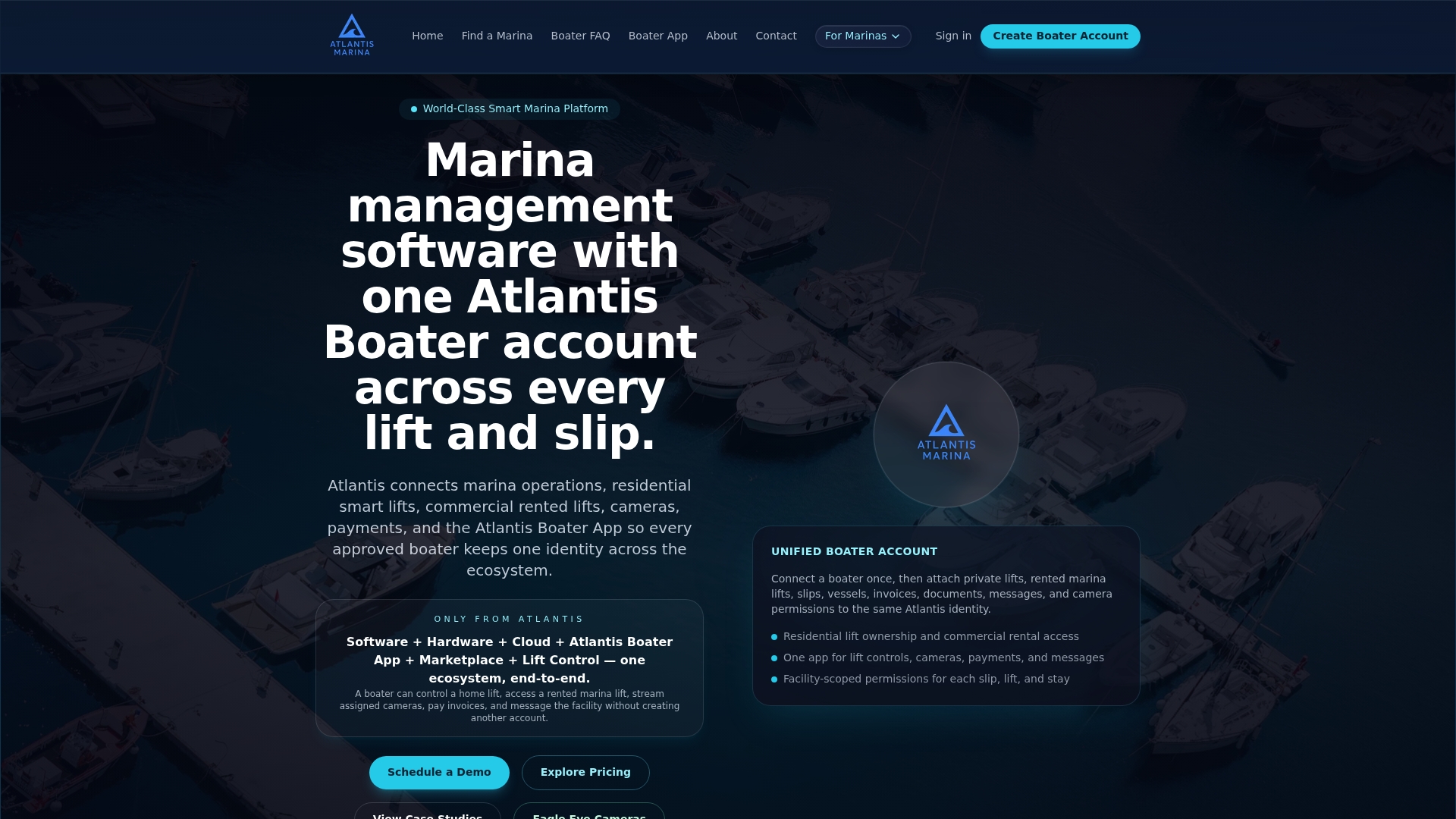
The Atlantis Marina management platform gives operators a single dashboard for slip assignments, billing, maintenance tracking, customer records, dry stack workflows, and occupancy reporting across all locations. Boaters get a self-service portal for reservations, payments, and document uploads. Staff get mobile access to real-time data on the dock. QR-code workflows connect every in-person interaction back to the correct customer account instantly. For marina groups ready to replace spreadsheets and fragmented tools with a connected operating system, the Atlantis Marina sales page details every feature and how it applies to multi-property operations.
FAQ
What is multi-property marina management?
Multi-property marina management is the coordinated oversight of two or more marina locations using shared workflows, centralized reporting, and standardized operational procedures to improve efficiency and profitability across the portfolio.
How do you manage multiple marinas without losing consistency?
Documented playbooks for billing, safety inspections, and customer check-in create consistency across locations. Site managers then adapt guest-facing services to local conditions while following the same financial and compliance standards.
What technology do multi-property marina operators need?
A centralized marina management platform that covers slip assignments, billing, maintenance tracking, CRM, and real-time occupancy reporting across all properties. Atlantis Marina delivers all of these functions from one cloud-based system.
How often should marina infrastructure be inspected across a portfolio?
Monthly inspection cycles are the industry standard for fuel systems, electrical hookups, and dock structural integrity. Formal monthly inspections prevent emergency repair costs that sharply reduce net operating income.
What KPIs matter most for a multi-marina portfolio?
Occupancy rate by property, yield per amp, transient revenue share, maintenance cost per slip, and customer satisfaction scores are the five metrics that give operators the clearest picture of portfolio health and profitability.