
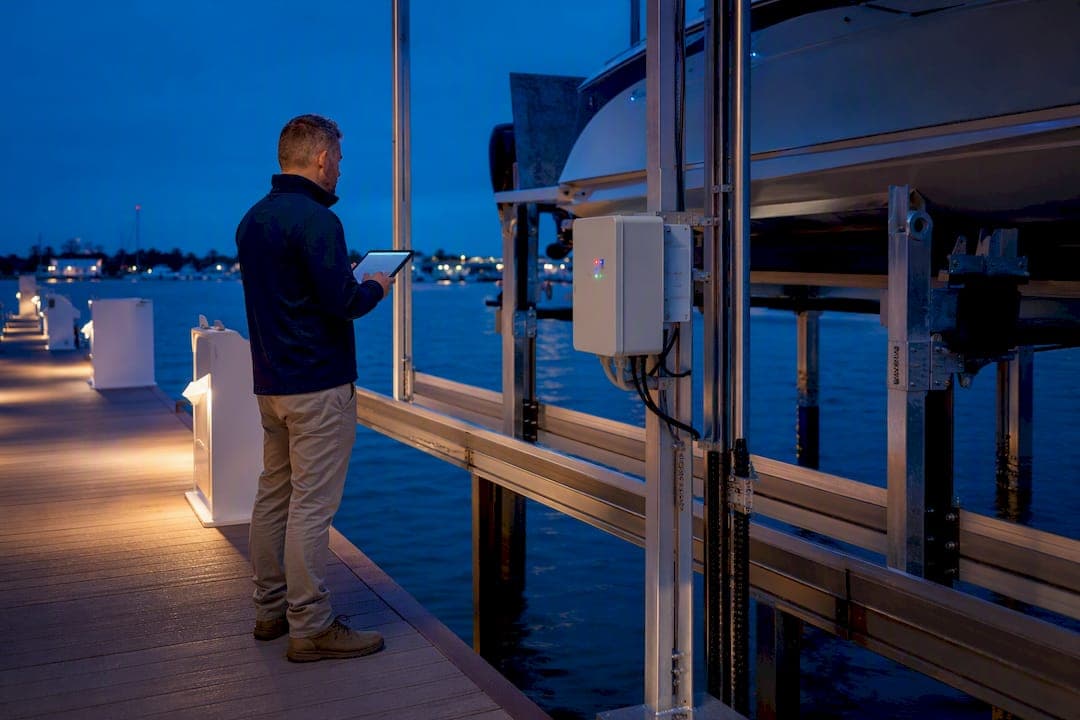
Remote boat lift monitoring is the integration of lift telemetry, alerts, and diagnostics into a marina’s daily operations platform, giving dockmasters real-time visibility into every lift’s health from one screen. The core benefit is operational: fewer emergency callouts, faster fault response, and centralized control across a portfolio of lifts instead of a facility-by-facility guessing game.
TL;DR:
Monitoring systems track voltage, motor status, and fault alerts to catch issues early and reduce emergency service calls.
Cellular connectivity provides the most reliable data transmission, especially in marinas with poor Wi-Fi or storm-prone areas.
Launching a pilot with five to ten lifts helps calibrate alert thresholds and prevents staff from muting important alerts prematurely.
Integration with operations platforms allows alarms, slip billing, and maintenance tasks to be managed from a single dashboard, streamlining marina operations.
Ongoing sensor maintenance involves scheduled battery replacements, firmware updates, and monitoring hardware health to ensure long-term reliability.
Table of Contents
-
What Counts as Remote Boat Lift Monitoring for Marina Operators?
-
Cellular, Wi-Fi, or Wired: Which Connectivity Fits Your Marina?
-
How Atlantis Marina Brings Lift Monitoring Into Daily Operations
What Counts as Remote Boat Lift Monitoring for Marina Operators?
For a facility manager running a moderate to large number of lifts, remote boat lift monitoring means something specific: sensors and controllers reporting continuously to a dashboard, with alerts that reach the right staff member before a small problem strands a boat mid-lift. It’s not a handheld remote that raises and lowers a single lift from the dock. It’s facility-grade telemetry wired into how the marina actually runs.
The distinction matters because the value proposition is different. A consumer remote solves “how do I operate my lift.” Facility monitoring solves “how do I know which of my forty lifts needs attention before a customer calls angry.” Radian IoT’s Boat Lift Monitoring system, for example, tracks battery voltage, cycle counts, and lift performance continuously, aiming to catch failure signs before they strand a vessel. That’s the operator lens this entire article uses.
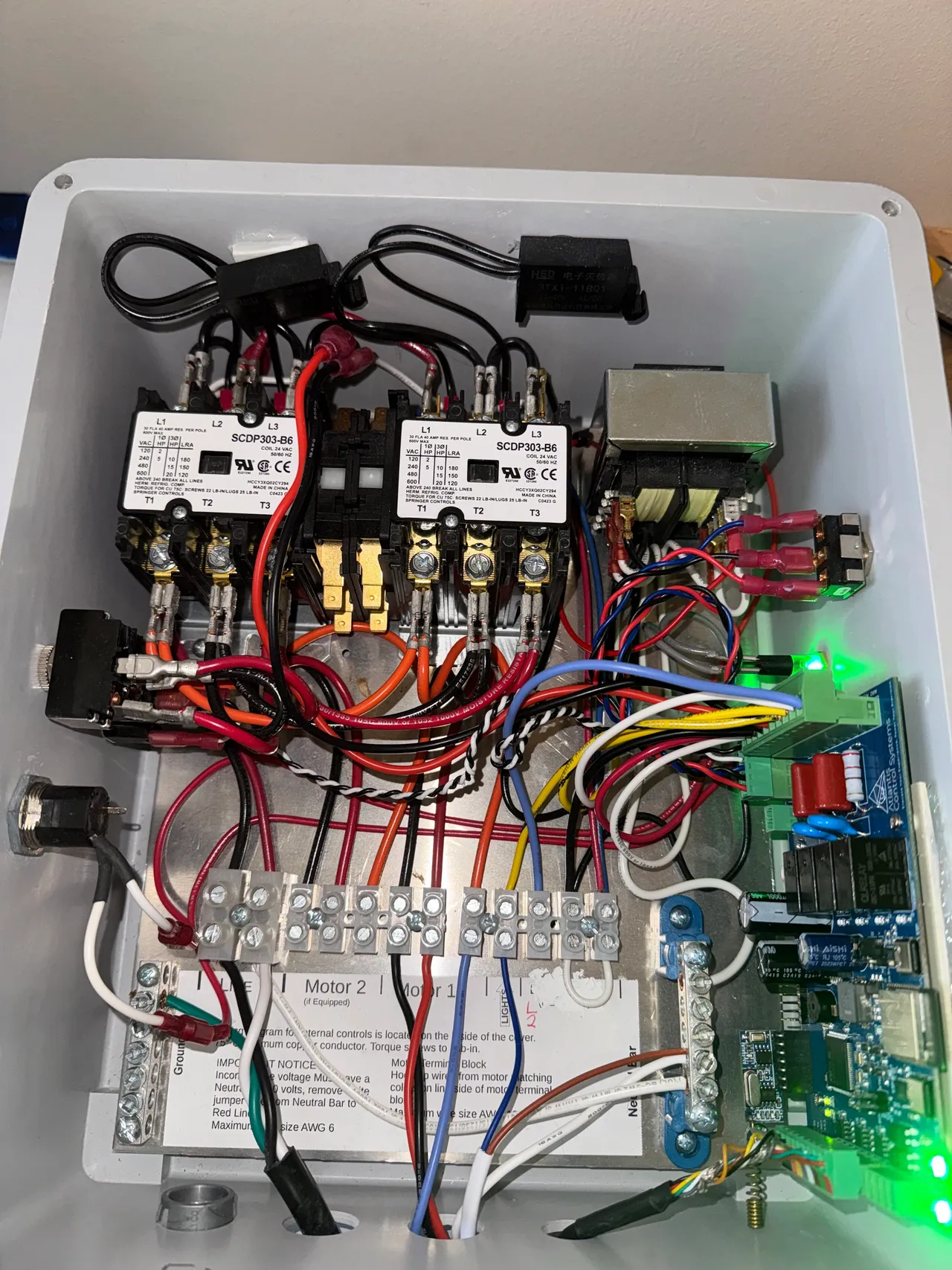
What Features Should a Monitoring System Actually Deliver?
A monitoring system earns its subscription fee by turning raw sensor data into decisions your staff can act on the same day. Here’s what to expect at the facility level:
-
Telemetry feeds: voltage, motor current draw, cycle counts, limit switch state, and position or tilt data where hardware supports it.
-
Threshold-based alerts: low battery warnings, motor stall detection, unexpected movement, limit-switch faults, and tamper events flagged the moment they occur.
-
Event logs and health dashboards: a running history that lets a dockmaster prioritize which lift gets serviced first, not just which one broke last.
-
Camera and security tie-ins: pairing lift alerts with nearby camera feeds so staff can confirm what happened before dispatching a technician.
Each of these maps directly to a KPI you already track. Fewer stall events mean fewer emergency service calls. Faster fault detection means shorter response windows. Battery telemetry alone reduces the surprise failures that turn into weekend emergency dispatches, which is usually the most expensive kind of service call a marina makes.
Cellular, Wi-Fi, or Wired: Which Connectivity Fits Your Marina?
Connectivity choice determines reliability more than any other single decision in a monitoring rollout. Get it wrong and you’ll spend the first six months chasing dropped signals instead of fixing lifts.
-
Cellular hubs work well when marina Wi-Fi is spotty or nonexistent at the water’s edge, which is most marinas. A single cellular gateway can report data from many sensors without running network cable down every dock finger.
-
Wi-Fi and wired uplinks cost less to run month to month but depend entirely on local infrastructure holding up in salt air and storm season.
-
Gateways and hub topologies let one uplink serve dozens of sensors, which is the pattern that scales best across a multi-lift property.
-
Sensor-only versus direct controller integration changes what you actually see. A sensor bolted onto an existing lift gives you telemetry; a smart controller gives you telemetry plus remote command authority, and that difference decides whether your platform can act on a fault or just report it.
Power source matters too. AC power is simplest where available, battery works for retrofit sites, and solar extends battery life on lifts far from shore power. Self-powered, battery-driven sensors in particular cut installation complexity by avoiding a hardwired tie-in to the boat’s own electrical system.
Pro Tip: Before committing to a connectivity type, run a one-week signal survey at the farthest lift from your office. If cellular bars drop below two on your carrier, budget for an external antenna or a Wi-Fi mesh extension before installation day, not after.
How Do You Deploy Monitoring Across Multiple Lifts?
A multi-lift rollout goes sideways fast without a written checklist. Here’s the sequence that keeps a deployment on schedule:
-
Survey the site. Check cellular and Wi-Fi coverage at each lift location, confirm physical access for mounting, and note enclosure rating requirements for salt spray exposure.
-
Inventory every lift. Tag each unit, record motor specs, and map limit switch positions and existing power sources before ordering hardware.
-
Procure hardware deliberately. Choose controllers, sensors, and gateways that match your connectivity plan, and order spare batteries and consumables up front rather than after the first failure.
-
Install with corrosion in mind. Mount enclosures above splash zones, ground everything properly, and route cables to avoid chafe points, a common failure source in marine environments.
-
Commission before you call it done. Set alert thresholds, simulate a stall and a low-battery event on a test lift, and confirm the alert reaches the right phone. Document the baseline log for every lift so future anomalies are easy to spot.
Skipping the commissioning step is the single most common rollout mistake. A sensor that reports data but has never had its thresholds tested will either flood staff with false alarms or stay silent during a real fault.
Who Handles Alerts Once Monitoring Goes Live?
Monitoring only pays off if alerts land with the right person fast. Role-based routing prevents both alert fatigue and the “nobody saw it” failure mode.
-
Dockhands get movement and tamper alerts tied to lifts they physically walk past daily.
-
On-call technicians receive motor stall, limit-switch fault, and battery-critical alerts that need hands-on diagnosis.
-
Managers see rollup dashboards and SLA tracking rather than every individual ping, so they can spot patterns across the season.
A mobile-first alert workflow lets a dockmaster triage from a phone between rounds instead of returning to an office terminal. Turn the same telemetry into maintenance tickets and scheduled preventive service, and you’ve replaced reactive firefighting with a real schedule. Some marinas take this further and monetize monitored slips directly, billing a premium tier for lifts with active monitoring and priority response.
What Maintenance Keeps Monitoring Hardware Reliable?
Sensors and controllers need their own upkeep or they become the failure point they were installed to prevent.
-
Replace batteries on schedule, not when they die. Most facility-grade sensors flag voltage decline weeks in advance, giving you a planning window.
-
Apply firmware updates during scheduled downtime rather than letting units drift out of sync with the platform.
-
Watch for corrosion and wiring faults, which telemetry often reveals as intermittent signal dropouts before a full failure occurs.
-
Try remote diagnostics first. A stuck alert or missing telemetry feed can often be reset from the dashboard without a truck roll.
-
Track two numbers religiously: alert frequency per lift and mean time to repair. Both trend upward when hardware is aging out.
What Does Monitoring Cost, and What’s the Payback?
Budget for both upfront hardware and ongoing subscription costs. Line items typically include controllers, sensors, gateways, installation labor, a cellular or data plan, and the platform subscription itself.
-
Hardware and installation are one-time costs that vary by lift count and site complexity.
-
Recurring costs run either as a flat subscription or per-device pricing, and per-lift models scale predictably as you add units.
-
Savings show up in three places: fewer emergency service calls, lower motor replacement rates from catching stress signs early, and less staff time spent on manual dock walks.
A simple payback model needs three inputs: number of lifts monitored, average cost of an emergency service call, and your expected reduction in failure events. Atlantis Marina prices premium smart lift automation at $1 per month per lift, which makes the per-unit math straightforward when you’re comparing it against even one avoided weekend callout.
How Atlantis Marina Brings Lift Monitoring Into Daily Operations
Atlantis Marina folds lift telemetry directly into the same platform where staff already handle reservations, billing, and customer messages, rather than running it as a separate system nobody checks. Smart lift control support means alerts, battery status, and fault data show up alongside slip assignments and billing records on one operations dashboard.
Here’s what that integration adds beyond raw telemetry:
-
Mobile alerts route to dockhands or on-call staff the moment a threshold trips, without a separate app to check.
-
Automated billing ties monitored-lift usage to invoicing, so premium monitoring tiers bill themselves through Stripe and ACH processing.
-
Atlantis Bot, the platform’s built-in AI assistant, helps staff answer routine questions and manage daily tasks without pulling a manager away from the dock.
-
QR-code workflows let staff pull up the right vessel, contract, and billing status instantly when responding to a lift alert in person.
-
Cloud hosting makes the whole system usable from a phone at the far end of the marina or from a regional office managing multiple properties.
The operations dashboard is built to scale from a single small marina to a multi-property group without switching platforms as you grow.
An Operator’s View on What Rollout Actually Looks Like
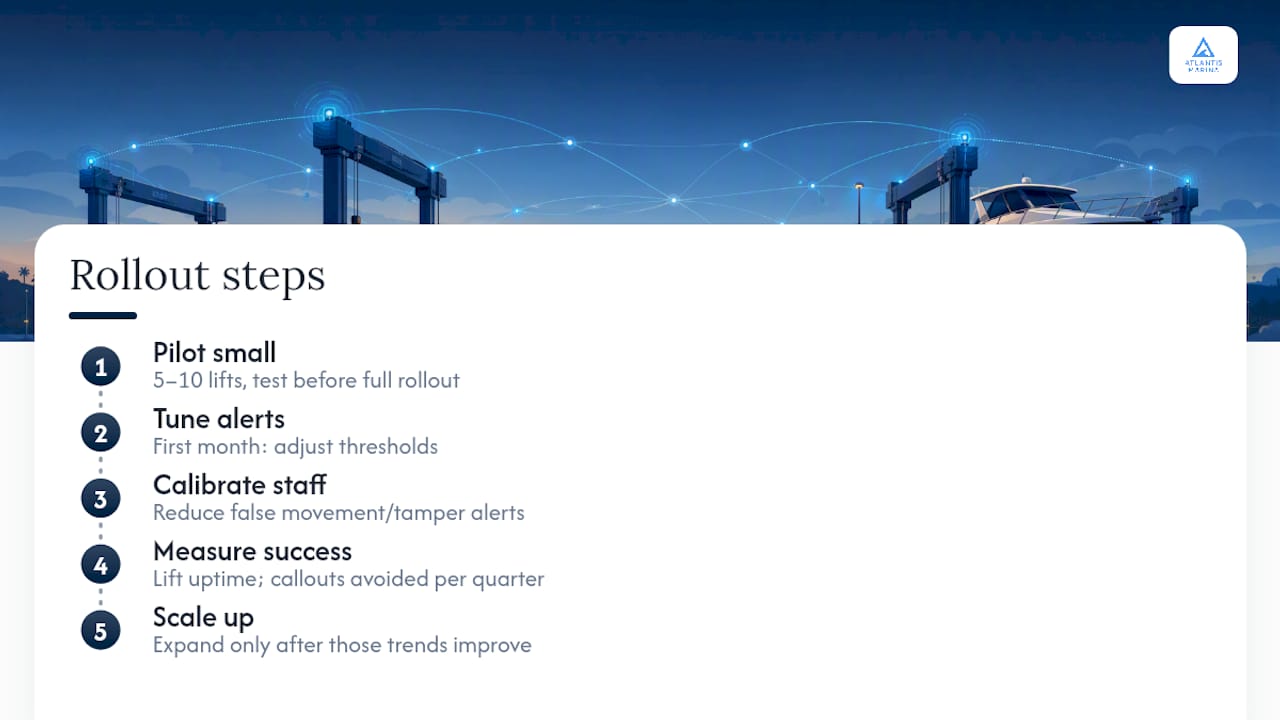
Start small. Pilot monitoring on five or ten lifts before touching the whole property, because the first month is always about tuning alert thresholds, not celebrating a clean install. You will get false positives on movement and tamper alerts until staff calibrate what “normal” looks like at your dock. Dockmasters who skip this step end up muting alerts entirely within a few weeks, which defeats the purpose.
Measure success with two numbers: lift uptime and the count of emergency callouts avoided per quarter. Everything else, including battery replacement schedules and dashboard polish, follows once those two trends move in the right direction.
— John R
Ready to Pilot Remote Lift Monitoring at Your Marina?
Atlantis Marina is the alternative to running lift sensors as a bolt-on system disconnected from your billing and reservation software. It’s monitoring, mobile alerts, and operations built into one platform, so a battery warning and a slip invoice show up in the same dashboard instead of two logins nobody checks consistently.
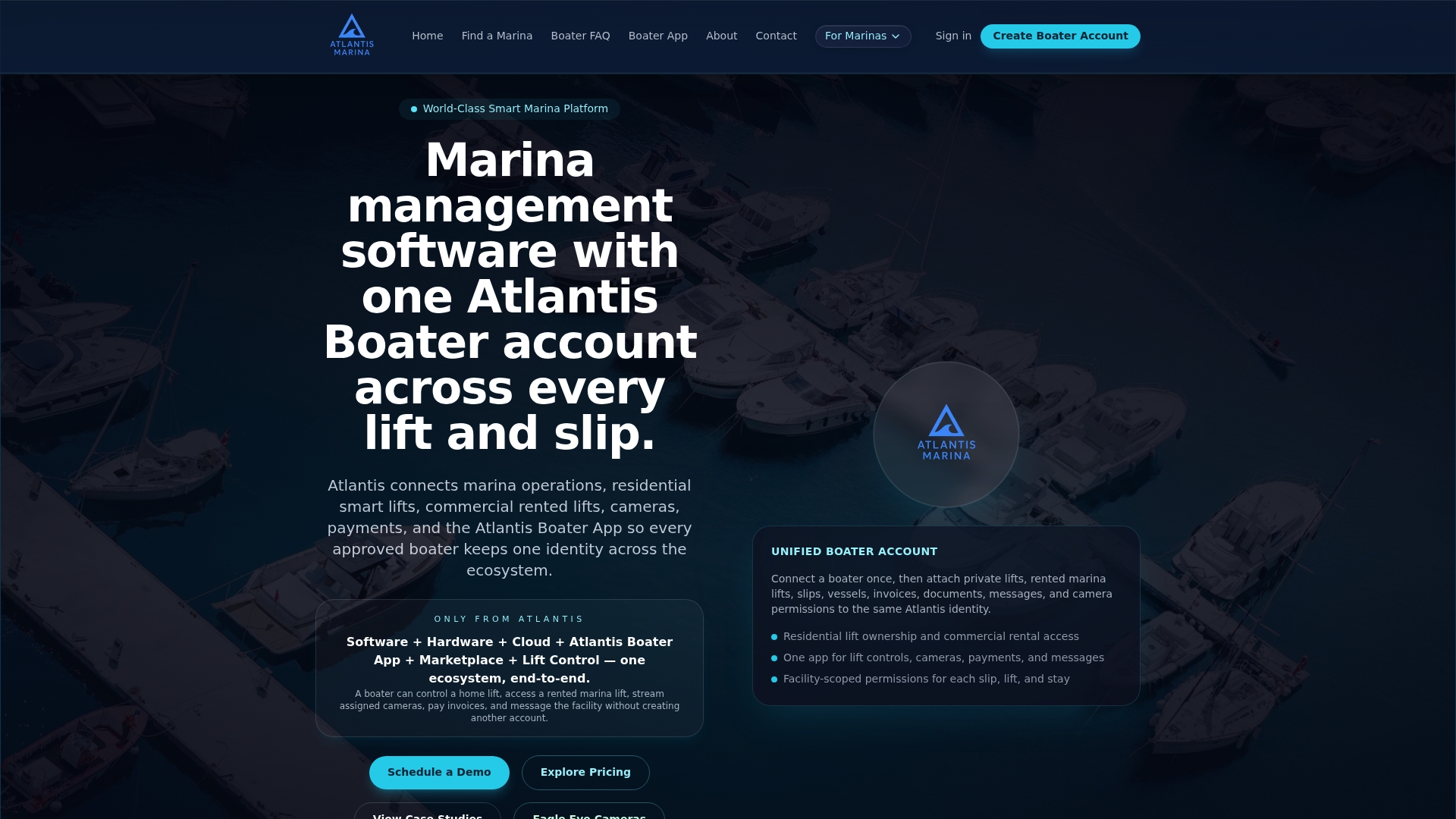
If you’re running a handful of lifts or a full multi-property portfolio, the fastest way to see the fit is a direct look at the numbers. Premium smart lift automation runs $1 per month per lift, and plans start at $150 per month for Micro marinas scaling up to Large and Enterprise tiers. Review the smart lift control page to see how telemetry, alerts, and controller integrations work together, then request a site assessment or demo to scope a pilot on a handful of lifts before committing to a marina-wide rollout.
Sources
-
How Marinas Can Maximize ROI with High-Capacity Boat Lifts | HydroHoist
-
Marina Monitoring Solutions for Operators - Oversea Boat Monitoring System
FAQ
What Is Remote Boat Lift Monitoring?
It’s facility-grade telemetry, integrated into a marina’s operations platform, that tracks voltage, cycle counts, motor status, and faults across every lift from a single dashboard rather than a handheld remote for one unit.
How Much Does Lift Monitoring Cost per Lift?
Atlantis Marina’s premium smart lift automation is priced at $1 per month per lift, on top of the marina’s base subscription plan.
Do I Need Cellular Service for Remote Monitoring?
Not always, but cellular hubs are often the most reliable option where marina Wi-Fi is weak or absent, since a single gateway can report from many sensors without running new wiring.
How Many Lifts Should a Pilot Program Include?
Most operators start with a small number of lifts to tune alert thresholds and confirm connectivity before expanding monitoring across the full property.
Can Monitoring Data Be Tied to Billing?
Yes. Platforms like Atlantis Marina can connect monitored-lift usage to automated billing, letting marinas charge a premium tier for monitored slips through the same invoicing system.