
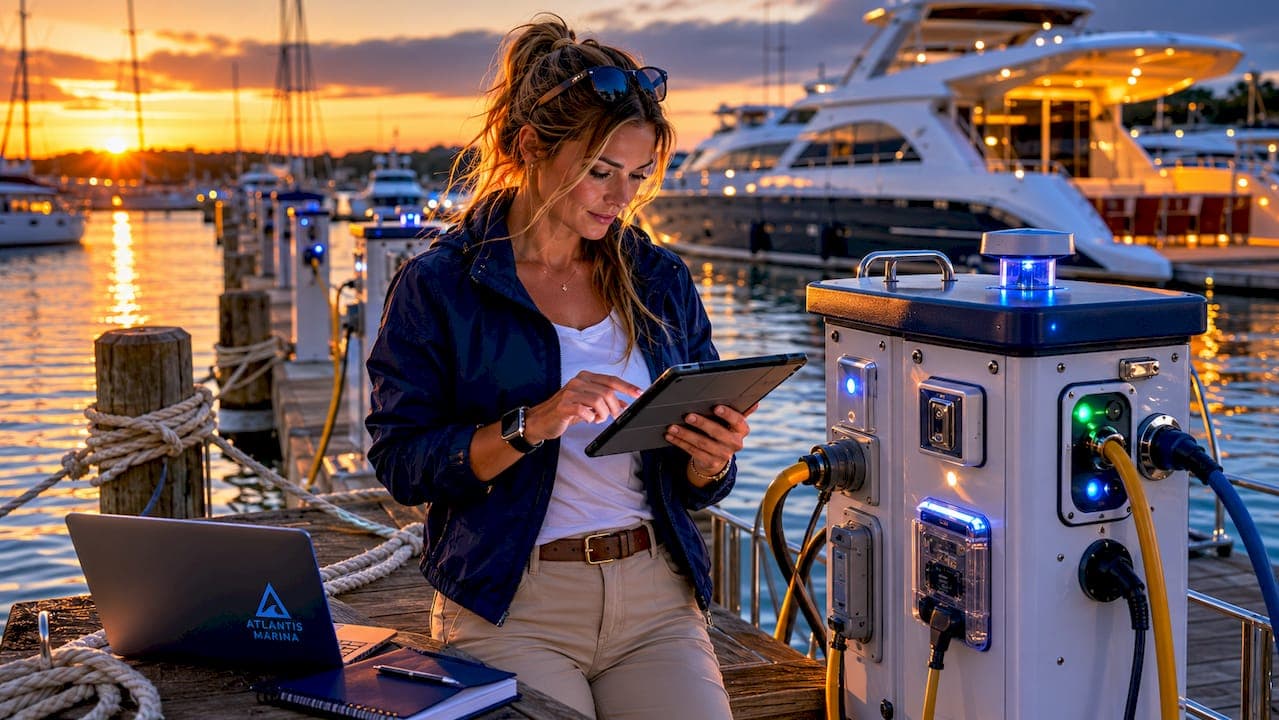
Connected marina infrastructure is the integration of smart hardware, marina software, telemetry, billing automation, and boater mobile access into one shared data layer that runs every aspect of waterfront operations. Where traditional marinas rely on manual meter reads, paper logs, and disconnected billing systems, connected marinas pull all of that into a single platform. The result is real-time visibility across every slip, lift, and utility pedestal on the property. Platforms like Atlantis-marina, developed by Atlantis Control Systems, are built specifically around this model, combining reservations, payments, Eagle Eye camera integration, smart boat lift control, and CRM into one unified system.
What is connected marina infrastructure, exactly?
Connected marina infrastructure is defined as a data-driven, interoperable ecosystem where software, IoT sensors, smart hardware, and communication networks share a single operational data layer. The industry term for this architecture is "smart marina infrastructure," and the two phrases describe the same concept. Understanding the distinction matters because vendors use both terms, and marina operators need to recognize what they are buying.
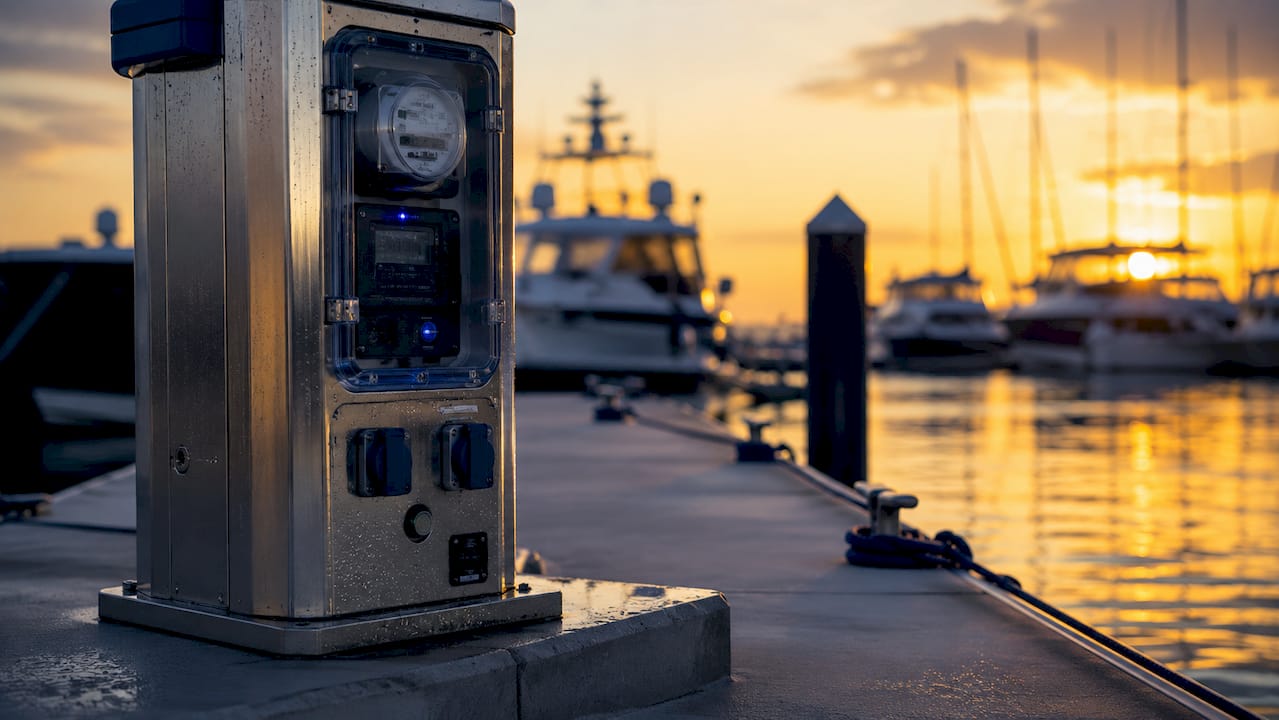
The core components work together rather than in parallel. A smart utility pedestal reports electricity and water consumption in real time. That data feeds directly into the billing module, which generates invoices automatically. A boater receives a notification through a mobile app, reviews the charge, and pays online without calling the office. Every step connects back to the same platform.
Atlantis-marina positions this as the "modern waterfront" model. The platform consolidates multiple marina functions into one system, including slip assignments, boat lift tracking, waitlists, facility maps, and tenant communications. That consolidation is what separates connected infrastructure from simply adding software to an existing manual workflow.
What technologies make up a connected marina system?
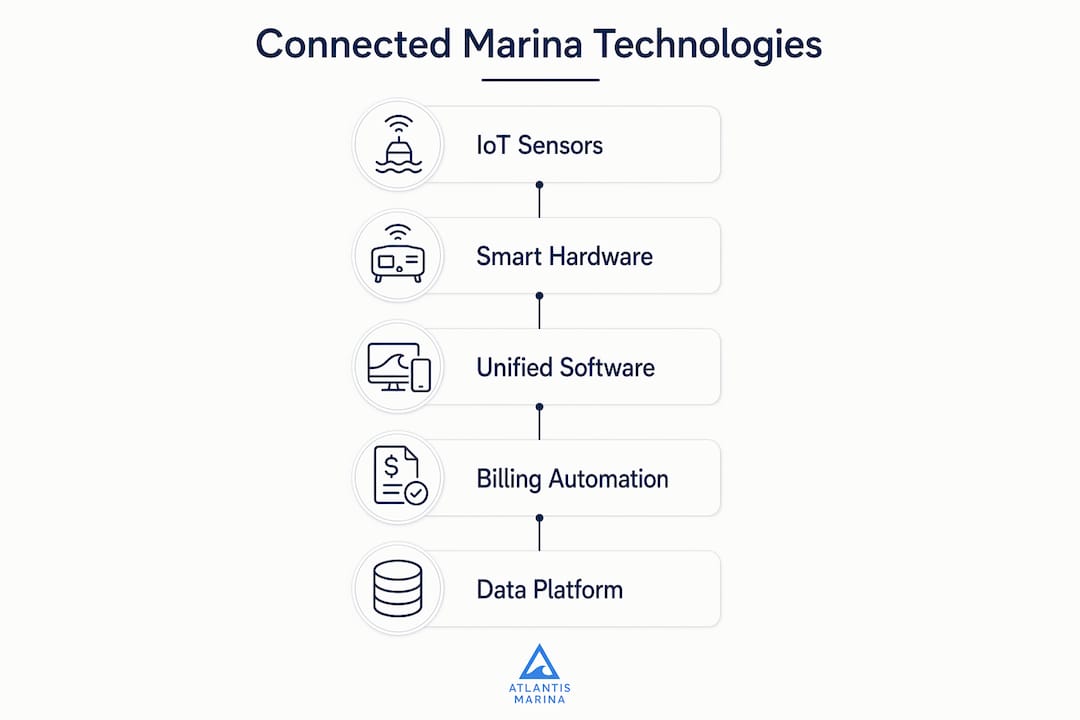
The technology stack behind connected marina systems covers five distinct layers. Each layer must function reliably before the next one delivers value.
- IoT utility sensors and smart pedestals: These devices monitor electricity, water, and gas consumption at the berth level. Real-time consumption tracking enables remote utility shut-offs and automated billing without manual meter reads.
- Smart boat lift hardware: Lifts equipped with telemetry controllers report operational status, load data, and fault alerts. Atlantis-marina integrates directly with smart lift controllers, supporting remote monitoring and AUX device control from the same dashboard.
- Software modules: CRM, billing, reservations, payment processing, and document management run as connected modules rather than separate tools. Atlantis-marina supports QuickBooks and Stripe integrations, dry-stack workflows, and guided reservation flows embedded directly into a marina's website.
- Telecommunications infrastructure: High-performance WiFi and IoT networks are required to transmit sensor data reliably in a marine environment. Water reflections and open-air layouts create signal challenges that standard commercial networks cannot handle. Solar-powered smart totems at some European marinas generate approximately 2,000 kWh of renewable energy annually while also serving as network nodes, a model gaining traction in North American waterfront development.
- Camera and security integration: Atlantis-marina integrates with Eagle Eye camera systems to support access control and incident monitoring. Camera integration connects security data to the same operational platform that manages reservations and billing.
A unified data platform ties all five layers together. Without that central layer, operators end up with five separate dashboards and no shared context between them.
How does connected infrastructure improve efficiency and reduce costs?
The operational gains from connected marina infrastructure are concrete and measurable. The shift from reactive to predictive management is the most significant change.
- Remote monitoring reduces labor costs. Staff no longer walk the docks to read meters or check lift status. Centralized utility metering gives operators real-time visibility from any device, cutting the time spent on routine checks.
- Automated billing accelerates collections. Berth-level metering feeds directly into invoice generation. Disputes drop because tenants can see their own consumption data through the boater app. Faster billing cycles improve cash flow without adding administrative staff.
- Predictive maintenance reduces downtime. Sensors track polymer degradation, hydrostatic pressure, and thermal data across dock structures and equipment. Predictive sensor data allows maintenance teams to address issues before they become failures, reducing repair costs and asset depreciation.
- Automated Storage and Retrieval systems expand capacity. ASAR systems can store up to 4 times more boats compared to traditional dry dock layouts. That capacity gain comes with integrated sensors that improve retrieval speed and safety in poor weather conditions.
- Fewer spreadsheets mean fewer errors. Centralizing billing, security, and reservations on one platform removes the manual reconciliation that creates billing errors and audit gaps.
Pro Tip: Before deploying IoT sensors, audit your existing power and data network infrastructure. Missing digital foundations are the leading cause of failed connected marina deployments. Sensors cannot communicate reliably without stable power and fiber.
How does connected infrastructure improve the boater experience?
Boater retention depends on transparency and convenience. Connected marina systems deliver both through app-based interfaces that give tenants direct access to their account data.
- Real-time consumption alerts: Boaters receive push notifications when utility usage spikes, helping them catch equipment faults before they become expensive. App-based monitoring removes the friction of calling the office for billing questions.
- Digital reservations and access: Tenants reserve slips online, submit vessel documents, and receive digital access credentials through the same platform. Atlantis-marina's boater portal embeds directly into a marina's existing website, so the experience feels native rather than redirected.
- Remote billing and payments: Boaters pay invoices through the app using Stripe-connected payment flows. Recurring billing automation eliminates the monthly check-collection process that still burdens many independent marinas.
- Integrated staff communication: Service requests, maintenance updates, and facility notices reach tenants through the same platform that handles billing. That single channel reduces missed messages and improves response times.
- Facility maps and guided workflows: Atlantis-marina includes dock layout maps and step-by-step reservation flows that reduce confusion for first-time visitors and cut the volume of inbound calls to the dockmaster.
Better dispute resolution follows naturally from this transparency. When a tenant questions a charge, the operator pulls up the consumption log and resolves the issue in minutes rather than days.
Connected vs. traditional marina management: what actually changes?
The difference between connected and traditional marina management is not just technology. It is the speed and accuracy of every operational decision.
| Feature | Connected marina infrastructure | Traditional marina management |
|---|---|---|
| Utility metering | Automated, berth-level, real-time | Manual reads, monthly or quarterly |
| Billing | Auto-generated from sensor data | Manual entry, prone to errors |
| Maintenance | Predictive, sensor-triggered | Reactive, after failure occurs |
| Security | Camera integration, access logs | Physical checks, paper logs |
| Boater access | Digital keys, mobile app | Physical keys, in-person check-in |
| Data visibility | Unified dashboard, all functions | Siloed systems, no shared data |
| Reporting | Automated analytics and audit trails | Manual spreadsheets |
Traditional systems are not just slower. They actively limit what operators can know about their own facility. A marina running on spreadsheets cannot identify which slips are consistently underutilized or which tenants are at risk of churning. Connected infrastructure makes that analysis automatic.
Automation amplifies management strengths and exposes planning weaknesses. A poorly designed dock layout becomes a bigger problem when an ASAR system highlights retrieval bottlenecks at scale. Technology does not fix bad planning. It makes the consequences of bad planning more visible, faster.
Pro Tip: Map your physical dock layout and circulation paths before selecting any automation hardware. Site layout flaws that seem minor in a manual operation become operational constraints that no software can work around.
How to implement connected marina infrastructure step by step
Adoption works best as a phased process. Trying to deploy every layer at once creates integration problems and staff resistance.
- Assess your current infrastructure. Audit existing power supply, data network coverage, and software systems. Identify gaps in fiber, WiFi coverage, and metering hardware before purchasing any IoT devices.
- Upgrade physical foundations first. Install reliable power distribution and data cabling across the dock. Foundational digital infrastructure is the prerequisite for every connected device that follows.
- Deploy IoT sensors and smart pedestals. Start with utility metering at the berth level. This delivers immediate billing accuracy and gives operators their first real-time data feed.
- Select an integrated software platform. Choose a system that unifies billing, reservations, access control, and CRM in one place. Atlantis-marina connects all of these functions, including QuickBooks and Stripe billing automation, Eagle Eye camera integration, smart lift control, and dry-stack workflows, under a single operator dashboard.
- Enable the boater-facing portal. Activate the reservation system, boater app, and digital payment flows. This step directly improves tenant satisfaction and reduces inbound calls.
- Train staff and align workflows. Technology adoption fails when staff revert to old habits. Dockmasters need hands-on training with the operations dashboard before going live.
The phased approach also protects budget. Operators can validate ROI at each stage before committing to the next layer of investment.
Key Takeaways
Connected marina infrastructure delivers the most value when smart hardware, unified software, and trained staff operate from the same data layer.
| Point | Details |
|---|---|
| Define the ecosystem first | Connected infrastructure means one shared data layer across hardware, software, billing, and access control. |
| Physical foundations come before IoT | Reliable power and data networks must exist before sensors and smart devices can communicate. |
| Automation exposes planning gaps | Poor dock layouts and weak workflows become more visible, not less, after automation is deployed. |
| Boater experience drives retention | App-based billing, real-time alerts, and digital access reduce tenant friction and inbound support calls. |
| Phased rollout protects ROI | Deploying one layer at a time lets operators validate results before expanding the system. |
Why most marinas underestimate what "connected" actually means
I have watched marina operators buy smart pedestals, install them, and then call the project complete. The hardware works. The billing still runs on spreadsheets. That is not connected infrastructure. That is connected hardware sitting inside a disconnected operation.
The real shift happens at the data layer. When a utility sensor, a reservation record, a payment transaction, and a camera alert all write to the same platform, the operator stops reacting and starts anticipating. Digital Twins and AI models that simulate failures from real-time sensor data represent where this is heading. Most marinas are not there yet, but the path runs through unified data, not through more hardware.
The operators who get the most out of connected infrastructure are not the ones with the biggest budgets. They are the ones who fix their dock layout, train their dockmasters, and choose a platform that connects every function rather than adding another login to the stack. The technology is ready. The question is whether the operation behind it is.
— John
Atlantis-marina: one platform for the connected waterfront
Atlantis-marina brings every layer of connected marina infrastructure into a single cloud-based platform built for marina operators, yacht clubs, and waterfront communities.
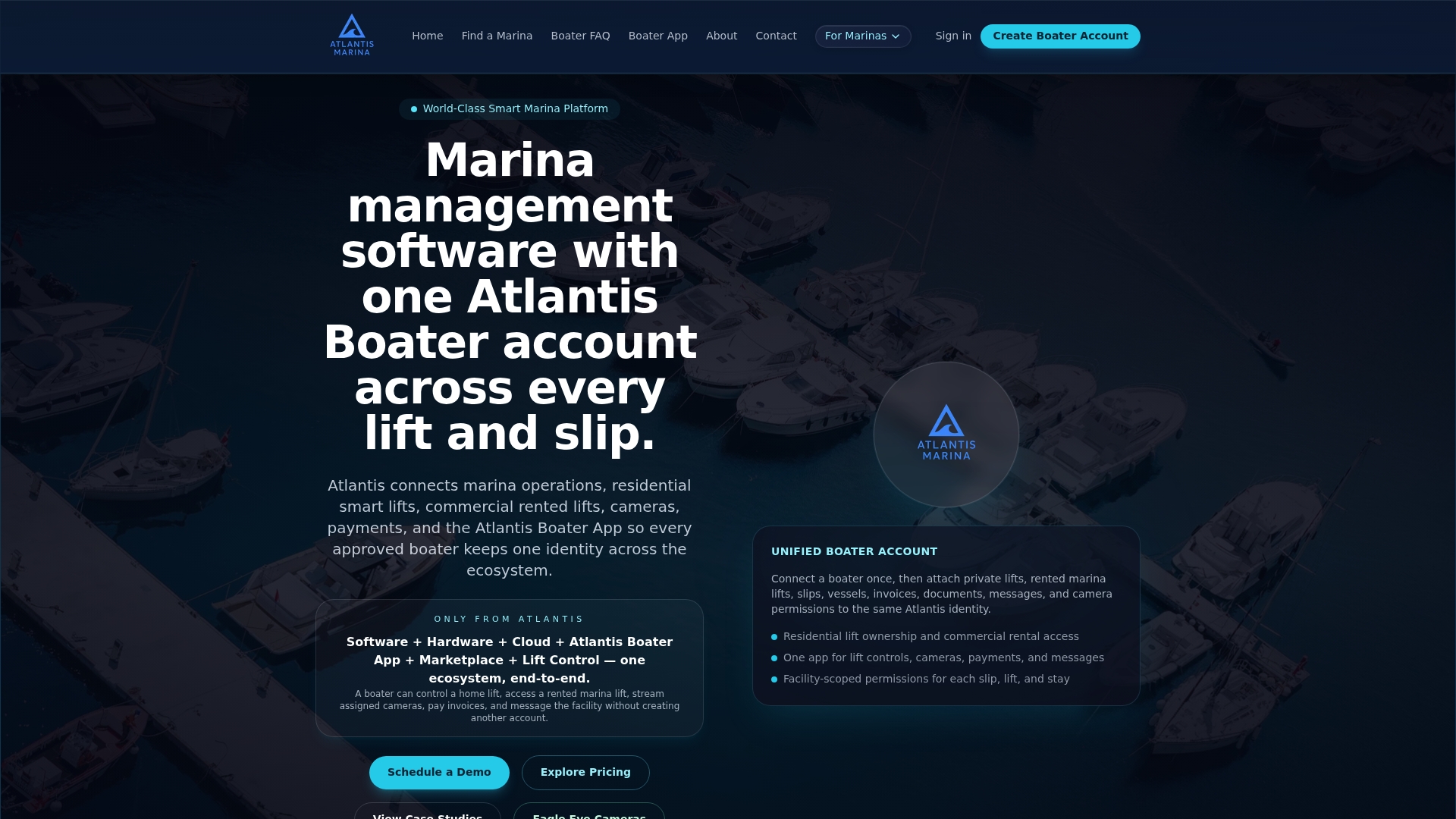
The platform covers slip and lift management, guided reservations, QuickBooks and Stripe billing automation, Eagle Eye camera integration, dry-stack workflows, and the Atlantis Boater App, all from one dashboard. Operators get real-time occupancy data, automated invoicing, and full audit trails without managing multiple systems. Tenants get digital access, transparent billing, and direct communication with marina staff. Schedule a demo through Atlantis-marina's management software page to see how the platform fits your facility's specific workflow.
FAQ
What is connected marina infrastructure?
Connected marina infrastructure is the integration of IoT sensors, smart hardware, marina management software, billing automation, and boater mobile access into one unified data platform. It replaces manual, siloed workflows with real-time monitoring and automated operations across every function of a marina.
What are the main benefits of connected marina systems?
The main benefits include automated utility billing, predictive maintenance, real-time occupancy tracking, faster payment collection, and improved boater satisfaction through app-based access and transparent consumption data.
How does marina infrastructure automation differ from traditional management?
Traditional management relies on manual meter reads, paper logs, and disconnected software. Marina infrastructure automation connects all functions to a shared data layer, enabling real-time decisions, automated billing, and sensor-driven maintenance rather than reactive repairs.
What is marina cloud infrastructure?
Marina cloud infrastructure refers to the cloud-hosted software layer that stores and processes all marina operational data, including reservations, billing, sensor readings, and tenant records, making it accessible from any device and location.
How long does it take to implement connected marina infrastructure?
Implementation timelines vary by facility size and existing infrastructure. A phased approach, starting with network upgrades and utility metering before adding software and boater-facing tools, typically produces measurable results within the first operational cycle after each layer goes live.