
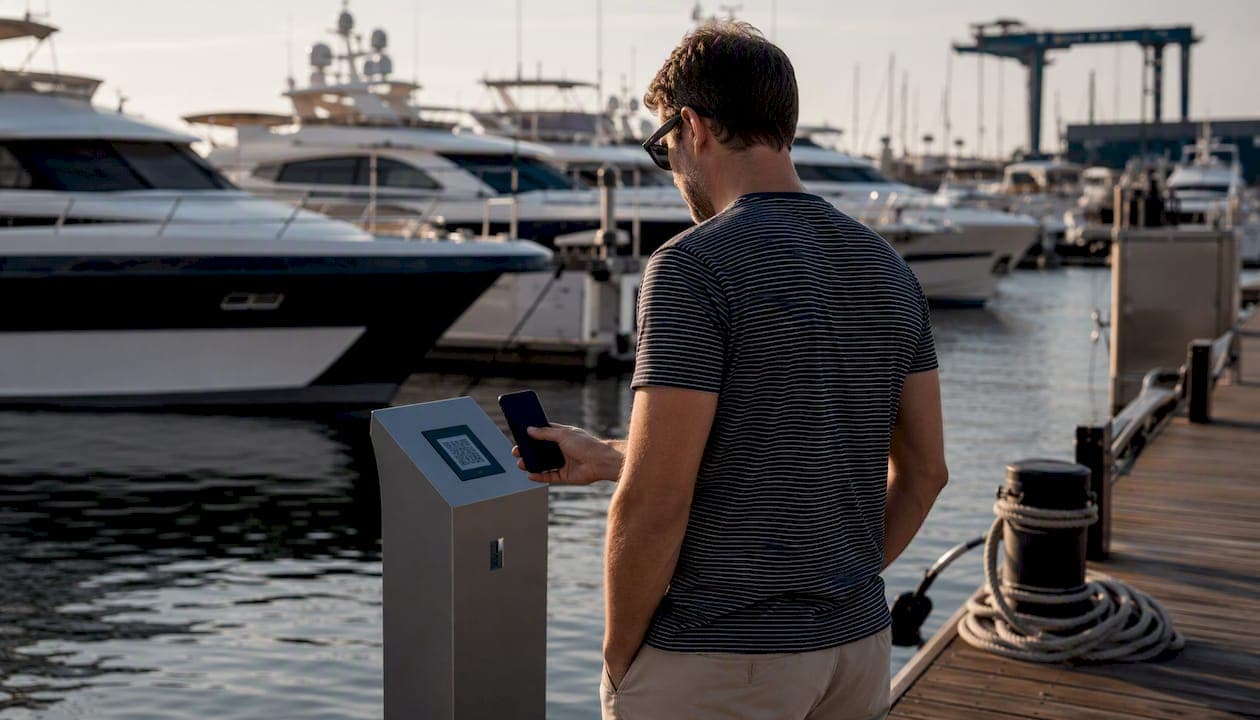
Automating the marina check-in process reduces arrival friction, prevents revenue leakage, and unlocks better slip utilization — and the fastest way to prove it is a 30-day pilot on peak weekends with mobile pre-checkin and digital payment enabled for transient boaters. The business case writes itself quickly once you see the numbers.
Immediate wins to cite in your next leadership meeting :
- Average check-in time drops from manual paperwork to a few minutes with digital pre-arrival workflows
- Double bookings decrease significantly when reservations, payments, and slip assignments share a single live database
- Payment capture accelerates because autopay and Instant Pay collect at confirmation, not at the dock
- Staff hours shift from clipboard administration to guest-facing service and facility maintenance
Pro Tip : Start with mobile pre-checkin and digital payment only. You get immediate time savings and revenue protection without touching hardware or access control — the lowest-risk entry point for any marina.
Key Takeaways
Automating marina check-in reduces arrival time to under 5 minutes, prevents double bookings, and improves space efficiency — making it the highest-ROI operational upgrade available to marina managers today.
| Point | Details |
|---|---|
| Check-in time reduction | Automated pre-checkin cuts arrival processing from manual paperwork to under 5 minutes. |
| Space efficiency as primary driver | Automation improves slip throughput and occupancy without adding berths, per Marina Dock Age. |
| Phase your implementation | Start with document capture and payments before adding access control and hardware automation. |
| Measure before and after | Set baseline KPIs two weeks before go-live; track check-in time and payment rate weekly for 90 days. |
| Atlantis Marina | The platform unifies mobile pre-checkin, QR workflows, billing automation, and smart hardware in one system. |
Table of Contents
- Why automating the marina check-in process pays off operationally
- What features does an automated check-in system need?
- How does check-in automation improve space efficiency and occupancy?
- What does implementing automated check-in actually involve?
- How do you measure ROI after automating check-in?
- How Atlantis Marina automates check-in across unified operations
- Automation and hospitality are not in conflict
- Atlantis Marina gives you the tools to automate check-in now
- Sources
- FAQ
Why automating the marina check-in process pays off operationally
The core argument for marina check-in automation is not speed alone. It is the compounding effect of eliminating manual handoffs across reservations, billing, documentation, and access — all at once, every arrival.
Time and labor savings are the most visible benefit. AI-powered onboarding tools can reduce manual check-in time to under 5 minutes in many cases, and document processing time drops dramatically when systems extract and verify insurance certificates, vessel registrations, and IDs automatically. Dock staff who previously spent their mornings processing paperwork can spend that time on slip assignments, safety checks, and guest orientation.
Revenue protection is less obvious but financially larger. Workflow automation connects reservations, check-ins, maintenance, and billing into coordinated digital processes that eliminate the manual handoffs where double bookings and missed payments hide. When a boater confirms a reservation, the system locks the slip, queues the billing, and flags the dockmaster — no phone tag, no whiteboard updates.
Guest experience improves in ways boaters notice immediately. Digital arrival instructions, QR-code access, and pre-loaded vessel data mean a boater who has pre-checked in walks from their car to their slip without stopping at the office. That frictionless arrival is increasingly the expectation, not a premium.
Risk and compliance round out the case. Automated document collection captures insurance certificates and registration records at booking, not on arrival day when the office is busy. Expiration tracking and automated reminders keep your compliance file current without staff manually chasing paperwork.
Statistic callout: Self-service check-in in hospitality shortens arrival time, increases guest satisfaction, and creates upsell opportunities at check-in — a pattern that translates directly to marina arrivals, where ancillary sales at the ship store or fuel dock are most likely when the boater's first interaction is smooth.
Pro Tip : When communicating the change to staff, frame automation as removing the tasks they dislike most — paperwork, payment chasing, and document filing — not as a headcount reduction. Adoption rates climb when the team sees it as relief, not replacement.
What features does an automated check-in system need?
Not every platform delivers the same depth of automation. Before evaluating any system, use this checklist to confirm the features that actually move the needle.
Mobile pre-checkin and onsite kiosk options
Boaters should be able to complete arrival paperwork, upload documents, and sign contracts from their phone before they leave the dock at home. Onsite, a QR-code workflow links their physical presence to the correct account instantly — no name lookup, no manual search. Kiosk options extend self-service to boaters who arrive without completing pre-checkin.
Payment integration and electronic contracts
The system must support Stripe and ACH processing, autopay enrollment, and Instant Pay for transient arrivals. Electronic contract signing at booking — not at the dock — eliminates the paper shuffle that slows every manual check-in. Billing automation should sync to QuickBooks Online so revenue is booked without manual entry.
Access control integration
For marinas with smart infrastructure, check-in must be bi-directional. The platform must issue time-limited, location-specific access codes or activate pedestals and lifts the moment a boater checks in — otherwise the arrival experience stays fragmented even if the paperwork is digital. Mobile access workflows and smart lock integrations are the connective tissue between a reservation event and a boater who can actually reach their slip.
Real-time slip availability and waitlist automation
The reservation engine must reflect live slip status, not a snapshot from the last manual update. Dynamic berth matching based on vessel length, beam, and draft prevents the common problem of assigning a slip the boat cannot physically use. Automated waitlists fill cancellations without staff intervention.
Minimum integration requirements checklist :
- Marina management platform (PMS) with live slip inventory
- Payment processor (Stripe, ACH) with autopay and Instant Pay support
- Electronic signature for contracts and waivers
- Document storage with expiration tracking (insurance, registration)
- Access control API (smart locks, pedestals, lift controllers)
- Accounting sync (QuickBooks Online or equivalent)
- SMS and email notification engine for arrival instructions and alerts
- Cloud hosting with uptime SLAs appropriate for peak-season demand
How does check-in automation improve space efficiency and occupancy?
Speed at the dock is a visible benefit. The deeper commercial advantage is what Marina Dock Age identifies as the primary value driver: space efficiency and predictability — getting more throughput from the slips you already have, without adding a single berth.
When check-in is manual, slips sit empty between a departure and the next arrival because staff cannot confirm the slip is clear, notify the incoming boater, and process their paperwork fast enough to close the gap. Automated systems close that gap by triggering slip-prep notifications the moment a departure is logged, matching the next reservation automatically, and sending the incoming boater their arrival instructions and access code before they leave home.
| Metric | Manual process | Automated process |
|---|---|---|
| Average check-in time | manual process takes several minutes | automated process greatly reduces this time |
| Slip turnaround gap | 2–4 hours (staff-dependent) | 30–60 minutes (system-triggered) |
| No-show handling | Manual follow-up calls | Automated waitlist fill |
| Document compliance rate | Inconsistent | Near 100% at booking |
Real-time availability also reduces no-shows. When boaters receive automated reminders with their slip number, access code, and arrival instructions, they are far less likely to arrive at the wrong time or cancel without notice. Waitlist automation fills those gaps when cancellations do occur.
Pro Tip: During peak season, schedule departure confirmations for 8 AM and set automated slip-prep alerts to trigger within 15 minutes of a confirmed checkout. That single workflow change can recover 1–2 additional transient arrivals per day on a busy weekend.
- Real-time availability prevents double-booking and idle slip time
- Automated waitlists convert cancellations into revenue without staff calls
- Departure-triggered prep workflows reduce turnaround gaps
- Vessel-spec matching prevents assignment errors that require last-minute reshuffling
What does implementing automated check-in actually involve?
A phased approach reduces risk and accelerates adoption. Automating every workflow at once is one of the most common implementation mistakes; practitioners recommend building in stages.
Recommended implementation sequence :
- Enable mobile pre-checkin and document capture — the fastest win with the lowest integration complexity. Boaters upload insurance and registration at booking; staff arrive to a clean compliance file.
- Activate payment automation — connect Stripe or ACH, enable autopay for liveaboards and seasonal contracts, and add Instant Pay for transients. This is where revenue leakage stops.
- Deploy QR-code check-in and digital passes — link onsite interactions to accounts instantly. Staff scan a boater's QR code and reach their reservation, billing status, and vessel record in one tap.
- Integrate access control — issue time-limited access codes or activate smart locks and pedestals at check-in confirmation. This step requires hardware compatibility verification against NMMA certification standards for any connected marine equipment.
- Automate hardware workflows — connect boat lift controllers, remote monitoring, and AUX device control for dry stack and lift operations.
Timeline and cost shape : Most marinas complete steps 1–3 in 30–60 days. Steps 4–5 depend on existing hardware and site infrastructure. Costs follow a SaaS model: a monthly subscription scaled to marina size, a platform fee on digital payments processed, and optional hardware costs for smart lifts, cameras, and POS terminals.
Common pitfalls to avoid :
- Data sync gaps between the reservation system and billing platform cause double-billing or missed charges — confirm real-time sync before go-live
- Hardware compatibility issues surface late; audit existing pedestals and lift controllers against platform APIs before committing to a timeline
- Peak-demand planning is often underestimated; test the system under simulated load before the first busy weekend
Staff training guidance : Run a two-hour hands-on session covering the dockmaster dashboard, QR-code scanning, and the exception workflow for boaters who arrive without completing pre-checkin. Designate one staff member as the internal champion who owns the platform relationship and trains new hires.
Pro Tip : Roll out digital pre-checkin to seasonal slip holders first — they are your most familiar customers and will give you honest feedback before you expose the workflow to transients.
How do you measure ROI after automating check-in?
Measurement starts before go-live. Capture your baseline numbers for each KPI in the two weeks before launch so you have a clean before-and-after comparison.
| KPI | How to measure | Target improvement |
|---|---|---|
| Average check-in time | Time from arrival to slip access (staff log or system timestamp) | Target significant reduction |
| Occupancy rate | Occupied slip-nights / available slip-nights × 100 | Aim to improve occupancy |
| Slip turnover time | Minutes between departure confirmation and next check-in | Aim to reduce substantially |
| Payment collection rate | Payments collected at or before check-in / total arrivals | Target high collection rate |
| Ancillary revenue per check-in | Ship store, fuel, and service revenue / total check-ins | Aim to improve revenue |
| Guest satisfaction score | Post-stay survey (NPS or 1–5 star) | Aim to improve satisfaction |
Simple ROI formula for leadership reporting :
Reporting cadence : Review check-in time and payment collection rate weekly during the first 90 days. Shift to monthly reporting for occupancy and ancillary revenue once the system is stable. Assign ownership clearly: the dockmaster owns check-in time and slip turnover; the marina manager owns occupancy and revenue metrics.
- Set baseline KPIs two weeks before go-live
- Review check-in time and payment rate weekly for the first 90 days
- Report occupancy and ancillary revenue monthly to ownership
- Adjust waitlist and pricing rules quarterly based on throughput data
How Atlantis Marina automates check-in across unified operations
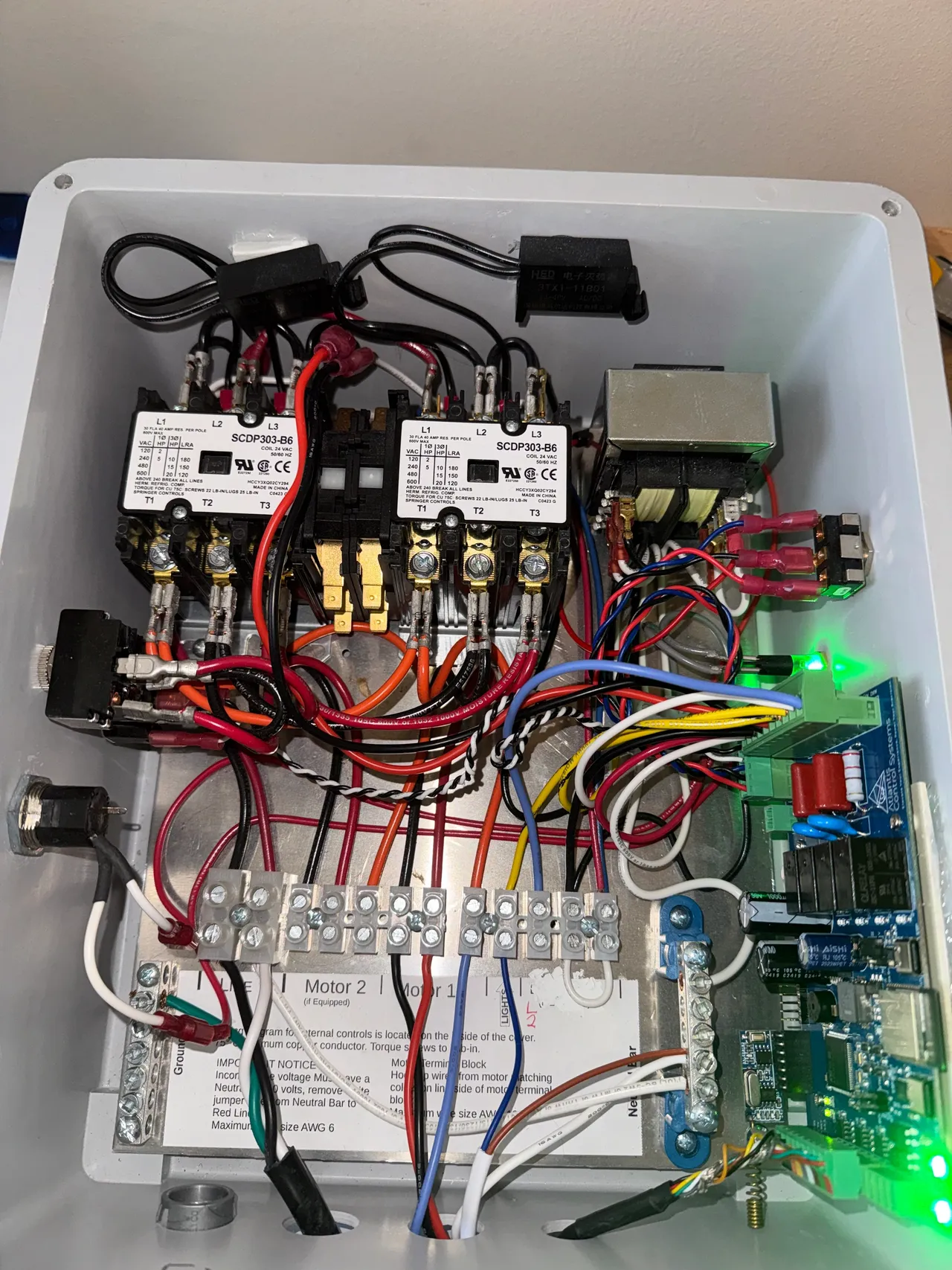
A mid-sized Florida marina operating 120 slips and a dry stack facility deployed Atlantis Marina to replace a combination of spreadsheets, paper contracts, and a disconnected billing system. The deployment covered mobile pre-checkin via the Atlantis Boater App, QR-code check-in workflows, billing automation with Stripe and ACH, and smart boat lift controller integration for the dry stack.
Within the first 60 days, the marina's dockmaster team reported that arrival processing time dropped to under 5 minutes for pre-checked-in boaters. Insurance and registration compliance reached near 100% because the boater portal required document upload before a reservation was confirmed. Billing disputes dropped because autopay and electronic contracts removed the ambiguity of verbal agreements.
Platform features that drove the outcome:
- Atlantis Boater App — boaters submitted vessel details, uploaded documents, signed contracts, and received slip assignments and access instructions before arrival
- QR-code workflows — dock staff scanned a boater's account QR code to pull up their reservation, billing status, and vessel record instantly, with no manual search
- Billing automation — Instant Pay, autopay, and QuickBooks Online sync kept revenue collected and booked without manual entry; the marina billing platform handled refunds and adjustments in the same interface
- Smart boat lift integration — the dry stack team used Atlantis's lift controller integration to coordinate launch queues and reduce staging delays
- Atlantis Bot — the AI assistant answered boater questions on the marina's website and helped staff handle reservation and billing inquiries during peak hours
The marina management platform also gave ownership a real-time occupancy dashboard and automated guest notifications, replacing the manual phone calls that had previously consumed two to three staff hours per day.
Pro Tip : Use Atlantis Bot on your marina website before full platform deployment. It captures leads, answers common boater questions, and reduces inbound calls — with zero additional staff time.
Automation and hospitality are not in conflict
The operators who get the most from check-in automation are not the ones who remove staff from the dock. They are the ones who redeploy staff to the moments that actually build loyalty.
A boater who pre-checked in digitally, received their slip number and access code the night before, and walked straight to their berth without stopping at the office — that boater still wants a dock hand to help with lines, a friendly face at the fuel dock, and someone who remembers their vessel name on the second visit. Automation handles the administrative layer. People handle the relationship layer.
Premium marinas run a hybrid model deliberately: self-service for routine arrivals, staffed concierge for first-time guests and complex situations. The technology makes the staffed moments more valuable, not less, because staff are no longer buried in paperwork when a guest needs them.
Pro Tip : Designate one staff member as a "welcome ambassador" during peak arrival windows. Their only job is greeting boaters who just completed self-check-in — a 60-second personal touch that turns a digital transaction into a hospitality moment.
Atlantis Marina gives you the tools to automate check-in now
Long check-in queues, missed payments, and idle slips between arrivals are operational costs that compound every peak season. Atlantis Marina eliminates all three with a unified platform that connects mobile pre-checkin, QR-code workflows, billing automation, and smart hardware control in one cloud-based system.
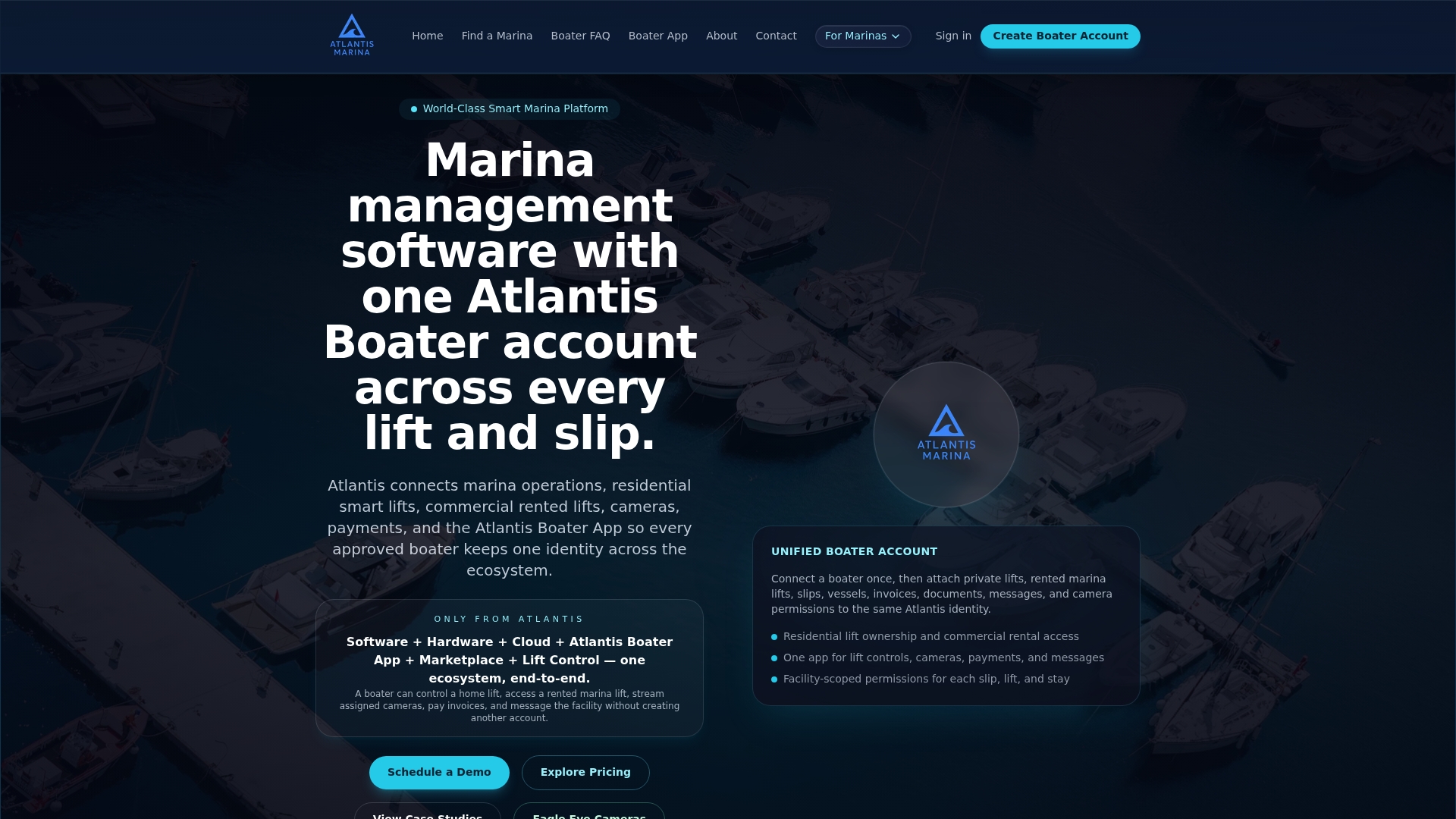
The Atlantis Marina platform maps directly to the pain points this article covers: boaters pre-check in and upload documents through the Atlantis Boater App, contracts are signed electronically, payments are collected automatically via Stripe or ACH, and dock staff manage everything from a single operations dashboard. Smart lift and access control integrations extend automation to your physical infrastructure without a separate vendor.
Pricing follows a subscription model scaled to marina size, plus a platform fee on digital payments processed — no large upfront license, no long-term lock-in. The fastest way to see the ROI is a live demonstration with your own slip count and occupancy numbers. Schedule a demo and see how quickly the payback period calculates.
Sources
- What Marina Automation Really Changes and What It Doesn’t | Marina Dock Age
- What Is Workflow Automation in Marina Management? | OS For Your Business
- The ROI of self-service check-in: a practical ROI and risk assessment framework for hospitality operators | HospitalityNet
FAQ
Why should a marina automate the check-in process?
Automating check-in reduces arrival time to under 5 minutes, prevents double bookings, and captures payments at booking rather than at the dock — protecting revenue and improving guest experience simultaneously.
What is the biggest operational benefit of marina check-in automation?
Marina Dock Age identifies space efficiency and predictable throughput as the primary commercial benefit: automation fills slips faster after departures without adding berths or staff.
How long does it take to implement automated check-in?
Most marinas complete mobile pre-checkin, payment automation, and QR-code workflows within 30–60 days. Access control and hardware integrations add time depending on existing infrastructure.
Can small marinas justify the cost of check-in automation?
Yes. A SaaS subscription model scales to marina size, and the labor savings from eliminating manual paperwork typically offset the monthly cost within the first few months of operation.
How does Atlantis Marina support automated check-in?
Atlantis Marina provides mobile pre-checkin via the Atlantis Boater App, QR-code workflows, billing automation with Stripe and ACH, electronic contracts, and smart hardware integrations — all managed from a single cloud-based operations dashboard.