

Yacht club service request tracking is the process of systematically capturing, categorizing, assigning, and monitoring member and operational requests through a centralized platform to ensure accountability, timely completion, and documented history. Without a structured system, requests arrive through phone calls, emails, and verbal conversations, creating gaps that frustrate members and overwhelm dockmasters. The industry standard for managing these workflows follows a six-step lifecycle: capture, classify, assign, execute, verify, and close. Platforms like Atlantis Marina bring this entire process into one connected operating system, replacing fragmented inboxes and clipboards with real-time visibility and automated routing that keeps every request on track.
How does yacht club service request tracking work?
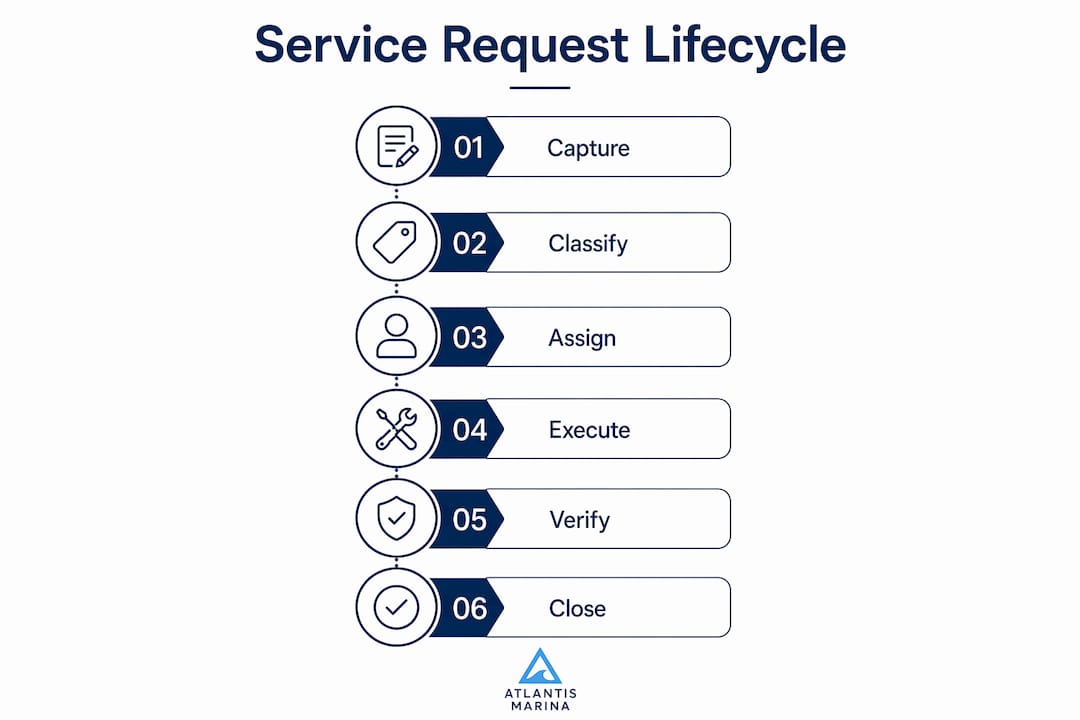
Effective service request tracking follows a six-step lifecycle that moves every request from submission to verified closure. Each stage creates a record, and that record becomes the foundation for accountability and future analysis.
- Capture — The member or staff member submits a request through a digital form, mobile portal, or QR code scan. Standardized intake fields replace free-form emails and verbal handoffs.
- Classify — The system categorizes the request by type (maintenance, repair, inquiry, compliance) and assigns a priority level based on asset criticality or urgency.
- Assign — The platform routes the request to the correct staff member or vendor automatically, based on predefined rules and current workload.
- Execute — The assigned team member completes the work and logs updates directly in the system, creating a timestamped activity trail.
- Verify — A supervisor or the requesting member confirms the work meets the expected standard before the request advances.
- Close — The system marks the request complete, archives the full record, and triggers any follow-up notifications or billing actions.
Digital systems replacing manual methods save mid-sized facilities 10–20 hours per week by automating routing and status alerts. That time savings translates directly into more dockmaster attention on members and vessels rather than chasing down status updates.
Request types at a yacht club span a wide range. Common categories include engine and hull maintenance, slip reassignments, fuel requests, guest dock inquiries, insurance document renewals, and facility repairs. Each type carries different urgency and resource requirements, which is exactly why classification at intake matters so much.

Pro Tip: Require photographic evidence at the capture stage for any maintenance or repair request. This single requirement eliminates the most common source of back-and-forth between members and staff.
What features and integrations enhance service request tracking in yacht clubs?
Modern yacht club service request management relies on several interconnected features working together. No single tool delivers results in isolation.
Real-time dashboards and SLA compliance
Real-time dashboards track every request stage and SLA compliance status, eliminating the need for manual status updates. Service Level Agreements linked to asset criticality ensure that a failing bilge pump receives immediate attention while a cosmetic paint scuff waits its turn. This priority-based routing prevents critical hazards from getting buried under routine requests.
IoT and automated compliance alerts
IoT integrations allow real-time berth status updates and automated alerts for regulatory compliance, including insurance expiry and registration deadlines. These automation tools reduce manual tracking tasks and prevent legal exposure by notifying the full fleet automatically. A dockmaster no longer needs to manually audit vessel documents; the system flags exceptions and routes them as service requests.
Member-facing portals and API access
Customer-facing portals allow members to submit requests directly, track status in real time, and receive automated updates without calling the dock office. This closed-loop communication improves response times and reduces the volume of inbound calls that interrupt staff workflows.
Key features that define a capable tracking system:
- Standardized digital intake forms with required fields and photo upload
- Priority-based routing tied to SLA thresholds and asset criticality
- Automated status notifications sent to members at each lifecycle stage
- Audit trail documentation capturing every interaction, approval, and change
- Compliance alert automation for insurance, registration, and safety deadlines
- Mobile access for dockmasters and staff working anywhere on the property
| Feature | Operational benefit |
|---|---|
| Real-time dashboard | Eliminates manual status checks across all open requests |
| SLA-linked priority routing | Ensures critical issues receive immediate attention |
| Automated compliance alerts | Prevents regulatory lapses across the entire fleet |
| Member self-service portal | Reduces inbound staff inquiries and repeat contact |
| Audit trail records | Supports performance analysis and dispute resolution |
Pro Tip: Connect your service request platform to your vessel records system. When a request comes in for a specific boat, staff should see insurance status, registration, and maintenance history on the same screen without switching tools.
Common challenges in yacht club service request management
Most yacht clubs do not fail at tracking because they lack effort. They fail because the underlying process has structural gaps that no amount of manual diligence can fix.
-
Fragmented communication channels. Requests arriving by text, email, phone, and verbal conversation cannot be reliably tracked. Centralized digital platforms deliver immediate operational improvements precisely because they eliminate this fragmentation. When every request enters through one channel, nothing falls through the cracks.
-
Unstructured intake data. Free-form emails create bottlenecks and increase administrative overhead. Standardized intake forms with required categories and photographic evidence reduce follow-up time by up to 50% compared to email requests. The difference is not marginal; it is the gap between a two-hour resolution and a two-day back-and-forth.
-
Failure to account for future availability. Manual systems fail to capture future availability, leading to scheduling conflicts when slips are under preparation or vessels have delayed departures. A digital system that tracks resource status in real time prevents these conflicts before they happen.
-
Staff resistance to system-based workflows. The transition from inbox-based requests to object-based records requires a cultural shift, not just a software installation. Staff must understand that the goal is creating an accessible, analyzable record, not simply logging a task. Training should focus on the "why" behind structured data entry, not just the "how."
-
Underestimating ongoing maintenance of the system itself. Tracking platforms require regular review of routing rules, SLA thresholds, and intake form fields as club operations evolve. A system configured in one season may not reflect current staffing or service categories by the next.
What are the benefits of an integrated service request tracking system?
The operational case for structured yacht service request management is direct and measurable. Clubs that move from manual processes to integrated platforms see improvements across three areas: staff efficiency, member satisfaction, and data quality.
Reduced administrative overhead is the most immediate gain. When routing, notifications, and status updates happen automatically, dockmasters spend less time coordinating and more time resolving. Treating every request as a complete record with interactions, approvals, and changes tracked creates audit-ready histories that support performance analysis and identify recurring issues. That data becomes a planning tool, not just a log.
Member transparency drives satisfaction in ways that direct service quality alone cannot. Centralizing requests in mobile-friendly platforms increases member satisfaction by giving members direct visibility into request status, reducing the need to contact staff repeatedly. Members who can see that their request is assigned and in progress are far more patient than members who have heard nothing since submitting.
The data layer is where long-term value compounds. Every closed request adds to a dataset that reveals which vessel types generate the most maintenance requests, which staff members resolve issues fastest, and which request categories consistently breach SLA thresholds. That analysis drives better staffing decisions, smarter vendor contracts, and more accurate budgeting.
| Tracking approach | Staff time per request | Member visibility | Audit capability |
|---|---|---|---|
| Manual (email/phone) | High, untracked | None | Minimal |
| Basic spreadsheet logging | Moderate | None | Limited |
| Integrated digital platform | Low, automated | Full real-time | Complete |
Premium yacht operations demonstrate that digital responsiveness, not just staff availability, defines service quality at the highest level. Yacht clubs that adopt this standard position themselves to retain members who expect the same experience on the dock that they receive everywhere else in their professional lives.
Key Takeaways
Effective yacht club service request tracking requires a structured six-step lifecycle, standardized digital intake, SLA-based routing, and real-time member visibility to replace fragmented manual processes.
| Point | Details |
|---|---|
| Six-step lifecycle | Every request must move through capture, classify, assign, execute, verify, and close stages. |
| Standardized intake forms | Required fields and photo uploads cut follow-up time and eliminate unstructured email requests. |
| SLA-linked priority routing | Connecting urgency levels to asset criticality prevents critical issues from being delayed. |
| Member self-service visibility | Real-time status access reduces repeat member inquiries and improves satisfaction. |
| Audit trail as a planning tool | Closed request records reveal recurring issues and support smarter staffing and budget decisions. |
What I've learned about service request tracking that most guides miss
Most articles on efficient yacht service tracking focus on the software features. The harder problem is the data discipline that makes those features useful.
The single biggest mistake I see yacht club managers make is treating the intake form as optional. When staff allow members to submit requests by text or verbal request "just this once," the exception becomes the rule within a season. Every request that bypasses the structured form is a request with no photo evidence, no category tag, and no SLA clock running. You cannot analyze data that was never captured.
The second mistake is assuming that automation replaces judgment. AI-assisted triage helps structure requests, but it does not replace human assessment of context. A request flagged as "routine maintenance" by a member may actually describe a safety hazard that requires immediate escalation. Dockmasters still need to review incoming requests, even when the system handles routing. Automation handles volume; humans handle nuance.
The insight that changes how managers think about this: treat your service request history as a vessel records asset, not just an operational log. When a member disputes a charge or a vendor questions a repair timeline, the audit trail is your evidence. Clubs that build this habit from day one have a significant operational advantage over those that try to reconstruct history from email threads.
Member transparency is also underused as a satisfaction driver. Clubs that give members real-time request status updates report fewer complaints, not because service is faster, but because members feel informed. That perception of responsiveness is worth more than most clubs realize.
— John R
How Atlantis Marina supports your service request workflows
Atlantis Marina brings the full service request lifecycle into one connected platform built for yacht clubs and marina operations.
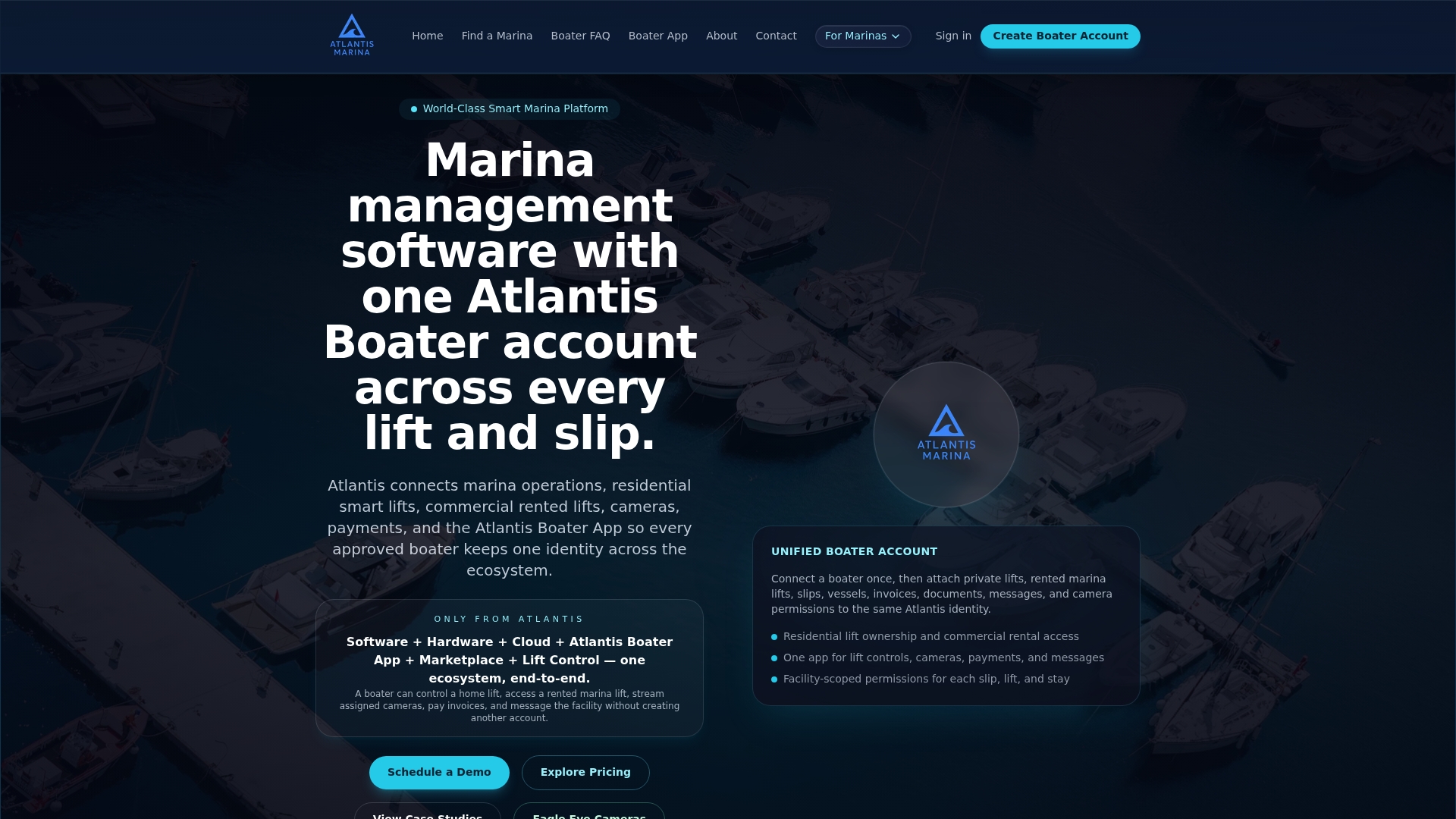
The platform's service request management module includes digital intake forms, SLA tracking, automated member notifications, and a real-time operations dashboard that gives dockmasters complete visibility across all open requests. Vessel records, compliance documents, and billing connect directly to each request record, so staff never need to switch between systems to get context. QR code workflows let members submit requests on the dock and track status from their phones. For clubs ready to move beyond clipboards and disconnected inboxes, Atlantis Marina's management platform is built to handle the full scope of yacht club operations from one cloud-based system.
FAQ
What is yacht club service request tracking?
Yacht club service request tracking is the structured process of capturing, categorizing, assigning, and monitoring member and operational requests through a centralized digital platform. It replaces fragmented communication with documented workflows and real-time status visibility.
How do SLAs improve service request management?
Service Level Agreements linked to asset criticality prioritize requests so that critical hazards receive immediate attention while routine issues are handled at lower priority. Real-time dashboards track SLA compliance and eliminate manual status updates.
What types of requests does a yacht club tracking system handle?
A yacht club tracking system handles maintenance requests, hull and engine repairs, slip reassignments, fuel requests, guest dock inquiries, insurance document renewals, and facility repairs. Each type is classified and routed based on urgency and resource availability.
How does member self-service improve club operations?
Members who can submit requests and track status directly through a mobile portal contact staff less frequently for updates. This reduces inbound call volume for dockmasters and improves member satisfaction by providing transparency throughout the resolution process.
Why do manual tracking systems fail at yacht clubs?
Manual systems fail because they cannot capture future resource availability, rely on unstructured communication channels, and produce no audit trail for analysis or dispute resolution. Digital platforms with standardized intake and automated routing eliminate these structural gaps.