
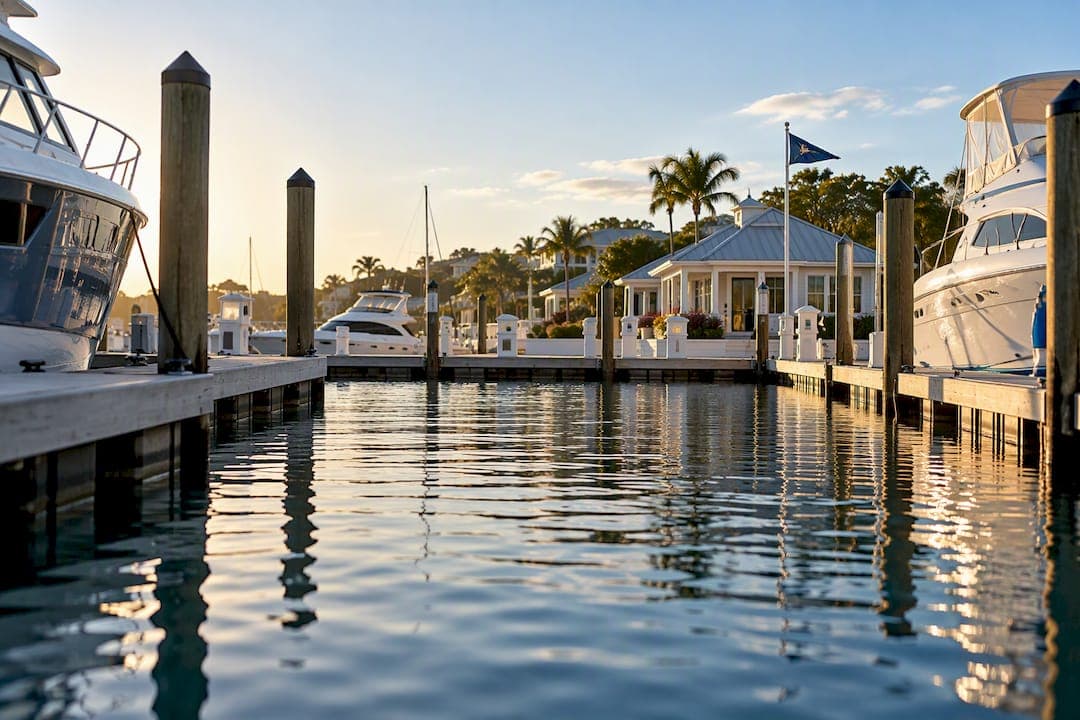
The fastest results in marina SEO come from five moves, in order: complete and actively manage your Google Business Profile, publish separate landing pages for each service line, fix mobile page speed, build a review-ask habit into checkout, and add a booking or waitlist flow that captures leads automatically. Each one drives a specific outcome: more "near me" map visibility, more direct reservations, and fewer slips sitting empty through the season.
TL;DR:
- Verifying and optimizing your Google Business Profile regularly can produce faster local search visibility improvements than on-site changes alone.
- Creating service-specific landing pages with detailed boat and amenity information significantly boosts conversion rates for transient slips and storage requests.
- Consistently fixing your website speed issues through image compression and technical optimizations can prevent loss of visitors and improve ranking signals.
- Implementing a systematic review request process tied to specific milestones enhances review recency and volume, which positively impacts local search relevance.
- Using connected marina operations software automates key customer interactions, reducing friction and increasing the likelihood of turning website visitors into booked slips.
Table of Contents
- Quick Action Checklist for Your First 30 Days of Marina SEO
- On-Site SEO for Marinas: Structure, Content, and Technical Fixes
- How Do You Optimize a Marina's Google Business Profile?
- What's the Best Way to Get More Marina Reviews?
- Turning Marina Website Visits Into Booked Slips
- When Should Marinas Use Paid Search?
- Which KPIs Actually Show If Marina SEO Is Working?
- Why Operations Software Matters for Marina SEO Results
- An Operator's View on What Actually Keeps Slips Full
- See What a Connected Marina Platform Looks Like in Practice
- Sources
- FAQ
Quick Action Checklist for Your First 30 Days of Marina SEO
Momentum beats perfection here. An operator with two hours a week can complete this checklist inside a month and see measurable movement in Google Business Profile insights before the next billing cycle closes.
- Week 1: Verify and complete every Google Business Profile field, primary category, service list, hours, and at least ten current photos. Assign this to whoever manages the front office.
- Week 1: Connect Google Search Console to your domain and submit your sitemap so indexing issues surface early.
- Week 2: Build three landing pages, long-term slips, transient reservations, and dry storage, since service-specific pages convert better than a single generic services page.
- Week 2: Run a PageSpeed baseline and fix the three worst offenders, usually oversized hero images, unoptimized fonts, or unminified scripts.
- Week 3: Draft a review-ask script triggered at checkout or job completion, not a mass email blast.
- Week 4: Review Search Console and GBP insights together and assign a single owner for ongoing upkeep.
Pro Tip: Don't wait for a redesign to fix speed. Compressing your ten heaviest images often cuts load time more than any other single change, and it takes an afternoon.
On-Site SEO for Marinas: Structure, Content, and Technical Fixes
A marina website earns rankings the same way any local business site does, by matching page content to search intent, then removing the technical friction that keeps Google from crawling it well. The difference for marinas is specificity: a boater searching "transient dockage" and one searching "boat storage near me" want different pages, not the same homepage paragraph rewritten twice.
Each service landing page should include:
- Boat length, beam, and draft fields so visitors can self-qualify before contacting you
- A clear list of amenities (power, water, pump-out, Wi-Fi, security)
- Insurance and registration requirements stated plainly, not buried in a PDF
- One obvious call to action, a reservation form, a phone number, or a scheduling link
On the technical side, follow Google's Search Essentials: mobile-first design, HTTPS, a clean sitemap, proper canonical tags, and Search Console verification. Marina websites see heavy mobile traffic from boaters searching while standing on a dock, and slow-loading pages cost you visits before they load. Image optimization, browser caching, and lazy-loading images below the fold are the three highest-return fixes most marina sites are missing.
Structured data is the piece almost everyone skips. Adding LocalBusiness JSON-LD that explicitly labels your slip types, dry stack capacity, and fuel dock hours gives search engines a machine-readable answer to exactly what boaters are asking. Marinas that mark up services this way tend to show stronger relevance in map-pack results than those relying on page text alone.
How Do You Optimize a Marina's Google Business Profile?
Treat your Google Business Profile as a channel you operate, not a listing you set once and forget. Completeness and accuracy directly affect local search relevance, which makes GBP one of the highest-leverage tools available to a marina with a limited marketing budget.
Prioritize these fields first:
- Primary category (marina, not a generic "harbor" or "boat dealer" mismatch)
- Full service list matching your landing pages: transient slips, dry storage, fuel, haul-out
- Special hours for holidays, storm closures, and seasonal transitions
- Fresh photos updated at least seasonally, dock conditions, available slips, ship store, events
Tie every GBP service description back to its matching landing page so a searcher who clicks through lands on content that answers their exact question. Check GBP Insights weekly, not monthly. Weekly review catches a broken phone number or an outdated season hour before it costs you five missed calls.
The most common pitfalls are inconsistent name-address-phone (NAP) data across directories, hours that still show winter closures in June, and photo galleries that haven't been touched since the listing was created.

Pro Tip: If you operate seasonal hours, set a recurring calendar reminder for the Monday before each season shift. GBP hour mismatches are one of the most common reasons boaters call a competitor instead.
What's the Best Way to Get More Marina Reviews?
Reviews compound. A marina with a steady flow of recent, specific reviews outranks and outconverts one with fifty reviews from three years ago, and the mechanism is simple: Google Business Profile treats review recency and volume as active local signals, not one-time credentials.
Build the ask into your operations, not into a separate marketing task:
- Trigger the review request at a confirmed milestone, checkout, completed haul-out, or finished service work, not a generic monthly email
- Keep the ask short: a one-line text or email with a direct link or QR code posted at the dock office
- Never offer an incentive for a review; it violates platform policy and creates fake-looking clusters
- Respond to every review within a few days, thanking positive reviewers by name and addressing negative ones without getting defensive
- Pull strong, specific review language into your landing pages and GBP posts, with attribution, to reinforce trust at the point of decision
A review that says "renewed our slip contract in five minutes on my phone" belongs on your transient reservations page, not buried on a third-party review site.
Turning Marina Website Visits Into Booked Slips
Traffic without conversion is wasted spend. The gap between a visitor and a reservation is usually a form with too many fields or a booking process that dead-ends in a phone tag loop.
- Keep initial forms minimal: name, boat length, desired dates, and contact information. Ask for insurance documents and full vessel details after initial interest, not before.
- Add a scheduling link for tours or consultations so prospects can book time without waiting on a callback.
- State pricing cues clearly, even a starting range, since ambiguity drives abandonment.
- Build a waitlist capture that collects boat length, target start date, and contact info, then send automated notifications when a slot opens.
- Sync reservations with your calendar and decide upfront whether you collect a deposit or full payment at booking, and state that policy on the form itself.
A boater self-service portal removes most of the manual back-and-forth that causes leads to go cold before staff can respond.
When Should Marinas Use Paid Search?
Paid search fills the gaps organic SEO can't close fast enough, particularly around spring launch and winterization windows when demand spikes in a matter of weeks.
- Run exact and phrase match campaigns around high-intent terms like "boat slip rental [location]" and "dry storage near me"
- Use retargeting ads for visitors who viewed a landing page but didn't convert
- Add call-only ads for last-minute transient dockage searches from boaters already on the water
- Match ad copy to the exact landing page it points to; mismatched messaging tanks quality score and inflates cost per click
- Build a negative keyword list early, excluding terms like "jobs," "used boats for sale," or "marina supplies" that waste budget on the wrong intent
- Set seasonal budgets that ramp up 4 to 6 weeks before your region's boating season and pull back sharply after it ends
Track cost per booked slip, not just cost per click, since that's the number that actually tells you whether the spend is working.
Which KPIs Actually Show If Marina SEO Is Working?
A handful of numbers tell the whole story. Watch organic sessions landing on service pages, phone calls and direction requests from GBP, form conversion rate, waitlist growth, and slip occupancy against the same period last year.
- Use Search Console for indexing health and query-level visibility
- Use GA4 or a comparable analytics tool for on-site behavior and conversion tracking
- Cross-reference occupancy or CRM reports monthly to connect digital activity to actual bookings, not just clicks
Run a lightweight audit monthly: check for crawl errors, retest mobile page speed, and confirm your key pages are still indexed. A disciplined local SEO, review, and waitlist funnel tends to keep occupancy near practical capacity because it converts local search intent into booked slots instead of letting it leak to competitors with faster response times.
Pro Tip: Set a recurring calendar block on the first Monday of every month for this audit. SEO work that isn't reviewed on a schedule quietly decays as pages change and season hours shift.
Why Operations Software Matters for Marina SEO Results
SEO gets a boater to your site. What happens next, how fast they can check availability, sign a contract, and pay, decides whether that click becomes revenue. Fragmented systems create the exact friction that kills conversion rates and delays the review requests that build local authority.
- Automated billing and e-signature flows turn a completed reservation into a confirmed checkout without staff chasing paperwork
- A boater-facing app with live availability builds the trust signals landing pages need to convert cold traffic
- QR-code account access lets staff pull up a customer's reservation and billing status instantly, which shortens the window between service completion and a review ask
- Centralized occupancy and lead data make the KPI tracking described above possible without stitching together spreadsheets
Marinas running on connected systems, rather than clipboards and disconnected software, are better positioned to close the loop between search visibility and filled slips.
An Operator's View on What Actually Keeps Slips Full
Most marina SEO advice treats this like a project with an end date. It isn't. The operators who keep occupancy high run it like a maintenance schedule: a weekly Google Business Profile check, a monthly landing-page refresh, and a quarterly paid-search pulse timed to seasonal demand.
I've seen marinas fix a single wrong phone number on their GBP listing and pick up bookings within days, not because the fix was clever, but because it removed a small piece of friction that had been quietly costing them calls for months. SEO for marinas rewards consistency far more than cleverness. The marina that shows up every week beats the one that ran a great campaign once and moved on.
— John R
See What a Connected Marina Platform Looks Like in Practice
Most of what this article recommends, review triggers tied to checkout, live availability on landing pages, fast form-to-reservation flows, is hard to sustain with disconnected tools and manual entry. Atlantis Marina is built to close that gap: reservations, billing, and boater communication run through one system, so the operational triggers that support your SEO, a completed checkout, a signed contract, a finished service call, happen automatically instead of depending on someone remembering to send an email.

The platform ties directly to the tactics covered above. The Atlantis Boater App gives prospects live availability and self-service booking, which supports the trust signals your landing pages need. Marina reservations software automates the waitlist and notification flow described in the conversion section. Automated billing through the marina billing platform creates the natural checkout moment that triggers a well-timed review ask. QR-code account access means staff pull up the right customer and reservation instantly, no manual searching, no delay.
Plans start at a monthly fee for smaller marinas and scale up through tiers based on facility size, with full details on the Atlantis Marina pricing page. If you'd rather talk through your setup first, request a demo and see how the platform fits your operation before you commit to anything.
Sources
- Marketing Your Marina — Marinas.com
- Tips to improve your local ranking on Google — Google Business Profile Help
- SEO Starter Guide — Google Search Central
FAQ
What Is the Fastest SEO Win for a Marina?
Completing and actively managing your Google Business Profile is the fastest win, since accurate categories, hours, and photos directly affect local search relevance. Most marinas see it move faster than any on-site change because it doesn't require a developer.
Do Marinas Need Separate Landing Pages for Each Service?
Yes. Boaters search with specific intent, "transient slip" versus "dry storage," and service-specific landing pages convert better than one general page because they match that intent directly.
How Often Should a Marina Ask for Reviews?
Trigger the request at a confirmed milestone, like checkout or completed service, rather than sending periodic mass emails. Google Business Profile guidance recommends timing requests to real interactions instead of incentivizing them.
Can Software Help With Marina SEO Directly?
Software doesn't rank your site, but it removes the friction that undermines SEO results, slow checkouts, missed review windows, and manual waitlist tracking. Atlantis Marina automates those operational triggers, with pricing details available on the Atlantis Marina pricing page.
What KPIs Should a Marina Track Monthly?
Track organic sessions to service pages, GBP calls and direction requests, form conversion rate, waitlist growth, and slip occupancy compared to the same period last year. Search Console and GA4 cover the search and site data, while occupancy or CRM reports close the loop to actual bookings.