
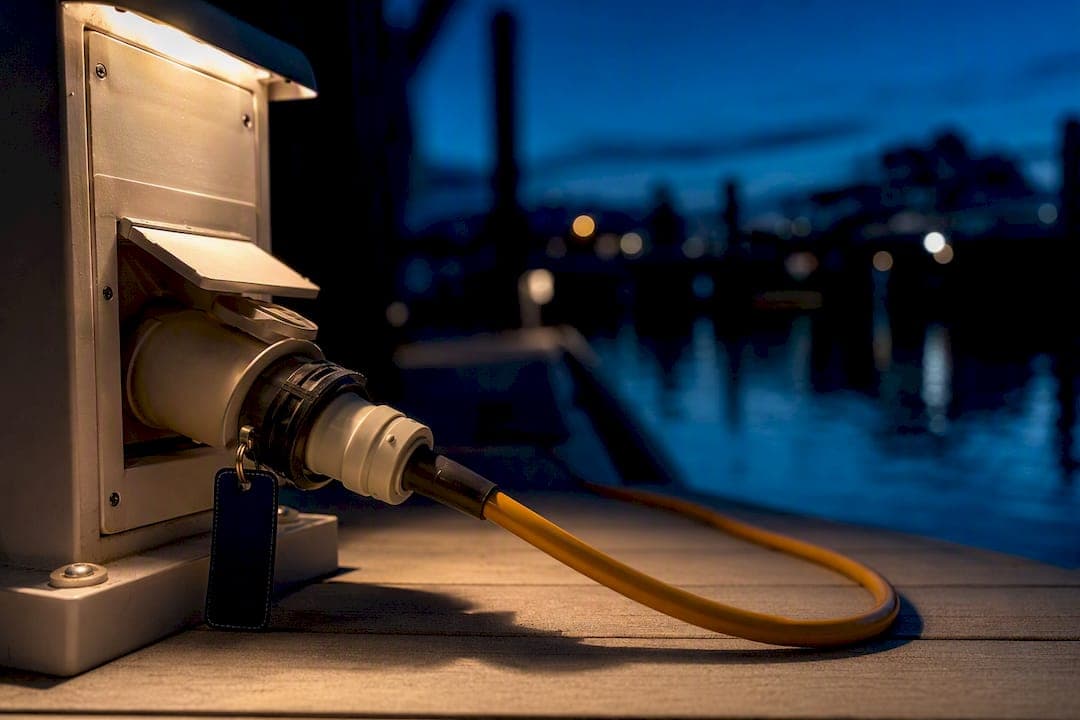
Shore power is safe when installed to code and used with marine-rated equipment. Plug into the boat first, then the pedestal. Use UL‑Marine cords only. Test ELCI and GFCI protection monthly. Never swim near powered docks. Know your amperage (30A or 50A) before you connect anything, and follow the step-by-step sequence below every single time.
TL;DR:
- Only use UL-Marine rated cords and check all connections for damage, corrosion, and proper locking before each use to prevent failure points.
- Wear water conductivity makes fresh water more hazardous for electric shock drowning, which can occur with currents as low as 16 milliamps.
- Testing GFCI and ELCI devices monthly and conducting annual full-load leakage tests are essential to identify silent failures and maintain safety.
- Always turn off the boat’s breaker before plugging or unplugging shore power to minimize arcing and exposure of live prongs.
- Marina management platforms help automate safety checks, track inspections, and send real-time alerts to enable consistent shore power safety practices.
Table of Contents
- Shore Power Safety Basics: 30A vs 50A and How the Circuit Works
- Electric Shock Drowning: The Hazard Most Boaters Underestimate
- Choosing and Inspecting Shore Power Cords, Plugs, and Pedestals
- How to Connect and Disconnect Shore Power Safely
- Inspection and Testing: What to Check and How Often
- What to Do If You Suspect Energized Water
- Codes and Standards That Govern Shore Power
- How Marina Software Turns Safety Rules Into Daily Habits
- A Dockmaster's View on Making Shore Power Safety Routine
- Run Your Shore Power Safety Program Without the Spreadsheet Chaos
- Sources
- FAQ
Shore Power Safety Basics: 30A vs 50A and How the Circuit Works
A 30-amp shore connection runs on 120 volts and typically supports a single circuit for smaller boats and lighter loads like air conditioning or a battery charger. A 50-amp connection is split-phase, delivering 120/240 volts across two hot legs, which is why larger boats with multiple AC units and heavier galley equipment need it. Neither system is designed to run at full rated capacity continuously. Treat the nameplate amperage as a ceiling, not a target.
The power path runs from the pedestal on the dock, through the shore power cord, into the boat's inlet, and on to the onboard distribution panel and bonding system. Every connection point along that chain is a potential failure point: a loose pedestal receptacle, a corroded inlet, a nicked cord.
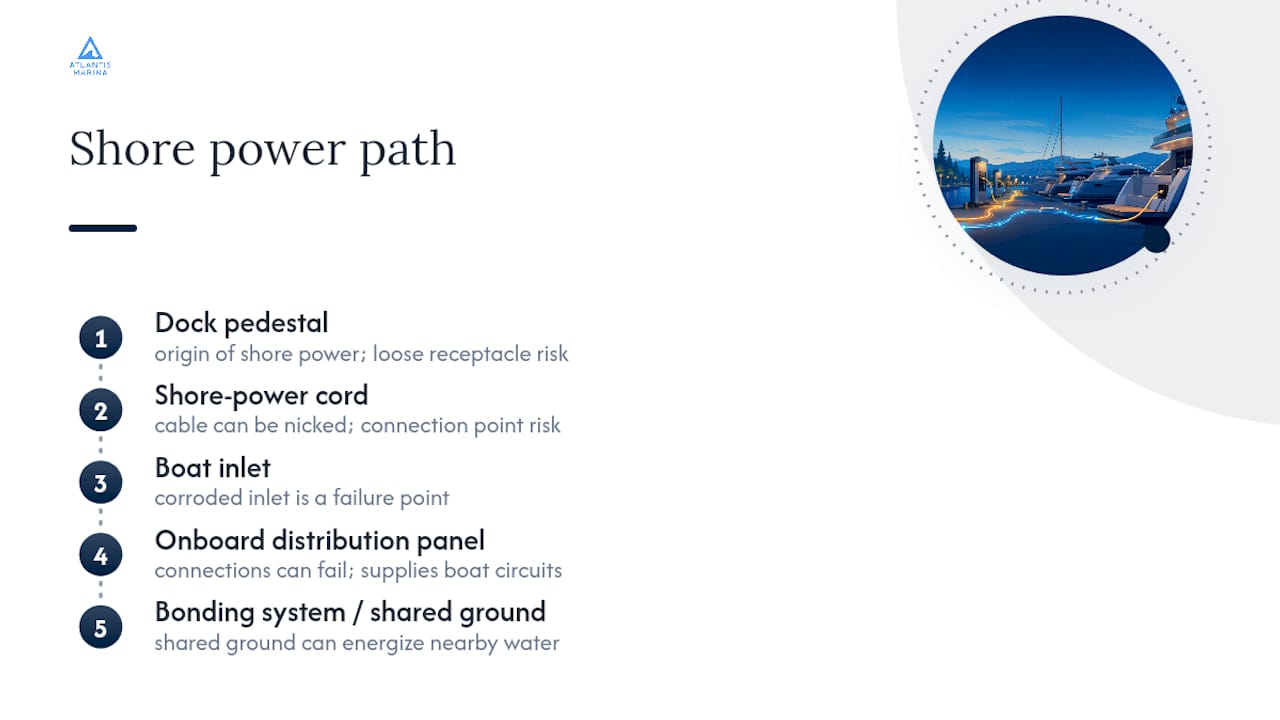
Marinas share a common ground across the entire dock, which is exactly why one boat's wiring fault can put stray current into the water near a completely different slip. A leak on a boat three slips away can energize the water around your swim ladder. That shared ground is the single biggest reason shore power safety has to be treated as a marina-wide policy, not just a boat-by-boat concern.
Electric Shock Drowning: The Hazard Most Boaters Underestimate
Electric Shock Drowning, or ESD, happens when AC current leaks into fresh or brackish water and paralyzes a swimmer before they can get out. It doesn't take much current to do it. As little as 16 milliamps can cause muscle spasms strong enough to stop a swimmer from swimming, and 30 milliamps can make breathing impossible, according to the Electric Shock Drowning Prevention Association.
Why 5 mA and 30 mA both matter: GFCI devices protecting 15 to 20 amp circuits are designed to trip around 5 milliamps. ELCI devices on 30 to 50 amp shore power circuits typically trip closer to 30 milliamps, whole-boat coverage at a higher threshold. Neither number is arbitrary. Both sit below the level that stops a human heart or diaphragm from working, but they protect different parts of the system.
Fresh water is more dangerous than salt water for this exact reason. Salt water conducts so well that current disperses quickly and the human body offers comparatively little resistance to the surrounding water. Fresh water is a worse conductor, so current concentrates around the body itself, right where a swimmer is trying to move their arms and legs.
Tingling in the water near a dock is not a false alarm. It's a warning sign that current is present. Get out immediately, using a ladder or dock edge you don't have to swim toward, and alert dock staff. No swimming near powered docks isn't a suggestion. It's the single most effective ESD prevention rule marinas can enforce.
Choosing and Inspecting Shore Power Cords, Plugs, and Pedestals
Every cord and adapter touching your boat's shore power connection should be listed as UL‑Marine rated. Household extension cords and homemade adapters are not built for wet, corrosive marine environments and shouldn't touch a dock pedestal, according to the Electrical Safety Foundation International.
Before every connection, look for:
- Strain relief at both cord ends, so plug prongs don't bear the cord's weight or movement.
- Locking rings fully engaged, not just seated, on both the pedestal and boat inlet.
- Cord gauge matched to amperage, since undersized cords overheat under sustained load.
- No cracking, chafing, or discoloration anywhere along the cord's length.
- A dry, functioning in-use cover on the pedestal receptacle.
Pedestal covers fail more often than boaters expect. A cracked or missing in-use cover lets rain and spray reach live contacts, and that's a common source of corrosion-driven leakage, per Practical Sailor's reporting on pedestal failures. Adapters that step a 50A boat down to a 30A pedestal, or vice versa, need to be locking types, and you should limit continuous draw to whatever the smaller-rated side can handle.
ELCI and GFCI aren't interchangeable. ELCI protects the whole boat at the main breaker, while GFCI protects specific receptacle circuits, usually at lower trip thresholds, as West Marine's advisory on the two systems explains. A boat with both installed correctly has layered protection instead of a single point of failure.
How to Connect and Disconnect Shore Power Safely
The order you plug and unplug matters more than most boaters realize. Doing it backward means live prongs are exposed longer, and arcing at the pedestal is far more likely.
To connect:
- Turn off the boat's shore power breaker.
- Plug the cord into the boat's inlet first.
- Plug the other end into the pedestal.
- Turn on the pedestal breaker.
- Check polarity and any onboard reverse-polarity alarm before doing anything else.
- Turn on the boat's shore power breaker.
To disconnect:
- Turn off the boat's breaker.
- Turn off the pedestal breaker.
- Unplug the pedestal end first.
- Unplug the boat end.
- Dry the cord and stow it coiled, not kinked.
Before any of this, walk the cord for damage, wear closed-toe, dry footwear, confirm no one is swimming nearby, and make sure both breakers are within easy reach in an emergency.
Pro Tip: If a plug feels warm to the touch after being connected for a while, that's not normal wear. Disconnect it, let it cool, and have it inspected before reconnecting. Warm plastic means resistance somewhere in the connection, and resistance means heat that only gets worse.
Inspection and Testing: What to Check and How Often
GFCI and ELCI devices don't announce when they've degraded. They can fail quietly, which is why manual testing has to be scheduled, not assumed, according to ESFI's boating and marina toolkit.
Monthly:
- Press the test button on every GFCI and ELCI device and confirm it trips.
- Visually inspect cords and pedestal receptacles for damage or corrosion.
- Check in-use covers close and seal properly.
Annually:
- Have a qualified marine electrician perform a full-load leakage test, measuring voltage between underwater metal fittings and the shore ground while running the boat's AC loads at expected maximum. This catches leakage paths a standard ELCI test alone can miss.
- Log every test, repair, and replacement with dates and the technician's name.
A maintenance log should track device type, test date, result, technician, and next due date. Marinas that skip logging tend to lose track of which pedestals were actually tested last quarter versus which ones were just visually checked.
What to Do If You Suspect Energized Water
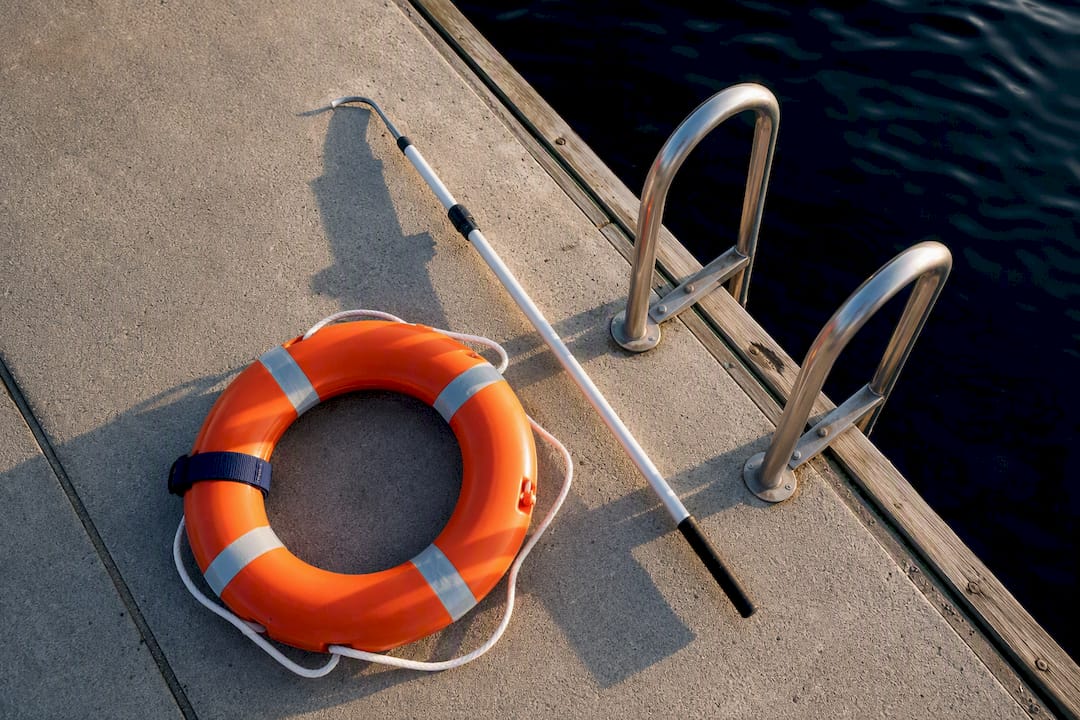
Never enter the water to help someone you suspect is experiencing ESD. Turn off shore power to the affected area and disconnect cords if you can do so safely without touching the water or wet dock surfaces. Throw flotation devices and use reach tools instead of attempting a swimming rescue, then call 911 or hail VHF Channel 16, per Discover Boating's electrical shock hazards guidance.
Dock staff should isolate power to the slip in question, secure the area from swimmers and other boaters, call a qualified marine electrician, and document exactly what happened, including timestamps and which pedestal or vessel was involved. Incidents traced to AC leakage from a vessel or its equipment fall under Coast Guard reporting guidance, so keep records ready.
Codes and Standards That Govern Shore Power
Three standards cover shore power from three different angles. ABYC E-11 governs a boat's onboard AC and DC electrical systems, the boat owner's responsibility. NEC Article 555 covers shore-side wiring, pedestals, and receptacles, generally the marina operator's and electrician's territory. NFPA 303 covers fire protection for marinas and boatyards as a whole, referenced in NASBLA's ESD resource guide.
In practice, that division of labor means boat owners are on the hook for what's inside their own hull, while marina operators own the pedestals, wiring, and fire protection infrastructure. When hiring anyone for pedestal or boat electrical work, ask directly whether they're a qualified marine electrician familiar with marine-specific wiring norms, not just general residential NEC work. That distinction catches more mistakes than people expect.
How Marina Software Turns Safety Rules Into Daily Habits
Rules only work if someone tracks whether they were followed. A marina management platform can turn monthly GFCI checks and annual electrician inspections into scheduled tasks instead of items someone remembers eventually. Digital inspection logs replace the clipboard that gets left in a truck, and mobile alerts push reminders to staff the moment a pedestal test comes due, similar to how boat lift mobile alerts work for lift maintenance.
Boater apps built into the same system can push no-swimming reminders, outage notices, and test schedule updates directly to slip holders, so the policy reaches the people who need it instead of sitting on a sign no one reads twice.
Incident workflows and stored inspection documents also give marina operators a clean record when an insurer or auditor asks for proof that testing actually happened on schedule.
A Dockmaster's View on Making Shore Power Safety Routine
Signage works only when staff treat it as policy, not decoration. Run drills so every employee knows the disconnect sequence cold, and hand boaters a written checklist at check-in, not a verbal reminder they'll forget by their second visit.
When in doubt, disconnect. Document everything. Build these habits into your operational checklists rather than relying on memory.
— John R
Run Your Shore Power Safety Program Without the Spreadsheet Chaos
Most marinas already know what needs checking monthly and annually. The problem is tracking it consistently across dozens of pedestals, hundreds of cords, and a staff roster that changes every season. A modern marina operations platform can turn that tracking into automated maintenance scheduling, mobile alerts when a GFCI test is overdue, and digital inspection records that stay attached to the exact pedestal or slip they cover, instead of living in a binder in the office.

Boater alerts about outages, test schedules, or no-swimming notices go out through the same boater account platform boaters already use for reservations and billing, so the message actually reaches them. When an incident happens, staff can log it, attach documentation, and route it for follow-up instead of reconstructing the timeline from memory weeks later. If your marina is still running inspection schedules off a wall calendar, request a demo through Atlantis Marina's sales team and see how the platform handles the rest.
Sources
The Electric Shock Drowning Prevention Association remains the clearest source on ESD mechanics and prevention. The ESFI marina toolkit lays out testing intervals in plain language. Practical Sailor covers real-world equipment failures, and NASBLA's ESD resource page ties the standards together. For a boater's angle on dock access and operations, Sailorix's marina access guide is worth a read too.
- Electric Shock Drowning Prevention Association — Preventing ESD
- Electrical Safety Foundation International — Electrical safety tips for marina owners
- Practical Sailor — Ensuring safe shorepower
- Discover Boating — Electrical shock hazards brochure
FAQ
Do you leave batteries on when connected to shore power?
Yes, batteries typically stay connected while on shore power because the onboard battery charger needs to maintain them, but the shore power connection itself should still follow the boat-first, pedestal-second sequence every time.
What is the 1/3 rule in boating?
The 1/3 rule refers to fuel planning, not electrical systems: use one-third of your fuel to get out, one-third to get back, and keep one-third in reserve for the unexpected.
Can an RV use shore power without a battery?
Most RVs can run 120-volt appliances directly off shore power without a battery connected, but components relying on 12-volt DC power, like some furnaces or water pumps, still need the battery in the circuit.
Can I run my RV engine while plugged into shore power?
Running an engine while connected to shore power is generally not recommended and can create a backfeed hazard; disconnect shore power before starting or running the engine unless your system is specifically designed for it.