
What are marina digital passes and why do they matter?
Marina digital passes are electronic access credentials that replace physical tickets and manual check-in sheets. They use RFID tags, QR codes, or mobile credentials to grant boaters entry to marina facilities, boat ramps, and amenities, often around the clock. The Riviera Pass at Havasu Riviera Marina is a practical benchmark: for $450 per year, passholders get 24/7 access, a dedicated passholder lane, discounted launch fees, and a linked account tied to a bank card or credit card for auto-renewal.
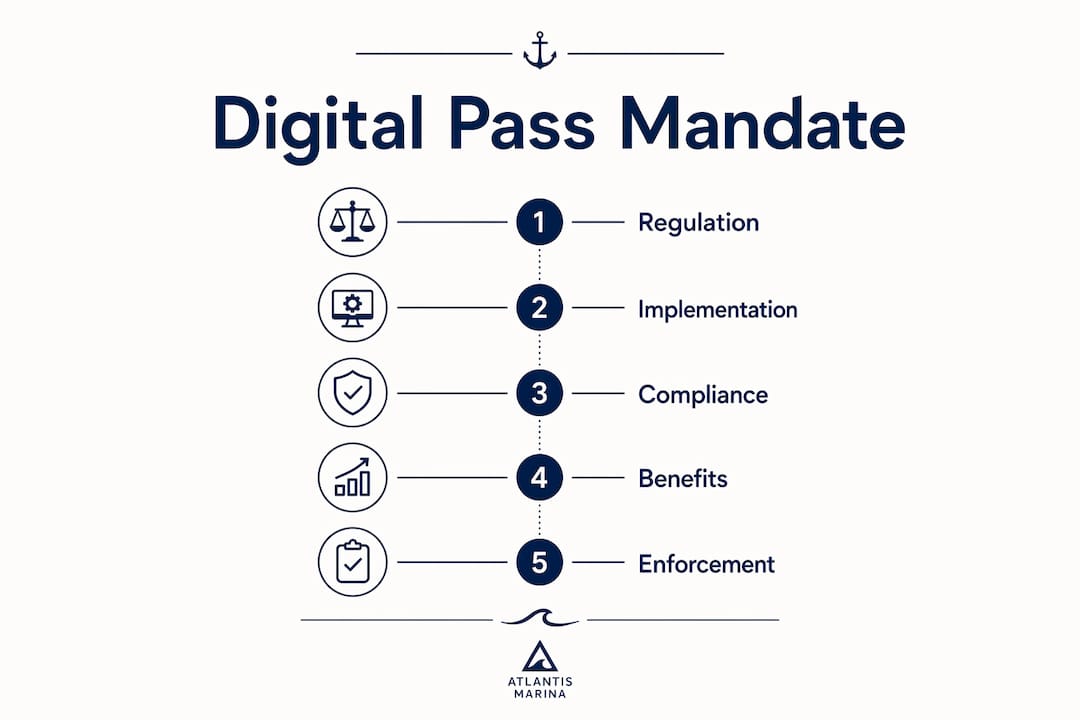
Beyond convenience, digital passes are becoming a compliance matter. The Maritime Industry Authority (MARINA) has mandated digital ticketing systems for domestic passenger ships, with pilot programs beginning Q2 2026 and full compliance required within two years for major ports. Regulators increasingly treat digital manifests not as optional upgrades but as safety infrastructure.
Key capabilities that define a well-built digital pass program:
- 24/7 facility access beyond standard operating hours via RFID or QR authentication
- Dedicated passholder lanes that reduce congestion at peak entry points
- Mobile account management for renewals, vehicle updates, and billing
- Auto-renewal billing tied to a stored payment method
- Real-time occupancy tracking to enforce capacity limits
How subscription pricing and operational efficiency work together
The annual subscription model is the most common structure for marina access passes. The Riviera Pass covers one primary vehicle, one watercraft, and up to three additional adults in the same vehicle. Passes auto-renew each March 1st, creating predictable recurring revenue for the marina without manual invoicing.

Operationally, that predictability matters as much as the revenue itself. Automated billing eliminates the end-of-season scramble to collect fees, and centralized payment processing reduces errors that come with manual entry. Staff spend less time at the gate verifying credentials and more time on tasks that actually require human judgment.
The operational gains compound when passes connect to the broader management system:
- Centralized billing with autopay and ACH processing reduces accounts-receivable lag
- Occupancy reporting tied to pass scans gives dockmasters a live view of facility load
- Discounted launch fees for passholders create a tiered pricing structure that rewards loyalty
- Employee workflow improvements through hardware-integrated access control reduce gate staffing needs
What MARINA's digital ticketing mandate means for marina operators
MARINA's Memorandum Circular DS No. 2026-01 requires all domestic passenger ship operators to adopt a Shipping Online Ticketing System (SOTS). The mandate targets longstanding problems such as ticket scalping, overbooking, and incomplete passenger records that compromise safety. Under the rule, no data means no boarding. Every passenger must be recorded in a digital manifest before departure.
MARINA Administrator Sonia Malaluan has been direct about the rationale: "With SEAS, every Filipino passenger can finally travel with peace of mind. No more scalpers, no more long lines, and automatic passenger manifests mean faster response in emergencies." The Philippine Coast Guard receives real-time passenger data before vessels depart, which directly improves emergency response capability.
Key compliance points marina operators need to understand:
- Pilot testing begins at selected ports in Q2 2026; full rollout follows in phases
- Major ports must comply within two years of the mandate's effective date
- Smaller operators may choose between tap-and-go card systems or QR-based platforms depending on connectivity
- Automated fare discounts for senior citizens, students, and persons with disabilities must be built into the ticketing system
- Ticketing offices are required to assist passengers who lack internet access
The digital passenger manifest requirement is not limited to large ferry operators. Any marina handling passenger vessels on domestic routes should treat MARINA's framework as the direction the entire industry is heading.
How to choose the right digital marina pass system
The right system connects pass issuance directly to your existing marina management infrastructure. A pass that lives in isolation from billing, occupancy tracking, and vessel records creates more work, not less. Evaluate any platform against these criteria:
- Regulatory compliance: Does the system generate digital manifests that satisfy MARINA or applicable U.S. Coast Guard requirements?
- Hardware integration: Does it work with RFID readers, license plate recognition (LPR) gates, and QR scanners already installed or planned at your facility?
- Guest self-service: Can boaters update vehicle registrations, payment methods, and vessel details through a web portal without calling the office?
- Occupancy management: RFID and LPR integration improves access control but does not enforce capacity limits on its own. The system must connect to real-time occupancy data.
- Staff training requirements: How long does onboarding take, and does the vendor provide documentation and support?
- Data security: Are guest records encrypted, access-controlled, and stored in compliance with applicable privacy standards?
Keeping vehicle and license plate data current is one of the most common friction points at automated gates. A self-service portal where guests update their own records eliminates the manual correction cycle that otherwise falls on dock staff.
Pro Tip: Connect your digital pass system to live occupancy monitoring from day one. A pass grants access rights, but only real-time gate counts prevent you from exceeding capacity, which the Riviera Pass program explicitly notes as a condition that can override even a valid pass.
How Atlantis Marina supports digital pass operations end to end
Atlantis Marina is a cloud-based marina management platform built to handle the full operational cycle that digital passes require. Pass issuance, guest account management, billing, and hardware-connected access control all run through one system rather than separate tools that need manual reconciliation.
The platform's core capabilities relevant to digital pass programs include:
- QR code workflows that connect a boater's scan to their account, reservation, billing status, and vessel record instantly
- Atlantis E-Sign for electronic contracts and pass agreements without paper
- Autopay and Instant Pay through Stripe and ACH, with QuickBooks Online sync for clean accounting
- Atlantis Bot, the platform's AI assistant, which handles boater questions on pass status, billing, and reservations without requiring staff intervention
- Camera security integrations and smart sensor monitoring that complement gate-level access control
- The Atlantis Boater App, which gives guests mobile access to reservations, payments, documents, and pass management from anywhere
For dockmasters, the operations dashboard provides live occupancy reporting, customer records, and billing status in one view. That means a staff member at the gate can verify a boater's pass, check their account standing, and process a payment without switching between systems. The mobile management tools Atlantis Marina provides extend that capability beyond the gatehouse to anywhere on the property.
Common challenges when adopting digital marina passes
Adoption rarely fails because the technology is wrong. It usually fails because the rollout skips the operational details that determine whether staff and guests actually use the system.
Outdated vehicle and plate data is the most frequent cause of gate delays. When a boater's registered plate doesn't match what the LPR camera reads, the gate holds up the line and staff have to intervene manually. A self-service portal that prompts guests to verify their records at renewal time prevents most of these incidents before they happen.
Connectivity gaps at remote or waterside access points can interrupt QR and mobile credential verification. Offline validation modes, where the gate reader caches authorized pass data locally, are a practical safeguard for facilities with inconsistent signal.
Staff resistance to new workflows is real and predictable. Dockmasters who have managed access manually for years need hands-on training, not just a user manual. Designating a lead operator who learns the system first and trains the rest of the team produces faster, more durable adoption than a single group session.
Guest confusion at the transition point, when a marina moves from physical passes to digital credentials, generates a short-term spike in support calls. Clear communication before the switchover, including step-by-step instructions for the self-service portal, reduces that spike considerably. Marinas should also plan for guests who lack smartphones or reliable internet access and provide an assisted enrollment option at the office.
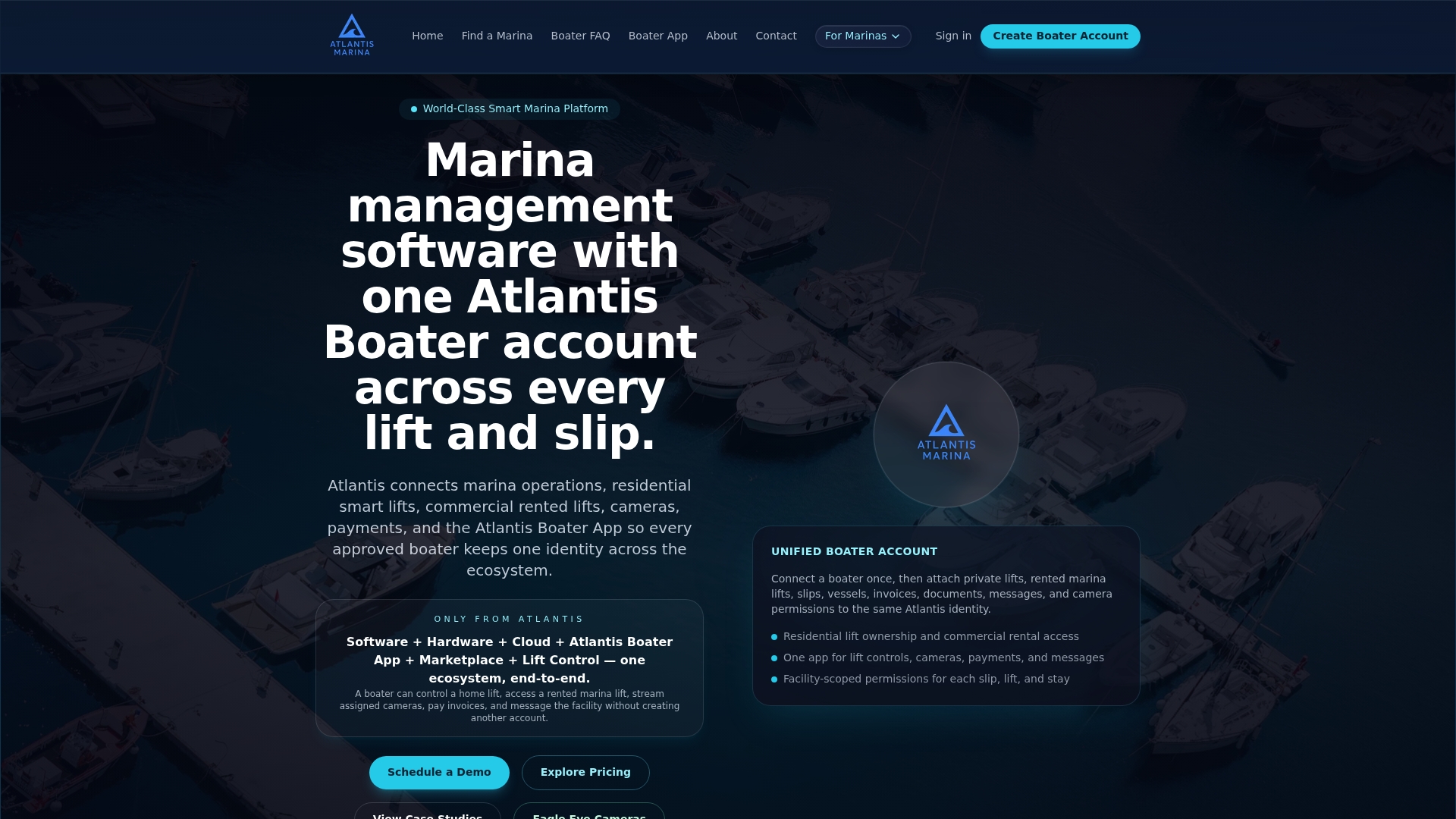
Atlantis Marina's marina management platform brings digital pass workflows, billing automation, hardware integrations, and guest self-service together in one place. Operators ready to move beyond manual access control can explore the full platform at atlantis-marina.com.
Key Takeaways
Digital marina passes deliver the most value when pass issuance, billing, occupancy tracking, and hardware access control run through a single connected system rather than separate tools.
| Point | Details |
|---|---|
| Annual pass pricing | The Riviera Pass model offers annual access with auto-renewal and 24/7 facility entry. |
| MARINA compliance timeline | Pilot programs begin Q2 2026; major ports must reach full digital ticketing compliance within two years. |
| Occupancy integration is required | RFID and LPR gates improve access but do not enforce capacity limits without real-time occupancy data. |
| Self-service portals reduce friction | Guest-managed vehicle and plate updates prevent the most common cause of gate delays. |
| Staff training drives adoption | Hands-on training with a designated lead operator produces faster adoption than group-only sessions. |
FAQ
What is a marina digital pass?
A marina digital pass is an electronic credential, delivered via RFID tag, QR code, or mobile app, that grants boaters access to marina facilities without a physical ticket or manual check-in.
How much does an annual marina pass typically cost?
Annual marina access passes are most often priced at $450 per year, as with the Riviera Pass at Havasu Riviera Marina, which includes 24/7 access, a passholder lane, and discounted launch fees.
What does MARINA's digital ticketing mandate require?
Under Memorandum Circular DS No. 2026-01, domestic passenger ship operators must adopt a digital ticketing system that generates real-time passenger manifests. Pilot testing begins Q2 2026, with major ports required to comply within two years.
Do digital passes automatically enforce capacity limits?
No. RFID and license plate recognition gates control entry but do not cap occupancy on their own. Capacity enforcement requires integration with a real-time occupancy monitoring system.
What is the biggest operational challenge when switching to digital passes?
Keeping vehicle and plate data current is the most common friction point. A self-service portal where guests update their own records at renewal eliminates most gate delays caused by mismatched credentials.