

No vendor should touch a dock, a lift, or a vessel until four things are on file: a certificate of insurance naming the marina as additional insured, a completed vendor registration form, an authorized-employee roster with photo IDs, and a signed scope-of-work approved by the vessel owner or marina staff. Municipal programs like the City of Long Beach's marine vendor system and San Francisco Recreation and Parks both build their vendor rules around this exact set. A platform like marina management software exists specifically to track and enforce these four items without a spreadsheet ever entering the picture.
TL;DR:
- Nearly all marinas require verified insurance, a current business license, photo ID, and a completed registration form before onboarding vendors.
- The verification process typically takes three to five business days, with automatic alerts for COI expirations to prevent lapses.
- Access control options include daily check-ins, gate fobs with automatic deactivation, or tenant-sponsored access, each offering different balances of convenience and oversight.
- Vendors must handle emergency protocols, safety checks, and environmental compliance, with immediate documentation for any violations or incidents.
- Automated marina management software streamlines document tracking, expiry alerts, check-in logs, and audit trails, reducing the risk of uninsured or non-compliant vendors operating on docks.
Table of Contents
- What Documents Does Vendor Onboarding at a Marina Require?
- How Does the Vendor Onboarding Process Work Step by Step?
- What Access Control and Check-In Procedures Work Best?
- How Do You Vet Vendors for Safety and Environmental Compliance?
- What Contract Terms Protect the Marina Financially?
- What Records Should Marinas Keep, and for How Long?
- How Should Vendors Handle Emergencies on the Docks?
- How Often Should Marinas Verify Vendor Insurance?
- How Should Marinas Handle Vendor Data Privacy?
- A Marina Operator's Take on Vendor Discipline
- Vendor management software replaces the folder of loose COIs and the sticky note reminding someone to check expiration dates with one connected system built for exactly this workflow. Digital vendor registration forms capture company details, scope of work, and employee rosters with photos in a single intake step. COIs get stored, tracked, and flagged automatically before they expire, gate and access integrations tie directly to vendor status, and billing automation handles vendor charges without a manual entry ever touching a spreadsheet.
- Sources
- FAQ
What Documents Does Vendor Onboarding at a Marina Require?
Every marina needs a published checklist vendors can read before they ever call the office. Ambiguity is what creates disputes later, when a contractor shows up assuming a verbal agreement counts as authorization.
Start with the certificate of insurance. Require general liability coverage at limits you set in writing (many marinas use $1 million per occurrence as a baseline), an additional insured endorsement naming the marina by its legal entity name, a visible policy number, and both effective and expiration dates. Navy Pier's preferred vendor program follows this same pattern, requiring insurance that names the marina and related parties as additional insured before any access is granted. Validate authenticity by calling the issuing broker directly rather than trusting a PDF alone; forged or altered COIs are common enough that a phone call is worth the five minutes.
Beyond insurance, collect:
- A current business license and, for specialty work, proof of certifications (fuel handling, confined-space entry, hot-work permits).
- A vendor registration form capturing company contact information, scope of work, and full worker names.
- Photo ID presented in person on the vendor's first visit and matched against the roster.
- A renewal calendar that flags COI expiration dates 30 days out, not the day they lapse.
Pro Tip: Build your registration form once, digitize it, and never accept a paper substitute. A form that lives in insurance document tracking software flags expirations automatically, which a filing cabinet never will.
How Does the Vendor Onboarding Process Work Step by Step?
Vendor onboarding at a marina moves through four stages, and each one should have a target turnaround time so vendors know what to expect and staff know when to escalate.
- Intake. The vendor submits an application along with the COI, business license, and employee roster as attachments. Digital intake forms cut down on missing paperwork because required fields simply cannot be left blank.
- Verification. A designated staff member, not whoever happens to answer the phone, confirms the COI's additional insured endorsement is current and calls the broker if anything looks off. This stage typically takes 3 to 5 business days when documentation arrives complete.
- Approval. Once verified, the marina issues a vendor card, gate fob, or access code, or instructs the vendor to check in at the office daily if no persistent access is warranted. Long Beach's marine vendor program issues a physical vendor card with an in-person photo tied to each registered employee.
- Orientation and ongoing compliance. First-visit vendors complete a short safety orientation covering PPE requirements and environmental rules before starting work. After that, compliance runs on daily check-ins, periodic audits of active work orders, and an automated renewal workflow that tracks COI expiration.
Exceptions happen. A boat takes on water at 9 p.m. and needs an emergency pump-out contractor who was never in the system. Build a documented after-hours exception process (verbal authorization from the on-duty manager, followed by paperwork submitted within 24 hours) so emergencies don't become a backdoor around your entire policy.
Pro Tip: Publish your SLA (say, 3 business days for standard verification) on the vendor application itself. Vendors who know the timeline stop calling the office every morning to ask about status.
What Access Control and Check-In Procedures Work Best?
Marinas generally choose among three access models, and each carries tradeoffs worth knowing before you commit.
- Daily front-desk check-in. Lowest cost, highest staff oversight, but slower for vendors doing repeat work across a week.
- Gate fobs or codes tied to the vendor account. Fast for recurring vendors, but only safe if the fob is disabled automatically when a COI lapses.
- Tenant-sponsored access, where a boat owner vouches for a specific contractor. Convenient, but it shifts liability questions onto the tenant relationship if something goes wrong.
Your check-in form should capture vendor name, company, date, time in and out, vessel or slip number, and scope of work, with a signature line. That signed attestation is what protects you if a dispute later arises over what work was authorized and when. San Francisco Marina requires exactly this kind of check-in before work begins, and staff reserve the right to bar any vendor who violates the rules.
Multi-day jobs and recurring vendors can graduate from daily check-in to a temporary fob once their documentation is fully verified. After-hours or emergency access should require a phone authorization logged in the system, and marinas that charge access fees for off-hours work should state that fee in writing before the vendor arrives.
How Do You Vet Vendors for Safety and Environmental Compliance?
Insurance paperwork tells you a vendor is covered. It doesn't tell you they'll handle a fuel spill correctly or wear the right gear near a running engine.
Minimum checks worth confirming before approval:
- Basic OSHA safety training relevant to marine trades.
- Fuel-handling certification for anyone doing engine or tank work.
- Hot-work permits for welding, grinding, or any spark-producing task near fuel docks.
- Spill containment materials on hand (absorbent pads, booms) before fueling or engine service starts.
Environmental compliance matters as much as physical safety. Waste oil, bilge water, and solvents need documented disposal, not a bucket poured into a storm drain. Vessel owners or marina staff should be present, or at minimum notified, for any work involving fuel systems or hull coatings, and spot inspections during active jobs catch problems before they become incidents.
When a vendor breaks a rule, the response should be immediate and documented: a written stop-work order, a required remediation step, and a note in the vendor's file. The Marina Association of Texas treats informal, undocumented vendor work as one of the biggest liability exposures a marina can carry, and repeat violations are grounds for removal from the approved list entirely.
Pro Tip: Keep a laminated one-page safety card at the dockmaster's office listing every required certification by trade type. New staff can check vendor compliance in under a minute without hunting through email threads.
What Contract Terms Protect the Marina Financially?
A signed vendor agreement is what turns a verbal understanding into something you can actually enforce. At minimum, every vendor contract should include:
- Indemnification language protecting the marina from claims arising out of the vendor's work.
- Clear limits of liability and confirmation the vendor carries workers' compensation coverage.
- Additional insured endorsement requirements restated in the contract itself, not just the COI.
- The marina's explicit right to suspend dock access if insurance lapses or safety rules are broken.
Work should never start without a signed scope-of-work authorized by the vessel owner or a marina representative, and any change to that scope needs its own change-order documentation. Billing, as a default rule, runs vendor-to-boater directly. Marinas that accept pass-through billing (charging the vendor's fee to the boater's marina account and remitting to the vendor) should document that arrangement in writing, including who's responsible if the boater disputes the charge.
If a vendor's COI lapses mid-job or they violate a safety rule, the stop-work procedure needs to be automatic, not a judgment call made under pressure. Tie fob and gate-code deactivation to the COI expiration date so access shuts off on its own the moment a policy lapses.
What Records Should Marinas Keep, and for How Long?
Audit-ready recordkeeping means having, at minimum: the original registration form, the current COI with its additional insured endorsement, the employee roster with photos, every signed scope-of-work, daily check-in logs, incident reports, and a history of COI renewals. Municipal insurance auditors and, occasionally, municipal procurement offices will ask for these during a compliance review, and "we'll pull it together" is not an acceptable answer in the room.
Retention periods vary by jurisdiction and insurer requirement, but a reasonable baseline is keeping vendor files active for the duration of the relationship plus several years after termination, matching general liability statute-of-limitations windows in most states.
This is exactly where a connected marina management software platform earns its keep. Instead of a folder per vendor, an integrated system handles:
- Digital intake forms that store COIs, licenses, and rosters in one searchable record.
- Automated expiry reminders that fire before a policy lapses, not after.
- Check-in logs tied to specific vessels, slips, and work orders.
- Audit trails that satisfy the kind of documentation requirements listed in municipal RFPs, including the Clay County marina management software RFP, which specifies COI tracking, audit logs, and API integration as baseline requirements for any modern system.
By the Numbers: Marinas running vendor compliance through spreadsheets and paper files routinely discover expired COIs only after a vendor is already on the dock. Automated expiry alerts, built into COI tracking workflows, catch the lapse before access is even granted, closing the gap between when a policy expires and when staff would otherwise notice.
How Should Vendors Handle Emergencies on the Docks?
Every vendor working at your marina needs to know the emergency chain of command before their first job starts, not after something goes wrong. That means a printed or digital card covering who to call for a fuel spill, a fire, a medical emergency, or a vessel taking on water, along with the marina's VHF channel and the dockmaster's direct line.
Emergency protocols should be part of first-visit orientation, not a footnote in the vendor contract. Cover evacuation routes, the location of fire extinguishers and spill kits, and the exact point at which a vendor is required to stop work and notify staff rather than try to handle a situation themselves. A vendor welding near a fuel dock, for instance, should know immediately that any spark-related incident triggers an automatic stop-work call, not a judgment call on their part.
Communication protocols matter just as much during routine work. If a vendor needs to reach the office outside business hours, they need a documented after-hours number, and marina staff need a log of who called, when, and why. This is also where staff coordination tools pay off. A system that lets dockmasters and staff message vendors, log incidents in real time, and alert the right person immediately closes the gap between "something happened" and "someone in authority knows about it."
Marinas should also require vendors to report near-misses, not just full incidents. A near-miss log, reviewed monthly, tends to surface pattern problems (a slippery dock section, a poorly lit work area) before they cause an actual injury.
How Often Should Marinas Verify Vendor Insurance?
Insurance verification isn't a one-time gate you clear at onboarding. COIs expire, policies lapse, and a vendor who was compliant in January can be uninsured by June without anyone noticing unless the marina checks.
Verify at three points: at initial onboarding, at every renewal date the COI itself specifies, and on a rolling basis, ideally 30 days before expiration so there's time to chase down a renewal before it lapses. Some marinas add a fourth check, an annual audit of the entire approved-vendor list, to catch stale documentation that slipped through routine reminders.
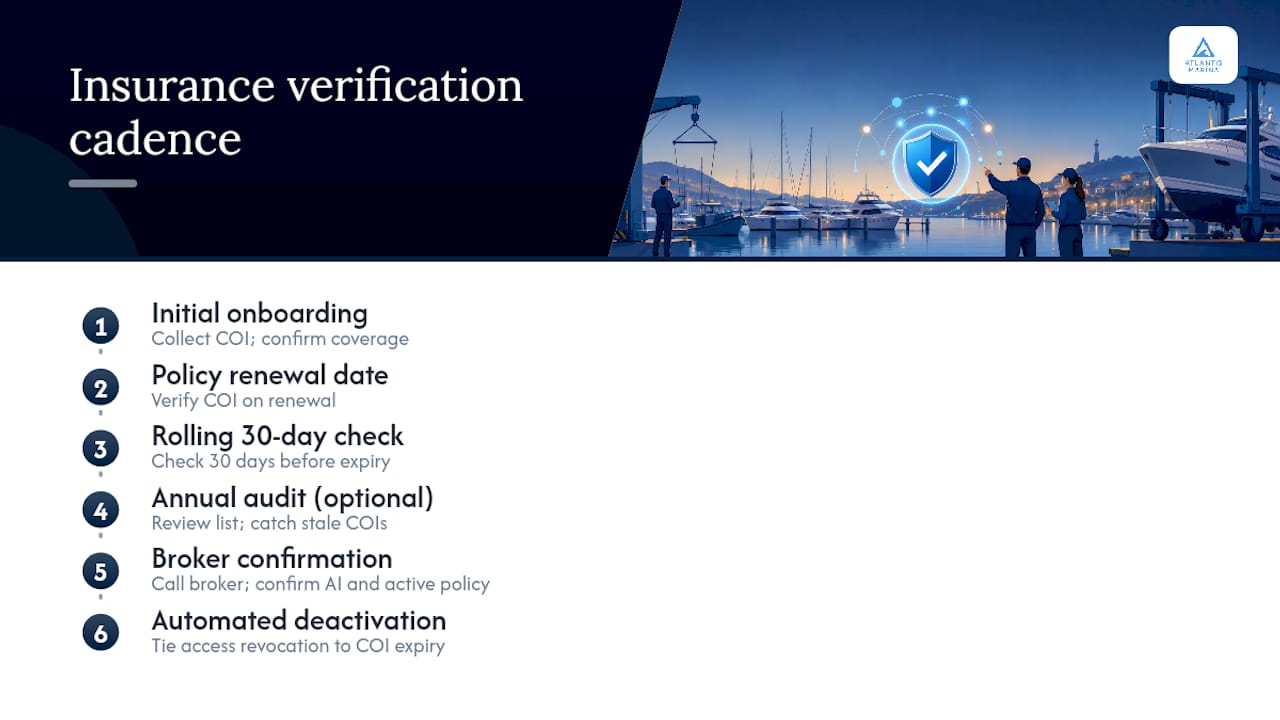
The verification step itself should always include a direct call or email to the issuing insurance broker, confirming the policy is active and the additional insured endorsement still names your marina by its correct legal entity. A COI PDF alone confirms nothing; brokers can confirm status in minutes when asked.
Automating this cuts the manual burden dramatically. Tying gate-fob or access-code deactivation directly to a vendor's COI expiration date means the system revokes access the moment a policy lapses, with no staff member needing to remember to do it manually. That single automation closes one of the most common gaps in vendor onboarding at a marina: the vendor whose insurance quietly expired three weeks ago and nobody caught it.
How Should Marinas Handle Vendor Data Privacy?
Vendor files contain sensitive information: insurance policy numbers, business license details, employee names, sometimes home addresses or driver's license numbers collected for photo ID verification. That data needs the same handling discipline a marina would apply to boater financial records.
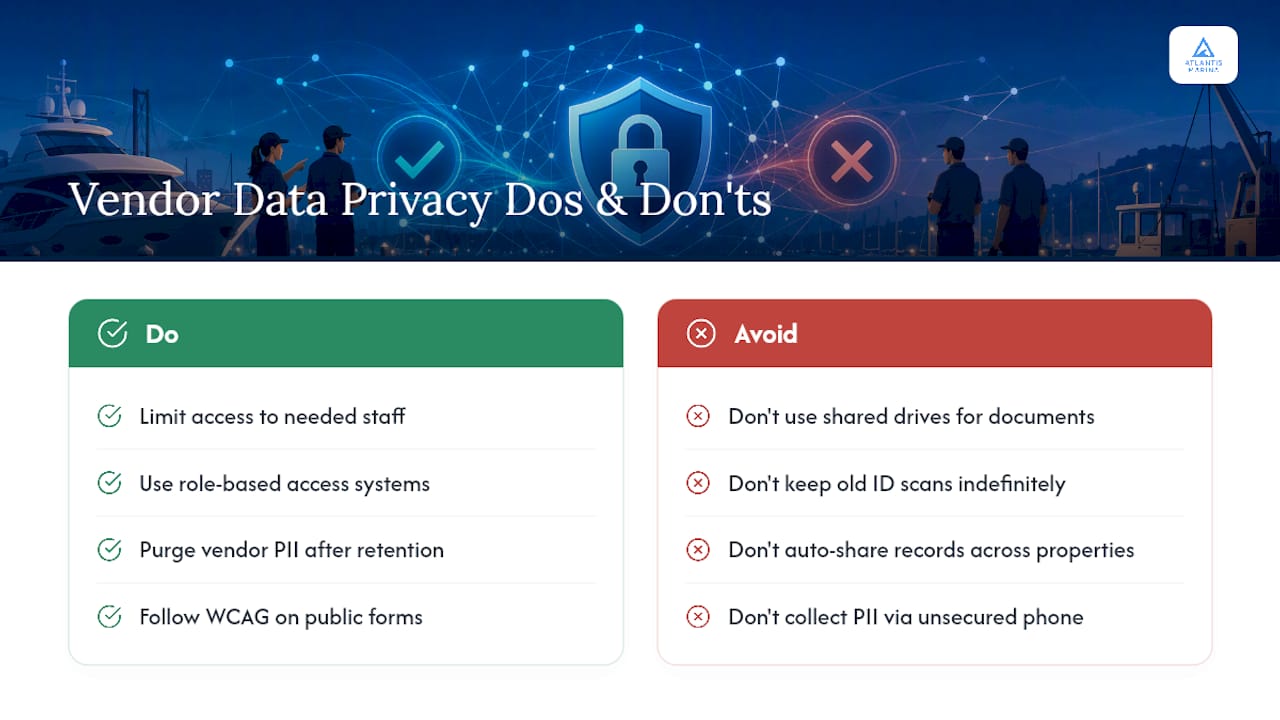
Limit access to vendor files to staff who actually need it for verification or billing purposes. A dockmaster checking someone in doesn't need to see the vendor's full insurance policy details, just confirmation that the COI is current and the employee is on the authorized roster. Store documents in a system with role-based access rather than a shared drive everyone in the office can open.
Retention and disposal matter too. Once a vendor relationship ends and the retention period required for liability purposes has passed, old employee ID scans and personal contact information should be purged rather than left sitting indefinitely in an old folder. If your online vendor registration form is public-facing, following WCAG accessibility guidelines also ensures every vendor, regardless of ability, can complete the intake process without needing to call the office for help, which itself reduces how much sensitive information gets exchanged over the phone instead of through a secure form.
Marinas working with a shared platform across multiple properties should also confirm how vendor data is segmented between locations. A vendor approved at one marina in a multi-property group shouldn't automatically see or access records tied to a separate facility unless the group explicitly authorizes cross-property vendor status.
A Marina Operator's Take on Vendor Discipline
Formal vendor onboarding isn't paperwork for its own sake. It's what keeps one uninsured contractor's mistake from becoming the marina's liability. The marinas that get this right treat it as a fixed system, not a favor extended to whoever shows up first.
Three things separate marinas that enforce this consistently from ones that don't: publish a one-page vendor packet so nobody can claim they didn't know the rules, require first-visit orientation without exception, and automate COI expiry alerts so a lapsed policy never depends on someone's memory.
— John R
Vendor management software replaces the folder of loose COIs and the sticky note reminding someone to check expiration dates with one connected system built for exactly this workflow. Digital vendor registration forms capture company details, scope of work, and employee rosters with photos in a single intake step. COIs get stored, tracked, and flagged automatically before they expire, gate and access integrations tie directly to vendor status, and billing automation handles vendor charges without a manual entry ever touching a spreadsheet.
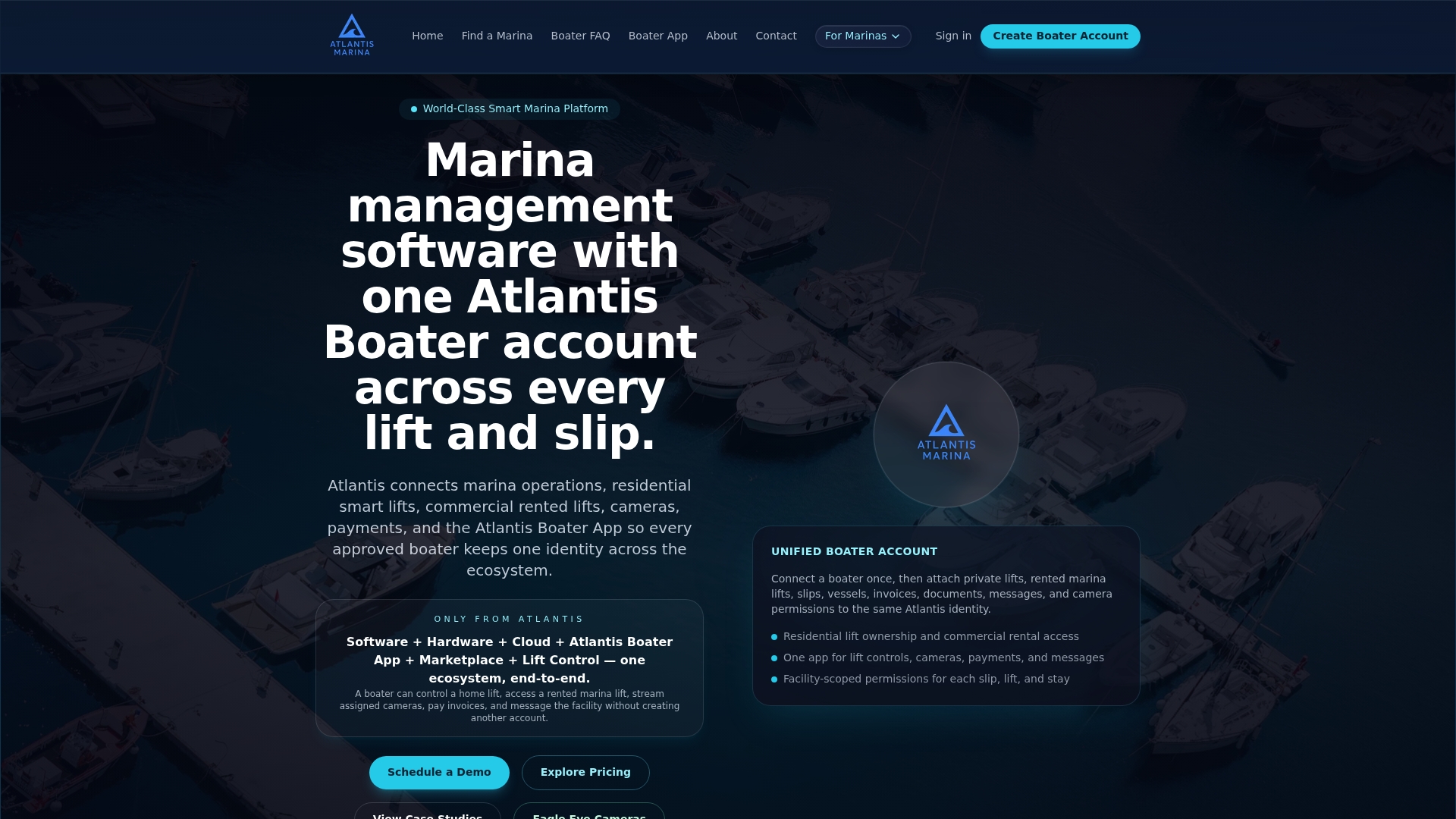
The marketplace features let you maintain a searchable, pre-approved vendor list tenants can reference directly, cutting down on unauthorized work before it starts. If your marina is still running vendor compliance through paper files and email reminders, request a walkthrough of the full platform and see how the intake-to-audit-trail process runs when it's automated end to end.
Sources
- Vendors in Marina — City of Long Beach
- Vendor Portal — San Francisco Recreation and Parks
- Preferred Vendor Application — Navy Pier Marina
- RFP 39-26 Marina Management Software — Clay County
FAQ
What Is the Process of Vendor Onboarding at a Marina?
Vendor onboarding runs through intake (application, COI, roster), verification (document and reference checks), approval (card, fob, or check-in instructions), and ongoing compliance tracking, typically completed within 3 to 5 business days once paperwork is complete.
Can You Make Money Owning a Marina?
Marinas generate revenue through slip fees, dry storage, fuel and ship store sales, and vendor or service fees, though profitability depends heavily on occupancy rates and operating efficiency, which is why tools like automated billing matter for margin.
What Are the Two Types of Vendors Marinas Typically Work With?
Marinas generally distinguish between tenant-sponsored vendors, hired directly by a boat owner for a specific job, and marina-approved or preferred vendors who complete formal registration and appear on a centrally maintained approved list.
How Much Does It Cost to Start a Marina?
Startup costs vary enormously by location, slip count, and infrastructure condition, and no single figure applies across markets. This makes it a question best answered with a detailed feasibility study rather than a general estimate.
How Often Should a Marina Verify Vendor Insurance?
Verify at onboarding, at every stated renewal date, and on a rolling basis roughly 30 days before expiration, ideally through an automated system that disables access the moment a policy lapses.