
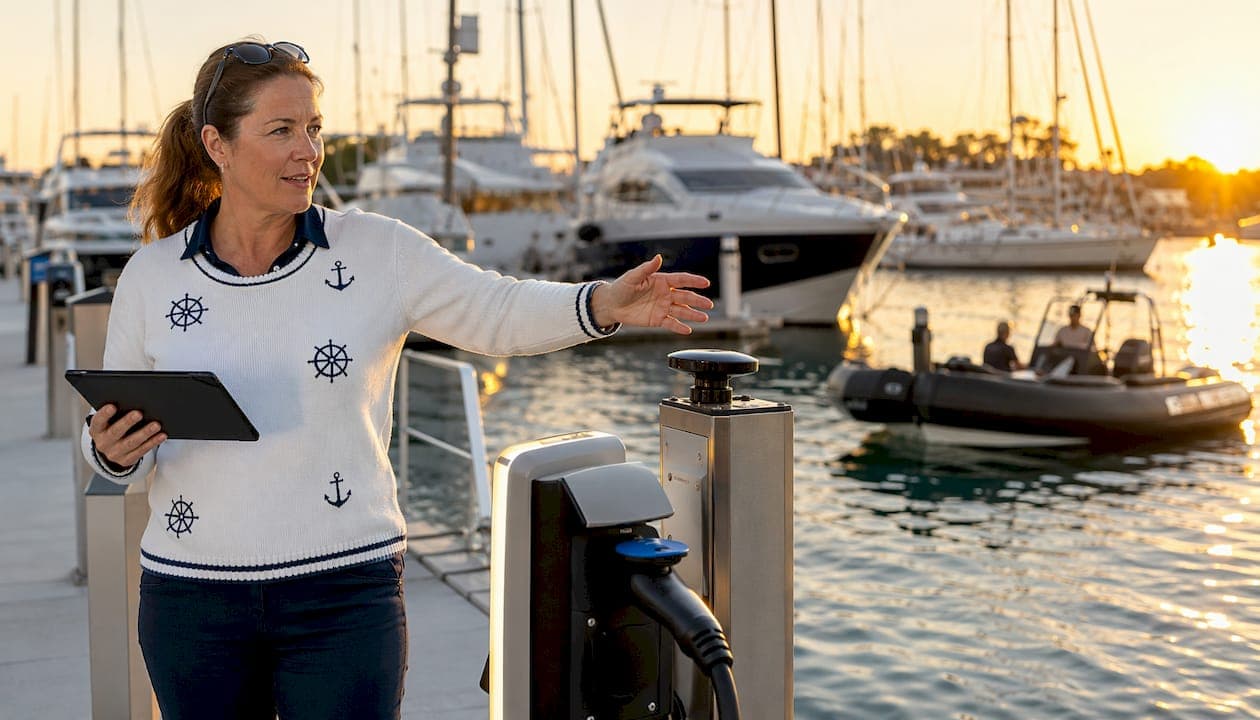
A smart marina guest notification system is an integrated alert and messaging engine that delivers real-time, targeted communications to boaters and staff across SMS, push notifications, email, in-app messaging, and webhooks. For marina operators, the core payoff is faster incident response and fewer manual touchpoints per guest interaction. Rather than relying on phone calls and front-desk check-ins, unified marina platforms route the right message to the right person the moment a trigger fires.
Primary notification channels include:
- SMS (highest open rates, TCPA-regulated for U.S. marinas)
- Push notifications via a boater app
- Email for non-urgent updates and document reminders
- In-app messaging for two-way staff-to-boater communication
- Webhooks to connect third-party work-order or maintenance systems
The Association of Marina Industries (AMI) recognizes advanced operations management as a core competency for senior marina professionals, and guest notification technology sits squarely inside that discipline.
Table of Contents
- What components make up a guest notification system?
- How does a guest notification system work end to end?
- What operational and guest benefits does this technology deliver?
- How do you plan and implement a guest notification system?
- What security, consent, and compliance issues should U.S. marinas know?
- How does Atlantis Marina implement guest notifications in practice?
- Key Takeaways
- Why marinas can't afford to wait on this
- Atlantis Marina gives you a faster path to real-time operations
- Useful sources
- FAQ
What components make up a guest notification system?
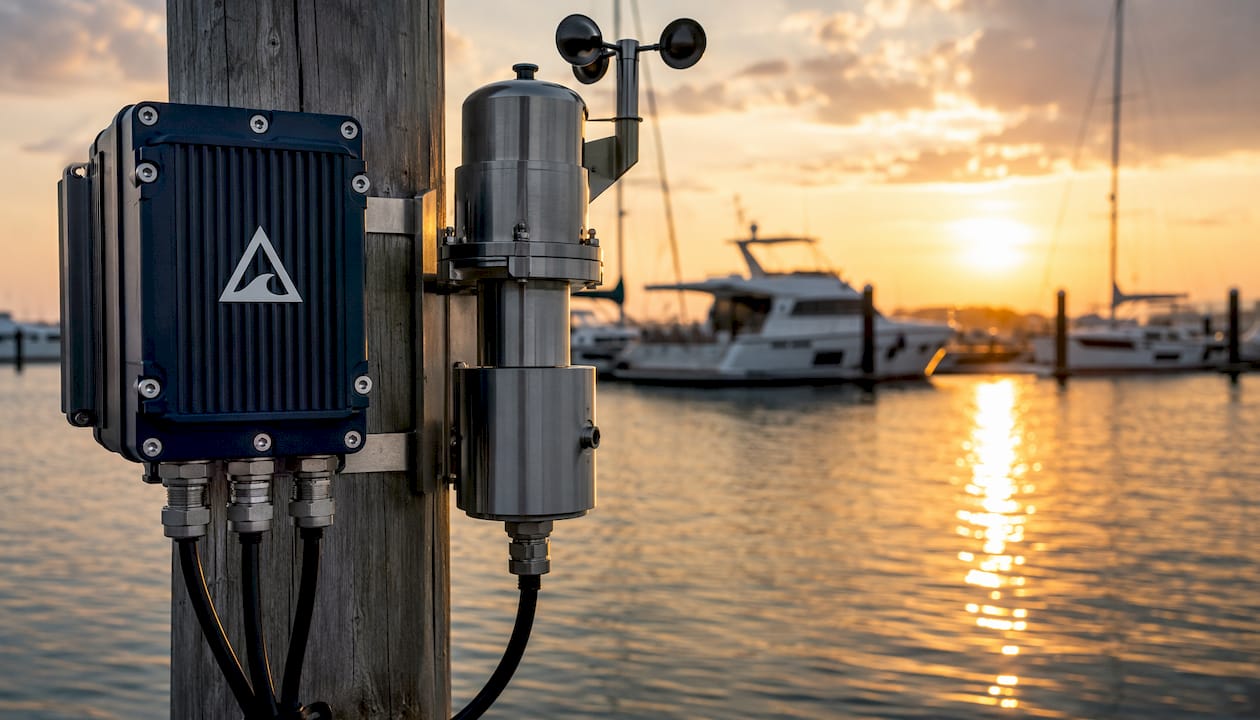
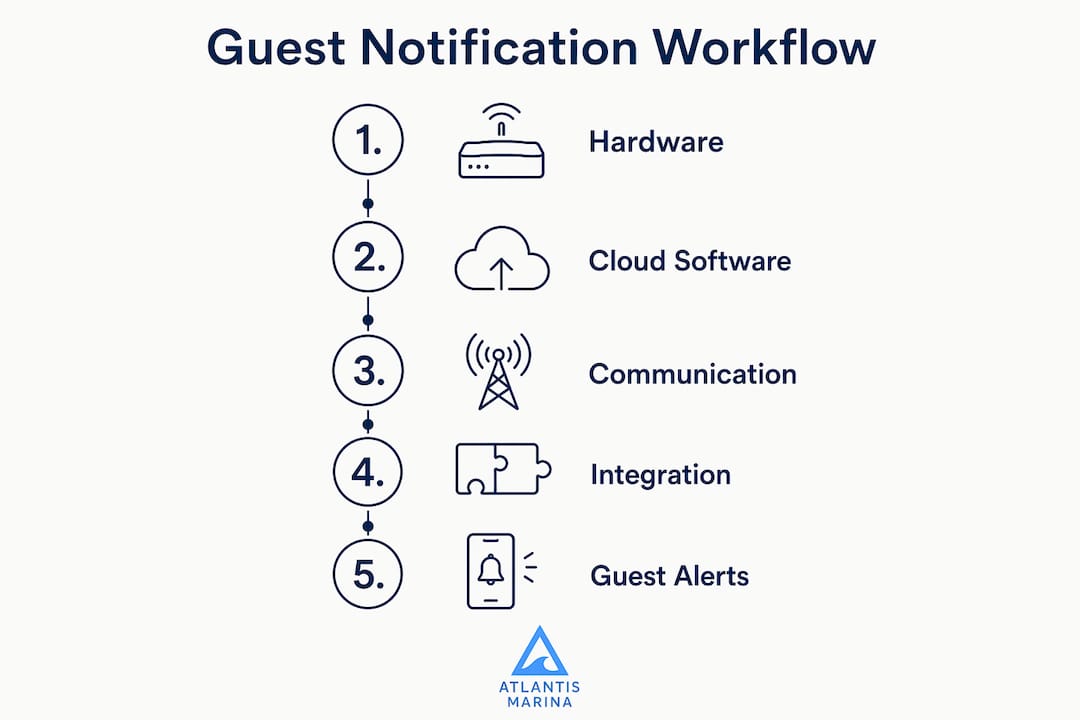
A guest notification system is built from three layers: hardware at the dock, software in the cloud, and the communication channels that connect them.
| Layer | Components | Role |
|---|---|---|
| Hardware | Edge sensors, environmental monitors, access controllers, cameras, AIS receivers, gateways | Detect events and forward data to the cloud |
| Software | Cloud rules engine, marina management/PMS integration, notifications engine, user directory, consent records | Process events, apply rules, format and route messages |
| Communication | SMS, push (boater app), email, IVR, in-app messaging, webhooks | Deliver messages and capture acknowledgements |
| Integration points | PMS, billing, access control, payment processors, work-order systems | Provide context and close the loop on triggered actions |
Integration with your property management system (PMS) is what separates a true smart marina system from a standalone alert tool. When a sensor event ties directly to a reservation record, billing account, and work-order queue, staff get context alongside the alert rather than a raw data point they have to investigate manually.
Pro Tip: Limit notification triggers to high-value events: safety alerts, access events, expiring insurance, and slip arrivals. Alert fatigue sets in quickly when boaters receive too many low-priority messages, and staff stop trusting a system that cries wolf.
How does a guest notification system work end to end?
The data flow from dock to boater phone follows a predictable sequence. Understanding each step helps operators identify where delays or failure points can occur.
- Event detection. A sensor, AIS receiver, access controller, or manual staff entry triggers an event. Examples: a bilge sensor threshold crossed, a gate badge scan, or a reservation check-in window opening.
- Gateway or edge processing. The local gateway aggregates raw sensor data, applies basic filtering, and forwards structured event records to the cloud. Edge processing reduces latency and prevents noise from flooding the rules engine.
- Cloud rules engine. The platform evaluates the event against configured rules: which guest or staff member to notify, which channel to use, what message template to apply, and whether an escalation path is needed.
- Channel selection and message formatting. The engine selects the preferred channel (push first, SMS fallback, email for non-urgent) and populates the message template with reservation, vessel, and slip data from the PMS.
- Delivery and status tracking. The message is sent, and the platform logs delivery status, read receipts where available, and any failed delivery attempts. SMS delivery confirmations and push acknowledgements feed back into the event record.
- Escalation and work-order creation. If a guest does not acknowledge a critical alert within a defined window, the system escalates to a dockhand and can automatically open a work order. For example: a leak sensor fires → automated SMS to the slip guest → no acknowledgement in 10 minutes → dockmaster notified and a maintenance ticket created.
Push notifications typically deliver in seconds; SMS follows within 30–60 seconds under normal carrier conditions. Email is suitable for non-urgent communications where same-minute delivery is not required. Mobile-first workflows reduce the gap between event and response across all three channels.
What operational and guest benefits does this technology deliver?
Fragmented legacy systems cause missed messages, slow check-ins, patchy access control, and security gaps that translate directly into negative guest reviews. A well-configured notification system addresses each of those failure points.
For operators:
- Faster guest check-in through automated pre-arrival instructions and QR code check-in workflows
- Reduced front-desk call volume when boaters receive proactive status updates
- Faster incident response because alerts route directly to the right staff member
- Better facility uptime through automated maintenance triggers and work-order creation
- Automated insurance and registration expiry reminders keep vessel documents current, reducing compliance risk
For guests:
- Timely arrival instructions and berth-ready notifications before they reach the dock
- Access codes delivered automatically at check-in
- Weather and evacuation alerts pushed to their phone without requiring a staff call
- Facility status updates (fuel dock availability, shower hours, amenity closures)
- Event reminders and billing notifications through a single app account
Common use cases span the full guest lifecycle: slip arrival and auto check-in, access-code delivery, leak and intrusion alerts, weather warnings, insurance expiry reminders, and amenity status updates. Each use case maps to a measurable KPI, whether that is check-in completion rate, incident response time, or front-desk call volume.
How do you plan and implement a guest notification system?
A phased approach reduces risk and builds staff confidence before a full property rollout.
Implementation checklist:
- Inventory existing assets: Wi-Fi coverage, sensor hardware, gateway capacity, and PMS integrations
- Define 2–3 priority use cases and the specific triggers for each
- Map integration requirements: PMS, billing, access control, and payment processors
- Build consent flows and opt-in records before sending any SMS (see the compliance section below)
- Run a pilot on one dock or slip cluster with a small trigger set
- Measure delivery rate, acknowledgement rate, and staff time saved during the pilot
- Train staff on alert routing, escalation procedures, and work-order creation
- Scale to the full property based on pilot results, typically within a few months
Primary cost drivers include connectivity upgrades (Wi-Fi and backhaul to remote docks), sensor and gateway hardware, integration or custom development work, SMS messaging fees, and staff training. A facility upgrade checklist helps operators sequence infrastructure investments before software configuration begins.
Vendor selection questions to ask before purchasing:
- What PMS and billing integrations are available out of the box?
- What are the SLAs for message delivery and platform uptime?
- Is 24/7 monitoring and live support included?
- How are consent records stored and exported for compliance audits?
- Can you share case studies showing delivery rates and staff-time savings from comparable properties?
Marina management system selection and staff training are both components of a successful smart-marina deployment, and vendors who treat them as afterthoughts tend to produce poor pilot results.
What security, consent, and compliance issues should U.S. marinas know?
U.S. marinas sending automated SMS messages must comply with the Telephone Consumer Protection Act (TCPA). The practical requirements are straightforward but non-negotiable.
Beyond TCPA, data protection practices matter. Store only the personal information required for notification delivery, encrypt data in transit and at rest, and restrict access to message logs and guest records to authorized staff. Rate limits and abuse-prevention controls reduce the risk of spoofed or runaway messages. The AMI Advanced Marina Management course covers risk management and regulatory compliance as core curriculum, which reflects how seriously the industry treats these obligations.
This article is general information, not legal advice. Confirm current TCPA requirements and your specific obligations with a qualified U.S. communications attorney.
How does Atlantis Marina implement guest notifications in practice?
Atlantis Marina connects the operations dashboard, Boater App, billing automation, and smart hardware integrations into a single notifications workflow. The platform is cloud-hosted and mobile-ready, supporting sensor and camera integrations, access workflows, and smart lift control alongside its core marina management capabilities.
A typical Atlantis Marina notification workflow looks like this:
- Reservation confirmed: The system sends an automated pre-arrival email and SMS with slip assignment, access code, and check-in instructions.
- Arrival window opens: A push notification through the Atlantis Boater App confirms the slip is ready and delivers the QR check-in pass.
- Guest checks in: The QR scan updates the reservation record, triggers billing, and logs the arrival time in the operations dashboard.
- Issue reported: If the guest reports a maintenance issue through the app, the platform routes it to the dockmaster and creates a work order automatically.
- Document expiry approaching: Automated reminders for insurance and registration expiry go out on a configurable schedule, keeping vessel compliance current without manual follow-up.
For a pilot, Atlantis Marina recommends scoping one dock or slip cluster, activating 2–3 triggers (arrival notification, access-code delivery, and one safety alert), and measuring delivery rate, acknowledgement rate, and front-desk call volume over a 4–8 week period. The marina management solution page details the full integration list and available APIs.
Key Takeaways
A smart marina guest notification system reduces manual workload and speeds incident response by routing real-time, trigger-based alerts to boaters and staff across SMS, push, email, and in-app channels.
| Point | Details |
|---|---|
| Core definition | An integrated alert engine that delivers real-time messages to boaters and staff across multiple channels. |
| Trigger discipline | Limit triggers to high-value events (safety, access, compliance) to prevent alert fatigue and preserve staff trust. |
| Pilot first | Run a 4–8 week pilot on one dock with 2–3 triggers before scaling to the full property. |
| TCPA compliance | U.S. marinas must obtain explicit written opt-in and retain consent records before sending any automated SMS. |
| Atlantis Marina | Connects the Boater App, operations dashboard, billing, and smart hardware into one notifications workflow for marinas of any size. |
Why marinas can't afford to wait on this
The conventional wisdom treats guest notification as a "nice to have" upgrade, something to consider after the bigger infrastructure projects are done. That framing gets it backwards. Notification capability is what makes every other investment in sensors, access control, and smart hardware actually pay off. A leak sensor that fires an alert nobody sees for 40 minutes is not a smart marina feature. It is an expensive piece of hardware with a slow response time.
The staffing reality in U.S. marinas makes this more urgent. Dockmasters are managing more slips with leaner teams, and guest expectations have shifted toward the kind of real-time communication they get from every other service in their lives. A boater who can track a food delivery to the minute will notice when a marina's check-in process still requires a phone call. That gap in experience is a retention problem, not just an operational inconvenience.
The operators who treat notification infrastructure as a core system rather than a marketing feature are the ones building the kind of guest experience that drives repeat bookings and referrals. The technology is mature, the integration paths are well-defined, and the compliance requirements are manageable with proper legal review. The only real barrier is the decision to start.
Atlantis Marina gives you a faster path to real-time operations
Replacing fragmented phone calls and manual check-ins with a connected notification workflow is exactly what Atlantis Marina is built for. The platform ties your marina management software, Boater App, billing automation, and smart hardware into one system, so every alert carries context and every response closes a loop.
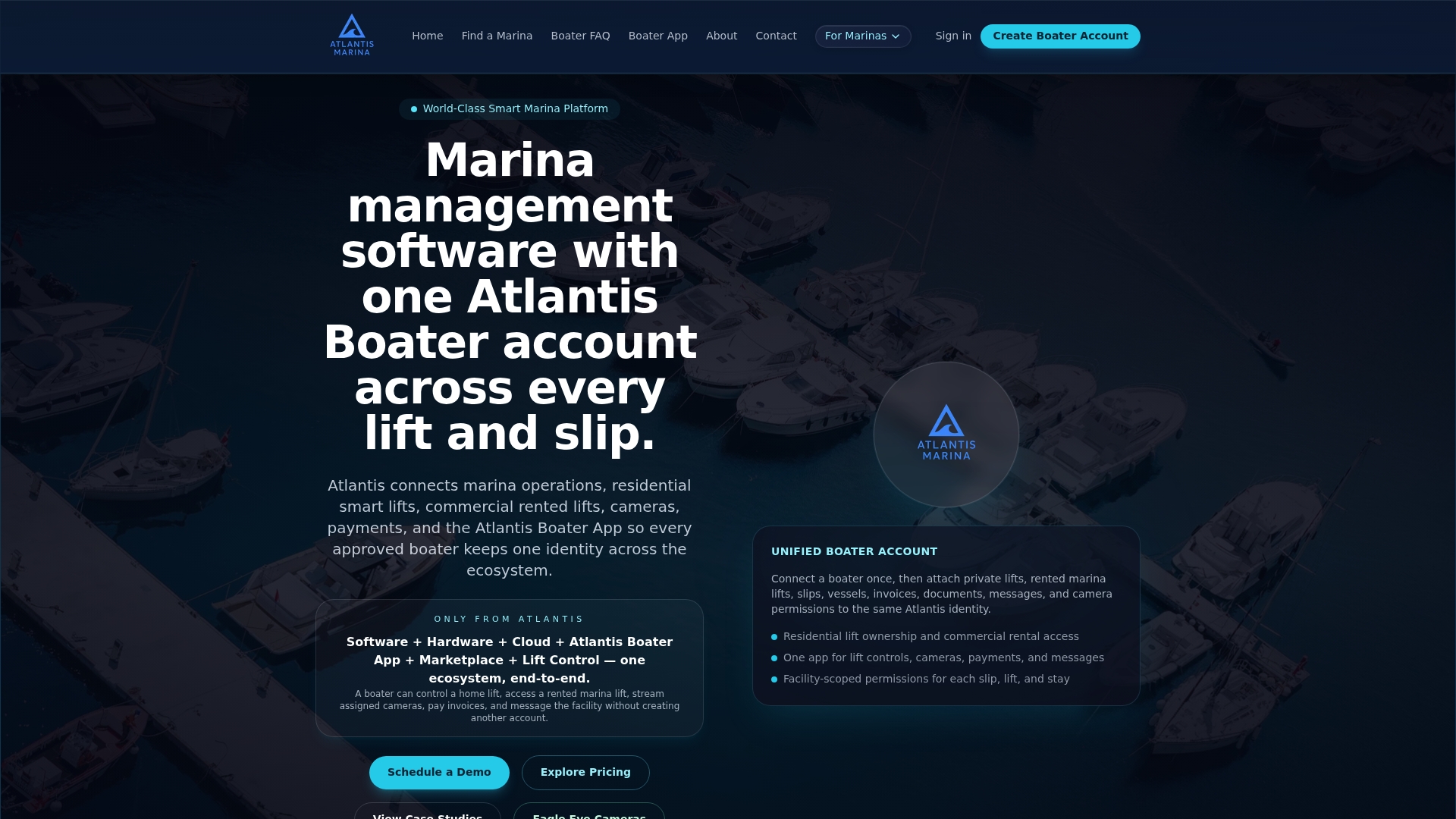
A focused pilot takes 4–8 weeks: pick one dock, activate arrival notifications and access-code delivery, and measure delivery rate and front-desk call volume. The Atlantis Boater App handles push notifications with SMS fallback, and the operations dashboard gives your team a single view of every active alert, reservation, and work order. Ready to see it in action? Request a demo and get a pilot scoped for your property.
Useful sources
| Source | Why it's useful |
|---|---|
| NexusTek: Smart Marina Experience | Industry analysis of fragmented legacy systems and the case for unified smart marina platforms |
| Northstar Marina & Yacht Club Software | Product-level detail on document expiry alerts, member portals, and alert fatigue guidance |
| RationalGo: Marina App Builder | Member portal features, in-app messaging examples, and pilot scoping recommendations |
| Advanced Marina Management Pty Ltd | Marina consulting perspective on system selection, staff training, and implementation methodology |
| AMI Advanced Marina Management Course | Industry-recognized training covering risk management, regulations, and operations best practices |
| Atlantis Marina Platform | Full platform overview: operations dashboard, Boater App, billing, smart hardware integrations |
FAQ
What is a smart marina guest notification system?
It is an integrated alert and messaging engine that sends real-time, trigger-based messages to boaters and staff across SMS, push notifications, email, and in-app channels to speed responses and reduce manual workload.
How does TCPA apply to marina SMS notifications?
U.S. marinas must obtain explicit written opt-in from each recipient before sending automated texts, include a clear opt-out instruction in every message, and retain consent records. Consult a U.S. communications attorney before launching any mass SMS program.
What is the typical timeline to implement a guest notification system?
A small pilot covering one dock and 2–3 triggers typically takes 4–8 weeks. A full property rollout generally runs 3–6 months, depending on connectivity upgrades, integration complexity, and staff training requirements.
How does Atlantis Marina handle guest notifications?
Atlantis Marina connects the Boater App, operations dashboard, billing automation, and smart hardware integrations into one workflow, delivering push notifications with SMS fallback and routing maintenance alerts directly to work orders.
How do you avoid alert fatigue with a marina notification system?
Limit triggers to high-value events such as safety alerts, access events, slip arrivals, and compliance reminders. Broad or frequent triggers reduce staff trust in the system and cause boaters to ignore messages over time.