

A yacht club facility upgrade checklist is a structured tool that guides managers through assessing, prioritizing, and executing capital improvements across docks, utilities, amenities, and technology. The industry standard for this process is the Facility Condition Assessment (FCA), which should be updated every 3–5 years to reflect current construction costs and recent renovations. Clubs that follow a phased, checklist-driven renovation plan consistently outperform those that react to failures rather than plan ahead. Atlantis Marina supports this process by connecting facility condition data, maintenance tracking, and member communication in one platform.
1. What belongs on a yacht club facility upgrade checklist?
A complete facility upgrade checklist covers six core categories: structural infrastructure, utilities, member amenities, technology, safety compliance, and communication systems. Each category requires its own assessment before any budget is allocated. Skipping the assessment phase is the most common reason upgrade projects run over budget and over schedule.
The checklist structure follows the Facility Condition Assessment model used by facility managers across commercial and recreational properties. Facility managers act like city planners, aligning capital investments with organizational goals such as member retention and long-term safety. That framing matters because it shifts the mindset from "fixing what's broken" to "managing assets strategically."
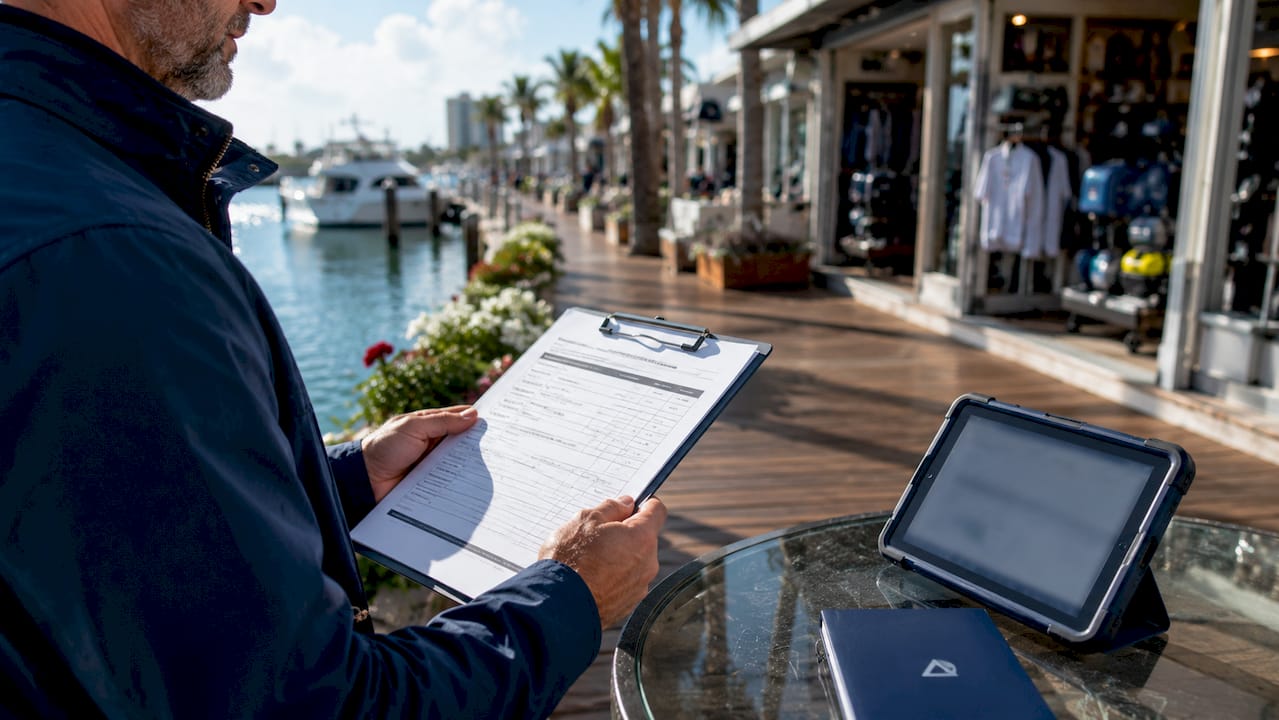
Pro Tip: Start every upgrade cycle with a formal FCA before presenting any budget to your board. The FCA gives you objective data, not opinions, and it makes budget requests far easier to defend.
2. Essential infrastructure upgrades every yacht club should prioritize
Infrastructure is the foundation of every other upgrade. Docks, pilings, shore power pedestals, lighting, pumpout stations, and fuel systems must be assessed before any cosmetic or amenity work begins. Facilities experts advise prioritizing safety and operational risk before quality-of-life improvements.
The primary metric for justifying infrastructure budgets is the Facility Condition Index (FCI), which is the ratio of deferred repair costs to total asset replacement value. A high FCI signals that deferred maintenance is consuming a growing share of the asset's value. Boards respond to FCI data because it translates physical deterioration into financial risk.
World-class preventative maintenance compliance targets sit at 85–95%. Clubs that fall below that range accumulate deferred maintenance faster than they can address it.
Key infrastructure items to include in your checklist:
- Docks and pilings: Inspect for rot, corrosion, and structural fatigue. Replace sections rather than entire docks to control costs.
- Shore power pedestals: Upgrade to 50-amp and 100-amp service where member vessels require it.
- Lighting: Replace incandescent and fluorescent fixtures with LED systems for energy savings and improved visibility.
- Pumpout stations: Verify compliance with Clean Vessel Act requirements and confirm adequate capacity for peak season.
- Fuel systems: Inspect underground storage tanks, dispensing equipment, and spill containment systems on a documented schedule.
Pro Tip: Phase infrastructure work by dock section, not by system type. Working one section at a time keeps more slips accessible and reduces member disruption compared to shutting down an entire utility system at once.
3. How to upgrade clubhouse and member amenities to enhance experience
Member satisfaction at a yacht club is often determined before anyone sets foot on a dock. Clean restrooms and showers are the primary benchmarks members use to judge overall facility quality. A quick restroom inspection reveals more about facility quality than any marketing material. That means restroom and shower upgrades belong near the top of any clubhouse upgrade checklist.
Beyond restrooms, the clubhouse interior sets the tone for the entire member experience. Lighting quality, furniture condition, and the layout of social spaces all affect how often members use the facility and whether they recommend it to others. Clubs that align interior upgrades with documented member feedback see higher utilization rates after renovation.
Amenity upgrades to include in your facility improvement guide:
- Restrooms and showers: Replace fixtures, improve ventilation, and add touchless hardware for hygiene and durability.
- Clubhouse lighting: Upgrade to LED with dimming controls for events and everyday use.
- Wi-Fi coverage: Extend wireless access to docks, outdoor seating areas, and the clubhouse. Members expect connectivity throughout the property.
- Outdoor gathering spaces: Add shaded seating, weather-resistant furniture, and covered areas for social events.
- Social and dining areas: Reconfigure layouts to support both casual gatherings and formal events without requiring separate rooms.
- Sustainability compliance: Verify that all renovations meet local environmental regulations, including stormwater management and materials disposal requirements.
For clubs managing high-end marina amenities, the standard for member expectations has risen significantly. Clubs that treat amenity upgrades as one-time projects rather than ongoing programs lose ground to facilities that invest continuously.
4. What utility and technology upgrades maximize operational efficiency?
Utility and technology upgrades deliver the highest long-term return of any category on the checklist. Upgrading electrical, water, and fuel systems with connected infrastructure improves both operational efficiency and member satisfaction. The two outcomes are directly linked: when systems work reliably, staff spend less time on reactive repairs and more time serving members.
Electrical upgrades should include three-phase power capability where vessel demand requires it. Water system upgrades should address pressure consistency, backflow prevention, and metering for accurate billing. Fuel system modernization should include automated dispensing and leak detection.
On the technology side, connected marina infrastructure now includes smart dock sensors, remote monitoring, automated access controls, and integrated billing. These systems reduce manual labor and give managers real-time visibility into facility status. Atlantis Marina supports smart boat lift controllers, sensor integrations, camera integrations, and mobile alerts as part of its connected waterfront platform.
Pro Tip: Schedule utility upgrades during off-peak months, typically october through february in most U.S. markets. Contractors are more available, costs are often lower, and member disruption is minimal.
Digital member communication and billing tools also belong in this category. Member communication platforms that deliver project updates, billing notices, and service alerts through a single channel reduce staff workload and improve member confidence during active upgrade periods.
5. How to plan and phase yacht club facility upgrades for minimal disruption
Phased construction is the standard approach for marina and yacht club upgrades. Phased dock and facility upgrades keep key access points open, use temporary staging areas, and schedule heavy equipment during off-peak hours. The alternative, completing all work simultaneously, creates member attrition and revenue loss that rarely justifies the time savings.
A practical phasing framework follows four steps:
- Assessment and prioritization: Complete the FCA, calculate the FCI for each asset category, and rank projects by safety risk, operational impact, and member experience value.
- Budget and timeline alignment: Match project scope to available capital. Align major expenditures with multi-year capital improvement plans rather than single-year budgets.
- Staged execution: Work on one dock section, one utility system, or one amenity zone at a time. Maintain access to at least 70% of slips and all critical services throughout each phase.
- Communication and monitoring: Send members written updates before each phase begins. Track progress against milestones and adjust schedules when weather or supply chain delays occur.
The table below summarizes how to sequence a typical multi-year upgrade program:
| Phase | Focus area | Timing |
|---|---|---|
| Phase 1 | Safety and structural infrastructure | Year 1 |
| Phase 2 | Utility systems and electrical upgrades | Year 1–2 |
| Phase 3 | Clubhouse and member amenities | Year 2–3 |
| Phase 4 | Technology and connected systems | Year 3 |
| Phase 5 | Ongoing preventative maintenance | Continuous |
Dockmaster mobile management tools give staff the ability to track phase progress, log maintenance tasks, and communicate with members from the dock rather than from a desk. That mobility matters during active construction when conditions change daily.
6. How to evaluate and select upgrades that align with long-term goals
Not every upgrade request deserves equal priority. The evaluation framework that produces the best outcomes combines objective condition data with stakeholder input and financial analysis. Starting with a formal FCA and calculating the FCI removes subjectivity from budget conversations and gives boards a defensible basis for approving or deferring projects.
The evaluation matrix below shows how to categorize upgrade requests before committing resources:
| Upgrade type | Primary driver | Evaluation criteria |
|---|---|---|
| Safety and structural repairs | Risk mitigation | FCI score, regulatory compliance, liability exposure |
| Utility system upgrades | Operational reliability | Failure frequency, energy cost, member impact |
| Amenity enhancements | Member satisfaction | Usage data, member feedback, competitive benchmarking |
| Technology investments | Efficiency and data | ROI timeline, integration capability, staff adoption |
Balancing non-negotiable safety repairs with quality-of-life enhancements requires a clear policy. Safety and compliance items should be funded first, regardless of member preference. Amenity upgrades should be sequenced based on member feedback data and usage patterns, not board opinion. Marina document management systems that store FCA reports, vendor contracts, and project records in one place make this evaluation process repeatable and auditable.
Key takeaways
A structured yacht club facility upgrade checklist, grounded in Facility Condition Assessment data and executed in phases, produces better outcomes than reactive or ad-hoc renovation approaches.
| Point | Details |
|---|---|
| Start with an FCA | Calculate the FCI before budgeting to justify every project with objective data. |
| Prioritize safety first | Address structural and compliance risks before investing in amenity upgrades. |
| Phase all major work | Work one section at a time to keep slips accessible and members satisfied. |
| Target 85–95% PM compliance | Preventative maintenance at that rate prevents deferred maintenance from compounding. |
| Use technology to track progress | Connected platforms give managers real-time visibility across all upgrade phases. |
What I've learned from watching clubs get facility upgrades right and wrong
The clubs that execute upgrades well share one habit: they treat facility management as a continuous program, not a series of emergencies. The clubs that struggle treat the FCA as a formality and skip straight to vendor quotes. That shortcut costs them twice. Once when they overpay for work that wasn't properly scoped, and again when they discover the work they funded wasn't the work they actually needed most.
The most underrated step in any yacht club renovation plan is the member communication phase. Clubs that communicate project timelines clearly, explain the phasing logic, and give members realistic expectations during construction retain members at a much higher rate than clubs that go quiet and hope nobody notices the disruption. Members tolerate inconvenience. They don't tolerate being ignored.
Technology is the category where I see the most hesitation, and it's the one that pays back fastest. A platform like Atlantis Marina that connects maintenance tracking, billing, member communication, and facility status in one system eliminates the coordination failures that derail upgrade projects. Most delays I've seen weren't caused by contractors. They were caused by information gaps between staff, management, and members.
My honest recommendation: run your FCA, calculate your FCI, build a five-year capital plan, and communicate every phase to your members before the first piece of equipment arrives on site. That sequence works. Everything else is execution.
— John R
Atlantis Marina supports your facility upgrade program
Yacht club managers who use Atlantis Marina gain a platform built for exactly this kind of multi-phase upgrade work. The system connects marina management software with maintenance tracking, member communication, billing, and facility status monitoring in one cloud-based dashboard.
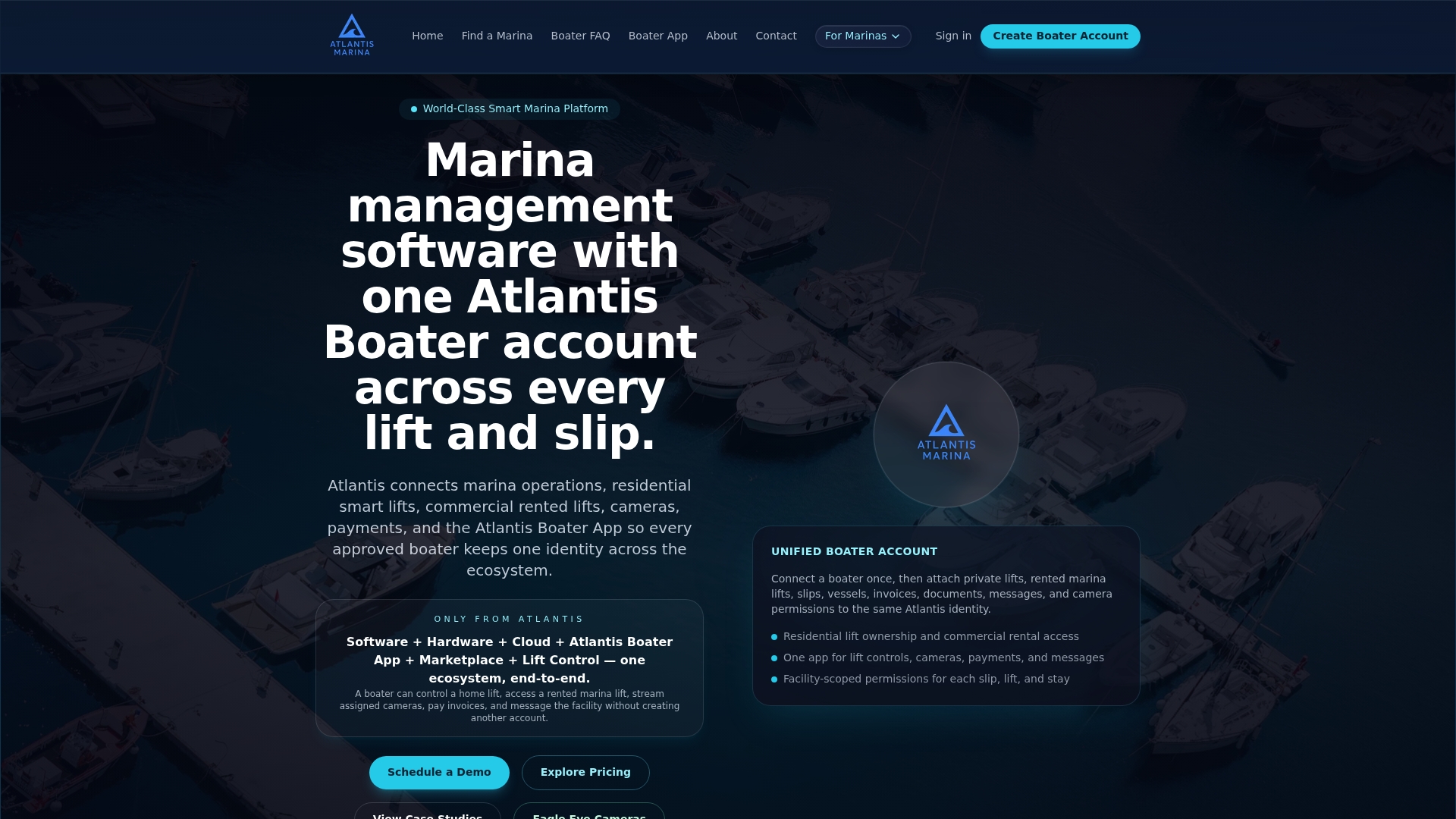
Atlantis Marina's operations dashboard gives your team real-time visibility into maintenance tasks, service requests, and project milestones across every phase of your upgrade program. Members receive timely updates through the platform's communication tools, reducing inbound calls and keeping satisfaction high during active construction. Whether you're managing a single clubhouse renovation or a multi-year capital improvement plan, Atlantis Marina gives your team the tools to execute with confidence. Explore the marina management solution to see how it fits your upgrade workflow.
FAQ
What is a yacht club facility upgrade checklist?
A yacht club facility upgrade checklist is a structured assessment and planning tool that covers infrastructure, utilities, amenities, technology, and compliance. It guides managers through prioritizing projects based on safety risk, operational impact, and member experience value.
How often should a yacht club conduct a Facility Condition Assessment?
Facility Condition Assessments should be updated every 3–5 years to reflect recent renovations and current construction costs. Clubs that skip this cycle make budget decisions based on outdated or incomplete data.
What is the Facility Condition Index and why does it matter?
The Facility Condition Index is the ratio of deferred repair costs to total asset replacement value. Boards use it to compare the cost of maintaining an asset against the cost of replacing it, which makes it the most objective tool for budget justification.
How do you minimize member disruption during facility upgrades?
Phased construction that maintains slip and dock access is the most effective method. Scheduling heavy equipment during off-peak hours and communicating timelines clearly to members before each phase begins reduces both operational impact and member attrition.
What technology upgrades deliver the best return for yacht clubs?
Connected infrastructure upgrades, including smart dock sensors, automated billing, and integrated member communication platforms, deliver the fastest return. They reduce staff labor, improve data accuracy, and give managers real-time visibility into facility status across all upgrade phases.